Habits· 11 min read
The Forgetting Curve: Why You Forget and How to Fix It
You forget 70% of new information within a week. Ebbinghaus proved it in 1885. Here's the science of retention and how to actually fix it.

The Forgetting Curve: Why You Forget Everything You Learn (And How to Fix It)
Three weeks after finishing Ultralearning by Scott Young — a 304-page book I'd highlighted obsessively, dog-eared half a dozen pages, and called "the best thing I've read all year" in three separate conversations — someone asked me what it was about.
I described the vibe. I said something like "intense, self-directed learning" and mentioned a guy who learned four languages in a year. I referenced the cover art. What I could not do was name a single actionable framework, cite one specific study, or explain one concrete method from the book I'd just told everyone they needed to read.
The Forgetting Curve explains why. If you recognize that strange, quiet embarrassment — investing real time and money in learning and coming away with almost nothing you can actually use — you need to understand what a meticulous German psychologist documented in 1885.
You're not bad at learning. You're using the wrong architecture.

The Man Who Memorized Nonsense for Seven Years
Hermann Ebbinghaus was not, by any measure, a fun person at parties. The German experimental psychologist spent the better part of seven years — from 1878 to 1885 — sitting alone, memorizing lists of completely meaningless syllables: "DAX," "BUP," "ZOK," and hundreds more like them. Then he tested himself at precise time intervals to measure exactly how much he had retained and how much had disappeared.
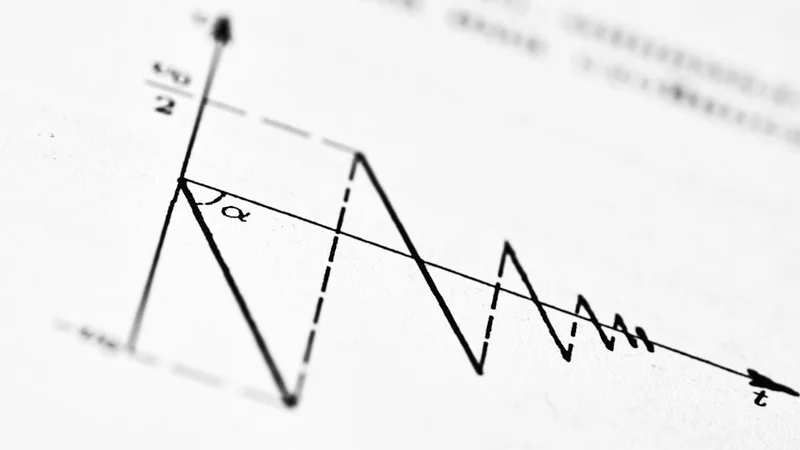
No one had ever rigorously measured forgetting before. The result of his obsessive self-experimentation became the Forgetting Curve: a mathematical description of how memory decays over time without deliberate review.
The numbers are genuinely uncomfortable. Without any form of structured review, you forget approximately:
- 40–50% of new information within 24 hours
- 70% within a week
- Up to 90% within a month
This is not a personal failure. It is not a sign that you're distracted or unintelligent or didn't try hard enough. It is the brain's default memory management system functioning exactly as it was designed — treating any information accessed once and not subsequently reinforced as low-priority data to be pruned.
Your brain isn't a hard drive. It's a prediction machine that keeps what it thinks it will need again. One read, one listen, one watch: the brain's implicit conclusion is "probably won't need this again." Discard.
The cruel irony is that the books, courses, and podcasts we invest in for personal growth are precisely the kind of material the brain deprioritizes most aggressively — because we typically consume them passively, once, with no follow-up that signals to the brain that this information is worth retaining.
The Fluency Trap That Fools Almost Everyone
Here's what makes it worse: when you re-read your highlights, skim your notes, or flip back through a chapter you've already covered, it feels like you're learning. The concepts seem familiar. Your reading speed picks up. You nod along with a sense of recognition. You close the book feeling caught up and informed.
That feeling is a cognitive illusion.
Psychologists call it the fluency illusion. Familiarity masquerades as understanding. When material is easy to read — because you've seen it before — your brain interprets that processing fluency as knowledge. It isn't. It's pattern recognition. You've encountered the words. That's not the same as knowing the idea well enough to apply it, explain it, or build on it.
Robert Bjork at UCLA's Bjork Learning and Forgetting Lab, one of the most influential researchers in human memory and learning, has spent decades documenting the gap between what feels effective for learning and what actually produces durable retention. His central finding: the conditions that feel most comfortable and productive for learning are routinely among the least effective for long-term memory, while the conditions that feel awkward, effortful, and even frustrating are consistently the most effective.
He calls these "desirable difficulties" — conditions that increase the challenge of encoding but dramatically improve the durability of what gets encoded. Smooth, easy, familiar: feels like learning, produces almost nothing retained. Effortful, slightly uncertain, requiring genuine recall: feels like struggling, produces lasting memory.
Passive re-reading — the default method for most people, and the default way most people "review" material they care about — is roughly as effective as reading something once and hoping the brain decides it's worth keeping.
Deep Work — Cal Newport (Paperback)
The chapter exposes passive re-reading as a fluency illusion and praises 'desirable difficulties'. Deep Work is the natural deep-dive into building the effortful, focused attention that real encoding requires.
As an Amazon Associate, we earn from qualifying purchases — at no extra cost to you.
The Testing Effect: The Finding Nobody Acts On
In 2006, Henry Roediger and Jeffrey Karpicke at Washington University published a paper in Psychological Science that should have changed how every school on the planet approaches instruction. Mostly, it hasn't. But it changed how serious learners approach retention — and the gap between the two groups keeps widening.
Their experimental setup: two groups of students, the same material, the same total time investment. Group one re-read and re-studied the material across four sessions. Group two studied the material once, then were tested on it three times — without access to the source material during the tests.
One week later: the re-study group retained 40% of the material. The testing group retained 61%.
The group that spent its time retrieving information rather than re-reading it performed 52% better with identical time investment. The act of forcing the brain to recall something — even failing at the recall attempt, then checking the answer — strengthens the underlying memory trace in a way that passive re-exposure simply does not.
The mechanism is neurologically clear. Each retrieval event accesses the memory and triggers reconsolidation: the memory is reactivated, then re-stored, each time with a stronger and more robust neural pathway. You're not just playing back a recording; you're rewriting it each time, reinforcing the connections, making subsequent recall faster and more complete.
This is why teaching something produces the deepest retention of all. When you explain a concept to someone else — out loud, without notes, letting yourself be corrected — you're doing the most demanding form of retrieval practice available. Richard Feynman understood this intuitively decades before the neuroscience caught up. His technique: if you can't explain something simply, you don't actually know it yet. Now we know that the act of explaining it is what makes you know it — not just a test of knowing, but the mechanism of knowing itself.
The practical translation is uncomfortable in its simplicity: close the book. Write down everything you remember for five minutes without looking at the source material. Struggle. Check your answers. Correct your gaps. That single cycle of retrieval, comparison, and correction produces two to three times the retention of equivalent time spent re-reading.

Clever Fox Habit Calendar Circle (2-Year Tracker)
Right where the testing effect is introduced — 'write down everything you remember for five minutes'. A physical tracker operationalises the daily recall-journal habit.
As an Amazon Associate, we earn from qualifying purchases — at no extra cost to you.
Spacing: The Architecture Your Brain Actually Runs On
Ebbinghaus discovered something else during those seven years of memorizing syllable lists: the timing of review matters as much as the fact of review.
He found that the optimal moment to review material is not immediately after learning, when everything is still fresh and the effort required is minimal. And it's not months later, when most of the trace has decayed. The optimal moment is just before you would have forgotten it — the point where retrieval requires genuine effort but the memory hasn't disappeared entirely.
This principle — the Spacing Effect — is one of the most consistently replicated findings in 140 years of cognitive psychology. Distributing practice across time produces dramatically better long-term retention than the same total practice time massed together. The reason is precisely what makes it feel inefficient: spaced practice hits each memory repeatedly at the productive edge of forgetting, where the retrieval is difficult enough to strengthen the trace significantly.
The problem: figuring out when to review what, across dozens of books and thousands of concepts, is mathematically too complex to manage manually. You're learning from multiple sources across multiple domains. Each piece of knowledge has a different decay rate based on how deeply it was initially encoded, how often it's been reinforced, and how novel it was. Tracking all of this on a calendar is, in practice, impossible.
This is exactly the problem Sebastian Leitner solved in the 1970s with the Leitner Box: a physical card system divided into sections with different review frequencies, where cards move to longer intervals when you answer correctly and return to shorter intervals when you fail. The physical version is elegant and still works beautifully. The digital implementation is more powerful.
Anki — the free spaced repetition software used extensively by medical students, language learners, and anyone preparing for rigorous examinations — automates Leitner's principle with a spaced repetition algorithm. The system tracks your response to each card (whether you recalled it correctly, and how easily) and dynamically calculates the optimal interval to schedule the next review — long enough that the recall requires genuine effort, short enough that the memory hasn't decayed beyond retrieval.
Cards you know solidly get pushed to intervals of months. Cards you consistently struggle with come back within 24 hours. Over time, the system builds a personalized management layer over your own forgetting curve, scheduling each piece of knowledge for review at exactly the moment where reinforcement is most efficient.
Medical students using Anki consistently report retaining clinical pharmacology and pathophysiology years after initial study — not because they have superior memories, but because they've built a retention architecture that works with the brain's actual operating system rather than assuming the brain will do something it's not designed to do.

Kindle Paperwhite (2024, 16GB)
After the Anki / medical-student retention passage — the high-ticket reading device for the serious learner building a long-term retention architecture. Highlights export cleanly into spaced-repetition cards.
As an Amazon Associate, we earn from qualifying purchases — at no extra cost to you.
Why Most People Still Don't Do Any of This
Here's the honest friction: retrieval practice and spaced repetition feel worse in the moment than passive re-reading. There's nothing comfortable about closing a book and staring at a blank page trying to reconstruct what you just read. Re-reading is smooth. Recall is effortful. The fluency illusion is genuinely pleasant to inhabit. Struggling to remember something you know you've encountered is mildly stressful in a way that tends to make people stop.
There's also a real setup cost. A book doesn't arrive pre-loaded into Anki. You have to read actively, identify the ideas worth encoding, and build the cards. That requires a different kind of attention than passive consumption — the attention of someone who is asking, as they read, "what is the minimum extractable idea here that I need to be able to retrieve in three months?"
Most people read 30 books in a year and retain 10 ideas. The person who reads 10 books with deliberate retrieval practice and spaced review retains 80–90% of each one. That's the equivalent of 8–9 books of integrated, working knowledge against the first person's 3.
They read less. They know more. They can actually use what they've learned in conversation, in decisions, in the difficult moments when having the right framework at hand actually changes the outcome.
The setup cost is approximately 2–3 hours per serious non-fiction book — building questions from the key concepts, creating cards, doing the initial review session at 24 hours. That sounds like a lot until you compare it to the alternative: investing 8–10 hours reading a book and retaining 10% of it indefinitely.
How to Actually Start Today
You don't need to rebuild your entire learning system this weekend. Five changes, implemented incrementally, will do more for your retention than any app or productivity framework:
1. Start a recall journal for your current book. After each reading session — before you put the book down — write everything you remember for five minutes without looking at the pages you just read. It will feel harder than you expect. The difficulty is the event. That strain is your brain building the memory, not failing to retrieve it.
2. Set a 24-hour review alarm. When you finish a chapter or a book that matters, set a phone reminder for 24 hours later. When it fires, spend ten minutes writing everything you remember without looking at your notes. Then check. Then correct your gaps. This single habit will roughly double your one-month retention compared to no review at all.
3. Convert your highlights into questions. Every highlight that felt important gets converted into a question-answer pair. "What percentage of information is forgotten within a week without review?" becomes its own card, answered without looking. This is the operational difference between a highlight and a memory — one is a marker you made while reading; the other is a retrievable unit of knowledge.
4. Pick one domain and build the system there first. Don't try to load your entire reading history into Anki at once. Pick the one domain where retention matters most to you right now — the professional skill you're building, the subject you're actively applying — and commit to encoding that material rigorously. Build the habit before you attempt to scale the system.
5. Teach what you're learning. Find the context — a conversation, a team meeting, a written explanation for someone else — to explain the key ideas from what you've just read. Not summarize. Explain. The accountability of an audience that might notice when you can't actually explain something is the most powerful retrieval practice available at zero additional cost.

TIJN Blue Light Blocking Glasses (Square, Clear Frame)
Deliberate retrieval practice means long, focused reading and screen-card review sessions. Blue light glasses reduce the eye fatigue that ends those sessions early.
As an Amazon Associate, we earn from qualifying purchases — at no extra cost to you.
The Honest Arithmetic of Self-Development
Jim Rohn captured this well when he observed that "the difference between where you are today and where you'll be five years from now will be found in the quality of books you've read." I'd argue the difference between the person who reads passively and the person who reads with a deliberate retention system is just as significant — it just shows up more quietly, in the quality of their thinking and the precision of their judgment rather than in the height of their book pile.
Here's the math nobody runs: if you read 20 books this year and retain 10% of each — the realistic outcome of highlights-only passive reading — you have the equivalent of two books' worth of working knowledge. If you read eight books with active retrieval and spaced review, you retain 80–90% of each. That's the equivalent of seven books of integrated, accessible knowledge.
Twenty books. Two you can actually use.
Eight books. Seven you can actually use.
The Forgetting Curve doesn't care how motivated you were when you read the book, how good your intentions were, or how many notes you took in the margins. It's a law of cognitive physics that operates on everyone equally. The people who beat it aren't reading faster or concentrating harder. They've built a system that works with the brain's actual architecture instead of assuming the brain will make an exception for information they happened to care about.
Designing your evolution means being honest about what you're actually building — not just what you're consuming. The shelf of highlighted books feels like progress. The 300 encoded, retrievable ideas in a spaced repetition system is progress.
There's a particular moment that starts to be familiar when you actually do this for a while: someone mentions a concept in conversation, and instead of nodding vaguely while searching your memory for the highlight you can't locate, you know it. You can explain it clearly, connect it to something else, push back or agree with specificity. That's not a natural gift. That's the testing effect in action — the result of having retrieved an idea enough times that it's genuinely yours.
What's the most important thing you've read or learned in the last six months? Could you explain the core of it right now, without looking it up — the actual mechanism, not just the general topic?
If the answer makes you pause, you already know where to start.
Was this helpful?