Mindset· 10 min read
The Halo Effect: How Fame Warps Your Judgments
Thorndike's 1920 research found one favorable impression bleeds into unrelated judgments. Here's the real science behind why fame skews perceived quality.

The Halo Effect: Why Fame Alone Makes Someone's Work Feel Better Than It Is
A few years ago I spent good money on a book because the author was famous. I'd seen their TED Talk — one of those rare performances where the speaker makes you feel like you're watching something historically important. Compelling, clear, the kind of charisma that sticks.
So when their book came out, I ordered it without reading a single review.
It was mediocre. Not actively bad. Just ordinary — the kind of book you finish out of obligation, not because it's pulling you forward. Thin arguments. Familiar examples. The intellectual equivalent of a restaurant that coasts on its reputation. The halo effect had already made up my mind — and I didn't notice until the book was finished.
What unsettled me more than the book itself was my own reaction to it. I kept circling back to the same thought: surely I'm missing something. The author was brilliant. The TED Talk was brilliant. The book had to be brilliant.
It wasn't. But my brain wouldn't fully let me accept that.
That experience has a name. It's been documented in peer-reviewed research since 1920. And once you understand the mechanism, you start seeing it everywhere — not just in books you've trusted too easily, but in hiring decisions, performance reviews, product purchases, and every other judgment where a prior impression gets a quiet vote it was never supposed to have.
What Edward Thorndike Found in 1920 That Researchers Are Still Writing About
Edward Thorndike was an American psychologist who, in the early twentieth century, became curious about how people form judgments of other people. His 1920 paper, "A Constant Error in Psychological Ratings," published in the Journal of Applied Psychology, drew on data from military officers who had been asked to rate their soldiers across several supposedly independent traits: intelligence, physique, leadership ability, and character.
The halo effect is the tendency for one strong favorable impression of a person or work to quietly distort your evaluation of their entirely separate, unrelated qualities. Name one impressive thing about someone, and your judgment of everything else about them shifts — often without your awareness, and often in proportion to how strong that first impression was.
The ratings should have varied independently. A soldier could theoretically be physically impressive but average as a strategic thinker. A highly principled person could still be a weak leader. These are genuinely separate qualities. You can imagine a distribution where each rating fluctuates independently of the others.
They didn't. The correlations between supposedly unrelated traits were far higher than the actual relationships between those traits could explain. Officers who rated a soldier highly on physique also rated them highly on intelligence. Officers who formed a positive impression of a soldier's character rated their leadership ability upward too — not because the evidence demanded it, but because a single overall impression was quietly contaminating every subsequent specific judgment.
Thorndike called this a "constant error." The name that eventually stuck — the halo effect — came from later research. But the core pattern he identified hasn't changed in the century since: form a strong impression of someone or something, and that impression acts like a halo, subtly illuminating everything else you see about them in a more favorable light.
What makes this disturbing isn't that it happens to naive or credulous people. It happened to military officers — people professionally trained to make discriminating evaluations under real pressure, with genuine stakes attached to their judgments. The halo effect doesn't require inattention or laziness. It operates through the normal, well-intentioned process of forming impressions and then reasoning outward from them.

The 1977 Study That Showed the Halo Effect Is Invisible From the Inside
Thorndike's finding was observational — patterns in existing performance ratings. It demonstrated that the effect existed, but it didn't illuminate the mechanism. Richard Nisbett and Timothy Wilson's 1977 study did something more uncomfortable: it showed that the people being influenced by the halo effect typically don't know it's happening.
Their experiment, "The Halo Effect: Evidence for Unconscious Alteration of Judgments," published in the Journal of Personality and Social Psychology, showed two groups of students a video of the same university instructor. In one video, he was warm, enthusiastic, and clearly interested in the students. In the other, he was cold, distant, and mildly condescending. Both videos featured the identical physical appearance, the identical mannerisms, and the identical accent.
After watching, students rated the instructor on several dimensions. Some were clearly relevant — how engaging was he? How intellectually stimulating? Those differed predictably between the warm and cold conditions.
But here's the part that matters: students were also asked to rate his physical appearance and his accent. Qualities that have nothing, logically, to do with how warm or cold he was.
Students who watched the warm version rated his appearance and accent as significantly more appealing.
The exact same face. The exact same way of speaking. A different impression of warmth — and suddenly unrelated traits shifted with it.
Nisbett and Wilson then asked participants directly: do you think your overall impression of the instructor influenced your rating of his physical appearance and accent? The overwhelming majority said no. They believed they'd assessed each quality on its own merits, independently, one at a time.
They hadn't. But crucially, they genuinely thought they had.
This is the finding that changes how you should think about this bias. The halo effect isn't a mistake you can simply catch by deciding to be more careful. It doesn't announce itself. You don't experience yourself as letting one impression contaminate another — you experience yourself as making a series of reasonable, separate, evidence-based assessments. The contamination is invisible from the inside.

Stillness Is the Key — Ryan Holiday
The 1977 finding is that the contamination is invisible from the inside — the correction is slowing the judgment down before it forms. This is the book on exactly that discipline.
As an Amazon Associate, we earn from qualifying purchases — at no extra cost to you.
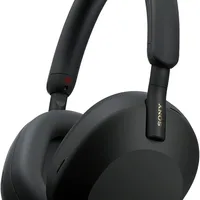
Sony WH-1000XM5 Noise Cancelling Headphones
Thorndike's officers weren't lazy — they were rating under pressure. Careful, dimension-by-dimension evaluation needs an environment that doesn't rush you.
As an Amazon Associate, we earn from qualifying purchases — at no extra cost to you.
The Modern Halo: Fame, Reputation, and Why the Name Gets More Credit Than the Work
The most visible contemporary expression of the halo effect isn't in military performance reviews. It's in how reputation travels — specifically, in the way a single impressive piece of work generates a halo that gets applied to everything the creator does afterward, including work that doesn't deserve it.
Seth Godin made this observation simply: celebrity alone transforms perceived value, independent of craftsmanship. A painting attributed to a famous artist gets evaluated differently than an identical painting attributed to an unknown. Not because the craft differs. Because the fame itself is functioning as a halo.
You can test this in your own reading habits. Think of a book you genuinely loved — one that changed how you think. Now imagine the same author's next book comes out, and you pick it up. How much less scrutiny do you apply to it than you'd apply to a book on the same topic by a first-time author you've never heard of? That initial halo is doing work long before you read a word.
It's worth being precise here about what the halo effect is not, because two concepts often get confused with it.
It's not the mere exposure effect — Robert Zajonc's finding that repeated passive contact with a stimulus gradually builds liking through familiarity. The halo effect doesn't require repeated exposure. One strong favorable impression is sufficient to start bending unrelated judgments.
And it's not George Akerlof's market for lemons, which concerns how buyers' inability to verify quality at all degrades average market quality over time through information asymmetry. The halo effect doesn't require an information gap. You can have all the information you need and still have your evaluation quietly pulled toward the favorable impression you formed first.
How confirmation bias warps your best decisions — and what to do about it
The halo effect is its own mechanism: a single specific impression actively distorting your judgment of entirely separate, unrelated qualities. The mechanism is specific, and so is what helps correct for it.

Kindle Paperwhite (2024, 16GB, Without Ads, Black)
The article's own test: would you rate this book the same way if nobody you'd heard of wrote it? Free Kindle samples let you judge 30 pages of the actual work before the famous name gets your money.
As an Amazon Associate, we earn from qualifying purchases — at no extra cost to you.
Where This Shows Up Beyond the Obvious
Most people recognize the halo effect in celebrity endorsements. A famous athlete promotes a watch, and the watch feels better than it is. That's obvious enough that we can notice it and discount it.
The less obvious version is more consequential.
In hiring: A meta-analysis of experimental studies published in Personnel Psychology (Hosoda, Stone-Romero & Coats, 2003) found that physical attractiveness measurably biased evaluators' ratings of candidates — including on job-relevant competencies that attractiveness has no logical relationship to — and that the bias persisted even when raters had access to real information about a candidate's qualifications. Interviewers weren't being deliberately superficial. They were forming a positive overall impression and then letting that impression quietly influence every subsequent specific rating — exactly the pattern Thorndike documented in 1920, replicated in a completely different context more than eighty years later.
In performance reviews: Research on rating biases consistently finds that managers who hold a strong prior positive impression of an employee rate them higher across dimensions they've had no direct evidence about. A person known for being reliable gets rated as more creative by managers who've never seen evidence of their creativity, simply because reliability generated a halo.
In your reading: James Clear writes extensively about how environment shapes behavior in ways we don't consciously track. The halo effect is the cognitive equivalent: the environment of who someone is perceived to be shapes how you evaluate what they actually produce, often without you noticing, and often for a long time after the initial impression was formed.
In products: The reason premium brand extensions consistently outperform their objective quality in consumer evaluations — a successful luxury car brand launching a lower-tier model, a respected tech company releasing a mediocre accessory — is largely explained by halo transfer. The brand's established positive impression bleeds into the evaluation of the new product before you've actually assessed the product itself.
Cognitive biases that secretly run your life — a field guide
The Counterfactual Test: Are You Judging the Work or the Name?
Nisbett and Wilson's data suggests that becoming aware of the halo effect doesn't fully neutralize it. But it does create an opening for a useful question.
Here it is: If this exact work had come from nobody I'd heard of, would I rate it the same way?
You don't need to answer the question perfectly. The act of asking it introduces friction at the moment when the halo is most likely to be doing work you haven't authorized. It forces a brief separation between the reputation and the evidence.
Robert Cialdini's research on the authority principle — the finding that humans are strongly predisposed to defer to signals of expertise and status — helps explain why this friction matters so much. We're not deferring to famous people's unrelated work because we've lost our ability to reason. We're doing it because deference to reputation is a shortcut that works often enough to persist as an instinct. The problem is that it breaks exactly when you're evaluating whether a famous person's new, less-impressive work is actually as good as their reputation suggests.
How to Actually Audit This in Your Own Judgments
The goal isn't to eliminate every favorable prior impression. That's not realistic, and a more modest version of the halo — basic trust in sources that have earned it — is useful. The goal is to build habits that introduce deliberate friction at the moments when the bias is most likely to distort a judgment that actually matters.
-
Name the halo before you evaluate. Before reviewing any work, proposal, or product from someone with a strong established reputation, write down what impression you already hold of them. Making it explicit makes it slightly less invisible. It doesn't neutralize the halo, but it pulls it into your conscious awareness where you at least have a chance to discount it.
-
Rate specific qualities separately, in writing, before reaching an overall conclusion. This is precisely what structured performance evaluation systems are designed to do — they're trying to counteract Thorndike's constant error by forcing raters to assess each dimension with its own evidence before aggregating. It's slow. It's deliberately uncomfortable. That discomfort is the point.
-
Apply the counterfactual test before trusting an endorsement. If a famous person whose work you admire recommends a book, a product, or a service, ask what you know about the specific quality of that thing independent of who's recommending it. Endorsement is halo transfer, and the quality of the endorsing relationship tells you nothing reliable about the quality of what's being endorsed.
-
Seek reviews from people with no prior impression. For important purchase decisions or decisions about whose work to trust, the most informative signal is often from people who'd never heard of the creator before encountering the work. Their halos are blank. Their assessments of the work itself are correspondingly cleaner.
-
Keep a brief decision log for high-stakes evaluations. When you make a significant call — buying an expensive product, recommending a book, hiring someone — log the specific evidence you used. Not the name or reputation. The actual observations. Reviewing those logs over time is one of the most reliable ways to notice a pattern of letting halos carry more weight than your own direct assessment.
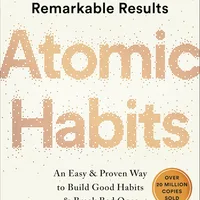
Atomic Habits — James Clear
The article cites Clear on how environment shapes behaviour without you tracking it — the halo effect is the cognitive version of exactly that argument.
As an Amazon Associate, we earn from qualifying purchases — at no extra cost to you.

Why This Matters More Than It Did in 1920
Thorndike was writing about military performance reviews. The decisions involved were serious, but the information environment was relatively contained. You knew a limited number of people. Reputations spread slowly.
The contemporary version is operating in a world where a single piece of impressive work — a viral post, a successful book, one standout interview — generates a reputation that immediately travels to millions of people simultaneously. The halo precedes the person into every subsequent interaction. And the subsequent work, the follow-up book, the second product, the next recommendation, gets evaluated not on its own terms but against the halo that formed before anyone encountered it.
This doesn't mean famous people's later work is always worse than their early work. Sometimes it's better. The problem is that you can't easily tell, because the halo is obscuring the measurement.
Designing your evolution — which is, at its core, about making intentional choices rather than defaulting to automatic ones — means periodically applying that counterfactual question to the judgments you make most habitually. The books you trust without reading reviews. The people you assume are excellent because they once were. The products you rebuy without checking whether something better exists.
The Pygmalion effect: when other people's expectations quietly shape your performance
Thorndike named the mechanism in 1920. Nisbett and Wilson confirmed it operates outside conscious awareness in 1977. You now have the vocabulary and the practical question to at least slow it down when it matters.
Which leaves one honest question worth sitting with: the halo effect you're most confident you're immune to — is that confidence itself evidence that you're not?
Was this helpful?
Continue Your Evolution
The Frozen Goal Problem: Why Tiny Wins Beat Grand Plans
Rejection Sensitivity: Why You Keep Assuming They're Upset
The Science of Nostalgia: Why Looking Back Helps
Sedikides and Wildschut found nostalgia boosts mood, meaning, and social connection — not mere sentimentality. Here's the science and how to use it.