Mindset· 9 min read
High Agency: Do You Believe You Can Change Things?

High Agency: Do You Believe You Can Change Things?
My grandmother explained everything with the same phrase. The neighbor who built a business from nothing? Lucky. The cousin who failed his exams three times? Just unlucky. When I was growing up, the universe felt like a lottery machine, and your job was simply to hope your ticket came up. Psychologists have a name for that posture: an external locus of control.
That belief stayed with me longer than I should have let it. I didn't notice what it was costing me until the pattern became too clear to ignore: whenever something went sideways, my first instinct was to locate the external cause — the economy, the timing, the manager who didn't see what I brought. That reflex kept me passive in situations where a different approach would have actually worked. And I didn't question it until I stumbled into a piece of psychology that made the whole thing visible.
What the Research Actually Shows
In 1966, psychologist Julian Rotter introduced the concept of locus of control — and it quickly became one of the most widely studied constructs in personality psychology. The core idea is simpler than it sounds. People sit on a spectrum. At one end, you believe your outcomes are mostly shaped by your own actions — your effort, decisions, and choices. That's called internal locus of control. At the other end, you believe outcomes are mostly determined by luck, other people, or circumstances beyond your reach. That's external.
Rotter's insight wasn't that one end is right and the other wrong. It was that this belief influences behavior in a fairly direct way. If you think effort moves the needle, you put in effort. If you think the outcome is decided elsewhere, you conserve energy and wait for conditions to change on their own.
Timothy Judge and Joyce Bono published a meta-analysis in the Journal of Applied Psychology in 2001, built on 274 correlations, that examined four traits — self-esteem, generalized self-efficacy, locus of control, and emotional stability. Their finding: a more internal locus of control was associated with higher job satisfaction (an estimated correlation of .32) and higher job performance (.22). Those are moderate effects, not dramatic ones. But moderate effects that show up across that much data are worth paying attention to.
Important caveat: these are correlational findings. They don't prove that believing you're in control directly causes better outcomes. People with more stable environments, more resources, and stronger support networks also tend to score higher on internal locus measures. Causation runs in multiple directions. The research is honest about that, and you should be too.
mindset and performance at work
Where This Framework Gets Distorted
Here's where I want to slow down, because this concept has a dark side that most productivity writing walks straight past.
"You control your outcomes" sounds empowering. Applied carelessly, it becomes a way to blame people for circumstances they genuinely couldn't overcome — the worker displaced by structural automation, the student whose school was chronically underfunded, the person managing a health condition that shapes how much capacity they have on any given day.
A strong external locus is associated with passivity and helplessness. But an uncritical internal locus can tip into something equally distorted — the belief that anyone who struggles simply didn't try hard enough. That's not what the data shows, and it's not a useful framework for anyone.
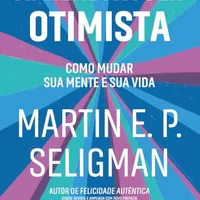
Learned Optimism — Martin E. P. Seligman
As an Amazon Associate, we earn from qualifying purchases — at no extra cost to you.
The Trap of Learned Helplessness
Martin Seligman's work in the late 1960s — beginning with animal studies and later extended to human behavior — uncovered something quietly devastating: when organisms repeatedly experience situations where their actions produce no effect, they eventually stop trying. Even when the situation later changes. Even when acting would now actually work.
The mechanism matters here. It's not that they stop wanting things to improve. It's that the belief has been updated, based on accumulated experience, that trying doesn't help. The brain is doing something reasonable with bad data.
The exit isn't a motivational speech. It's specific, verifiable evidence that your actions can change a specific outcome. You can't think your way to agency; you accumulate it through real results, however small.
Building Agency Through Small Experiments
The mental frame I've found most useful isn't "I control my life." That claim is too large to verify and too easy to demolish on a bad week. A better working version: I am someone who designs small experiments and pays close attention to what they teach me.
Start with one area of mild frustration. Not the biggest crisis in your life — something mid-level. Your mornings feel reactive and scattered. Scale matters: small enough that five days of attention is genuinely informative.
Write a falsifiable hypothesis. "If I do [X], then [Y] will change in a measurable way by day five." Writing this on paper — not keeping it as a mental note — converts intention into something you can actually compare against a result. Run it for five days. Track the outcome in two sentences each evening: what you did, and what happened as a result.
Assess the result honestly. "It worked completely," "it helped somewhat," and "nothing visibly changed" are equally useful data. A partial result isn't failure — it's a refined hypothesis for the next test.

Clever Fox Habit Calendar Circle (24-Month)
As an Amazon Associate, we earn from qualifying purchases — at no extra cost to you.
building habits that actually stick
How to Start This Week
- Name one situation where you currently feel most like a passenger. Not a life category — a specific context.
- Write one hypothesis. If I [action], then [outcome] will change by day five.
- Track daily. Two sentences at the end of each day: what you did, what happened.
- Debrief on day six. What did you learn about the relationship between your effort and this outcome?
The goal is to accumulate enough small, concrete evidence that when you ask does my effort actually change things here? you have something better than "I'm not sure" to answer with.
The Long Game
My grandmother wasn't wrong about everything. Luck is real. Structural conditions shape outcomes in ways individual effort genuinely can't always overcome. Some situations are outside your control, and pretending otherwise doesn't help anyone.
But within the actual range of circumstances you're working with right now, there are almost always specific outcomes where your actions make a genuine difference. The practice is learning to distinguish those from the ones where they genuinely don't — and investing your effort there.

Philips SmartSleep Wake-Up Light HF3520
As an Amazon Associate, we earn from qualifying purchases — at no extra cost to you.

Kindle Paperwhite (12th Gen, 16GB)
As an Amazon Associate, we earn from qualifying purchases — at no extra cost to you.
That's what "Design Your Evolution" means in practice: deliberate, tested, incremental growth is available to you as a practice — whenever you're ready to run the next small experiment on the situation directly in front of you.
The question isn't whether you believe you're in control. It's whether you're willing to design something small enough to actually find out.
morning routine for clarity and intentional days
Where in your life right now do you feel most like a passenger? And what's the smallest experiment you could run this week to test whether that's actually true? Drop it in the comments.
Was this helpful?