Habits· 9 min read
How Much Time in Nature Do You Actually Need?
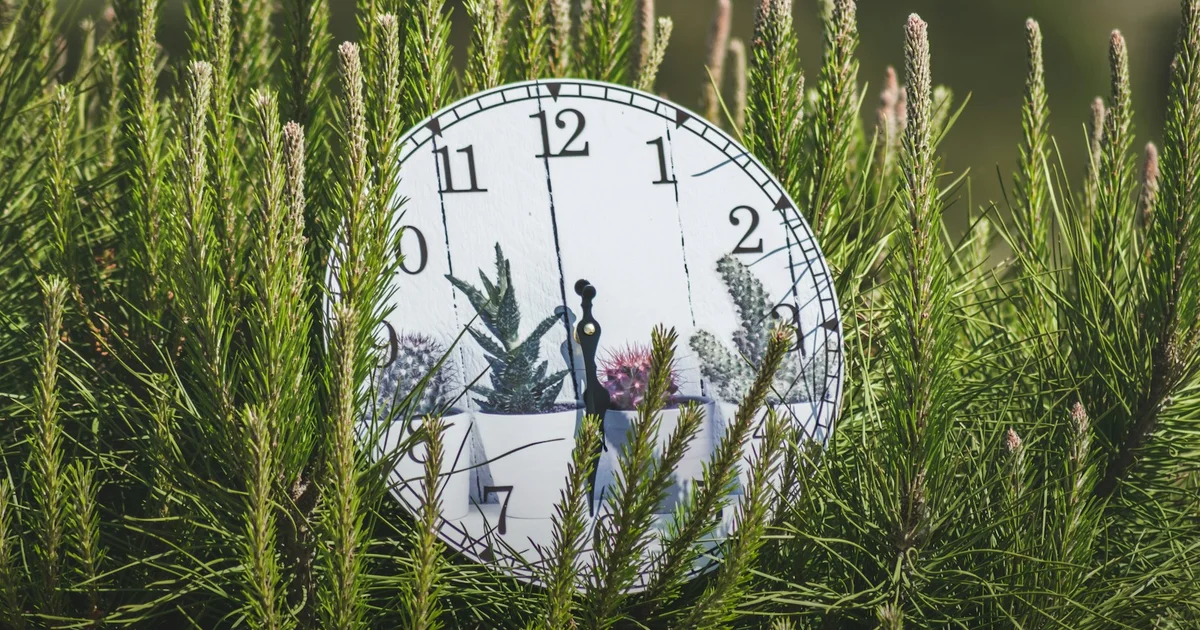
How Much Time in Nature Do You Actually Need?
There's a number. That's the thing most people don't know — that researchers have actually looked at this, surveyed nearly 20,000 people, and come back with a figure.
It's 120 minutes a week.
Not two consecutive hours on a Sunday. Not a hiking trip once a month. Just 120 minutes, spread however you like, in any kind of green or blue space — a park, a garden, a riverbank, a patch of trees behind a car park. That's the threshold at which adults in a large 2019 study were significantly more likely to report good health and high well-being than people who got no nature time at all.
The catch? It's a correlation. Researchers surveying 19,806 people across England can't tell you that nature caused the improvements — only that the association held across groups, including older adults, different income levels, and people with long-term health conditions.
What the 120-Minute Study Actually Found
The research, led by Mathew White at the European Centre for Environment & Human Health (University of Exeter) and published in Scientific Reports, asked participants how much time they'd spent in natural environments for recreation during the past week. People who reached 120 minutes were more likely to report good health and high well-being than those with no nature contact. Below 120 minutes, there was no significant association.
The positive associations in the data continued to rise up to around 200–300 minutes per week, after which they levelled off. Going further didn't hurt, but it didn't add much either.
Think of 120 minutes less as a magic number and more as the minimum worth committing to.
morning routine habits for mental clarity
What Happens to Your Body After 20 Minutes Outside
The White et al. finding answers the weekly dose question. A separate line of research gets into what happens during a single session.
MaryCarol Hunter and colleagues at the University of Michigan published a study in Frontiers in Psychology in 2019 asking participants to take a "nature pill" — a brief, unstructured experience in a natural setting of 10 minutes or more — at least three times a week for eight weeks. They measured salivary cortisol before and after sessions, roughly every two weeks.
The efficiency of a nature pill per minute spent was greatest between 20 and 30 minutes. Longer sessions continued to show benefit, but at a reduced rate.
You don't need to go into the woods for three hours. Twenty to thirty minutes in a green space — not scrolling, not on a call, just present in the space — appears to be where the physiology shifts most efficiently.

Amazfit GTR 4 Smart Watch
As an Amazon Associate, we earn from qualifying purchases — at no extra cost to you.
One caveat worth stating plainly: in the Hunter et al. study, participants chose their own time of day, duration and place, and a single biomarker is an incomplete picture of stress. Cortisol also varies widely between individuals and across the day. Still, the directional finding aligns with decades of attention-restoration research going back to Kaplan and Kaplan in the 1980s, and it matches what most people already notice when they step outside and slow down.
Does a City Park Actually Count?
Yes, it can. "Nature" in these studies isn't restricted to forests or remote landscapes — the White et al. study counted urban parks and gardens as well as countryside and coast.
That matters for most people reading this. You're probably not moving to the countryside. You don't need to.
Urban green space works, but there's likely a real difference between glancing at a tree and actually spending time around one.
The Nature Fix — Florence Williams (Paperback, W. W. Norton)
As an Amazon Associate, we earn from qualifying purchases — at no extra cost to you.
If you live somewhere with limited green space, this is worth treating as a design constraint rather than a permanent excuse. Where is your nearest park? How many minutes does it actually take to get there? If it's 15 minutes away, you're unlikely to go spontaneously — you need to plan it as a trip, not hope it happens.
The Dose Doesn't Have to Come All at Once
This is the part most people skip over too quickly.
120 minutes a week sounds significant. Divided over seven days, it's about 17 minutes a day — less than the average person spends reading news they'll forget by lunchtime. Three 40-minute sessions gets you there. Two longer walks of an hour each covers the threshold with room to spare.
In the White et al. data, the pattern held whether the 120 minutes came in one long visit or several shorter ones. So the practical question is what you'll actually do: small, reliable doses that fit your week are easier to repeat than a dramatic retreat once a quarter.
Atomic Habits — James Clear
As an Amazon Associate, we earn from qualifying purchases — at no extra cost to you.
A Realistic Weekly Plan (Under Two Hours Total)
Here's a template, not a prescription.
Monday, Wednesday, Friday: 20 to 25 minutes outdoors, ideally in a park or somewhere with trees. Phone in your pocket, not in your hand. You don't have to be offline entirely — but you're there to notice the space, not to consume content.
Saturday or Sunday: One longer session, 40 to 60 minutes. A walk along a canal or river, a slow circuit of a park with a notebook, or just sitting somewhere green without an agenda. This is where immersive quality replaces sheer quantity.
That structure puts you at roughly 100–135 minutes for the week — right around the threshold the White et al. study identified.
Two practical obstacles to account for:
Weather. A decent waterproof layer removes a lot of the friction of going outside. Cold is rarely the real deterrent — standing at the door feeling underprepared is. Kit solves this permanently.
Distance. If your nearest green space takes 15 minutes to reach, a 20-minute walk becomes a 50-minute round trip. That's a real barrier. Know your options: is there a smaller, closer pocket park? A churchyard? A stretch of green belt reachable in five minutes?
keystone habits and weekly planning
What This Isn't
Nature time isn't a treatment for depression or anxiety. If you're going through a rough season, stepping outside is a low-cost thing to try, but it's not a substitute for professional support when that's what the situation calls for.
The 120-minute figure is also an association from a cross-sectional survey, not a controlled experiment where researchers assigned people to specific doses and tracked outcomes. People who spend more time in nature may differ from those who don't in ways the study couldn't fully control for — income, baseline health, physical mobility, urbanisation. The honest position: the directional evidence is encouraging, the threshold is a reasonable target, and the costs of trying are essentially zero.
How to Start This Week
Three decisions are all you need.
First: Identify your nearest green space and measure the actual walking time to reach it. If it's under ten minutes, your access barrier is functionally zero.
Second: Choose two or three fixed slots in your week — times you could be outside for 20 minutes without moving anything significant in your calendar. Block them like a meeting.
Third: For the next two weeks, note whether you hit 120 minutes. Not a detailed log — one line in a notebook or phone works. "Tuesday: 25 minutes." "Saturday: 55 minutes." That's enough to see your own pattern clearly.
The most common reason people don't reach 120 minutes isn't that they don't care — it's that outdoor time stays in the category of "I should do that," which means it competes every week with everything that already has a slot.
Design the slot, and the habit has a chance to take care of itself.
The 120-minute threshold is from White M.P. et al., 2019, "Spending at least 120 minutes a week in nature is associated with good health and wellbeing," Scientific Reports 9:7730. The 20–30 minute cortisol finding is from Hunter M.R., Gillespie B.W. & Chen S.Y.-P., 2019, "Urban Nature Experiences Reduce Stress in the Context of Daily Life Based on Salivary Biomarkers," Frontiers in Psychology 10:722. Read the primary papers before citing either finding.
How close does your week actually get to 120 minutes? Is it already there, or does it keep getting postponed to the weekend that never quite arrives?
Was this helpful?