Habits· 12 min read
Sunday Night Reset: The Science Behind Fresh Starts
Monday motivation is real science, not wishful thinking. Here's the Sunday reset ritual — and every tool I use — to capture that fresh-start energy.
My Sunday Night Reset (The Science That Explains Why Every Monday Feels Like New Year's Day)
There's something almost embarrassing about how motivated I feel on certain Monday mornings.
Not every Monday. Not the ones where the alarm feels like a personal attack and the week ahead looks like a wall of obligation. But the Mondays that follow a specific Sunday evening — the ones where I've done what I now call my Sunday Reset — those Mondays feel genuinely different. There's a sharpness to them. A sense that the slate has been wiped clean and something real is possible. For a long time, I chalked this up to coffee, personality, or the randomness of sleep. Then I read the research, and it turned out I'd accidentally built a ritual around one of the most consistently documented phenomena in behavioral science.

The Research Nobody Told You About
In 2014, Hengchen Dai, Katherine Milkman, and Jason Riis at the University of Pennsylvania's Wharton School published a paper in Management Science that documented what they called the Fresh Start Effect. They analyzed Google search data for the term "diet" across multiple years and found a pattern that went far beyond January 1st. Searches spiked on every Monday. On the first of each month. On the day after national holidays. On birthdays. Every temporal landmark the researchers examined produced the same spike.
They weren't satisfied with search data. When they analyzed gym attendance records, the same pattern emerged. When they looked at commitment contracts on stickK.com — the behavioral economics platform where people wager money on meeting personal goals — commitment rates were measurably higher following temporal landmarks than at arbitrary other points in time.
The mechanism Dai and her colleagues identified is elegant and a little humbling. Temporal landmarks create a psychological separation between the "old you" and the "new you." They allow the brain to mentally file past failures under "that was then" — categorically assigned to a previous chapter — while approaching the present period with the openness and possibility that new beginnings carry. The technical language is that temporal landmarks reduce the psychological salience of past failures by making them feel temporally remote. But the lived experience is simpler: Monday morning arrives, and something that felt heavy on Friday feels lighter.
Daniel Pink synthesized this research and a trove of related timing findings in When: The Scientific Secrets of Perfect Timing.
Atomic Habits — James Clear (Paperback)
Behavioral-science framing of how small deliberate cycles compound — the habits foundation under the Fresh Start ritual.
As an Amazon Associate, we earn from qualifying purchases — at no extra cost to you.
His analysis of behavioral datasets showed that mood and cognitive performance follow a consistent daily pattern — a peak in the morning, a trough in the afternoon, and a recovery in the evening — while temporal landmarks like the start of a new week create mini fresh starts that the brain treats as genuine new beginnings.
You've felt this. That Sunday night feeling — somewhere between dread and quiet possibility. The week ahead still has the quality of a blank page.
What most people don't realize is that this feeling isn't something that just happens to you. It's something you can design for.
Why Most People Waste the Motivation Spike
Here's the problem with temporal landmarks: the motivational energy they produce is real but fragile. Like most motivation, it degrades fast without structure to receive it.
A 2015 follow-up paper by Dai, Milkman, and Riis in Psychological Science documented a critical boundary condition: the fresh start effect is strongest when temporal landmarks genuinely signal new beginnings and the person has a clearly articulated goal to attach to the landmark. Without that attachment point, the motivation dissipates into the background noise of the week. Monday morning arrives, but there's nothing waiting to direct the energy. By 9:30am, it's gone into email and reactive tasks and the week looks exactly like the one before.
This is where most productivity advice goes badly wrong. It focuses on sustaining discipline at the hard moments — pushing through Friday afternoon fatigue, fighting the mid-week slump. That's working against the current. The research says the current runs strongly in your favor at the start of each week. The question is whether you've built something to capture it.
The Sunday evening ritual is that structure.
The Two-Part Structure: You Have to Close Before You Open
The mistake most people make with weekly planning is that they only look forward. They write next week's tasks, set a few intentions, maybe pick a theme for the week, and call it done.
That's half the ritual. And it's the less important half.
The closing ritual matters as much as the opening one. David Allen's Getting Things Done dedicates an entire phase to the Weekly Review — and it's not just about planning ahead.
Getting Things Done — David Allen (Revised Paperback)
Explicitly cited in the article — the Weekly Review and 'open loops' concept that powers the Sunday closing ritual.
As an Amazon Associate, we earn from qualifying purchases — at no extra cost to you.
Allen's core insight is behavioral: incomplete tasks and uncaptured commitments create what he calls "open loops" — cognitive demands that sit in working memory, bleeding attention and generating a low-grade background anxiety that you carry everywhere without quite knowing where it's coming from.
Bluma Zeigarnik, a Soviet psychologist working in the 1920s, documented the phenomenon that now carries her name. Incomplete tasks occupy mental space in a way that completed ones don't. The Zeigarnik effect is that specific feeling of something nagging at you — your brain's attention system refusing to release an open commitment until it's either finished or consciously captured somewhere you trust.
The Sunday review isn't just administrative tidying. It's neurological housekeeping. By systematically reviewing the previous week — what got done, what didn't, what needs to carry forward, what can be honestly released — you're closing the open loops that would otherwise follow you into Monday morning, contaminating the fresh start energy with last week's residue.
I spend about twenty minutes on this part. I use a structured physical planner — right now I'm working through the Full Focus Planner, which has a weekly preview section built specifically around this close-then-open sequence. The paper-and-pen format matters here. There's something about the physical act of writing by hand that makes the closing ritual feel genuinely ceremonial — like signing off on a chapter rather than scrolling past it. You can't easily delete handwriting. The finality is the point.
The four questions I ask during the closing phase:
- What did I actually complete this week?
- What moved the needle most?
- What's still open and needs a decision?
- What can I release — fully, without guilt?
That last question is the one most people skip. It's also the one that creates the most room for Monday.
Building the Opening: The Week in Three Decisions
Once the closing review is done — and only then — I shift to the opening. But I keep it deliberately constrained.
Brian Moran and Michael Lennington make an argument in The 12-Week Year that changed how I think about planning cycles entirely. Their central point: annualized thinking is a form of procrastination in disguise. When you have twelve months to hit a goal, the first ten feel like runway. The last two feel like emergency. Compress the cycle to twelve weeks and suddenly every week carries the urgency that only those final weeks of an annual plan produce. I don't follow their full system, but I've borrowed the underlying psychology. Each week is a micro-year. The Sunday planning session is strategic decision-making at compressed scale — not task allocation.
Three questions drive my opening ritual:
What's the one thing this week that, if I only accomplished that, would make the week a win?
This is the central question from Gary Keller and Jay Papasan's The One Thing, and I've found no better filter. It forces a decision before the week starts, so Monday morning arrives with a destination rather than a general direction. The discipline is in not allowing two answers.
What are the two or three supporting moves that feed into that one thing?
Not ten. Not a full sprint board. Two or three. Everything else goes on a separate list I won't look at until Wednesday — by which point I'll have a realistic sense of what the week actually has capacity for, rather than what I optimistically imagined on Sunday evening.
When, specifically, does the most important work happen?
Not "this week." Not "Monday." Monday at 7am, before the email client opens, for ninety minutes. The research by Peter Gollwitzer on implementation intentions is clear on this: "I will do X" is dramatically less predictive of follow-through than "I will do X at time Y in location Z." The specificity is the leverage. Without it, the intention is just a wish in better clothing.
The Tools That Make This Actually Sustainable
I want to say something slightly counter-cultural here: the tools matter. Not because any tool is magic, but because friction kills rituals before they have time to become habits. The right setup removes friction. The wrong setup adds it, and eventually you start skipping Sundays, and then the ritual dissolves.
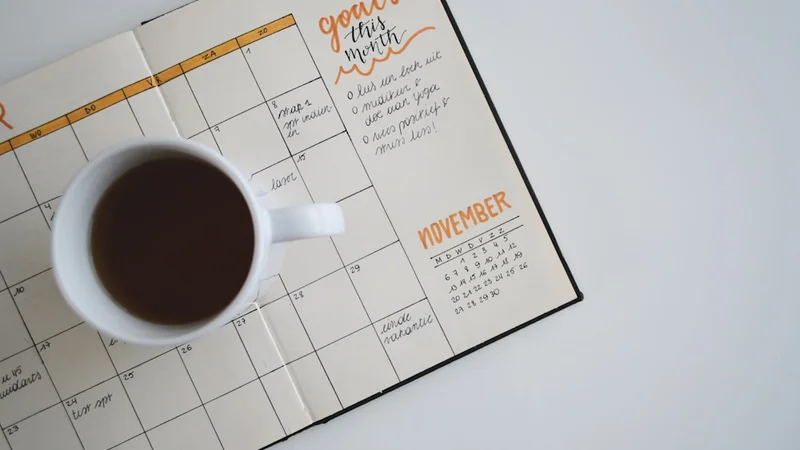
For the physical planning layer, I've settled into a rotation between two planners depending on what the week demands. The Full Focus Planner works best during heavy execution quarters — its quarterly big-three goal structure keeps me anchored across the planning layers. The Panda Planner Pro is better during weeks when I need more mindset support alongside the scheduling — its daily gratitude and focus sections add a qualitative layer that pure productivity planners skip.
For the digital layer, I use a Notion workspace with a weekly review template. The critical design feature: the template forces you to complete the closing section before the opening section unlocks. That sequence isn't just organizational preference — it reflects the psychological logic of the ritual itself. You can find excellent community-built Notion templates designed around the Sunday review structure; look for ones that explicitly separate the retrospective phase from the forward-planning phase.

Kindle Paperwhite 2024 (12th Gen, 16GB, Black)
High-ticket anchor (£160). The article is reading/research-heavy — a distraction-free device for the books referenced (When, GTD, The 12-Week Year, Your Best Year Ever).
As an Amazon Associate, we earn from qualifying purchases — at no extra cost to you.
For context and calibration, the book that most shaped how I think about intentional weekly design is Your Best Year Ever by Michael Hyatt. It's the most practical treatment I've found of treating each week as a designed unit rather than a default — the philosophy underneath the tools.
For the session itself: I set a physical timer for 45 minutes. The constraint is deliberate. It prevents the review from expanding into a planning spiral where I'm still rearranging priorities at midnight. Forty-five minutes, then I close everything.
The Part Nobody Mentions
Here's the counter-intuitive finding buried in Dai's research: the fresh start effect works even when you know about it.
Understanding that Monday's motivational spike is a psychological artifact of temporal structure doesn't reduce the spike. This surprised me when I first encountered it. Most cognitive biases are somewhat dissolved by awareness — once you see the anchoring effect, it loses some grip. The fresh start effect appears more robust — the motivation generated by temporal landmarks is genuine regardless of whether you can name its source.
What awareness does give you is the ability to design for it deliberately. To build the Sunday night ritual that ensures Monday morning has a structure waiting to receive the energy. To create the psychological closing of last week that the brain naturally wants but rarely gets without intentional design.
The idea applies here too: what matters isn't the tools or the timing per se, but the deliberateness you bring to each new cycle. That framing maps exactly onto the Fresh Start Effect research. Monday's motivational energy is the raw material. The Sunday ritual is the intentionality that shapes it into something that doesn't evaporate by noon.
Jim Rohn often emphasized that most people fail to design their lives deliberately — choosing instead to drift into whatever the day brings. Behavioral science now offers a specific mechanism underneath that observation. Every Monday is a naturally occurring gift — a genuine spike in motivation and goal-commitment produced by the temporal structure of the week. Most people let it pass unformed because there's nothing waiting to shape it. The ritual is the form.
How to Start This Sunday
You don't need the perfect system. You need a start that's honest and specific.
Step one: Block 45 minutes on Sunday evening. Not Sunday morning — the psychological transition from weekend toward week-ahead is stronger as the day closes. If the time isn't in your calendar, it won't happen. Put it there now.
Step two: Do the closing review before anything else. Spend 15-20 minutes on the previous week only. What completed? What didn't? What's still open? What can you release without guilt? Write this down in something you'll touch again — a planner, a notebook, a dedicated journal.
Step three: Identify the one win for next week. One outcome. The thing that would make the week worth it regardless of what else happens or doesn't. Write it at the top of your planning page where Monday morning will find it.
Step four: Block the time for that one thing. Monday before 10am if possible. Implementation intentions convert decisions into behaviors — without the when and where, the decision is still just an intention.
Step five: List two or three supporting moves, then stop. Everything else gets captured on a separate list you won't revisit until Wednesday. This is the discipline the ritual requires: not more planning, but better boundaries on what counts as planning.
That's it. Forty-five minutes on Sunday. The Monday morning you wake up to will feel different — not because you've done anything heroic, but because you've deliberately created the psychological fresh start the brain wants to give you, and built something specific for it to attach to.
There's a version of you that already knows what the week needs — the version that shows up when you deliberately design your evolution instead of letting days default into weeks. The Sunday night ritual is the practice of making that version audible, before the noise of Monday morning drowns it out.
What would it mean for your week if you treated Sunday evening as its most important hour?
Was this helpful?