Mindset· 12 min read
How to Stay Informed Without Doomscrolling Yourself
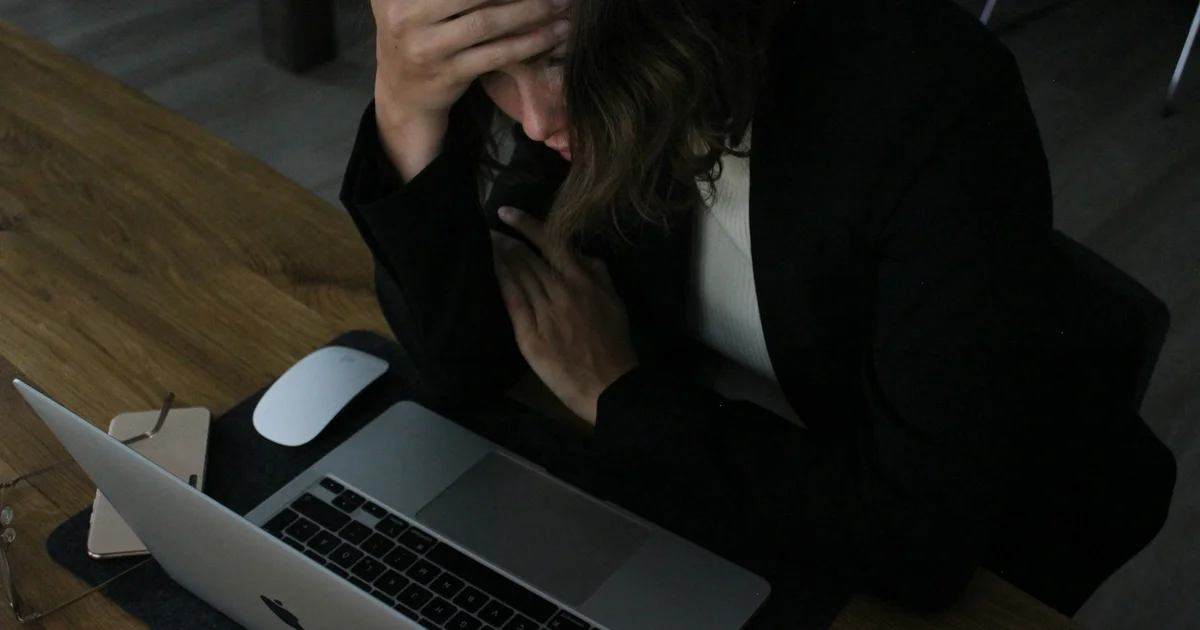
How to Stay Informed Without Doomscrolling Yourself
It was 7:14 AM. I hadn't made coffee yet, and I was already three headlines deep into something I couldn't do anything about — a political crisis happening thousands of miles away, a decision made by people I'd never vote for, an update that would almost certainly be corrected by noon.
By 8 AM I'd absorbed four separate emergencies, two disasters still developing, and one piece of information that turned out to be entirely false. I felt vaguely furious and vaguely nauseous. I hadn't moved from the couch. I hadn't made a single decision. I hadn't started anything that mattered. That's when I stopped asking "what's happening?" and started asking a different question: "what does this do to me?"
Doomscrolling describes the compulsive habit of cycling through negative news in a loop — even when doing so makes you feel worse. It's not unique to any platform or political moment. It's a structural feature of how most people now consume information, and understanding why it works the way it does is the first step to changing it.
What the Research Actually Found About News and Stress
In 2014, researchers published a study in the Proceedings of the National Academy of Sciences examining media consumption in the weeks after the Boston Marathon bombings. Holman, Garfin and Silver found that people who consumed six or more hours of bombing-related media per day in the week after the attack reported higher acute stress symptoms than people who had been directly exposed to the bombings.
Worth pausing on that. Media consumption was a stronger predictor of acute stress than direct exposure to the event.
Here's the caveat you need to hear: this was a correlational study. People who were already more anxious may have sought out more coverage, not the other way around. You should factor that in before concluding that the news is definitively rewiring your nervous system. The evidence shows a consistent association — not a proven one-way mechanism.
That association, though, keeps showing up. A 2019 longitudinal study by Thompson, Jones, Holman and Silver in Science Advances followed more than 4,000 U.S. adults across the 2013 Boston Marathon bombings and the 2016 Pulse nightclub shooting. It found that early media exposure predicted later stress symptoms, which predicted worry about future events, which in turn predicted heavier media consumption and acute stress after the next event. The authors described it as a cycle of distress and media use. It's still observational, but it points to a loop rather than a one-way street.
The more honest version of the research conclusion isn't "stop watching the news." It's closer to: the volume and manner of your consumption appears to be doing something — and you have considerably more control over it than you're currently using.
Why Your Brain Won't Let You Look Away
Here's something that rarely gets said in these conversations: you're not weak for checking the news compulsively. You're doing what a threat-monitoring brain does when it encounters a firehose of unresolved signals.
Your nervous system was built to stay alert. The impulse that makes you check for updates again at 11 PM — after you already told yourself you were done — is plausibly the same impulse that helped your ancestors survive in genuinely dangerous environments. It doesn't distinguish well between a predator in the grass and a breaking-news notification. Both register as something you should probably know about right now.
The problem isn't a character flaw. It's a mismatch: a brain designed for a world of local, mostly-resolvable threats, dropped into a media environment optimized to deliver unresolvable global ones at infinite volume, with no natural stopping point.
Cal Newport's Digital Minimalism makes a related argument: many attention-driven platforms borrow ideas from casino design, including unpredictable rewards that keep you pulling the handle one more time just in case something important changed.
Digital Minimalism — Cal Newport
As an Amazon Associate, we earn from qualifying purchases — at no extra cost to you.
The payout is unpredictable, which makes the behavior unusually resistant to change. And unlike a slot machine, the news never signals that you've checked enough. There's no bell, no flashing light, no moment of closure. The feed just keeps going.
digital minimalism and reclaiming your attention
The Problem Isn't Information — It's the Format
Here's the part that gets lost: the goal isn't to become less informed.
Civic engagement matters. Understanding what's happening in your city, your country, and your field isn't optional — it's how you vote, make decisions, and participate in the world around you. The researchers studying media exposure and stress aren't arguing for ignorance. They're pointing at something specific about how most people consume news, not whether they consume it.
The distinction comes down to two things: volume and resolution.
Volume is straightforward. Checking twelve times a day versus twice creates a compounding difference in cognitive load, not just in time spent. Each incomplete news story you've absorbed is an open loop your brain may keep tracking in the background. The Zeigarnik effect — the tendency to remember unfinished tasks better than completed ones — is often invoked here, though its application to news is an extrapolation rather than something the research has tested directly. Most news stories don't provide closure. They provide updates, which open more loops.
Resolution is subtler. The stories that reliably generate the strongest emotional reactions tend to be the ones where you have zero agency. The outrage or dread they produce has nowhere to go, which is partly why it lingers, loops back, and sends you to the feed again looking for something that might make it resolve.
APA's 2017 Stress in America survey found that 95 percent of Americans said they follow the news regularly, and 56 percent of them said doing so caused them stress. That tension is worth sitting with rather than resolving too quickly. Both things can be true at the same time: this is affecting me and I still want to know what's happening.
The issue usually isn't your discipline. It's that the system you're using to consume information was designed to maximize your time on platform, not to serve your ability to understand and act on what you read.
A News Diet That Actually Works
The word "diet" is more useful here than it first appears — not in the sense of deprivation, but in the sense of intentional structure. What you're designing isn't ignorance. You're designing windows.
-
Assign specific times, not vague intentions. Rather than cutting out news, contain it. One dedicated window in the morning, not as the very first thing you do, and one in the late afternoon. Outside those two windows, news doesn't exist as a background option you can drift into.
-
Choose slow formats over live ones. A morning newsletter or weekly digest delivers the same information as a live ticker without the architecture built to keep you anxious and clicking. The same events, filtered for significance rather than recency. You might also try a weekly long-form summary — the act of reading slowly once a week builds a genuinely different relationship with events than refreshing a feed every hour.
Kindle Paperwhite (12th Gen, 16GB)
As an Amazon Associate, we earn from qualifying purchases — at no extra cost to you.
- Keep one sentence of notes on what you read. Write a single line about what a story actually means to you — not what it says, but its significance to your life or decisions. A small notebook works well for this.
Moleskine Classic Notebook, Pocket, Ruled, Hard Cover, Black
As an Amazon Associate, we earn from qualifying purchases — at no extra cost to you.
This converts passive absorption into something with a defined beginning and end, which is exactly what the live news format is engineered to prevent.
- Find your one actually actionable domain. For most people, the news they can genuinely influence is local — local elections, local organizations, local policy decisions. Identifying the single area where your attention connects to real action changes your relationship with the rest of the feed. It stops being a source of helplessness and starts having a function.
how to build a morning routine that protects your energy
How to Start Today
You don't need to redesign your entire information life this week. Three specific moves:
-
Notice before you change anything. For two days, track when you check the news and how you feel ten minutes afterward. Not a formal study — a rough, honest tally. Most people are surprised by how often they check, and by how consistent the pattern between checking and mood turns out to be.
-
Pick one window and hold it. Not "I'll be more intentional going forward." One specific time — 8:30 AM or 5 PM — where news is on the schedule. Outside that window, the apps stay closed. One concrete boundary is far easier to hold than a general intention.
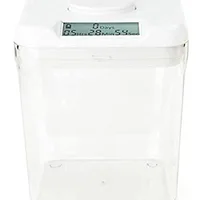
Kitchen Safe kSafe Time Locking Container (Medium)
As an Amazon Associate, we earn from qualifying purchases — at no extra cost to you.
- Replace one live feed with a slower format for a week. A newsletter, a digest, a weekly briefing. The information won't be worse for being slightly delayed. It will often be better, because it's been filtered for importance rather than speed.
If you find that anxiety or intrusive thoughts persist even after significantly reducing your consumption, that's worth taking seriously as its own matter — something worth talking to a professional about, not something a news diet alone will resolve.
There's a version of staying informed that doesn't cost you your morning or your nervous system. It requires treating your attention the same way you'd treat anything else worth protecting: deliberately, with specific rules, and with clarity about what it's actually for.
Jim Rohn is widely quoted as saying you are the average of the five people you spend the most time with. He was talking about relationships, but the logic applies just as well to information. What you let in consistently shapes what you think about — and what occupies your mind shapes what you're capable of building.
You're going to stay informed. That's not in question. The only question is whether you'll design how that happens — or let the feed design it for you.
What's one news habit you'd most like to change? Drop it in the comments.
Was this helpful?