Habits· 12 min read
Motivation Follows Action: How to Start Before You're Ready
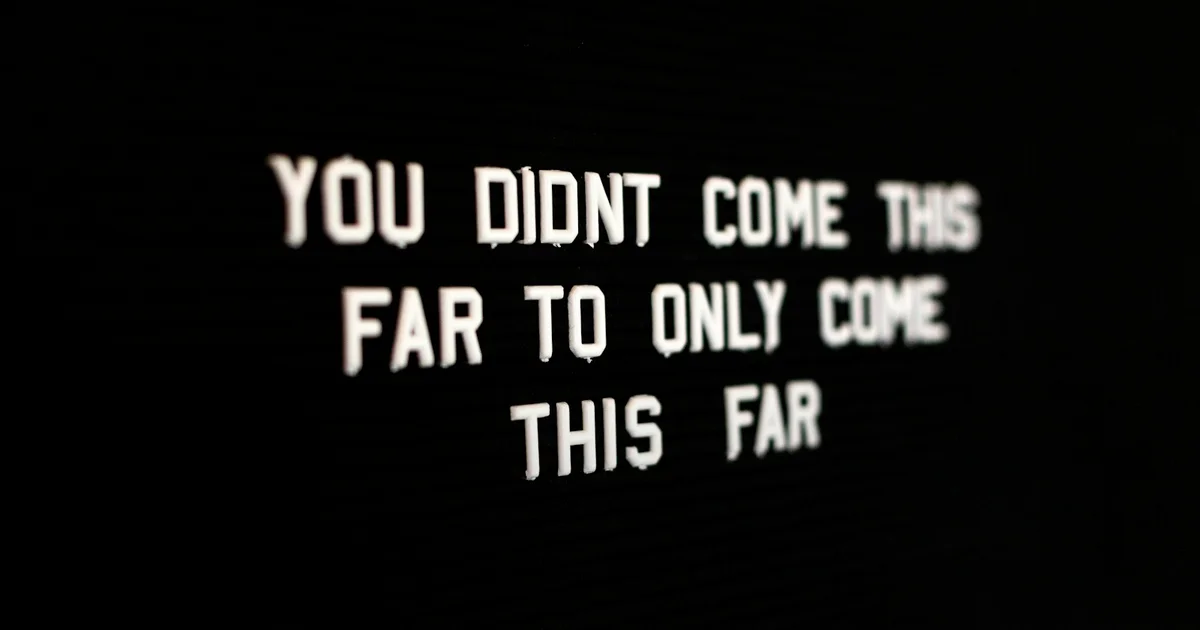
Motivation Follows Action: How to Start Before You're Ready
The email had been sitting in my drafts folder for eleven days. I had the notes, the research, the outline. What I didn't have — or so I told myself — was the right headspace. So I kept waiting.
I was waiting to feel like doing it.
Sound familiar? That low-grade holding pattern — checking your phone again, reorganizing your desk, pouring another coffee, promising yourself you'll begin "once you're in the mood" — it's one of the most common traps there is. And it's built on a belief that behavioral science has largely dismantled. Motivation doesn't typically arrive before the work. It arrives during it.
The Myth That Motivation Must Come First
Most people operate on a sequence that looks reasonable on the surface: feel motivated → take action → get results. Motivation is treated like a fuel tank that has to be full before you can drive anywhere. And so you wait. You read inspiring books. You rewatch a TED talk. You make a playlist.
The problem is that motivation — real, sustained, action-driving motivation — rarely shows up on cue. It doesn't respond to invitation. If anything, the longer you wait for it, the more remote it starts to feel.
Here's what behavioral science found when it looked at this directly.
Starting in the 1970s, psychologists began developing an approach that came to be called behavioral activation, originally as a treatment for depression. The core premise was deliberately counterintuitive: instead of waiting until patients felt better before getting them moving, therapists would help them start activities first. The hypothesis was that the doing would shift the feeling.
A 2010 meta-analysis by Mazzucchelli, Kane and Rees in The Journal of Positive Psychology — which pooled 20 randomized controlled studies with 1,353 participants — found that behavioral activation improved well-being compared with control conditions (a pooled effect of about g = 0.52), including in people without a clinical diagnosis. The intervention works by changing behavior first; the feelings follow the actions.
That's the reversal most people miss: action → motivation → more action.
Clever Fox Habit Calendar Circle (2-Year Habit Tracker)
As an Amazon Associate, we earn from qualifying purchases — at no extra cost to you.
Why Starting Changes Your Internal State
There's a plausible explanation for why this works, and it sits at the intersection of psychology and habit research.
When you begin a task — even reluctantly, even badly — you get evidence that you're in motion. Researchers Teresa Amabile and Steven Kramer, studying about 12,000 diary entries from 238 professionals, found that progress in meaningful work was the single most powerful positive influence on people's daily mood and motivation — what they called the progress principle. Their research was set in workplaces, but it points the same way: small forward movement can lift engagement.
Think about the last time you dragged yourself to a workout you absolutely didn't want. Five minutes in, something shifted. You weren't the same person who'd been looking for excuses twenty minutes earlier. The action changed your internal state without you deciding to change it.
The state we call "being motivated" is often something that builds during engagement rather than before it. You don't load the motivation and then start. You start, and the motivation tends to load.
Anne Lamott made a similar point in Bird by Bird, her book on the writing process, with her argument for "shitty first drafts": you can't edit a blank page, so the first job is simply to get something down. The good work comes from already being in motion. The blank page doesn't get less intimidating from across the room.
Amazfit GTR 4 Smart Watch (46mm, GPS, 150+ Sports Modes)
As an Amazon Associate, we earn from qualifying purchases — at no extra cost to you.
The Honest Limits of "Just Start"
Before this becomes another shallow "just do it" article, it's worth being precise about what the research actually supports — and where it doesn't reach.
Behavioral activation was developed primarily as a clinical intervention for depression. Most of the controlled trials showing strong effects are in that population, not in generally healthy people who simply feel unmotivated on a Tuesday. The mechanism likely generalizes — there's reasonable evidence that action precedes engagement in everyday contexts too — but the effect sizes in clinical populations are considerably larger, and the evidence for ordinary productivity specifically is thinner than the popular-psychology version of this idea tends to admit.
This matters for one important reason: if you notice that you consistently can't start, that low mood doesn't shift when you try to move, that it's been weeks not days — that's worth talking to a professional about. Behavioral activation is a clinical tool for a reason. This article isn't a substitute for that.
For garden-variety "I'm not feeling it today" procrastination, though? The research backs action over waiting, consistently.
The 5-Minute Start That Actually Works
The practical application is simpler than most systems make it sound. The goal isn't to feel motivated. The goal is to get into motion. And the most reliable way to do that is to make the entry point so small that resistance can't quite grip it.
Step 1: Name the smallest possible first action. Not "write the report." Not "work out." Just: open the document and read the last paragraph I wrote. Or: put on your workout clothes and stand in the living room. The action needs to be specific, physical, and absurdly manageable. The hardest part of any task is contact. Minimize the contact requirement.
Step 2: Set a timer for five minutes. You're not committing to the full task. You're committing to five minutes of contact with the task. This distinction is not trivial. "I have to work on this for two hours" feels very different from "I'll touch this for five minutes" — and the second version tends to provoke far less avoidance.
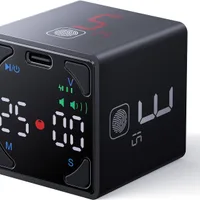
Ticktime Pomodoro Cube Timer (Black, USB-C)
As an Amazon Associate, we earn from qualifying purchases — at no extra cost to you.
Step 3: When the timer goes off, decide in real time. You're not automatically committed to continuing. But notice what's happening. Often, you'll find that stopping now feels harder than it did before you started. That's the motivation-follows-action pattern at work.
Step 4: Design the environment, not the feeling. The best habit architects don't rely on willpower or mood. They make the trigger unavoidable and the barrier to starting tiny. Your habit books shouldn't live on a shelf — they should sit on your desk.
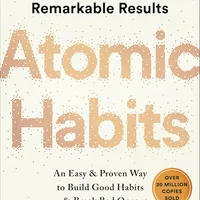
Atomic Habits — James Clear (Paperback)
As an Amazon Associate, we earn from qualifying purchases — at no extra cost to you.
Your running shoes shouldn't be in the cupboard — they should be by the door. When the environment makes starting the path of least resistance, you don't need to feel ready.
The Hidden Cost of Waiting
There's one more thing worth naming directly, because most productivity writing skips it.
Waiting for motivation isn't neutral. It has a cost.
Every time you delay until you feel ready, you implicitly reinforce the belief that you need to feel ready before you can act. That belief compounds. It becomes a story you tell about yourself. And stories, once they're sufficiently established, become more real than the task, more real than your actual capability, more real than the evidence that you've started difficult things before and been fine.
Psychologists describe a related pattern in avoidance: each time you dodge something that makes you uneasy, the relief you feel rewards the dodging, and the task can start to feel more aversive the longer it's avoided. The loop feeds itself. Waiting doesn't just delay the work — it can make the next time harder.
Flipping the loop requires one interrupt: start before you're ready.
Not because you've conquered the resistance. Not because you found the perfect morning routine. Just because five minutes of contact interrupts the story and replaces it with evidence that you can, in fact, begin.
Kitchen Safe kSafe Time Locking Container (Medium, White Lid)
As an Amazon Associate, we earn from qualifying purchases — at no extra cost to you.
the science of building a productive morning routine
How to Start Today
You don't need a new system for this. You need one decision.
Pick the task you've been postponing. Right now — not after you finish reading. Identify the smallest possible entry action. Set a five-minute timer. Start.
The theory will make more sense after you've tried it once than it does in the abstract. If you want to go further into the behavioral architecture behind starting, momentum and habit formation — there are books that do this seriously well.

Kindle Paperwhite 2024 (16GB, Without Ads)
As an Amazon Associate, we earn from qualifying purchases — at no extra cost to you.
Read them after you've already started, not as a reason to wait.
how to build habits that actually stick when motivation runs dry
Design Your Evolution doesn't begin with a feeling of readiness. It begins with a decision to move, even when the feeling is a few steps behind.
The research points the same way: motivation often follows action more reliably than it precedes it. You don't have to feel like it to begin. You just have to begin.
What's the one task you've been waiting to feel ready for? Set a five-minute timer and start it today — then tell us in the comments what happened when you did.
Was this helpful?