Mindset· 11 min read
Negativity Bias: Why Your Brain Focuses on the Bad
Your brain registers threats more strongly than wins. Here's the neuroscience of negativity bias — and how to compensate without faking positivity.

Negativity Bias: Why Your Brain Focuses on What's Wrong (And How to Rewire It)
You had a solid performance review. Your manager listed nine specific things you'd done well — the project came in early, the team was energized, your judgment on a difficult client call had been exactly right. Then she mentioned one area to work on: updating stakeholders a day earlier than you currently do.
Four months later, you still think about it. The nine positives? Gone — dissolved somewhere between the meeting room and the car park. But that one piece of developmental feedback? It's taken up permanent residence in the back of your head, showing up uninvited at 11:45 PM when you should be asleep.
You're not unusually fragile. You're not thin-skinned or ungrateful or incapable of handling criticism. You're running a perfectly functional brain with a factory setting that was calibrated 200,000 years ago — and that setting comes with a structural asymmetry that quietly distorts everything: your self-assessment, your perception of your own progress, your ability to accurately read the room of your own life. It's called negativity bias. And once you understand what's actually happening in your nervous system, you'll never look at a 3 AM rumination the same way.
Rick Hanson, a psychologist whose work sits at the intersection of neuroscience and practical psychology, put it in the most memorable phrase in the field: the brain is like Velcro for negative experiences and Teflon for positive ones.
That's not a metaphor invented for a TED talk. It describes a real, documented asymmetry in how the brain encodes and retrieves information.
In 2001, Roy Baumeister and colleagues published a landmark review titled — with unusual scientific directness — "Bad Is Stronger Than Good." They surveyed evidence across relationships, information processing, emotional responses, and moral judgment. The conclusion held across all four domains: negative events register more intensely, are encoded more deeply, are recalled more vividly, and exert more influence on subsequent decisions than positive events of equal objective magnitude.
The evolutionary logic is simple and unsentimental. Your ancestors lived in an environment where missing a threat — the rustle in the grass, the unfamiliar face at the edge of camp — could be lethal. Missing an opportunity was merely unfortunate. The asymmetry in consequences produced an asymmetry in neural wiring: a brain that errs dramatically toward negative vigilance, not because the negative is more likely to be true, but because the cost of ignoring a threat was historically incomparably higher than the cost of ignoring good news.
The problem is that you're running this survival-calibrated hardware in a world where the "threats" are a passive-aggressive Slack message, a cancelled meeting that might mean someone is annoyed with you, one lukewarm comment in a thread of praise, or a perfectly ordinary Tuesday that somehow feels subtly wrong. Your nervous system doesn't distinguish between a predator and a critical performance metric. Both trigger the same ancient alarm system. And that alarm system has veto power over your perception of how your own life is going — including whether you think you're making progress at all.
What Negativity Bias Actually Is — And Why It Goes Deeper Than Bad Moods
Negativity bias is the well-documented tendency for negative events to register more intensely, be encoded more deeply, and exert more influence on behavior than positive events of equal objective size. It's not a personality trait or a mood disorder — it's a structural feature of how human brains process information, present in virtually everyone across cultures.
Psychologists identify four main components.
Negativity dominance: Negative events produce stronger, more immediate reactions than positive ones of equal intensity. Being criticized by a stranger affects you more than being praised by one — even if both statements are equally true.
Negativity differentiation: We carry richer, more nuanced emotional vocabularies for negative states than positive ones. You can distinguish between anxious, apprehensive, dread, foreboding, unease, and low-grade worry with relative ease. Your positive vocabulary tends to cluster vaguely around "good," "fine," and "happy." The precision of your inner navigation system is higher in the direction of threat.
Negativity potency: Negatives carry disproportionate weight in judgment. John Gottman's research on relationship satisfaction — one of the most replicated findings in psychology — identified that happy, stable couples maintain roughly a 5:1 ratio of positive to negative interactions. Not because positive moments are weak, but because a single negative exchange does that much more damage. Five positives to neutralize one negative. The asymmetry isn't subtle.
Negativity in moral judgment: A harmful or dishonest act shifts our overall assessment of a person far more than a comparable good act improves our impression of someone else. Most people's mental models work something like: one terrible thing makes you a bad person; one generous thing is noted but doesn't quite flip the category. The moral ledger isn't balanced.
Understanding all four dimensions matters because it shows you the scope of what you're actually dealing with. Negativity bias isn't just about having difficult emotions. It's woven into how you evaluate yourself, assess your trajectory, judge the people around you, interpret feedback, make decisions, and form memories of your own history. It operates below conscious awareness, pre-processing your experience before you ever get to consciously interpret it.
Confirmation bias compounds this further — once negativity bias sets the default framing, other cognitive distortions build their case on top of that already-distorted foundation.
The Hidden Tax on Your Progress
Here's where it becomes practically significant.
Most people who are actively working on themselves — building habits, improving their thinking, showing up consistently, trying to do better — are doing so while carrying a systematically distorted internal measuring instrument. Their progress tracker has a structural bias toward registering failure more loudly than success. The accounting is rigged before they even start.
You exercise consistently for a month. You feel genuinely good about it for a day. You miss one workout and feel bad about it for four days. Your net self-assessment at month's end: behind schedule. Behind where you think you should be. Not making enough progress. This is not an accurate accounting of what actually happened. But it feels accurate, because it's your direct experience — and the distortion is invisible from inside it.
Rick Hanson spent years building a method specifically designed to counteract this asymmetry. The core insight in Hardwiring Happiness is that positive experiences need to be deliberately installed into long-term memory because they don't receive the automatic consolidation boost that negative ones do. The book offers a practical, neuroscience-grounded approach that's considerably more effective than being told to "think positive" — because it works with the actual mechanism rather than against it.
The bias doesn't just affect how you feel. It affects what you decide to do next. If your internal feedback system is consistently telling you you're failing — even when the objective record shows steady, real progress — you'll make decisions from a false premise. You'll pull back when forward is the right move. You'll avoid risks that are genuinely reasonable. You'll read neutral feedback as negative confirmation of a story that isn't true.
You're not a bad judge of your situation. You're working with a distorted instrument and trusting its output without questioning the calibration.
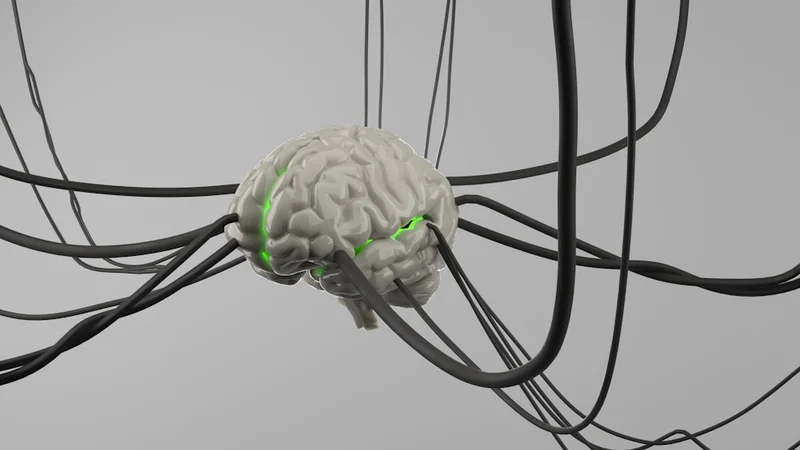
Why Bad Experiences Feel Stronger Than Good Ones — The Neuroscience
When something threatening or negative happens, the amygdala flags it for priority processing. The hippocampus encodes it with enhanced emotional intensity. Stress hormones — primarily cortisol and noradrenaline — strengthen the memory consolidation process. The result: negative experiences get written into long-term memory with greater fidelity, more emotional color, and easier retrieval than positive experiences of equal duration.
Positive experiences, by contrast, require what Hanson calls sustained, repeated attention to make the transition from short-term into long-term memory. They don't get the automatic consolidation signal. You can have a genuinely extraordinary afternoon — one of those rare days where everything flows and you feel completely capable — and wake up the next morning with almost no residue of it. Not because it wasn't real, but because your brain didn't prioritize consolidating it.
Pixar, of all sources, actually captured something neurologically accurate in Inside Out. The entire arc of the film is about the nervous system learning to let Sadness process experiences alongside Joy rather than suppressing one to protect the other. The ending works because it's true: the memories that integrate both emotional registers are the ones that actually stick and build genuine resilience. Negative emotions aren't the enemy of wellbeing — the imbalance is.
The practical implication is direct: positive experiences need to be actively installed, not passively received. Deliberately slowing down when something good happens — staying with it for 20–30 seconds, noticing where you feel it in your body, letting it register as real rather than sliding past — appears to engage the consolidation process enough to strengthen the memory trace. Hanson calls this "taking in the good." It sounds almost too simple to matter. But it addresses the asymmetry at its actual point of origin.
Negativity Bias in Everyday Life: Recognizing Your Own Default Settings
You probably recognize the core pattern. But some of the everyday manifestations are less obvious than the performance-review example, and worth naming specifically.
In how you process feedback: You walk out of a critique session remembering the 20% that was developmental and forgetting the 80% that was affirmative. Your manager's intention was encouragement with specific direction. Your nervous system filed it as "evidence I'm not performing well enough."
In your self-talk: The inner critic is disproportionately loud and specific — it knows exactly which arguments to make and makes them in high-definition. The inner advocate is vague and easily dismissed. This isn't a character flaw. It's the same Velcro/Teflon dynamic operating on your internal dialogue.
In your risk assessment: You systematically overestimate the probability of negative outcomes relative to positive ones of comparable likelihood. This produces consistent over-caution in situations where the data, if you examined it neutrally, would support moving forward.
In your relationships: You notice when someone takes longer than usual to reply. You file it as potential evidence of a problem. You don't notice the dozens of times the same person responded quickly and warmly and nothing was wrong. The absence of a problem is invisible. The hint of a potential problem is loud.
In your autobiographical memory: Ask most people to describe their worst year in detail, then their best year. The worst year typically comes with more vivid emotional texture, clearer narrative structure, and more specific recollection. The best year is often hazier, harder to reconstruct. Memory follows the same bias as attention.
The same dynamic drives the comparison trap — your default bias toward negative signals makes other people's visible wins register louder than your own real, quiet progress.
How to Rewire Your Brain From Negative Thinking — Without Faking It
Let's be direct about what this section is not recommending. The goal isn't relentless positivity. It's not pretending problems don't exist, suppressing accurate assessments of real difficulty, or pasting affirmations over genuine issues. Positivity without accuracy is a different kind of distortion — and arguably a more dangerous one, because it disables your ability to respond to real signals effectively.
The goal is perceptual balance. To calibrate your internal feedback system so that what's working registers with the same fidelity as what isn't. Right now, the scales are tipped structurally. These practices compensate — they don't overcorrect.
1. Gratitude with specificity, not abstraction
Generic gratitude — "I'm grateful for my health" — barely moves the needle neurologically. Specific, sensory-rich gratitude does. Write down three things that went well today with enough detail that you could re-experience them. "The conversation with my colleague went better than I expected and I noticed I left the room feeling energized" encodes differently than "I'm grateful for good relationships."
The brain encodes specificity. Vague appreciation is processed vaguely.
A structured journal makes this sustainable across weeks and months rather than burning out after four days. The Five Minute Journal — built explicitly around positive psychology research, with morning intention prompts and evening reflection prompts — genuinely takes about five minutes and provides the consistency structure that most standalone practices don't.
2. Deliberate "taking in the good"
When something good happens — a piece of work you're proud of, a conversation that left you energized, a task completed cleanly — don't let it slide past. Pause for twenty seconds. Stay with it consciously. Notice where you feel it in your body. Let it register as a real event worth remembering.
This isn't navel-gazing. It's applying the same consolidation mechanism that negative experiences get automatically. You're giving the positive experience a fighting chance to make it into long-term memory rather than evaporating by the time you reach your car.
3. Interrogate negative interpretations before accepting them
When a negative interpretation arrives — "She didn't reply, she must be frustrated with me" — treat it as a hypothesis rather than a fact. Ask: what's the evidence for this interpretation? What's the evidence against it? What are two or three alternative explanations that are at least as plausible?
This is cognitive disputation — the core technique of cognitive behavioral therapy and the central practice in Martin Seligman's research on learned optimism. His book Learned Optimism is the clearest practical guide to this skill available. The goal isn't to argue yourself into feeling good. It's to stop automatically upgrading a perception into a certainty without examining the evidence first.
4. Build a positive data log
Keep a running record — a note on your phone works fine — of evidence that contradicts your worst self-assessments. If your internal story is "I always freeze when stakes are high," document every time you don't. After thirty days, read back from the beginning.
The pattern that emerges is usually instructive. Your brain's automatic filing system was busy recording the setbacks in high resolution. Your deliberate log has been quietly collecting the wins. The comparison rarely confirms the self-narrative your negativity bias has been authoring.
5. Audit your environment for amplifiers
Social media platforms are engineered for engagement, and negative content consistently outperforms positive content in generating the interactions the algorithm rewards. You're running your negativity bias through an amplifier every time you scroll — and unlike the other challenges here, this one is deliberate on the platform's side.
The 6-Minute Diary is worth noting here for a specific structural reason: it builds a "what could have gone better" prompt alongside its positive reflection questions — which means it gives you a designated place to process difficulty without letting negativity bias dominate the whole accounting. The dual prompt structure acknowledges both without letting either crowd out the other.

How to Start Today
You don't need to overhaul your psychology to begin. Here's a three-tier sequence that actually works:
Tonight: Write down three things that went well today — not abstractly, but with enough specificity that you could re-experience them. Hold each one for twenty seconds before moving to the next. That's it. Four minutes total. This directly addresses the consolidation asymmetry without requiring anything else.
This week: Catch one negative interpretation in the act. You'll know it when it shows up — it'll arrive with the certainty of a fact and the shape of a catastrophe. Stop. Name it as an interpretation. Ask what the evidence actually is. You don't need to disprove it. Just create a pause between perception and belief.
This month: Start a positive data log. Every time something goes reasonably well — a conversation, a decision, a deliverable — add one sentence. At the end of the month, read it from the beginning before you do anything else. Let the record speak before your bias edits it.
Developing a growth mindset reinforces all three of these practices — both disciplines work on rewiring your relationship with progress and setback.
The Evidence Keeps Building
Jim Rohn used to say that success is a few simple disciplines practiced every day. The counterbalancing of negativity bias is one of those disciplines — unglamorous, cumulative, and quietly transformative when done consistently for months rather than days.
For the neurological underpinning of this work — how repeated experience literally reshapes neural structure, and how you can use that mechanism intentionally — Rick Hanson's Buddha's Brain goes deeper than his later writing and offers a more complete framework for the deliberate cultivation of positive mental states. If the neuroscience is where you find your leverage, it's the more rigorous of his two books.
For the performance dimension of this — the evidence that positive emotion isn't a reward for good work but a prerequisite for it — Shawn Achor's The Happiness Advantage documents what happens when people deliberately cultivate positive affect rather than passively waiting for circumstances to deliver it. Measurable improvements in cognitive function, creativity, and persistence follow. The causality runs the other direction from what most people assume.
Here's the deeper point beneath all of it: you can't design a better version of your life while using a distorted instrument to measure your progress. Negativity bias doesn't make you a pessimist. It makes you human. But "it's natural" has never been the same as "it's accurate" — and it's never been the same as "it's worth leaving unexamined."
Designing your evolution means choosing your reference point deliberately. The only reference point that consistently produces real and measurable progress is yesterday's version of yourself — not the algorithmically curated highlight reel of everyone else's peak performance that your amygdala has been treating as a benchmark.
What's one thing that went genuinely well this week — something your brain has almost certainly already filed under "irrelevant" — that actually deserves a second look?
Related reading: The comparison trap and how to escape it | How confirmation bias warps your best decisions
Tools mentioned in this article
Hardwiring Happiness — Rick Hanson
The article's primary methodology source. Immediately after Hanson is introduced as the originator of the Velcro/Teflon framing, the body explains: 'The core insight in Hardwiring Happiness is that positive experience…
As an Amazon Associate, we earn from qualifying purchases — at no extra cost to you.

The Five Minute Journal (Intelligent Change, Hardcover)
Direct editorial handoff. The article describes the product before the slot: 'A structured journal makes this sustainable across weeks and months rather than burning out after four days. The Five Minute Journal — buil…
As an Amazon Associate, we earn from qualifying purchases — at no extra cost to you.
Learned Optimism — Martin E. P. Seligman
The article cites Seligman by name and identifies the book explicitly: 'This is cognitive disputation — the core technique of cognitive behavioral therapy and the central practice in Martin Seligman's research on lear…
As an Amazon Associate, we earn from qualifying purchases — at no extra cost to you.

The 6-Minute Diary — UrBestSelf
The article positions the product editorially with explicit structural rationale: 'The 6-Minute Diary is worth noting here for a specific structural reason: it builds a what could have gone better prompt alongside its…
As an Amazon Associate, we earn from qualifying purchases — at no extra cost to you.
Buddha's Brain — Rick Hanson
Positioned as the deeper companion to Hardwiring Happiness in the closing 'Evidence Keeps Building' section: 'For the neurological underpinning of this work — how repeated experience literally reshapes neural structur…
As an Amazon Associate, we earn from qualifying purchases — at no extra cost to you.
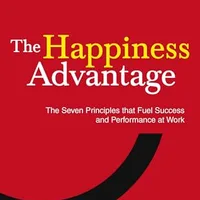
The Happiness Advantage — Shawn Achor
Closing slot of the basket. The article frames this as the performance-and-evidence reference: 'For the performance dimension of this — the evidence that positive emotion isn't a reward for good work but a prerequisit…
As an Amazon Associate, we earn from qualifying purchases — at no extra cost to you.
Was this helpful?