Intentional Living· 9 min read
11 Relationship Habits Modern Couples Have Abandoned
Before smartphones, couples built connection through 11 simple daily habits. They worked then. They work now. Here's how to bring them back.
11 Relationship Habits Modern Couples Have Abandoned
My parents had a rule for most of their 40-year marriage: no phones at the breakfast table. Not because they were anti-technology — my dad was an early adopter of practically everything. It was because, as he explained once without any dramatics, "That hour in the morning is how I know who your mother is right now. Not who she was last year."
I thought about that rule a lot when a friend told me something that stopped the conversation cold. She and her partner had spent nine consecutive evenings on the same couch, watching different shows on different devices, and had spoken fewer than 200 words to each other outside of logistics. Nine days. She wasn't upset about it. That was actually the more troubling part — it had quietly become normal.
Why Strong Relationships Erode Slowly — and How to Stop It
Here's what the research shows, and what most couples don't want to hear. Dr. John Gottman, who has studied couples for over four decades at the University of Washington's Love Lab, found that relationship satisfaction doesn't primarily decline because of big conflicts or dramatic incompatibilities. It erodes through what he calls "the failure to turn toward." Small moments of connection — the brief check-in, the inside joke, the hand on the shoulder — either happen or they don't. When they stop happening consistently, the emotional account empties slowly, quietly, invisibly.
Gottman's longitudinal studies found that couples who "turned toward" each other during small, everyday bids for connection at a rate of about 86% stayed together happily. Couples who later divorced had turned toward each other only 33% of the time. The difference wasn't grand romantic gestures. It was whether someone looked up from what they were doing.
The couples with the deepest connections after 20 or 30 years aren't the ones who had the best chemistry at the start. They're the ones who kept practicing small, unglamorous rituals long after the early intensity faded. Most of these rituals are embarrassingly simple. And modern life — specifically the smartphone, the streaming platform, and the permanently open work inbox — is extraordinarily good at dismantling them without anyone noticing.
Before you examine the big questions in your relationship, it's worth auditing which small habits quietly disappeared.
The Morning Rituals That Set Your Relationship's Emotional Temperature
The first 10 minutes after you wake up do something specific in your brain. Cortisol — your primary stress hormone — is at its daily peak in those first moments. How you and your partner interact during that window sets an unconscious emotional tone that carries through the rest of the day.
Habit 1: Eyes before screens. The old habit was simple: you greeted your partner before you looked at anything else. No notifications, no news headlines, no inbox. Just eye contact and a few words. It sounds almost painfully low-bar, but research on what Gottman calls "bids for connection" shows that couples who respond consistently to these small moments — even trivial ones — report significantly higher relationship satisfaction over time. You're not solving anything in that first 90 seconds. You're just signaling: you exist, and you matter more than whatever is on that screen.
Habit 2: A real goodbye. Not a reflex peck on the cheek as you're halfway out the door. Gottman's clinical recommendation — the 6-second kiss before parting — became famous because it addresses something specific. Six seconds is long enough that you can't fake it. It requires actual presence. It says: I'm leaving, and I'm aware I'm leaving you. Many couples have lost this entirely, replaced by a distracted "bye" mid-scroll.
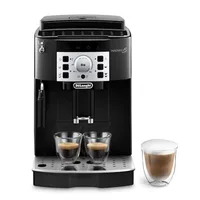
De'Longhi Magnifica S (ECAM22.110.B)
A shared morning coffee — poured for each other, sat with before the inbox opens — is the physical infrastructure that makes 'eyes before screens' and the real goodbye possible. A bean-to-cup machine removes the frict…
As an Amazon Associate, we earn from qualifying purchases — at no extra cost to you.
How to Be More Present in Your Relationship: The Habits Nobody Posts About
One of the quieter casualties of modern connectivity is the reunion ritual. There was a time when coming home was an event. You'd been away. Now, because you've been texting all day, the physical arrival barely registers emotionally.
Habit 3: The 20-second hug. Research on oxytocin — the neurochemical associated with bonding, trust, and calm — consistently shows that sustained physical contact for around 20 seconds triggers a measurable release. A University of North Carolina study (Grewen et al., 2003) found that couples who engaged in brief but genuine physical contact — ten minutes of handholding followed by a 20-second hug before a stressor — showed significantly lower cardiovascular stress responses and cortisol levels compared to couples with no contact. Twenty seconds. Most couples give each other a 1-second side-hug on autopilot. The original habit wasn't just sentiment. It was biology working correctly, and it's one of the easiest things to reclaim.
Habit 4: Dinner without an audience. The shared meal was once the primary social infrastructure of daily life — not because people were more virtuous then, but because the TV was in the other room. Research published in the Journal of Marriage and Family found that shared meals without devices are among the consistent predictors of relationship and family cohesion — and their positive effect on connection compounds with frequency over time. The habit requires almost no money. Just the decision to put the phone face-down and leave it there.
Habit 5: One real question per day. "How was your day?" is not a question. It's a social password that opens a door to nowhere. Couples who maintain deep knowledge of each other's inner lives — what Gottman calls "Love Maps" — ask specific, curious questions. "What's the thing you're most preoccupied with this week?" or "What made you laugh today?" or "Is there something on your mind you haven't mentioned yet?" Gary Chapman, author of The 5 Love Languages, identifies quality conversation as one of the most common love languages, and it's quietly dying in most long-term relationships.
Relationship Rituals That Deepen Love Over Time
Habit 6: Going to bed at the same time. Different schedules are real. Different sleep needs are real. But the data here is interesting. Sleep concordance research published in the journal Sleep found that couples who synchronize their bedtimes report higher relationship satisfaction — and the association holds even after controlling for sleep quality itself. It's not the sleep that matters — it's the ritual. The transition out of the day together, the conversation that only happens in the dark, the physical proximity that has no agenda. Many couples have quietly drifted from this, and they don't always realize what went with it.
Habit 7: The handwritten note. This doesn't need to be romantic poetry. A Post-it on the bathroom mirror. A short note slipped into a coat pocket. Before texting made communication frictionless, people wrote things down for each other — which meant they slowed down first. There's something about a handwritten word that a text can't replicate. The friction is the signal. It says: I stopped. I thought about you. I took the time to make this. That signal doesn't transmit at the speed of a notification.

Habit 8: The weekly date — scheduled, not spontaneous. Spontaneity sounds romantic, but it's actually what kills date nights. "We should do something this week" almost never survives a full calendar. The couples who maintain date nights don't wait for inspiration — they schedule it like a standing meeting and treat cancellation as genuinely non-negotiable. Gottman's Sound Relationship House model places this kind of intentional investment near the structural base, not the decorative top. The activity matters less than the rhythm.

Kindle Paperwhite 2024
The warm front-lit display means you can read next to a sleeping partner without the backlit screen that kills synchronised bedtime. A Kindle makes 'going to bed at the same time' survivable when sleep needs differ.
As an Amazon Associate, we earn from qualifying purchases — at no extra cost to you.
Simple Daily Habits for a Better Marriage or Partnership
Habit 9: Speak well of your partner when they're not there. There's a habit so old it's nearly invisible: you represented your partner with warmth when talking to friends or family. Not performing happiness — just genuinely speaking of them the way you'd want someone to speak of you. Research on what social psychologists call "spontaneous trait transference" shows that the qualities you attribute to your partner in conversation — even casually — shape how you unconsciously perceive them over time. Speaking disparagingly about your partner is not just venting. It's slowly rewriting the internal story you tell yourself about who they are.
Habit 10: Non-sexual physical touch, repeatedly, throughout the day. A hand on the back as you pass in the kitchen. Your feet touching on the couch. A shoulder squeeze when they mention something stressful. Helen Fisher, the biological anthropologist at Rutgers whose research on romantic love and attachment has been cited thousands of times, consistently found that couples who maintain high rates of casual, non-instrumental touch stay emotionally connected at a physiological level that partners who don't touch rarely achieve. The touch doesn't need to mean anything. That's precisely the point.
Habit 11: Make small decisions together. This sounds counterproductive from an efficiency standpoint — why discuss what to order for dinner when one person can just decide? But the habit of shared decision-making, even in small things, maintains a "we" orientation that healthy partnerships require to stay healthy. When every minor choice becomes a unilateral call, partners can start to feel like roommates who happen to share finances. The deliberation itself is the connection.
How to Start Today Without Overhauling Everything
You don't need to implement all eleven habits this week. That's not how behavioral change works — you probably know this already. What you actually need is three things.
Pick two habits that require almost no activation energy and start tomorrow. The goodbye kiss and one real question at dinner are ideal candidates. They cost nothing, take under three minutes combined, and produce results that are immediate enough to feel worth continuing.
Redesign your environment for the habits that need props. If you want to bring back handwritten notes, put a notepad and pen on the kitchen counter tonight.

Moleskine Classic Notebook (Large, Hardcover, Black)
This is the single most on-theme product for this article — it maps 1:1 onto Habit 7 (the handwritten note) AND the closing prompt to put a notepad on the kitchen counter. The friction of paper is the signal the artic…
As an Amazon Associate, we earn from qualifying purchases — at no extra cost to you.
If you want phone-free dinners, buy a small basket for the table — both phones go in it at 6 PM, no negotiation. Environment shapes behavior more reliably than willpower, every time, without exception.
Have a two-minute conversation about it. Not a serious relationship audit. Just this: "I've been thinking about a few small things I want us to bring back. Can we try a couple?" You're not diagnosing a problem. You're proposing a design upgrade — which, if you believe in designing your own evolution rather than drifting through it, is exactly how change should work. That framing makes the conversation collaborative rather than critical.
The reason most relationship advice doesn't stick is that it arrives as crisis intervention. These habits are the opposite. They're the daily maintenance that prevents the crisis in the first place. They're what the compounding of small, consistent attention looks like after 20 years — and why some couples seem to grow closer with time instead of just surviving it.
Jim Rohn said it plainly: "You cannot change the circumstances, the seasons, or the wind, but you can change yourself." That principle scales to every relationship you're in. You can't control whether your partner changes. You can control whether you show up with presence, warmth, and deliberate ritual — day after day, in the unglamorous ordinary — and trust that the compounding works.
The couples who make long love look effortless aren't lucky. They're the ones who kept doing the boring, specific, small things long after everyone else got too busy to notice.
For further reading, the Gottman Institute's research on bids for connection remains one of the most practical bodies of work on why relationships succeed or fail. And Grewen et al.'s foundational study on warm partner contact and cardiovascular reactivity is worth reading if you want the biology behind habit 3.
Which of these 11 old-fashioned relationship habits has quietly slipped out of your life — and which one are you bringing back first?
Was this helpful?