Mindset· 9 min read
Social Comparison Theory: Why Your Brain Never Stops Ranking
Social comparison theory explains why scrolling leaves you feeling behind. Here's what 70 years of research reveals—and the one switch that actually works.

Why Your Brain Compares You to Everyone — And What 70 Years of Research Says Actually Helps
You know the feeling. You open LinkedIn for "just a second" to send a message. Forty-five seconds later you're reading about someone your age closing a funding round, or getting promoted to a title that still feels aspirational to you, or launching something you've been quietly turning over in your head for two years. You close the app.
The app closes. The feeling doesn't.
That low-grade unease — the sense that everyone else is moving faster, building more, becoming someone while you're still figuring it out — isn't a character flaw. It isn't ingratitude or insecurity or a mindset problem you need to fix before you can get on with your life. It's one of the most deeply wired psychological drives in the human brain — the mechanism researchers call social comparison — doing exactly what it was designed to do.
The problem is that it was designed for a very different world.

The Drive That Never Actually Turns Off
In 1954, a psychologist named Leon Festinger at the University of Minnesota published a landmark paper in Human Relations proposing something that sounds almost obvious once you hear it: human beings have a fundamental drive to evaluate their own abilities, opinions, and outcomes. And when no objective external standard is available — no ruler, no test score, no measurable benchmark — they evaluate themselves by comparing to other people.
He called it Social Comparison Theory. It turned out to be correct in ways even Festinger didn't fully anticipate.
What makes it so uncomfortable in practice is this: the drive doesn't wait for your permission. Thomas Mussweiler, Professor of Organisational Behaviour at London Business School, ran a series of priming experiments documenting something that should permanently change how you think about your own reactions to other people's success. Social comparison initiates within milliseconds of encountering another person's performance information. Before you've made a deliberate decision to evaluate yourself. Before you're even aware you're doing it. The calculation is already running.
You don't choose to compare. You're already mid-comparison before the thought forms.
Mussweiler's work also identified what he called "selective accessibility" — the way social comparison triggers a selective retrieval of memory that confirms the comparison's framing. See that a peer has outperformed you and your brain immediately surfaces memories consistent with that narrative. The time you underdelivered. The project you haven't finished. The gap between where you are and where they appear to be. The comparison doesn't just happen. It curates your memory to support its conclusion.
That's not a malfunction. That's the mechanism working as designed — for a world of roughly 150 people in your immediate social group, where your relative standing genuinely mattered for survival. It's just being deployed in an environment it was never built for.

Clever Fox Habit Calendar Circle (24-Month Habit Tracker)
The article's core fix is installing a 'weekly backward look' — measuring distance travelled, not distance remaining. A physical habit/goal tracker gives the self-as-comparison-standard a structured, visible home.
As an Amazon Associate, we earn from qualifying purchases — at no extra cost to you.
Why Upward Comparison Hurts More Than It Should
Not all comparisons land the same way. The research on upward comparison (measuring yourself against someone doing better) versus downward comparison (measuring yourself against someone doing worse) is more nuanced than most advice on this topic acknowledges.
Upward comparison can genuinely motivate. If you see someone further along a path you're actually on — and you believe the gap is closeable — the comparison produces what researchers call assimilation: you pull toward the standard. Athletes who watch better athletes tend to improve. Students who study near high-performers often lift their own results. The comparison functions as a signal of what's possible.
But Abraham Tesser's Self-Evaluation Maintenance Model introduces a dimension that changes everything. Upward comparison to a close other — a friend, a sibling, a colleague in the same field at the same level — is fundamentally more threatening to self-esteem than upward comparison to a distant other or a stranger. The proximity of the relationship amplifies the personal relevance of the comparison.
This is why it hurts more to see a friend succeed in a domain you care about than to see a stranger dominate the same space. The stranger's success doesn't threaten your self-evaluation because you don't identify as being in competition with them. Your friend's success does — because you're in similar circumstances, and their advance makes the comparison impossible to dismiss as irrelevant.
Social media creates exactly this proximity problem at scale. The people in your feed aren't strangers. They're your peers. People your age, from your city, in your field, who attended your school. Every win they post is a proximity comparison. And proximity comparisons, as Tesser's research consistently shows, cut the deepest.
How the Feed Became a Comparison Engine You Didn't Build
Jean Twenge, professor of psychology at San Diego State University, has been tracking generational wellbeing data for decades. Her longitudinal research shows a sharp inflection in adolescent wellbeing — a simultaneous drop in life satisfaction, spike in reported loneliness, and increase in depression rates — that corresponds almost exactly with the moment smartphone penetration hit saturation, around 2012 to 2013.
The same young people. The same peer groups, schools, cities, families. Reporting significantly worse experiences of themselves and their lives.
The variable that changed: from occasional social comparison to constant, curated, algorithmically-amplified social comparison. The feed replaced the occasional update with ambient exposure to thousands of people's highlight reels, running continuously in the background of daily life.
Festinger designed his theory around what happens when people evaluate themselves against others in their immediate social environment. He didn't anticipate an environment where the comparison pool would be thousands of people, meticulously curated for visual appeal and achievement signaling, refreshed on a variable-ratio schedule that the neuroscience of reward anticipation tells us is maximally compelling.
The social comparison drive that calibrated your standing in a group of 150 is now running against a virtual cohort of thousands — selected for success, filtered for performance, and delivered in a format designed to maximize the time you spend looking at it.
Of course the results feel devastating. The benchmarks are designed to feel unreachable.

Kitchen Safe kSafe Time Locking Container (Medium)
Right after the section on the feed becoming a comparison engine you didn't build — a time-lock box physically removes the trigger device during deep-work windows, addressing the access point while you rewire the orie…
As an Amazon Associate, we earn from qualifying purchases — at no extra cost to you.
The most frequently recommended solution — deleting the apps — works during the deletion window and fails consistently upon reinstallation. Because the problem isn't the access point. It's the comparison orientation that the access point exploits. Fix the orientation, and the apps lose their hold. Leave the orientation intact, and they'll find you through whatever channel remains.
The Variable That Festinger Left in Your Control
Here's what Sonja Lyubomirsky at the University of California Riverside found when she studied the comparison habits of people who reported high wellbeing versus those who reported low wellbeing: it wasn't that happy people don't compare. They do. Everyone does — Mussweiler made that biologically clear.
The difference is who — or what — they compare themselves to.
Unhappy people compare themselves to others more frequently, more automatically, and in directions that reliably produce self-diminishment. Upward, toward visible success. Laterally, toward peers who appear to be moving faster. Through feeds that curate the most comparison-activating content available.
Happy people compare selectively. And the most consistent pattern in their comparison behavior is this: they compare themselves to themselves. Not the idealized version they plan to become someday. Their actual past self. Who they were six months ago. What they couldn't do then that they can do now. What they didn't understand then that they understand with clarity now. The distance traveled, not the distance remaining.
Dan Sullivan, founder of Strategic Coach, built an entire framework around this single distinction. He calls it measuring from the gain rather than the gap. Instead of measuring forward from your current position to the ideal destination — which always shows you how far you still have to go — you measure backward from your current position to where you started. The gain is concrete. The gap is always moving. And the comparison that comes from looking backward at your own trajectory produces a fundamentally different emotional experience than the comparison that comes from looking sideways at someone else's peak.
The self-as-comparison-standard doesn't require isolation from the social environment. It doesn't require closing the accounts or refusing to celebrate others. It requires a deliberate choice about which benchmark you treat as authoritative: the social environment's constantly refreshed highlight reel, or your own trajectory over time.
That choice is genuinely available. Not easy. Not automatic. But genuinely available.

What Ryan Holiday Gets Right About the Achievement Trap
Ryan Holiday's Ego is the Enemy opens with a concept that maps directly onto Mussweiler's research findings: the ego's compulsive need to measure itself against others is precisely what prevents the sustained, unglamorous focus that significant work actually requires. Not because comparison is inherently wrong. But because comparison to others is an unstable, externally-controlled metric.
The person who measures their progress primarily by how they compare to a peer has no control over their own success narrative. If the peer has a good month, your comparative standing drops — not because you did anything differently, but because someone else moved. You've outsourced your sense of progress to a variable you cannot influence.
This is one of the most underappreciated costs of habitual social comparison: it doesn't just affect how you feel. It affects where you direct your attention. The person monitoring their standing relative to others is spending cognitive resources on a signal they can't control, when those resources could be directed toward the actual work that would improve their absolute performance.

Ego is the Enemy — Ryan Holiday (Paperback)
Directly tied to the section 'What Ryan Holiday Gets Right About the Achievement Trap.' The article cites this exact book on how ego's compulsive comparison to others sabotages sustained work.
As an Amazon Associate, we earn from qualifying purchases — at no extra cost to you.
Carol Dweck's research at Stanford offers the complementary frame. People with growth mindsets evaluate their performance against their own learning curve and previous capability, not against the current standing of others. That internal reference point produces the kind of sustained effort that genuinely closes gaps — even as it makes the gap less relevant as the primary organizing metric.
The psychological mechanism is important: when your primary question is "am I growing?" rather than "am I ahead?", the answer is always within your control. You can always grow. You cannot always be ahead of whoever happens to be visible in your feed this week.
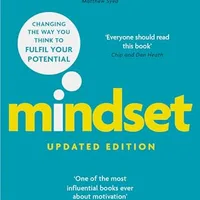
Mindset — Carol Dweck (Updated Edition, Paperback)
Maps to the Carol Dweck / growth-mindset passage. The article's argument — evaluate against your own learning curve, not others' standing — is the spine of this book.
As an Amazon Associate, we earn from qualifying purchases — at no extra cost to you.
For a deeper dive into developing this mindset shift, see our guide on how to develop a growth mindset as an adult.
How to Start Today
The research converges on a few interventions that actually work — not by eliminating social comparison (neurologically impossible and probably undesirable) but by redirecting the comparison drive toward targets that produce development rather than diminishment.
1. Install a weekly backward look. Every Sunday, write answers to three questions: What could I not do last month that I can do now? What did I understand less clearly six months ago than I understand today? What can I accomplish now that I couldn't accomplish a year ago? This isn't motivational journaling. It's installing the self-as-comparison-standard as a structured habit, giving your comparison drive a legitimate and productive target.
2. Map your comparison triggers explicitly. The drive initiates automatically, but the environments that trigger it aren't automatic — they're designed. Map which apps, accounts, and contexts reliably produce self-diminishment rather than inspiration. The test is simple: after exposure, do you feel energized to do your own work, or do you feel behind on someone else's timeline? You don't have to eliminate every trigger. But naming the mechanism disrupts the automatic response cycle more reliably than willpower does.

Kindle Paperwhite 2024 (12th Gen, 16GB, Black)
Sits in the 'map your comparison triggers' section. A distraction-free e-reader is the deliberate substitute for the scroll — redirecting screen time from curated highlight reels to your own development input.
As an Amazon Associate, we earn from qualifying purchases — at no extra cost to you.
3. Apply the "closeable gap" test to every upward comparison. When you encounter someone whose progress genuinely inspires you, pause and ask explicitly: is this a domain I'm actually pursuing, or one I feel I should be pursuing? The comparison that hurts most is almost always directed toward a domain where the pretension — what you feel you're supposed to be building — exceeds the genuine aspiration — what you actually care about building. William James noted this more than a century ago: self-esteem is a ratio of achievement to aspiration. The fastest path to self-respect isn't always expanding the achievement. Sometimes it's auditing whether the aspiration is genuinely yours.
4. Curate your comparison environment intentionally. Tesser's proximity principle works in both directions. The people you follow, the communities you join, the conversations you sit in on — all of these function as the comparison pool that your automatic comparison drive runs against. You can design that pool for comparisons that motivate rather than diminish. This isn't avoidance. It's the same intentional design logic you'd apply to any other input that consistently affects your output.

Liforme Original Yoga Mat (Blue, 4.2mm, Alignment System)
Supports the final intervention — 'observe the mechanism without becoming it.' A dedicated mat anchors a daily mindfulness/movement practice that builds the meta-observation gap between the automatic comparison drive…
As an Amazon Associate, we earn from qualifying purchases — at no extra cost to you.
5. Observe the mechanism without becoming it. When you catch a comparison thought forming — and you will, repeatedly, throughout every day — practice the single meta-observation: "I'm comparing right now." Not "I'm inferior." Not "they're winning." Just: "There's the comparison drive, doing exactly what it does." The moment you observe the mechanism, you've introduced a gap between the automatic process and your response to it. That gap is small. But it's where every meaningful change in your relationship to comparison actually lives.
This meta-observation skill — recognizing thought patterns without being consumed by them — is the same mechanism that helps identify and reframe cognitive distortions in other areas of life.
The deepest irony in social comparison is that the drive Festinger documented — the need to locate yourself relative to others — evolved to provide genuinely useful information. In a small, stable social group where your skills, status, and relationships were the actual infrastructure of your survival, knowing your relative standing mattered.
But location is not destiny. Knowing where you stand relative to the most visible people in your feed tells you something about the curated highlight reels of strangers. It tells you almost nothing about the trajectory of your own development, the value of your own path, or whether the benchmark you're measuring against has any relationship to the life you're actually trying to build.
Mussweiler showed you can't stop the comparison from initiating. But the comparison standard is the one variable in the equation that you do control. There's the ambient social feed that curates other people's peaks. And there's the record of your own trajectory over time — the accumulated distance between who you were and who you're becoming.
One of those benchmarks will always make you feel behind. The other one shows you how far you've actually traveled.
Design your evolution deliberately, or let the algorithm design it by default. Which comparison standard is your actual default right now — and is that a default you chose, or just one that happened to you while you were scrolling?
Was this helpful?