Mindset· 10 min read
Solomon's Paradox: Why You Give Better Advice Than You Take
Grossmann and Kross proved we reason wiser about others' problems than our own. Here's the science of Solomon's Paradox — and how to close the gap.
Solomon's Paradox: Why You Give Better Advice Than You Take
Think about the last time a friend came to you with a genuinely difficult problem. Maybe a relationship going stale. A career decision eating at them. A toxic situation they couldn't quite name. You probably knew, almost immediately, what they should do. You could see it clearly — the patterns, the priorities, the obvious next step they kept talking themselves out of.
Now think about whatever hard problem is sitting on your own desk right now.
Not so obvious, is it? Psychologists call this asymmetry Solomon's Paradox, and it turns out to be one of the more reliably documented cognitive gaps in the research literature.

The King Who Couldn't Take His Own Counsel
There's a name for this maddening gap, and it's not a quirk of your personality or a failure of self-awareness. It's a documented, measurable cognitive phenomenon that two researchers named after one of the most famous examples in recorded history.
King Solomon — the biblical ruler celebrated across multiple ancient texts for his extraordinary wisdom in adjudicating disputes and counselling others — also managed, according to those same texts, to accumulate 700 wives and 300 concubines, make a series of politically catastrophic alliance decisions, and tear apart the kingdom he spent his life building. The man apparently had one of the sharpest minds of the ancient world when other people's problems were on the table. His own life? Another story entirely.
Igor Grossmann and Ethan Kross published "Exploring Solomon's Paradox: Self-Distancing Eliminates the Self-Other Asymmetry in Wise Reasoning About Close Relationships in Younger and Older Adults" in Psychological Science in 2014, and their data confirmed what Solomon's biography suggested: we're systematically worse at reasoning wisely about our own problems than we are about identical problems belonging to someone else.
You've probably felt this. The friend who can't see why they should leave the job that's making them miserable. The colleague who keeps asking the same question about a relationship that everyone else can clearly see the answer to. And then, sometimes years later, realizing you were doing the exact same thing — unable to see what would have been obvious to anyone standing two feet further back.
Chatter: The Voice in Our Head and How to Harness It — Ethan Kross (Paperback)
The article names this book directly in the body copy (Kross is one of the two researchers behind the paradox). Highest-intent placement in the piece — reader is told it's 'essential reading' before the slot renders.
As an Amazon Associate, we earn from qualifying purchases — at no extra cost to you.
The research didn't just identify the feeling. It measured it, explained the mechanism, and — most usefully — identified how to close the gap on purpose.
What the Research Actually Found
Grossmann and Kross didn't just give this phenomenon a name. They took it into a lab, running three studies with a combined 693 participants.
In their studies, participants were asked to reason through a relationship conflict — specifically, imagining either their own partner or a close friend's partner had been unfaithful. One group reasoned about their own hypothetical situation. The other reasoned about their friend's identical situation.
Then the researchers scored the quality of the reasoning using specific markers of what psychologists call "wise reasoning": recognition of multiple perspectives, acknowledgment of the limits of one's own knowledge, intellectual humility, and a genuine willingness to consider compromise.
The gap was consistent and clear. People reasoning about the friend's problem scored measurably higher on every single marker of wise reasoning than people reasoning about their own identical situation.
Same problem. Worse reasoning when it was yours.
Here's the part that matters most: in follow-up experiments, the gap closed substantially when participants were prompted to think about their own situation from a deliberately distanced perspective — describing their own reaction in the third person ("why does he/she feel this way?") rather than the first person ("why am I feeling this way?"). Distance itself was the active mechanism driving the difference. Not whose problem it technically was.
Why Being Inside the Problem Makes You Think Worse
The proposed mechanism is something psychologists call "emotional immersion." When a problem is yours, you're inside it. The specific details demand attention — the exact words he said, the particular history between you, the very real stakes you're personally carrying. Your brain is doing exactly what brains evolved to do: prioritizing the concrete, immediate, and personal over the abstract, distant, and general.
That narrowing isn't a bug. In most situations, it's genuinely useful. But when the task is reasoning wisely about a complex decision — weighing competing perspectives, sitting with uncertainty, considering long-term consequences alongside short-term feelings — that same narrow focus actively gets in the way.
When a problem belongs to someone else, you don't have access to most of those crowding details. You can't feel what they feel. You don't know the specific history. So your brain, lacking those intimate particulars, naturally defaults to the broader, more principle-level reasoning that actually produces wise advice.
Put bluntly: the absence of emotional stakes doesn't make your advice worse. It makes it better.
There's an old image for this: standing on the bank versus swimming in the river. If you're swimming, you're working to stay afloat. If you're standing on the bank, you can see the current, the rocks, and where the river bends. Both positions are real. Only one lets you see the whole picture at once.
Related read: Why You Make Your Worst Decisions When It Matters Most
The Distance Tool Most People Don't Actually Use
Here's what's practically useful about Grossmann and Kross's research: they didn't just identify the gap. They tested whether it could be closed deliberately.
It can.
The key is what researchers call "self-distancing" — a set of deliberate techniques for generating the kind of psychological distance from your own situation that allows broader, wiser reasoning to surface. Several of these techniques have since been tested extensively, and a few have strong evidence behind them.
The pronoun shift. Instead of thinking about your problem in the first person — "what should I do?" — you address yourself by name or in the third person: "What should [your name] do here?" That feels almost comically small as an intervention. But in Kross's separate and extensive research on self-distancing self-talk, this shift consistently produced measurably better emotional regulation, cleaner thinking under stress, and — in ways that map directly back to Solomon's Paradox — more genuinely wise reasoning about personal problems.
Stillness Is the Key — Ryan Holiday
Lands in the self-distancing techniques section — the whole book is about the value of stepping back from your own noise. Second and final book of the article (2-book cap).
As an Amazon Associate, we earn from qualifying purchases — at no extra cost to you.
Temporal distancing. You project yourself forward in time — not months, but years. "How will I see this decision from ten years out?" The immediate stakes don't disappear, but they shrink relative to the longer frame. The things that feel like the only thing right now tend to look more like one thing among many when you give them a longer runway.
There's a reason "you'll look back on this and laugh" is a cliché. It's working the same mechanism. The trouble is clichés don't make the distance feel real in the moment. The technique requires deliberate, practiced application — not just nodding at the concept and moving on.
The Specific Question That Changes Everything
The most immediately practical output of Solomon's Paradox research is also the most ancient piece of advice you've probably already been given and, statistically speaking, almost certainly ignored:
What would you tell a close friend?
Not a generic, hypothetical person. A specific close friend — someone you care about, someone you want to see make a good decision, someone whose wellbeing you're genuinely invested in. Now imagine they're facing exactly your situation. Exactly. The same history, the same options, the same stakes.
What do you tell them?
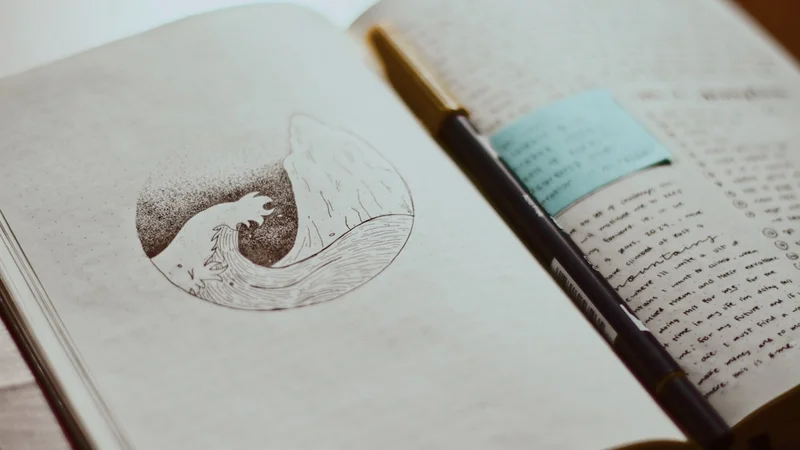
Sit with that for a moment. Actually write it down if you have the kind of journal that doesn't make you cringe to open.
What most people discover is that the answer arrives faster, and sounds cleaner, than anything they've been able to generate while stewing in the problem from the inside. They already had the answer. They just couldn't access it from where they were standing.
This isn't a magic trick. It's a reproducible cognitive shift backed by data. The question works because it forces a genuine frame change — not just intellectually but emotionally. Suddenly you're a friend-advisor rather than a protagonist. The stakes still exist, but they've moved one deliberate step away from your nervous system.
When This Matters Most — And When People Skip It
The irony of Solomon's Paradox is that the situations where we most need psychological distance are precisely the situations where we're least inclined to generate it.
The bigger the stakes, the deeper the emotional immersion. The more important the decision, the more convinced we are that what we need is more information, more analysis, more time spent inside the problem. This feels like diligence. It mostly isn't.
What the research suggests is that in those high-stakes moments, what we actually need is less immersion, not more. We need to step back and look at the whole river before we make a decision about which way to swim.
Ethan Kross documented this at length in his book Chatter: The Voice in Our Head, Why It Matters, and How to Harness It — which I'd call essential reading if you've ever found yourself unable to stop mentally replaying a difficult conversation or decision. The internal voice that's supposed to help you reason through problems can become noise — a loop of the same concerns restating themselves slightly differently, never actually resolving anything.
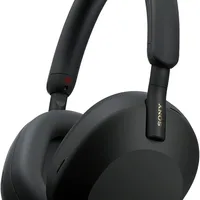
Sony WH-1000XM5 Noise Cancelling Headphones (Black)
Sits in the section about mental chatter and 'getting a different voice into the room' — the literal-quiet complement to the cognitive-quiet argument. UK/US tech-affinity pick.
As an Amazon Associate, we earn from qualifying purchases — at no extra cost to you.
Self-distancing techniques are essentially a way to get a different voice into the room. A voice that knows the facts of your situation but isn't swimming in the same emotional current as your regular internal narrator.
There's also something worth noting about whose advice we instinctively seek out. We tend to turn to people who have personal experience with our specific type of problem — someone who's been through a divorce, someone who's navigated a similar career pivot. That intuition makes sense. But Grossmann's findings suggest the person who's not emotionally immersed in the details of your particular situation might actually reason about it more clearly, even if they know less about the particulars, simply because they have the distance your immersed mind doesn't.
That doesn't mean you should stop seeking experienced counsel. It means you should also stop dismissing the clear-eyed view of someone two steps back — including your own future self, and your own self-as-friend-advisor. Both have access to something your immersed, present self genuinely doesn't.
Related read: What Are Mental Models and How to Use Them
How to Start Today
You don't need to redesign your decision-making process from the ground up. Grossmann and Kross's research points to a handful of specific, immediately usable moves. None of them take more than five minutes to try.
-
Ask the friend question — in writing. When you're stuck on any significant decision, write out the situation as if a close friend has come to you with it. Write your advice to that friend. Then read it back as advice to yourself. The writing matters. It's harder to dismiss what you've put on a page than what you've let circulate in your head.
-
Shift pronouns under pressure. When a problem is spiraling — especially a social or interpersonal one — try narrating it in the third person using your own name. "[Your name] is dealing with X. What should [your name] do?" It feels odd the first time. Do it anyway. The awkwardness is part of how it works: the slight friction of the different language is what creates the distance.
-
Project ten years forward. For decisions that feel catastrophically immediate, ask what your ten-years-from-now self would say matters here. Not to minimize the present problem — to put it in proportion. The question "will this matter in ten years?" is clichéd and slightly useless. The better version: "What would I wish I'd done when I look back at this from ten years out?"
-
Keep something to write in. Not for journaling's sake. For getting the problem out of your head and onto a surface where you can observe it with slightly more distance than you had when it was circulating inside your skull. A notebook, a notes app, anything that creates that small but real step from thought to external object.

Kindle Paperwhite 2024 (12th Gen, 16GB, Black, Without Ads)
Placed against action item 5 — 'choose advisors partly for their distance… in your circle or on a bookshelf.' The article itself points to the bookshelf; this is the bookshelf.
As an Amazon Associate, we earn from qualifying purchases — at no extra cost to you.
- Choose your advisors partly for their distance, not just their experience. Someone who isn't emotionally invested in your situation might generate cleaner reasoning than someone who's been through the identical thing and still carries feelings about it. Both perspectives matter. Don't underweight the clear-eyed outsider — in your circle or on a bookshelf.

The Gap Isn't Knowledge. It's Distance.
There's something worth sitting with in the name Grossmann and Kross chose for this effect.
Solomon — by most historical accounts a genuinely exceptional thinker — couldn't access his own best thinking when the problem was his own life. Not because he lacked intelligence. Not because he lacked information. Because he was too close. He was swimming in the river he needed to observe from the bank.
The implication for anyone trying to design their own evolution — rather than just live reactively inside it — is this: the wisdom you're looking for isn't always absent. Sometimes it's just blocked by proximity. The advice you'd give your best friend in your exact situation is, very often, the advice you already have. You're just standing too close to read it.
And unlike most of the things that hold back good decisions — time, money, resources, information — distance is something you can generate on purpose. Today. Right now. Before you make the next call, send the next email, or talk yourself out of something you've already basically decided.
The question Solomon never asked himself: What would I tell a close friend who was facing this?
What's yours?
Was this helpful?