Mindset· 11 min read
How to Be the Strong Friend Who Finally Asks for Help
The 'strong friend' quietly burns out. Here's why asking for help is the highest-trust act — and how to start without losing who you are.

How to Be the Strong Friend Who Finally Asks for Help
There is a note in my phone from October 2024 that I still don't read out loud. Six lines, time-stamped 2:47 AM, and the first one says: Nobody has asked how I am in eleven months.
I counted. That's the thing about being the strong friend — you count. Eleven months of being the person they called when their dad got the diagnosis, when the marriage cracked open, when the layoff arrived in a Tuesday morning email. Eleven months of "thank you for always being here," and not one person noticing I had quietly stopped sleeping through the night.
If your phone has more outgoing voice memos than incoming check-ins, this is for you.
The Archetype Nobody Wants to Talk About
The "strong friend" is not a personality type. It's a role — and roles, unlike personalities, are negotiated. Somewhere along the line, usually before you were old enough to consent, the people around you cast you as the steady one. Maybe a parent leaned on you too early. Maybe you were the oldest sibling, or the only kid in the friend group whose home felt safe. Maybe you were just verbal and emotionally articulate when everyone else was a mess, and the role found you because nobody else could play it.
You took the part. You got good at it. You became, as Dr. Brené Brown puts it in her research at the University of Houston, the person who is "willing to show up and be seen when we have no control over the outcome" — except only on behalf of other people, never yourself.
Then you woke up one morning, somewhere in your late twenties or thirties or forties, and noticed something strange. Everyone in your life knows your loyalty. Almost nobody knows your weight.
There's a Brigham Young University meta-analysis from 2010, led by Julianne Holt-Lunstad, that tracked 308,849 people across 148 studies. It found that weak social connection raises mortality risk on par with smoking 15 cigarettes a day, and significantly more than obesity. Read that twice. Loneliness is not just unpleasant — it is, statistically, a slow-acting medical event. And the strong friend is one of the loneliest categories of person in modern life, because the loneliness is camouflaged by activity. You're never alone. You're surrounded by people who lean in. None of them lean back.
You've probably felt this and immediately argued yourself out of it. I shouldn't complain. They have it worse. This is just who I am. Stay with me. We're going to take that voice apart.
Why "Strong" Became Your Identity (and Why That's the Trap)
Les Brown put it plainly: we don't get what we want — we get who we are. The strong friend has a self-image so ironclad that asking for help would feel less like a request and more like a structural failure. You don't see it as protecting an identity. You see it as facts.
But identity is not facts. Identity is the story you've been told about yourself so many times you forgot it was a story.
Here's the inconvenient truth: the strong friend role almost always benefits everyone except the person playing it. Friends get a reliable container for their pain. Family gets a sibling or partner who never makes a scene. Colleagues get someone who absorbs the chaos without complaint. And you get… what, exactly? The thin, repeating compliment of you're so strong, which is technically a kindness but also doubles as an instruction. Stay strong. Keep being strong. Don't change the arrangement we have all silently signed.
T. Harv Eker writes about how every blueprint, financial or emotional, has a thermostat setting we drift back to. The strong friend's thermostat is set to give 90, receive 10. When the receiving climbs above 10, you sweat. Something inside scrambles to restore the imbalance — by minimizing your needs, deflecting attention, or quickly asking the other person how they're doing. You'll recognize this if you've ever cried in front of someone and ended the conversation by apologizing.
This is not a character flaw. It's a learned regulation strategy. And like any regulation strategy, it can be unlearned. But not by trying harder to be vulnerable. The strong friend who decides to "be more vulnerable" the way a corporate retreat suggests it usually ends up performing vulnerability — sharing one carefully chosen difficulty in a room of acquaintances and calling it growth. That's not what we're doing here.
The Hidden Cost: What Burnout Actually Looks Like in Strong Friends
Strong-friend burnout doesn't look like dramatic collapse. That's almost the cruelest part. It looks like:
- A growing irritation toward the people you love most, with no obvious cause.
- Reading messages and putting your phone face-down without responding.
- A flat, low-grade resentment that feels suspiciously like exhaustion but won't lift after a weekend off.
- Crying in your car for no reason. Or in the shower. Or at a song that has nothing to do with anything.
- The strange experience of feeling lonelier in a room full of people who love you than you do alone.
UCLA psychologist Shelley Taylor's research on the "tend and befriend" stress response found that under chronic pressure, some nervous systems default to caregiving instead of fight-or-flight. Tend-and-befriend is brilliant in short bursts. As a permanent operating system, it slowly drains the caregiver until they have nothing left to tend with — and the only signal the system gives is a vague, unrelenting tiredness that no nap fixes.
You can carry this state for years before it cracks. Many people do. The reason it doesn't crack faster is precisely because of how good you are at the role. Nobody around you triggers an alarm, because the alarm system runs through you.
Why Asking for Help Is the Highest-Trust Act You Can Offer
This is the part that took me eight months of therapy to actually believe, so I'll say it carefully.
When you ask someone for help, you are not subtracting from them. You are inviting them into a level of relationship that very few people get access to — yours. The strong friend has effectively been operating a one-way mirror for years: you can see everyone, no one can see you. To finally say I'm not okay, can you sit with me, is to lower the mirror. It is, as Brené Brown writes in Daring Greatly, the courage to be imperfect in front of someone who matters.
Esther Perel, the Belgian psychotherapist whose couples work has shaped how a generation thinks about intimacy, makes the point clearly: vulnerability is not optional equipment for real closeness — it is the mechanism. Without the capacity to be seen at your most exposed, intimacy remains structurally out of reach. Not unlikely — impossible. Intimacy is not built by sharing fun facts. It is built by allowing another human to witness the soft underside of your life — and to discover, in real time, that they are honored to be invited.
What the strong friend has accidentally been doing for years is robbing the people around them of the chance to love them all the way back. Sit with that, because it reframes the entire equation. The vulnerability you've been avoiding wasn't protecting your relationships. It was capping them.
There is also a quieter, more practical truth here. The people who love you have, in many cases, been waiting. They've sensed the imbalance. They've felt the lack of access. They have wanted to give back and didn't know how. When you finally ask for help, you don't burden them. You promote them.
The 3-Step Framework to Start Without Losing Yourself
Here's where most articles on this subject collapse into platitudes. Be brave! Open up! Trust the process! That's useless. The strong friend doesn't need encouragement. They need a system.

Daring Greatly — Brené Brown (Paperback)
The article's central thesis — that vulnerability is not the opposite of strength but its mechanism — is Brené Brown's life work. Daring Greatly is where she lays out the argument in full, with the TED research that h…
As an Amazon Associate, we earn from qualifying purchases — at no extra cost to you.
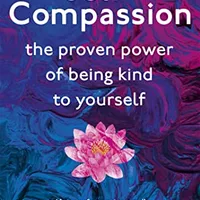
Self-Compassion — Kristin Neff (Paperback)
Neff's self-compassion framework is the part of the rewiring that most strong friends cannot access without a guide: the instruction to extend to yourself the kindness you reflexively give everyone else. The article r…
As an Amazon Associate, we earn from qualifying purchases — at no extra cost to you.
So here's a real one. Three steps, in order, designed to be small enough that your nervous system doesn't reject them.
Step 1: Audit your inner circle ruthlessly.
Not everyone in your life has earned the right to your full self. That's not coldness — that's design. Sit down with paper and write the names of the five to seven people who actually know you. Then ask, of each name: has this person ever shown me that they can hold a hard truth without flinching, gossiping, or trying to fix me? If the answer is no, they are not a candidate for the next steps. They might still be a wonderful friend, but they are not a vault. The strong friend's first move is to stop confusing presence with safety.
Step 2: Practice asking for absurdly small things first.
Don't open with the eleven months of unspoken grief. Open with: can you proofread this email for me? Or: I'm having a weird week, can we get coffee Saturday? Or: can you come with me to this appointment, I'd just feel better. These micro-asks are not the goal. They are the rep. Each one is your nervous system collecting evidence that asking did not, in fact, end you. After enough reps, the bigger ask becomes possible. This is how all rewiring works — Tony Robbins didn't invent the principle, but he popularized the truth: behavior change is built on small, repeatable proof.
Step 3: Name the role out loud — with one person.
This is the move that breaks the spell. You sit with one person from your audited list, and you say something like: I want to tell you something I've never said. I've been the strong one for so long that I don't know how to be anything else, and I'm tired. I don't need you to fix it. I just needed someone to know. That's it. That's the whole speech. You don't need fancy language. You don't need to perform a breakthrough. You just need one human in your life to hold the actual truth of your situation, and the role begins to dissolve, because the role required secrecy to function.
The Tools That Quietly Helped Me
I'll be honest — none of this work happened in a vacuum, and pretending it did would be its own kind of strong-friend lie. The shift that started in late 2024 was scaffolded by a small set of resources I returned to almost daily. None of them are magic. All of them are real.

Clever Fox Habit Calendar Circle (24-Month)
Step 2 of the framework — 'practice asking for absurdly small things first' — depends on rep-counting. Each micro-ask is evidence your nervous system collects that asking did not, in fact, end you. The Clever Fox Habi…
As an Amazon Associate, we earn from qualifying purchases — at no extra cost to you.
Books were the first doorway, because reading was the only form of receiving I'd ever let myself do without guilt. Brené Brown's Daring Greatly gave me the language for what I was avoiding. Kristin Neff's Self-Compassion — Neff is the University of Texas researcher who built the academic field — gave me a vocabulary for the kindness I'd never extended to myself. I'd recommend reading them in that order, slowly, with a pen.
The second doorway was writing. I'd avoided journaling for years because the strong friend instinctively distrusts anything that looks self-focused. What changed was switching from blank-page journaling, which felt like staring into a mirror with no clothes on, to prompted journaling — where someone else asks you a question and you simply answer it. The structure removed the self-consciousness. After three months, the daily five-minute habit had unlocked things eight months of therapy had circled around.
The third doorway was nervous-system regulation, which sounds clinical but isn't. The strong friend lives in a chronically activated state — slightly hypervigilant, scanning for the next person who needs catching. Slowing the body down is what makes the new behaviors stick, because you cannot ask for help from a body that's bracing for impact. Even small physical practices — weighted comfort while reading, breath work in the morning, a five-minute body scan before bed — change what becomes possible by 8 PM.
You don't need every tool. You need one that you'll actually use, repeated long enough to build evidence that the new way of being is safe.
What Changes When the Role Finally Drops
A year after that 2:47 AM note, I had dinner with a friend I'd known for twelve years. Halfway through the meal, I told her the truth — the eleven months, the note, all of it. She set down her fork and said, I have been waiting for you to let me in for a decade.
That's the part nobody warns you about. The role doesn't just protect you from being seen as weak. It protects you from being seen at all. And when it drops, the people who already loved you discover that they've been loving a representative — and they want, badly, to meet the actual person.
This is what Vanulos means when we talk about designing your evolution. It's not about adding more to a life that's already overflowing. Sometimes it's about putting down a role you accepted before you were old enough to consent to it, and discovering, in the quiet space afterward, who you actually are.
The strong friend isn't the truth of you. It's an old job you got hired for in childhood, and you've earned the right to retire it.
So here's the question I'll leave you with — the one I wish someone had asked me eleven months earlier than they did: who in your life is waiting for you to finally let them in, and what would it cost you to send the first message tonight?
Related read: The Still Face Study: What Happens When No One Responds
Was this helpful?