Productivity· 10 min read
The Real Science Behind Losing Yourself in Work
Csikszentmihalyi spent decades finding what produces flow state. Here's the structural answer — not motivation tips, but conditions you can actually build.

The Real Science Behind Losing Yourself in Work
Think back to the last time you glanced at a clock and were genuinely surprised by what it said — in a good way. Not "already?" as you stall before a dreaded meeting — I mean the other kind. Where you sat down to work on something and entered what psychologists call flow state: the next time you surfaced, two hours had disappeared and it felt like twenty minutes. Maybe it was a writing project. A tricky piece of code. A conversation so absorbing you forgot you were in public.
Now think about the last time the opposite happened. A task you were perfectly capable of doing, at a time when you had no particular reason to be distracted, and you still checked your phone four times in seven minutes. You felt vaguely guilty, slightly restless, and absolutely could not get traction. Not bored exactly. Not anxious. Just... absent.
Most people assume the difference is motivation. You were more motivated the first time. You cared more. You were "in the mood." But here's what four decades of actual research say: motivation had almost nothing to do with it. What made those two experiences different was something far more structural — and far more controllable.
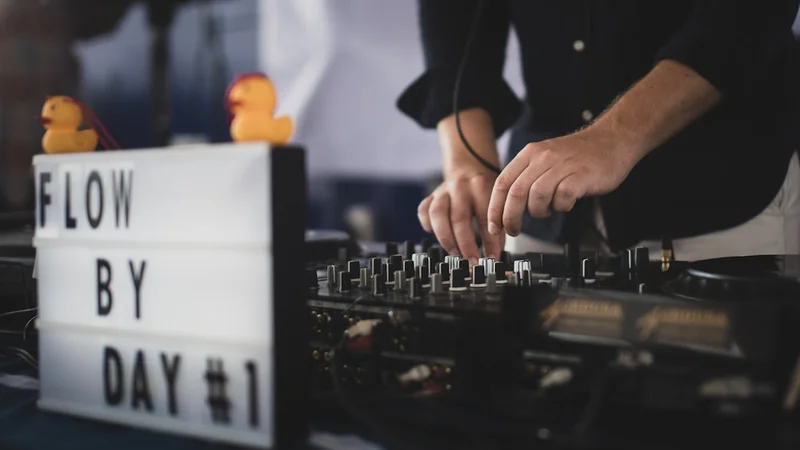
What Csikszentmihalyi Found When He Asked Thousands of People About Their Best Moments
In the late 1960s, Mihaly Csikszentmihalyi, then a young psychologist at the University of Chicago, became fascinated by a question that most of his colleagues thought was too soft to study scientifically: what does it actually feel like to be at your best?
He started by interviewing artists, chess players, surgeons, mountain climbers, dancers — people who had voluntarily chosen to spend enormous amounts of time doing difficult things that didn't always pay well. What he was looking for was a common thread in the moments they described as most satisfying, most absorbing, most alive.
He found one.
Every person, across every domain, described the same state. Complete absorption in the task. A temporary disappearance of the usual sense of self — the running inner commentary about how you look, what people think, what you still have to do later. Time either stopping or accelerating in a way that only becomes apparent afterward. A sense of effortless effort, which sounds like a contradiction but isn't: the work was genuinely hard, but the hardness felt matched rather than overwhelming.
Csikszentmihalyi called this state flow, and he spent the next three decades figuring out exactly what produces it. His findings are formalized in his 1990 book, still the most rigorous treatment of the subject.
Flow: The Psychology of Optimal Experience — Mihaly Csikszentmihalyi
The article explicitly points at 'his 1990 book, still the most rigorous treatment of the subject' — this is the single most natural affiliate placement in the entire piece, because the reader has just been told the p…
As an Amazon Associate, we earn from qualifying purchases — at no extra cost to you.
The popular summary of his work — "find your passion and you'll enter flow" — misses the point entirely. Passion barely appears in the data. What does appear, consistently, across chess and surgery and rock climbing and mathematics, is something much more specific.
The Single Most Critical Condition: Challenge Matched to Skill
Here's the core finding, and it's worth reading slowly because it inverts the way most people think about this.
Flow does not occur when you're doing something you love. It occurs when you're doing something where the challenge level is precisely matched to your current skill level — and stretched just slightly beyond it.
Csikszentmihalyi mapped this as a graph. On one axis, the difficulty of the task. On the other, your current level of skill. Most of your working life falls into three zones.
When challenge is low and skill is high, you get boredom. Not the pleasant, relaxed kind of boredom — the restless, slightly irritable kind where you keep checking your phone not because you want to, but because your brain is screaming that it's underused.
When challenge is high and skill is low, you get anxiety. A feeling of being overwhelmed, of the task having teeth you don't have the tools to deal with. Paralysis dressed up as busy-ness.
Flow lives in the narrow channel where challenge and skill are closely matched — and where the task is pulling you just slightly forward of where you are right now. Not comfortably within your abilities. Not terrifyingly beyond them. Just at the edge.
This is why genuinely difficult problems often produce flow more reliably than easy ones, even when the easy task is something you find more pleasant to think about in the abstract. Difficulty, when it's calibrated to your actual capability, is the mechanism. Enjoyment is a side effect, not a cause.
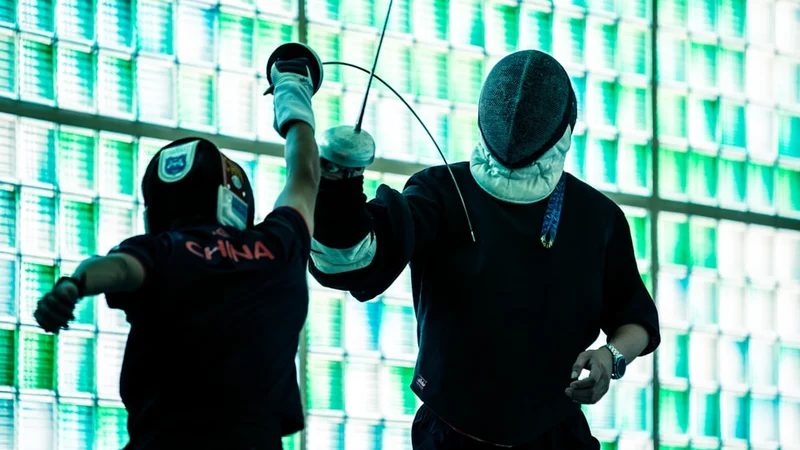
The Three Supporting Conditions Most People Never Set Up
The challenge-skill match is the most critical variable, but Csikszentmihalyi's research identified three additional conditions that reliably accompany genuine flow. Strip any of them out and the state either doesn't arise or evaporates quickly.
Clear goals for the immediate task. Not the project's ultimate objective — the very next thing you need to figure out or produce. A surgeon in flow isn't thinking "I need to save this patient." They're thinking about the specific tissue plane they're currently navigating. A chess player in flow isn't thinking "I want to win." They're working through the specific sequence of moves available from this exact position. Vague, outcome-level goals don't produce flow. Specific, immediate-task goals do.
This is the first thing to notice when flow won't come: not whether you care about the overall project, but whether you actually know what the next concrete thing is you're supposed to do. Cal Newport's work on deep work — building on exactly this kind of research — is worth reading alongside Csikszentmihalyi's original.
Deep Work: Rules for Focused Success in a Distracted World — Cal Newport
The copy names Newport directly — 'worth reading alongside Csikszentmihalyi's original' — so the product is already endorsed by the sentence it sits under. Second and final book; 2-book cap respected
As an Amazon Associate, we earn from qualifying purchases — at no extra cost to you.
Immediate feedback. You need to know, continuously and without significant delay, whether what you're doing is working. This is one reason programming, writing, and surgery can produce flow more readily than committee work or long-term planning: the feedback loop is short. The code either compiles or it doesn't. The sentence either sounds right or it doesn't. The tissue is either healthy or it isn't. Long-horizon work with delayed feedback — strategy, relationship-building, most management — makes flow structurally harder, though not impossible. The fix is usually to design shorter feedback loops within the longer arc of the work.
A sense of control over the outcome. Not certainty that you'll succeed. Just a genuine sense that what you do matters to what happens — that you're steering rather than being steered. Flow consistently breaks down when people feel the outcome is entirely determined by forces outside their influence. This is why highly automated or purely reactive work tends to resist flow even when it demands attention. You're monitoring, not directing.
Related: How to design your environment and session structure for deep work
Most knowledge workers set up none of these three. They show up with a vague sense of what they're supposed to accomplish today, receive feedback on their work days or weeks after they do it, and feel perpetually subject to other people's priorities and schedules. Then they wonder why they never enter flow.
The Finding That Should Change How You Think About Your Evenings
Here is the most counterintuitive result from Csikszentmihalyi's decades of data, and it's worth sitting with because it runs directly against what most people assume.
Leisure, on average, produces less flow than challenging work.
Not in every case, and not in every person. But the pattern in the data is clear: passive activities — watching television, scrolling social feeds, browsing with no specific purpose — consistently fail to produce flow regardless of how engaged they feel in the moment. The reason is structural: they don't require the active deployment of skill against a matched challenge.
Entertainment can be absorbing. It can pass time pleasantly. But it doesn't produce the deep, time-distorting, genuinely satisfying absorption that Csikszentmihalyi documented. His research participants frequently reported their leisure hours as less satisfying and less engaging than their working hours, even though they consistently said they'd prefer more free time.
This is the finding people resist most because it implies something uncomfortable: the activities we retreat to for rest are often producing less genuine restoration than the skilled, absorbing work we're retreating from. The most restoring thing you can do is often not less activity, but differently structured activity — active, skilled, and appropriately challenging.
A journal specifically designed for tracking your challenge-skill balance across different tasks is one of the more practical tools for making this visible before the day is over.
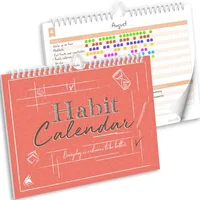
Clever Fox Habit Calendar Circle (24-Month Habit Tracker)
The copy asks for 'a journal specifically designed for tracking your challenge-skill balance across different tasks' — a 24-month circle tracker is the closest real product to that request, and the article's own closi…
As an Amazon Associate, we earn from qualifying purchases — at no extra cost to you.
Related: Attention residue — the hidden cost of task-switching that resets your focus
How to Actually Design for Flow Instead of Waiting for It
Flow isn't a mood. You can't decide to feel it any more than you can decide to feel hungry on command. But the conditions that produce it are entirely designable.
Here's what the research actually recommends.
Audit your current work for the challenge-skill match first. Before you change anything else, ask: is this task genuinely at the edge of what I can do, or is it well within territory I've already fully mastered? If you've done the same kind of work the same way for more than a few months without deliberately raising the difficulty, boredom isn't a personal failing. It's the predictable result of operating below your actual capacity.
Raise the stakes when a task has become too easy. This isn't about working faster or doing more of the same thing. It's about finding the dimension of the task you haven't fully mastered yet and making that the active challenge. Write the report for a more critical audience. Solve the coding problem in a language you're slightly less fluent in. Attempt the conversation in a format that doesn't let you prepare a script.
Break an overwhelming task down until you find the edge. The anxiety zone isn't a sign the work is wrong — it's a sign the task needs to be broken into a smaller piece where you actually have enough skill to engage. Find the specific sub-problem where your current skill makes genuine contact with the challenge. Start there.
Remove the feedback delay wherever you can. If your work normally gets reviewed weekly or monthly, find ways to create daily or hourly checkpoints where you can see whether what you're doing is working. This doesn't have to be formal — even a brief end-of-session note asking "did I make actual progress on the specific problem I set out to work on?" closes the feedback loop enough to support flow in the next session.
Protect the session with whatever friction management you can realistically sustain. Csikszentmihalyi's research is consistent on this point: interruptions don't just pause flow, they reset it. Gloria Mark's research at UC Irvine — one of the most cited studies in modern attention science — found it takes an average of roughly 23 minutes to fully refocus after a single interruption. A solid pair of noise-cancelling headphones, worn even without music, signals to your environment that the session is genuinely closed — and signals to your own brain that the task has started.
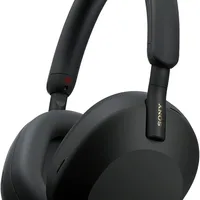
Sony WH-1000XM5 Noise Cancelling Headphones
Sits directly under the Gloria Mark 23-minute interruption statistic — the strongest cost-justification in the article. The copy even pre-sells the mechanism ('worn even without music, signals to your environment that…
As an Amazon Associate, we earn from qualifying purchases — at no extra cost to you.
A simple time-blocking cube or dedicated focus timer placed visibly on your desk does something similar: it externalizes the commitment to the task window, reducing the frequency with which you'll check whether time is up. The physical object makes the session real in a way that a phone timer doesn't.
Related: The best habit books of 2026 for building the structures that make focus automatic
The Lever Is Structural, Not Motivational
There's a version of the flow conversation that turns it into another self-help sermon about passion and purpose and finding work that matters. Csikszentmihalyi's actual data doesn't support that framing. A 2020 review published in Frontiers in Psychology confirmed the core finding across dozens of studies: the structural conditions — challenge, skill, feedback, goals — predict flow far more reliably than interest or motivation alone.
The chess players Csikszentmihalyi studied weren't all passionate about chess in some abstract sense. The surgeons weren't all called to medicine by profound vocation. What they had, in the moments they described as most alive, was a specific structural situation: a task at the edge of their current ability, a clear next action, feedback arriving in real time, and a sense that what they did actually steered the outcome.
You can build that. Not by changing what you do for a living, or by waiting until you care more, or by running a motivational playlist. By sitting down with an honest eye on the difficulty of the task you're about to attempt, and asking whether it actually requires enough of what you can do to pull you into genuine engagement.
The difference between two hours that vanished and five minutes that felt like an hour isn't effort or attitude. It's architecture.
Design Your Evolution means, among other things, this: stop waiting to feel motivated enough to do the work. Build the conditions where the work generates its own engagement. The research says it works. The only question is whether you'll make the structural adjustments, or keep rearranging the furniture while the room stays the same.
What's one task in your week that reliably fails to produce flow — and what would it look like to raise or lower its difficulty by one notch?
Was this helpful?
Continue Your Evolution
The Frozen Goal Problem: Why Tiny Wins Beat Grand Plans
Rejection Sensitivity: Why You Keep Assuming They're Upset
The Science of Nostalgia: Why Looking Back Helps
Sedikides and Wildschut found nostalgia boosts mood, meaning, and social connection — not mere sentimentality. Here's the science and how to use it.