Mindset· 10 min read
The Things We Wait Too Long to Do for Ourselves
Most people defer the self-investments that matter most. You don't need to be ready — here are 10 things worth starting today, imperfectly.
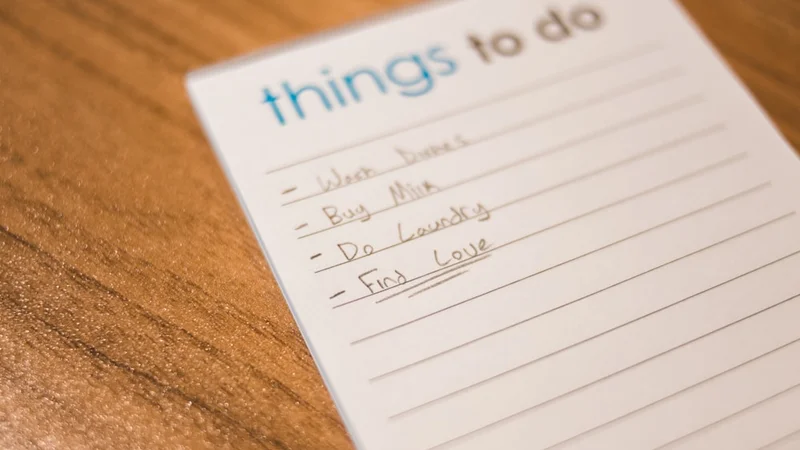
The Things We Wait Too Long to Do for Ourselves
The note sat in my drafts folder for fourteen months.
It was six lines long. A message to a friend I hadn't spoken to since my mother's funeral — the friend who drove four hours through a snowstorm to stand next to me at the cemetery, and then, somehow, I let drift. Every few weeks I'd see her name in my phone, open a draft, type a sentence or two, and close it. I wanted the message to be right. I wanted to explain everything. I wanted to not sound like I'd forgotten her.
So I waited. And waited. And a year became fourteen months.
When I finally sent it, she replied in seven minutes. She said she'd been hoping I'd reach out. She said she'd almost messaged me a dozen times but didn't want to intrude on my grief.
I spent fourteen months convinced I was being thoughtful. I was being a coward. And that's the honest name for most of the things we wait too long to do for ourselves — not patience, not timing, not wisdom. Fear, dressed in a clean shirt.
Why We Wait (When We Know Better)
Jeff Bezos has a tool he calls the regret minimization framework. When he was deciding whether to leave his hedge fund job to start what would become Amazon, he projected himself forward to age eighty and asked one question: which choice would I regret more?
The answer, he said, was obvious within seconds. He'd regret not trying. He wouldn't regret leaving a good salary.
Bronnie Ware, the Australian palliative care nurse who spent years listening to the dying, published her findings in The Top Five Regrets of the Dying. The pattern she documented was almost monotonously consistent: among the top five regrets, people wished they had worked less hard, stayed in touch with friends, and had the courage to live a life true to themselves — not the life others expected of them. The regrets were about the things people had postponed — the conversations, the bravery, the honesty, the risks.
You've probably felt some version of this. A promise to yourself you've carried for years. A conversation you keep rehearsing and never having. A dream you describe to strangers at parties but have somehow never scheduled a single hour of your life around.
Here's the uncomfortable part. Research on procrastination from Dr. Tim Pychyl at Carleton University shows that chronic delay is rarely about time management. It's about emotion regulation. We postpone not because we're busy, but because starting triggers a feeling we don't want to feel — inadequacy, exposure, the possibility of failing at something that actually matters.
Waiting is a coping strategy. A very expensive one.
The 10 Things Most People Wait Too Long to Do
1. Write the thing you've been carrying
The essay. The letter. The memoir chapter about your father. The book outline you've described to three different friends over three different dinners.
You don't need to be a writer to write it. You need to finish one page. Then another. Tony Robbins likes to say that clarity comes from engagement, not thought — which is a kind way of saying you cannot think your way into knowing what you want to write. You write your way there.
Start with a notebook you actually enjoy holding.
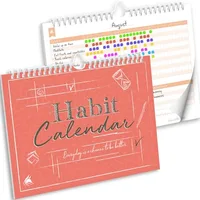
Clever Fox Habit Calendar Journal
The article opens with a 14-month deferred letter. Section 1 prescribes starting with a notebook you actually enjoy holding. This 24-month habit tracker makes the daily writing ritual visible without demanding a finis…
As an Amazon Associate, we earn from qualifying purchases — at no extra cost to you.
2. Have the real conversation
Not the one you've rehearsed in the shower. The real one. The one where you tell your parent you love them and you're also still angry. The one where you tell your partner what you actually need. The one where you tell your boss you want a different role or you're leaving.
There's a useful distinction between conversations that simply maintain a relationship — keeping it alive — and conversations that genuinely change it. Almost all of us have a transformative conversation we've been avoiding for years.
The people who hear these conversations almost never react the way you've imagined. I've asked dozens of people about this over the years. The answer is nearly always the same: "I wish we'd had this conversation sooner."
3. See the doctor about the thing
The mole. The knee. The thing you've been quietly noticing. The part of your body that started doing a new thing six months ago that you've now trained yourself to ignore.
Preventive medicine is the highest-return asset class in human life, and most of us treat it like a tax. Book the appointment this week. Put your phone down, open your calendar, make the call. Reading the rest of this article can wait ten minutes.
4. Learn the skill you keep mentioning
Spanish. Piano. Woodworking. Writing code. The language your grandmother spoke that nobody in the family can speak anymore.
Most people overestimate what they can do in a week and dramatically underestimate what they can do in a year. Twenty minutes a day for twelve months will take you further in almost any skill than people who "try" for a month and quit.
The trick isn't motivation. It's friction removal — making the tool obvious, the session short, and the first rep ridiculously small.
5. Leave the situation that's costing you more than it pays
The job that drains you. The friendship that tilts. The commitment you said yes to three years ago and have been quietly paying interest on ever since.
T. Harv Eker has a brutal line about this: the cost of a bad decision is paid in a currency you don't notice until the balance is zero. Energy. Sleep. Possibility. Self-respect. You don't get invoiced — you just wake up one morning emptier than you were a year ago.
Leaving rarely looks like a grand exit. It usually looks like a quiet, slow, two-stage plan. Write the plan. Then begin it.
6. Start the financial conversation with yourself
Not with a guru. With yourself.
Most people over thirty cannot name their own monthly runway. They cannot tell you how much they need to live for six months if income stopped tomorrow. They cannot tell you what their credit card APR is. They carry a vague anxiety about money that lives just below conscious thought.
An hour of real numbers — on paper, with a calculator and a planner beside you — will dissolve more anxiety than six months of vague worry.
7. Design the morning you actually want
Not a monk's morning. Not a productivity influencer's morning. Yours.
The point isn't the routine. The point is proving to yourself, in the first ninety minutes of the day, that you get to decide how your day begins. Jim Rohn said we should run the day before the day runs us. He wasn't being clever. He was describing a compounding asset.
The person who controls their first hour controls an astonishing amount of the rest.
8. Take the trip alone
One weekend. By yourself. No partner, no friends, no dog.
You do not know who you are when no one is watching. You know who you are in the reflection of the people around you. Stepping out of that reflection — even for forty-eight hours — is one of the most clarifying things a person can do. You'll hear your own thoughts at full volume, probably for the first time in a long time.
Some of them will be uncomfortable. That's the point.
9. Read the books you pretend to have read
You know the ones. The titles you mention in conversation. The covers you recognize. The ideas you've absorbed through osmosis from other people's summaries.
Deep reading is a different neurological event than scanning. Maryanne Wolf at UCLA has spent years documenting how the reading brain atrophies when we feed it only fragments. Fifteen minutes of undistracted reading in the evening rebuilds a muscle most adults have quietly lost.
Pick one book. Put your phone in another room. Give it thirty pages.

Kindle Paperwhite (2024)
Section 9 leans on Maryanne Wolf's reading brain research and prescribes "put your phone in another room, give it thirty pages." Kindle Paperwhite is the single purpose-built device that removes the phone-adjacent dis…
As an Amazon Associate, we earn from qualifying purchases — at no extra cost to you.
10. Make the thing you've been describing for years
The album. The podcast. The side business. The documentary. The workshop.
Mel Robbins, in The 5 Second Rule, argues that ideas have a physical lifespan. You hold them for a few seconds, and if you don't move toward them, your brain pattern-matches your hesitation as evidence they're not important. Do this enough times and your own nervous system stops bothering to send you ideas at all. It learns you don't act on them.
You can change that pattern today. One email. One recording. One sketch. One hour blocked on your calendar.
The Quiet Lie of "When I'm Ready"
Every item on that list is something I've either waited too long to do or watched someone I love wait too long to do. None of them required more information. None of them required a better season. None of them required the reader to become a different person first.
They required a decision.
Bruce Lipton, whose work on cellular biology has always fascinated me for how he translates it, puts it this way: the body responds to the environment it's told it's living in. If you tell your nervous system, every day, that someday is the operating mode — that's the mode it commits to. Your hormones calibrate to waiting. Your attention calibrates to rehearsal instead of action. Your identity quietly becomes someone who thinks about writing, calling, booking, leaving, building.
The person who moves first isn't braver than you. They've just decided that the cost of waiting is higher than the cost of being wrong.
How to Start Today (Before You Feel Ready)
Here's the short version. Pick one of the ten. Not all ten — you are not auditioning for a new personality today. One.
Block twenty minutes on your calendar in the next forty-eight hours. Title the event with the actual thing. Not "personal time." Not "work on X." Write: Call Sarah. Write: Draft the first page. Write: Look at my savings account.
Make the first rep laughably small. If it's a letter, write the first sentence and save it. If it's a workout, put on the shoes and walk to the end of the block. If it's the financial review, open one statement and read one page.
Tell one person you're doing it. Not a public announcement. One text, to one human, who will check on you.
Do it badly on purpose. The version of this thing that lives in your head is better than any version you will produce in the real world. That's fine. Done is the only version that gets to exist outside your skull.
Bob Proctor used to say that most people don't fail because they lack ability. They fail because they wait for clarity that only arrives after the action. You cannot think your way to readiness. You can only act your way there.
What the Waiting Was Really About
Fourteen months after I should have written to my friend, I finally did. Not because I figured out what to say. Because I ran out of good reasons to keep not saying it.
There's a version of you reading this who has a list longer than the one I just wrote. A conversation. A phone call. A page you've been meaning to finish. A doctor's appointment. A boundary. A risk. A recording. A return to something you loved before life got complicated.
I'm not going to tell you to unlock your potential or describe any of this as a transformation. That's not what it is. What it is, is simpler and harder: a series of small, unglamorous movements in the direction of the life you say you want, performed by someone who decided that waiting was costing too much.
You get to be that someone. Not tomorrow — today, in the next hour, with the first small thing on your list. Design Your Evolution isn't a slogan on our masthead by accident. It's the only job any of us actually have, and the clock runs whether we start or not.
So — which one are you going to stop waiting on?
Was this helpful?