Habits· 9 min read
What Exercise Actually Does to Your Brain
Exercise's real superpower isn't your body — it's your brain. Here's what neuroscience shows about movement as the most evidence-backed mental health tool.
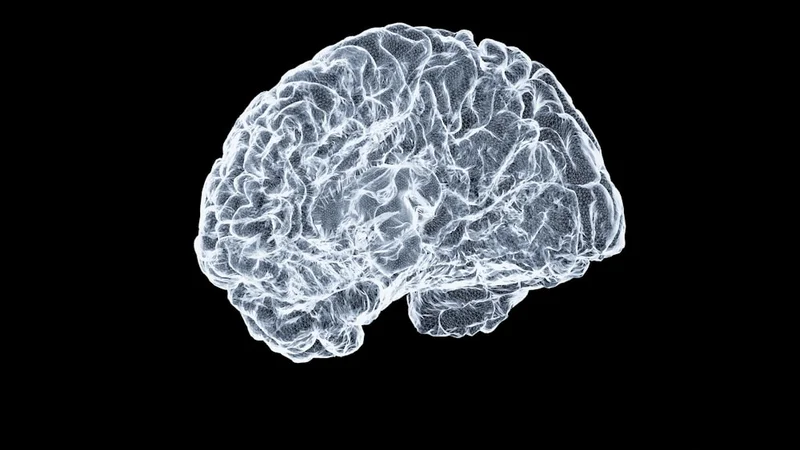
What Exercise Actually Does to Your Brain (The Science Most Fitness Culture Misses)
Three months into what I'd generously call a "productive slump," I was staring at a half-written document at 2pm — caffeinated, decently rested, completely unable to move a single thought forward.
A friend texted me a study link without context. One sentence in the abstract stopped me.
"Exercise training increased hippocampal volume by 2 percent, which is equivalent to reversing age-related volume loss by one to two years."
The hippocampus. Your brain's memory center. Aerobic exercise was making it physically larger — not metaphorically, not "functionally," but structurally, measurably larger on an MRI scan. In adults. People who weren't doing anything especially heroic. Just running.
I had been thinking about exercise entirely wrong. And I suspect you might be too.
The Thing Fitness Culture Got Backwards
Here's the frame most people operate inside: you exercise to change your body. You run to burn calories. You lift to build muscle. You do cardio to protect your cardiovascular numbers. The body is the point. Everything else is downstream.
This frame isn't false. It's just profoundly incomplete.
John Ratey at Harvard Medical School spent years documenting what exercise does to the brain — not the body, the brain — and his synthesis, SPARK (2008), arrives at a finding that most fitness culture has quietly ignored: the primary purpose of physical movement, from an evolutionary standpoint, is not to reshape the physique. It's to build and maintain the neural architecture required for learning, decision-making, and emotional regulation.
We didn't evolve to exercise. We evolved to move constantly, purposefully, in response to our environment. And the most consequential output of that movement, biologically speaking, wasn't a stronger body. It was a brain capable of adapting.
SPARK: The Revolutionary New Science of Exercise and the Brain — John J. Ratey
The article's core thesis (exercise builds neural architecture, not just muscle) is Ratey's — SPARK is the primary-source companion read.
As an Amazon Associate, we earn from qualifying purchases — at no extra cost to you.
You've probably felt the evidence of this without registering it as evidence. The afternoon run that dissolves a problem you'd been circling for hours. The morning workout that makes a difficult email feel easy to write. The three days you skipped exercise and noticed your mood doing something quiet and grey.
That's not motivation. That's not placebo. That's neurochemistry — and the research behind it is more robust than almost anything else in the behavioral science literature.
Let me walk you through what's actually happening.
BDNF: Your Brain's Own Miracle-Gro
When you do aerobic exercise — running, cycling, swimming, anything that elevates your heart rate for a sustained period — your brain produces a protein called brain-derived neurotrophic factor. BDNF.
Ratey calls it "Miracle-Gro for the brain." The metaphor is imprecise in all the ways that make it exactly right.
BDNF promotes the growth and maintenance of neurons. It strengthens synaptic connections — the junctions between brain cells where learning actually happens. It's one of the primary molecular mechanisms underlying memory formation, cognitive flexibility, and the brain's capacity to reorganize itself in response to experience. And your brain releases it in quantities that scale directly with aerobic exercise intensity and duration.
Here's what that looks like in a controlled experiment.
Kirk Erickson at the University of Pittsburgh ran a randomized trial with 120 older adults. Half were assigned to a year of aerobic walking. The other half did a year of stretching and toning exercises. At the end of the year, he scanned their brains. (Erickson et al., PNAS, 2011)
The aerobic exercise group's hippocampi had grown by 2%. The stretching group's hippocampi had shrunk — the expected, unremarkable process of age-related atrophy continuing on schedule.
Two percent sounds modest until you register what it means. Erickson calculated that this represented approximately two years of age-related hippocampal shrinkage reversed by twelve months of walking. The memory center of the brain was literally larger in the people who moved aerobically.
Not performing better. Not showing better recall scores (though they did). Larger. Physically, structurally larger.
The stretching control group wasn't a waste of time — stretching has genuine health benefits. But BDNF release requires sustained aerobic effort. You can't think your way to hippocampal growth. You can't meditate your way there. You need the elevated heart rate. You need the run.
The Antidepressant Nobody Prescribes
In 2023, an umbrella review published in the British Journal of Sports Medicine synthesized the evidence on exercise and mental health at a scale that should, by all rights, have changed the conversation.
The researchers analyzed 97 systematic reviews covering more than 1,000 randomized controlled trials and approximately 128,000 participants.
The finding: physical activity significantly reduced symptoms of depression and anxiety, with effect sizes comparable to or slightly exceeding those of antidepressants and psychotherapy — across all exercise modalities, populations, and presentations.
This wasn't a fringe result. It replicated what James Blumenthal at Duke had documented in 1999: 30 minutes of brisk exercise three times a week produced outcomes equivalent to sertraline for major depression. His 2000 follow-up found that patients who exercised had significantly lower relapse rates at ten months than those who had relied on medication alone.
The mechanism isn't mysterious. Exercise increases serotonin, dopamine, and norepinephrine — the same neurotransmitters that antidepressants target, typically through one pathway at a time. It simultaneously reduces cortisol, increases endocannabinoids (your brain's own mood-elevating molecules), and generates the BDNF-driven neuroplasticity that no medication can provide.
None of this means you should quit medication if it's working for you. That conversation belongs between you and your doctor, and the research says nothing to the contrary. But for the millions of people living inside the low-grade fog that most would describe not as depression exactly, but as not quite right — the evidence is specific and durable.
The most undersubscribed mental health intervention available doesn't require a prescription. It requires about 150 minutes a week.
The 20-Minute Effect: What One Session Does Right Now
You don't need a training plan to experience this. You need twenty minutes.
Wendy Suzuki at New York University has documented what happens to mood and cognition in the hours immediately following a single aerobic session. Her research describes two simultaneous effects: a short-term elevation in mood-related neurochemicals (dopamine, serotonin, norepinephrine), and what researchers call "transient hypofrontality" — a temporary reduction in prefrontal hyperactivity, a concept first described by exercise neuroscientist Arne Dietrich, that produces a measurable decrease in anxious rumination.
Translation: after a 20-minute aerobic workout, your brain is literally less capable of sustained anxious overthinking for two to four hours.
This isn't because exercise tires you out (though sometimes that's a bonus). It's because aerobic exercise downregulates prefrontal hyperactivity while upregulating the neurochemical environment that produces subjective wellbeing. The combination is what most exercisers describe informally as "that post-run feeling" — the calm, slightly elevated clarity that makes the impossible email feel entirely manageable.
The effect is transient. It wears off. Which is precisely why regularity matters more than any single heroic session.
This is also where tracking your aerobic zone becomes genuinely useful — not as a vanity metric, but as a tool for targeting the intensity range (roughly 60-80% of maximum heart rate) where BDNF production and mood effects are most consistently documented.

Amazfit GTR 4 Fitness Smartwatch (46mm, Black, GPS, 150+ Sports Modes, HR Zone Tracking)
Targeting the 60-80% max-HR aerobic zone where BDNF production and mood effects are most documented — the article explicitly recommends tracking your zone.
As an Amazon Associate, we earn from qualifying purchases — at no extra cost to you.
Knowing whether you're in that zone changes how you exercise, in the same way that knowing your speed changes how you train.

How Your Nervous System Learns to Handle Stress
Here's the finding that doesn't make fitness headlines, and that I think is actually the most valuable one.
Regular aerobic exercise doesn't just make you feel better in the moment. It changes how your autonomic nervous system responds to stress — all stress, not just the physiological stress of exercise itself.
The technical measure is heart rate variability (HRV): the beat-to-beat variation in your heart rate. High HRV reflects a parasympathetic nervous system that's functioning well — able to regulate, respond, and recover. Low HRV is associated with anxiety, burnout, and diminished resilience under pressure.
People who exercise regularly consistently show higher baseline HRV than sedentary individuals. More importantly: when both groups face identical stressors, regular exercisers produce lower cortisol outputs and recover to baseline faster. Their stress response is both smaller and shorter.
The mechanism is counterintuitive but internally consistent. Exercise is a physiological stressor — it activates your HPA axis, elevates cortisol, taxes your cardiovascular system. Regular exposure to this controlled stress makes the system better calibrated. More efficient. Less prone to misfiring in response to non-physical threats.
Think of it as stress-inoculation. You build a more resilient nervous system by regularly giving it manageable stress to handle — the same principle by which exposure therapy desensitizes anxiety responses, or by which a controlled burn prevents a catastrophic wildfire.
Regular exercisers don't have fewer difficult days. They have smaller physiological reactions to those days, and they return to baseline faster afterward.
How to Start This Week (Without Overhauling Your Life)
The research doesn't require a marathon training plan. It requires aerobic intensity and consistency. Here's the minimum viable version:
Step 1: Define your threshold, not your ideal. For BDNF release and the acute mood and memory effects, the evidence points to 20-30 minutes at 60-80% of your maximum heart rate. That's the minimum that produces documented effects — not the ceiling, just the floor. More is generally better up to a point, but getting to the floor consistently beats occasionally reaching the ceiling.
Step 2: Reduce the activation energy to near zero. BJ Fogg at Stanford has documented that the biggest predictor of whether a behavior starts is how much friction precedes it. Get a pair of running shoes you actually want to put on. The number of times you exercise in a month is more correlated with how easy it is to start than with how motivated you feel on any given morning.
Step 3: Move before your brain negotiates. The 2-4 hour cognitive and mood benefits are most valuable during your highest-cognitive-demand hours — which means morning exercise front-loads the neurological benefits across the part of the day that matters most. This isn't a hard rule; evening exercise is far better than no exercise. But morning tends to stick because it's outside the decision fatigue that dismantles evening plans by 6pm.
Step 4: Track your state, not just your stats. Keep a brief log — not miles and minutes, but a two-sentence note on your mood, focus, and energy relative to whether you exercised that day.

Clever Fox Habit Tracker Journal / Habit Calendar (2-Year)
Step 4 instructs the reader to log mood/focus/energy relative to exercise — a habit-tracking journal closes the feedback loop the article describes.
As an Amazon Associate, we earn from qualifying purchases — at no extra cost to you.
Most people, within three weeks of this practice, stop needing external motivation. The data you generate about yourself becomes the motivation. The feedback loop closes.
Step 5: Add resistance training as your second layer. Aerobic exercise produces BDNF and the acute mental health effects described above. Resistance training — kettlebells, bands, bodyweight work — produces complementary neurotrophic factors (IGF-1, VEGF) with different cognitive benefits and the structural and hormonal adaptations that aerobic training addresses less directly.

Liforme Original Yoga Mat (4.2mm, Alignment System, Yoga Bag Included)
Step 5 adds resistance / bodyweight training as the second layer — a non-slip mat is the base surface for floor and bodyweight work.
As an Amazon Associate, we earn from qualifying purchases — at no extra cost to you.
The research supports both. Not either/or. Both.
If you want to understand why movement produces the psychological effects it does — not just the neuroscience but the lived human experience of it — Kelly McGonigal's The Joy of Movement (Avery/Penguin Random House, 2019) is the companion read to Ratey's SPARK.
The Joy of Movement — Kelly McGonigal
The article explicitly recommends McGonigal's The Joy of Movement as the lived-experience companion to Ratey's SPARK.
As an Amazon Associate, we earn from qualifying purchases — at no extra cost to you.
McGonigal makes the case that exercise isn't just a tool for physical maintenance. It's a portal to the specific states — purpose, belonging, resilience — that people spend their lives looking for in other places.

The Most Underrated Biohack Is a 30-Minute Run
Jim Rohn used to say that the days you least feel like doing something are precisely the days you most need to do it. I spent years treating that as motivational rhetoric. It turns out it's neuroscience.
The days your mood is low, your focus is fragmented, your cortisol is high, your thinking feels thick — those are the days your brain needs BDNF, elevated serotonin, and parasympathetic recovery. Those are the days a 30-minute run would do more than an hour of trying harder at your desk.
But the brain in that state is the same brain that will argue you out of the run.
Designing your evolution means designing the physical practice that makes all other evolution neurologically possible. Better memory, better mood regulation, better stress resilience, better learning — all of it becomes more available after the run than before it. The brain that grows is the brain that moves.
What would change in how you work, decide, and recover if you treated exercise as cognitive infrastructure rather than optional maintenance? I'm genuinely curious — drop your answer in the comments.
Was this helpful?