Mindset· 10 min read
Why Being Ignored Hurts: What Brain Scans Reveal
Naomi Eisenberger's fMRI scans prove social rejection fires the same brain region as physical pain. Here's what the neuroscience means for you.
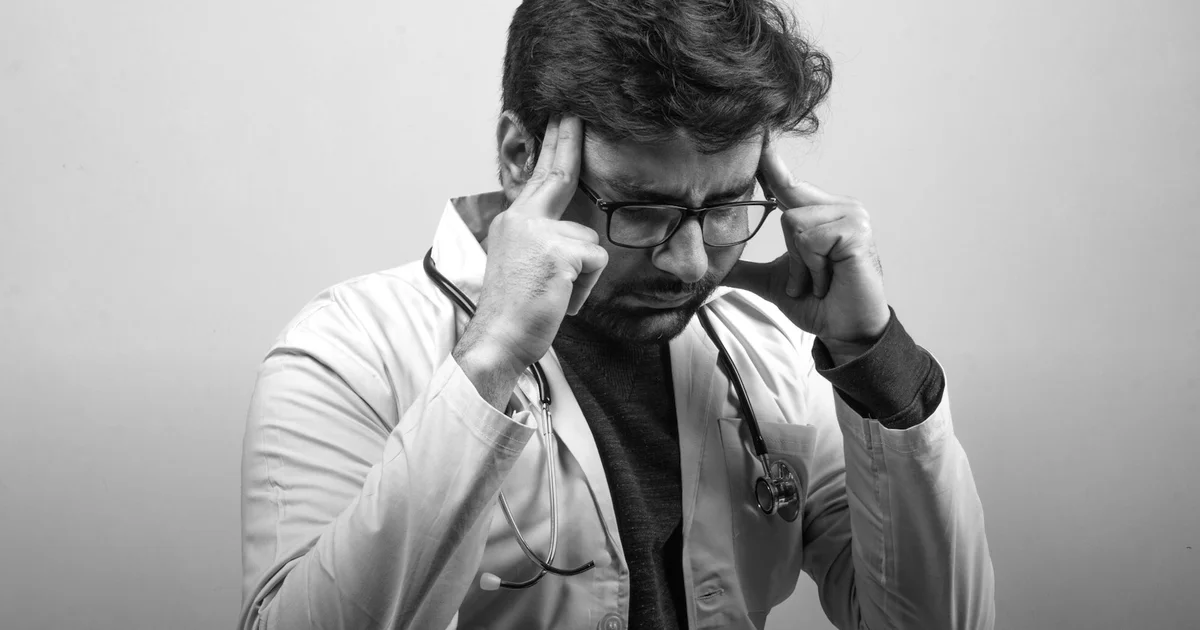
I Thought Being Ignored Was "Just Feelings." Then I Saw the Brain Scans.
There's a specific kind of silence that hurts more than an argument. You send a message and watch it sit there — read, but unanswered. You walk into a room and someone you expected to acknowledge you looks straight through you. You find out a gathering happened, one you'd have been happy to be included in, and nobody thought to ask. None of it leaves a mark you can show anyone. None of it technically qualifies as harm. And yet your chest feels like it's caving in.
For a long time, I blamed that feeling on thin skin. Some people just have thicker emotional armor, I told myself. Then I came across a 2003 paper published in Science that made me put my phone down and stare at the ceiling for a while — and I haven't looked at social exclusion the same way since.
The Study That Redefined Social Pain
The research was conducted by Naomi Eisenberger, a social neuroscientist at UCLA. Her setup was almost comically simple. Participants lay inside an fMRI scanner and played an online ball-tossing game called Cyberball — a paradigm originally designed by Kipling Williams at Purdue University. Three players, three digital avatars, one ball bouncing between them. After a few exchanges, two of the players stopped throwing to the participant.
That was it. A cartoon ball that stopped coming your way.
But the brain scans told a different story. The region showing the strongest activation when participants were excluded was the dorsal anterior cingulate cortex — the dACC. The same region that fires when you burn your hand on a stove, sprain your wrist, or catch a knee to a hard surface. Not a region adjacent to the physical pain system. Not a metaphorical overlap. The same region, responding to the same threat signal with the same urgency.
Social exclusion and physical pain share neural architecture.
This isn't a design flaw in your brain. It's the design.
Matthew Lieberman, a neuroscientist at UCLA and author of Social: Why Our Brains Are Wired to Connect, argues that the brain didn't accidentally borrow the pain system to handle social rejection — it co-opted pain deliberately. For the vast majority of human evolutionary history, being excluded from your group meant no food, no shelter, no protection from predators. The brain needed a signal powerful enough to force you back into the group before the damage became irreversible. The most powerful signal it already had was pain.

The Good Life — Robert Waldinger & Marc Schulz
The 85-year Harvard study proves what the brain's pain circuits already know: connection is not optional. The definitive read on why being ignored hurts and how relationships heal.
As an Amazon Associate, we earn from qualifying purchases — at no extra cost to you.
So it used that.
Which means the feeling you've been apologizing for — the disproportionate weight you give to a withheld invitation or an unanswered message — isn't evidence that something has gone wrong in your psychology. It's the predictable output of a system engineered over millions of years to treat social loss as a matter of survival. You're not oversensitive. You're running factory settings.

The Neuroscience That Rewrites the Story
Eisenberger's finding has been replicated and extended across dozens of studies in the two decades since. But the most striking confirmation came from an unexpected direction.
C. Nathan DeWall at the University of Kentucky ran a clinical trial in which participants took either acetaminophen — regular Tylenol — or a placebo daily for three weeks. The acetaminophen group reported significantly fewer hurt feelings in their daily diaries. When subsequently placed in an fMRI scanner and subjected to social exclusion, their neural responses to rejection were measurably reduced.
A physical painkiller reduced social pain.
The ventral prefrontal cortex, which normally functions as the volume knob for physical pain — quieting the signal once the threat has been assessed — is recruited during social exclusion too. In Eisenberger's data, participants with stronger activation in this region during exclusion reported lower distress. The brain's pain-modulation circuitry was doing for social rejection exactly what it does for a stubbed toe: trying to turn down the signal after the alarm has sounded.
This has practical implications that most people never reach, because they're too busy being ashamed of the fact that they hurt in the first place.
John Cacioppo and William Patrick, in Loneliness: Human Nature and the Need for Social Connection, frame the evolutionary calculus directly: humans are obligate social animals. The need for connection isn't a preference you can override with sufficient willpower or self-improvement. It's a biological requirement, managed by a nervous system calibrated over millions of years to treat social threat as survival threat.
When you understand this — really sit with it, at the level of "my brain is doing exactly what it's designed to do" — the shame that typically amplifies social pain starts to dissolve. Not the pain itself. The shame about the pain. That's the cognitive overhead worth eliminating first, because it's what turns a manageable signal into a verdict about who you are.
The Three-Stage Trap You Don't See Until You're Already In It
Kipling Williams, whose decades of Cyberball research represent the most comprehensive investigation of ostracism in psychology, documents a three-stage response sequence that plays out with remarkable consistency across cultures, ages, and degrees of exclusion.
Stage one is reflexive pain and immediate need threat. The response is immediate and non-negotiable. Williams found that it doesn't matter if participants know the exclusion is random and artificial. He ran experiments in which people were explicitly told the computer was selecting randomly — and they still experienced the pain response. The dACC doesn't process intent or context. It detects the signal and fires.
Simultaneously, exclusion threatens four core psychological requirements: belonging, self-esteem, control, and the sense that one's existence is meaningful to others. All four at once. This is what Williams calls a "need threat" response, and the research is unambiguous: people will do a lot to restore even one of these four needs after exclusion. They conform to opinions they don't hold. They agree to tasks they don't want. They affiliate with groups they actively dislike — anything that offers even a proxy experience of belonging.
Here's why this matters for how you understand yourself: many behaviors people label as their worst social tendencies — the approval-seeking, the over-explaining, the shrinking, the performing — are recognizable here as need-restoration strategies. Threat responses running in non-threatening environments. Not character flaws. Misapplied survival logic.
Stage two is reflective coping. The deliberate effort to restore the threatened needs — by reconnecting, by finding alternative belonging, or by generating meaning independent of the excluder. This is where agency enters the picture. Williams's research shows the strategies chosen at this stage largely determine whether exclusion produces lasting damage or becomes a navigable experience.
Stage three is resignation. Only reached when coping repeatedly fails. A withdrawal from social investment, a protective numbness that looks externally like not caring — but is, underneath, caring intensely with no available strategy. The functional definition of learned helplessness in the social domain.
Knowing which stage you're operating from in any given moment is one of the more practically useful pieces of self-knowledge you can develop.
Why Some People Hurt More — And What That Actually Tells You
Not everyone responds to the same exclusion event with the same intensity. Eisenberger's research on trait rejection sensitivity — a stable individual difference in how readily the exclusion-detection system activates — shows that people with higher sensitivity display stronger dACC responses even to mild or ambiguous social cues.
Jean Twenge at San Diego State University documents the downstream behavioral consequences of experimental exclusion: reduced helping behavior, increased aggression toward strangers, impaired logical reasoning, reduced self-regulation, and increased consumption of comfort food. The excluded brain redirects its resources toward the immediate priority of threat management, at measurable cost to everything else.
This is the hidden tax on chronic social vigilance that rarely makes it into the research headlines: not just the pain of specific exclusion events, but the ongoing cognitive and behavioral cost of walking around with a threat-detection system in continuous partial activation. The person who has learned — from childhood, from early relationships, from workplaces — to expect exclusion is carrying that overhead every day.
Brené Brown's research on vulnerability, documented in Daring Greatly, maps the armor people build specifically to avoid ever reaching the resignation stage of Williams's sequence.

Liforme Original Yoga Mat
A grounded, self-soothing practice (mindful movement / breathwork) calms the same threat circuitry that activates when we feel excluded.
As an Amazon Associate, we earn from qualifying purchases — at no extra cost to you.
The irony she documents is precise: the armor doesn't just block the pain of exclusion. It also blocks the connection that would reduce the underlying need for the armor in the first place. The defense mechanism defeats the goal it's defending.
The attachment research adds the developmental layer. In Attached, Amir Levine and Rachel Heller synthesize decades of work on how early relational experiences calibrate the sensitivity of the exclusion-detection system. If your primary caregivers were inconsistently available, your threat-detection system learned to run on heightened sensitivity — scanning continuously for indicators of impending exclusion, reading ambiguous signals as dangerous, activating the pain response at lower thresholds.

Philips SmartSleep Wake-Up Light HF3520
Mood and emotional resilience track circadian rhythm — a gentle light-based wake routine stabilises the baseline that social stress erodes.
As an Amazon Associate, we earn from qualifying purchases — at no extra cost to you.
This isn't pathology. It's learning. It's what an adaptive nervous system does with the data it receives. The relevant question isn't why you're sensitive to social signals. It's whether the sensitivity level appropriate for the environment that calibrated it is also appropriate for the environment you're actually in now.

Three Levers That Actually Work
The research converges on three mechanisms that demonstrably reduce both the intensity of social pain and the threat-response behaviors it produces. None of them require needing people less.
Accuracy calibration. The exclusion-detection system, calibrated for a world where ambiguous social signals were probably dangerous, generates significant false positives in modern environments. The unreturned message. The colleague who walked past you in the hallway without eye contact. The event you weren't included in that you found out about later. None of these are unambiguous exclusion signals — but the dACC treats them as potential survival threats and demands action.
Developing the habit of distinguishing "this person explicitly chose to exclude me from something they knew I wanted" from "this person was distracted, overwhelmed, or simply not thinking about me" isn't minimizing your experience. It's calibrating a system that evolved to err heavily on the side of false positives because the cost of missing a real threat was so much higher than the cost of a false alarm. In a different environment than the one the system was designed for, that same calibration produces more noise than signal.
Need diversification. Williams's research consistently shows that the threat intensity of any single exclusion event is proportional to how many of the four core needs are primarily satisfied by the relationship or context doing the excluding. When most of your belonging, recognition, and sense of meaning come from a single source, one exclusion event threatens all four simultaneously — and the system responds accordingly.
The design move is not to need people less. It's to distribute your need for belonging and recognition across enough genuine contexts that no single social signal can activate the full force of the threat response.
Self-compassion activation. Kristin Neff's research documents that the three components of self-compassion — self-kindness, common humanity, and mindfulness — specifically activate the parasympathetic "soothing" system that counteracts the threat response social exclusion triggers. The mechanism is the opposite of what most people attempt: rather than arguing yourself out of the pain ("this is stupid, I shouldn't feel this way"), self-compassion works by treating the pain as legitimate — which quiets the threat system biologically rather than amplifying it through suppression.
How to Start Today
Three specific practices grounded in the research above:
1. Name the system, not yourself. When the exclusion pain lands, the first move is naming what's happening neurologically rather than what it means about you: "My dACC is responding to what it's reading as a social threat signal." This isn't emotional bypass. It's the metacognitive distance that prevents a threat signal from cascading into a narrative about your worth. The pain is information. It isn't a verdict.
2. Run the accuracy audit. For any social signal you're interpreting as exclusion, ask two questions: What's the most generous plausible explanation for this behavior? What specific evidence would I need before concluding this was intentional exclusion? Jack Schafer, a former FBI behavioral analyst, offers a systematic framework for reading social signals more accurately in The Like Switch — distinguishing genuine rejection from the ambient noise the exclusion-detection system misreads as threat.
The Happiness Trap (2nd Ed.) — Russ Harris
ACT tools for sitting with painful emotions (like the sting of being ignored) without being ruled by them — practical companion to the neuroscience.
As an Amazon Associate, we earn from qualifying purchases — at no extra cost to you.
3. Map your belonging portfolio. Take a clear-eyed inventory of where you currently get your primary doses of belonging, recognition, control, and meaning. If more than 60% of any one of those needs is coming from a single relationship or social context, you're running a fragile system. The design task isn't to invest less in your primary relationships — it's to build parallel genuine connections that make the whole network more resilient. Nicholas Epley's Mindwise adds a useful counterintuitive finding here: people consistently underestimate how interested strangers are in connecting with them, which makes expanding the social world feel harder than the evidence suggests it actually is.

Kindle Paperwhite (2024, 16GB)
A low-stimulation reading refuge — building inner resources is part of recovering from social pain.
As an Amazon Associate, we earn from qualifying purchases — at no extra cost to you.
A structured journal for tracking your connection quality and belonging sources across different relationships can make this inventory concrete enough to act on rather than leaving it as a vague intention.

LectroFan Classic White Noise Machine
Rumination after social rejection wrecks sleep — non-looping white noise helps quiet the overactive mind at night.
As an Amazon Associate, we earn from qualifying purchases — at no extra cost to you.

There's a reason Matthew Lieberman titled his synthesis of social neuroscience Social and not Sentimental. The need for belonging isn't a soft feature of human psychology — it's structural, managed by the same neural hardware your brain uses to process physical injury. Treating it as something to toughen yourself against isn't resilience. It's fighting your own architecture with your bare hands.
What changes when you understand the mechanism is this: the pain stops feeling like a verdict on who you are and starts feeling like information about what your nervous system needs. Pain that carries information is workable. Pain you're ashamed of stays stuck.
Designing your evolution doesn't require needing people less. It requires building a life where your connections are broad enough, and your self-understanding is clear enough, that no single social signal can put the whole system into threat mode.
What's one relationship or community you've been meaning to invest more energy in — and what's the smallest possible step you could take toward it this week?
Was this helpful?