Mindset· 11 min read
Why Boredom Feels So Bad (and What to Do With It)
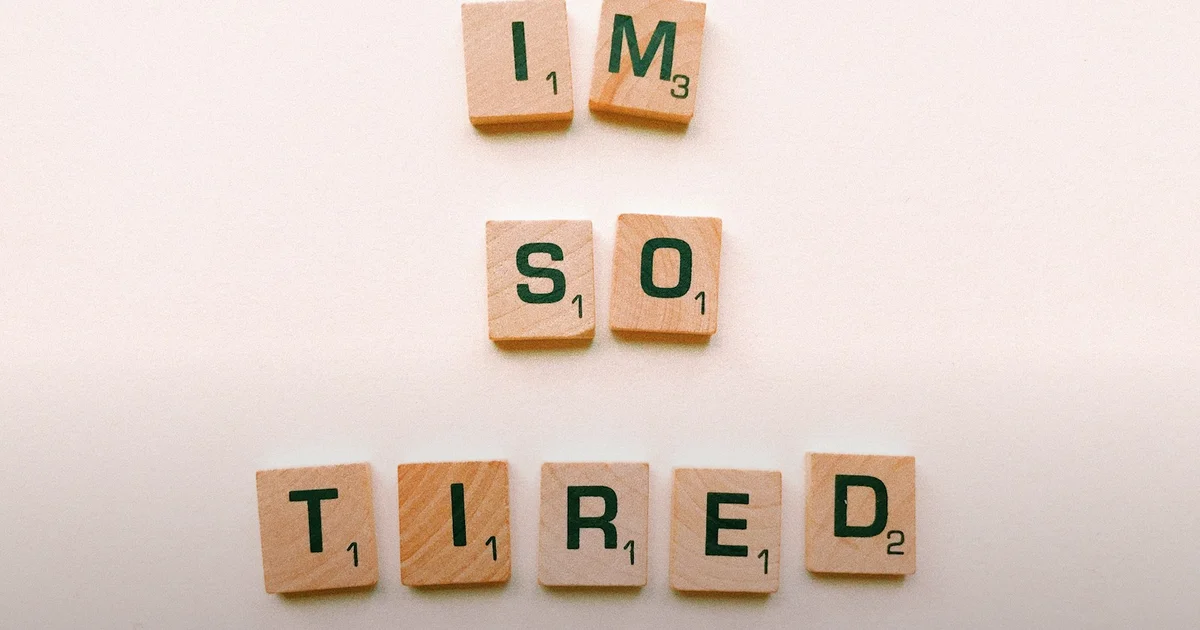
Why Boredom Feels So Bad (and What to Do With It)
I once sat in a waiting room for forty minutes without my phone. Not because I was being mindful. Because it had died.
The first five minutes were fine. I watched people come and go, noticed the outdated magazines, thought about what I was going to eat for lunch. Ordinary stuff.
Then something strange started. A low-grade discomfort built up — not pain, not anxiety in any dramatic sense, more like a static hiss. My hands felt purposeless. My attention kept casting around for something to grip. I ended up reading the fire safety instructions on the wall. Twice.
I wasn't in danger. I wasn't in distress. I was just bored. And it felt genuinely bad.
That afternoon I looked up whether anyone had studied this. They had.
What Boredom Research Actually Shows
In 2014, psychologists at the University of Virginia ran a deceptively simple experiment. They asked participants to sit alone in a room for between six and fifteen minutes with nothing to do — no phones, no books, no music. Just their own thoughts.
Most of them found it hard to concentrate and didn't enjoy it. And in one striking condition, when given the option to administer a mild electric shock to themselves during a 15-minute stretch alone, about two-thirds of the men (12 of 18) and a quarter of the women (6 of 24) did so at least once, even though they had said beforehand they would pay to avoid being shocked.
The authors, Timothy Wilson and colleagues, published the findings in Science. Their summary: "the untutored mind does not like to be alone with itself." Worth noting that the samples were mostly college students in artificial lab conditions, and the study has drawn criticism — voluntarily self-shocking outside that context is mercifully rare. But the core finding, that many people find sustained idle time surprisingly aversive, is what made the paper influential.
Why boredom feels so bad — not just dull, but actively aversive — got a cleaner answer in a 2018 paper by Westgate and Wilson in Psychological Review. Their model is elegant: boredom isn't simply low stimulation. It's a mismatch. Your attentional resources are available, but nothing in your environment is engaging them in a way that feels meaningful. The feeling is the signal. Your mind is announcing, fairly plainly: this isn't worth my capacity.
Why Boredom Sends You Straight to Your Phone
Every app in your pocket was built by teams specifically tasked with capturing your attention. The scroll resolves the attentional mismatch almost instantly: suddenly there is something engaging your resources. The signal stops. You feel better.
For a while, anyway.
Then the feeling returns and you scroll again. Variable reward schedules are widely described as more compelling than predictable ones, which helps explain why the scroll keeps pulling you back. Every moment might have something interesting, so you keep checking.
Research links higher boredom proneness to more problematic smartphone use — a pattern observed across multiple studies, though all of them are correlational, meaning they can't say which causes which. One plausible reading is that when the escape valve gets used reflexively, the tolerance for idle time — the ability to simply sit with an attentional mismatch for a few minutes — never gets a chance to develop.
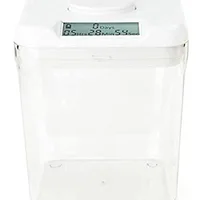
Kitchen Safe kSafe Time Locking Container (Medium, White Lid + Clear Base)
As an Amazon Associate, we earn from qualifying purchases — at no extra cost to you.
It's a bit like using sugar to manage low energy. Short-term it works. Long-term, you become worse at the thing you were trying to sustain.
This isn't a moral case against phones. It's a mechanical description of what happens when the fastest exit route gets used reflexively, before you've had a chance to notice what the boredom was actually pointing at.
Boredom as a Signal About Meaning
Here's the counter-intuitive part: some boredom is worth tolerating.
When you're bored, your mind tends to wander — and not randomly. Your brain, given nothing urgent to process, often drifts toward the future and personal concerns. That's an observation many people recognise from their own idle time rather than a settled empirical finding, but it's a reason to give the signal a chance to speak before you silence it.
But there's a second reading of the signal. If you notice boredom in a context you used to find engaging — a project, a relationship, a career path — that's information worth sitting with. Sustained boredom in a context you chose deliberately is sometimes the first quiet voice saying: this might not be what it was.
It won't shout. It starts as a vague restlessness, the kind you can easily drown out with a podcast. Catching it early requires being willing to sit with it long enough to hear what it's actually saying. That's harder than it sounds, partly because we've been conditioned to treat any signal of disengagement as a problem requiring an immediate fix.
Genuinely unoccupied time — where nothing is scheduled and nothing is demanded — is rare. Most people fill every available minute and then wonder why they feel reactive rather than intentional. How to build a morning routine that actually sticks covers why the shape of the first hour matters so much, but unscheduled time isn't only a morning issue. It's the space where the most important thinking tends to arrive — not the kind you plan for, but the kind that shows up when nothing else is competing for the bandwidth.
Why Idle Time Feels Like a Problem to Solve
There's a cultural layer here, too.
Busyness has become a status signal and, for many people, a core part of their self-concept. Being occupied means being important, useful, alive. Idle time triggers a low-grade guilt in people who measure their worth by output. So when you sit still, the discomfort isn't only boredom — it's the discomfort of not having evidence that you're doing enough.
The shock-yourself finding captures this precisely. The participants weren't just avoiding an unpleasant feeling. They were doing something to prove that something was happening.
A notebook and ten minutes can interrupt that loop. Not because journaling is always the answer, but because a blank page asks you to be active without performing activity for anyone else. It's one of the few spaces where your attention can move without anyone watching.
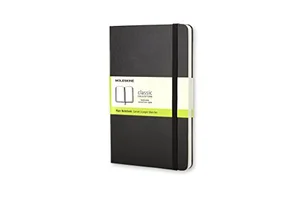
Moleskine Classic Notebook, Large, Plain, Black, Hard Cover
As an Amazon Associate, we earn from qualifying purchases — at no extra cost to you.
What Boredom-Tolerant People Do Differently
The people who seem most comfortable with idle time tend to have one thing in common: they have projects that require no audience.
Hobbies with no output pressure — something they build, draw, grow, or read that exists entirely for its own sake. When boredom arrives, they have somewhere to direct the attentional energy that isn't a screen. That's not accidental. It's a design choice, even if they didn't frame it that way.
They've also learned to distinguish between two types of boredom:
| Type | What it feels like | What it points to | What to do |
|---|---|---|---|
| Shallow boredom | Brief impatience — a queue, the last few minutes of a meeting | Low engagement with the current task; not a deeper mismatch | Wait it out. It passes on its own. |
| Deep boredom | Persistent flatness in a domain you care about, or used to | Possible gap between your goals and where your attention is going | Worth sitting with — it usually has something to say. |
The deeper kind is different: a persistent flatness in a domain you care about, or used to. That one is worth sitting with. It usually has something to say. And if you find yourself unable to walk away from a goal that no longer fits, why quitting feels so much harder than it should is worth reading before you make a decision either way.

Flow: The Psychology of Optimal Experience — Mihaly Csikszentmihalyi
As an Amazon Associate, we earn from qualifying purchases — at no extra cost to you.
How to Start Working With Boredom Instead of Against It
Three things tend to help, and none of them require willpower to sustain:
-
Leave one daily window deliberately unscheduled. Ten to fifteen minutes where nothing is planned and your phone stays in your pocket or bag. Don't fill it with a podcast. Don't reframe it as a meditation session. Just leave it genuinely empty. Let the discomfort arrive. Notice where your mind goes before you reach for a distraction. It won't feel comfortable at first. That's expected. The tolerance builds with repetition, the same way any other capacity does.
-
Start a simple boredom log. When you notice boredom, write down what you were doing, whether you felt the urge to escape immediately, and whether the feeling was shallow (impatience) or deeper (a flatter, more persistent disengagement). After two weeks the pattern becomes visible. You'll see which contexts genuinely don't fit you and which you're avoiding for no particular reason. A small notebook is all this requires.
-
Give your attention somewhere better to go. The people who stop relying on the scroll most successfully aren't primarily fighting the urge. They're redirecting the attentional energy toward something that absorbs it better — a skill they're building, a project they're working through, a book they're reading slowly. Not to fill time. To give the attention somewhere meaningful to land.
Boredom doesn't mean something is wrong with you. It means your attention is available and nothing is currently claiming it in a way that registers as worthwhile.
That's not a problem. That's an opening.
Designing your evolution — the deliberate work of becoming someone a little more intentional — doesn't mean filling every minute. It means paying attention to the signals that tell you where your attention actually wants to go. Boredom is one of them.
Your phone has a fast answer to that question. It's almost always the same answer: scroll this.
Your own mind, given a few quiet minutes, tends to come up with something more specific. And usually more interesting.
What does boredom usually point at for you — something worth changing, or just impatience in disguise?
Was this helpful?