Mindset· 9 min read
Why Excellence Is Rare (And How to Join the Few)
Excellence is rare because excuses are always available. Here's how people who consistently choose courage over comfort actually think and operate.

Why Excellence Is Rare (And How to Join the Few)
Here's something that doesn't get said often enough: most people will never become excellent at anything they genuinely care about. Not because talent is scarce. Not because circumstances are fundamentally unfair. And not — despite what they quietly believe — because they never got the right opportunity at the right time.
They'll fall short because at every critical junction, a perfectly reasonable voice shows up and says not yet. And they listen. That voice isn't a personal failure. It's biology doing exactly what four hundred thousand years of evolution designed it to do: minimize risk, preserve energy, and keep you exactly where you are. The problem is that biology was engineered for survival, not for excellence. And confusing the two is the most costly mistake most people will ever make.
Excellence Stays Scarce Because Excuses Are Always Available
Look around any room full of people with genuine potential — a classroom, a conference, a company — and ask yourself: how many of them will be operating at a truly exceptional level in ten years?
Research suggests fewer than you'd hope. Psychologist Heidi Grant Halvorson, whose work on goal pursuit at Columbia University has been applied across Fortune 500 organizations, has documented the significant gap between good intentions and sustained action. Separately, research published in the Journal of Clinical Psychology found that fewer than 8% of people who commit to meaningful goals reach what they'd define as full success. The culprit isn't low ambition at the start. Most people begin with enormous ambition. It's what happens between intention and sustained action — specifically, what happens every single day when the easier path is available and the internal negotiation begins.
Jim Rohn understood this before the researchers confirmed it. "Discipline weighs ounces. Regret weighs tons." The pain of discipline is immediate, specific, and present. The cost of avoidance is abstract, distant, and easy to defer. Your brain almost always chooses the concrete discomfort it can avoid right now over the abstract regret it can't yet feel.
Seth Godin frames this as a "shipping" problem — the gap between people who put their real work into the world and people who perpetually almost do. The difference, he argues, isn't talent or resources or even timing. It's the decision to stop waiting for perfect conditions and to start anyway, with what you have, from where you are. Most people never make that decision. Not because they can't. Because they don't have to — not today, anyway. Tomorrow is always an option.
You've probably felt this. A conversation you rewrote in your head a hundred times but never had. A project you spent three months "preparing" for without beginning. A standard you could have held yourself to but didn't, because Tuesday felt inconvenient and Saturday seemed more manageable. That pattern, repeated across months and then years, is the architecture of an ordinary life. It doesn't feel dramatic. That's precisely what makes it dangerous.
The Excuse Machine: How Your Brain Talks You Out of Greatness
Neuroscience has a name for the force working against you: the status quo bias, amplified by your brain's threat-detection system and its remarkable capacity for post-hoc rationalization.
Here's how it plays out. You set an intention — a new business, a creative project, a harder training program, a difficult conversation you've been postponing for weeks. Your brain registers this departure from the familiar as a low-grade threat. Within milliseconds, it starts generating justifications for why now isn't the right time. These justifications feel rational because your brain is genuinely good at building logical cases. They're not actually rational. They're emotionally motivated and intellectually dressed.
Steven Pressfield gave this force a name — "Resistance" — in a book that remains one of the most honest examinations of why people don't do the work they know they should. "Resistance is always lying," he wrote. "It will tell you anything to keep you from doing your work. It will assume any form, if that's what it takes, to deceive you."
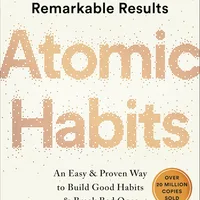
Atomic Habits — James Clear
The single most influential modern playbook for the exact problem the article describes: how small, consistent choices compound into identity. Direct match for the reps-over-results thesis.
As an Amazon Associate, we earn from qualifying purchases — at no extra cost to you.
The insidious part isn't that excuses feel like excuses. It's that they feel like wisdom. I'm not ready yet. Wise. The timing isn't right. Prudent. I need more information before I commit. Responsible. Each one sounds reasonable in isolation. Stacked across a year, they become the bricks of a very comfortable ceiling.
What separates the few who break through isn't that they've stopped having these thoughts. It's that they've learned to recognize them as theater — compelling, internally consistent theater — and act anyway. That skill isn't innate. It's trained. Which means you can train it too.
Courage Is Not a Feeling You Wait For — It's a Decision You Repeat
Most people are waiting to feel courageous before they act. The few who achieve excellence have realized that courage isn't a feeling that arrives first. It's a decision that feelings follow.
Ryan Holiday traces this distinction back to the Stoics in Courage Is Calling, showing how figures like Marcus Aurelius and Epictetus weren't fearless. They were deliberate. They felt the resistance and acted rightly in the presence of it, not after it had passed. That distinction — between waiting for fear to subside and acting while it's still loud — is where the gap between ordinary and excellent actually lives.

kSafe Time Locking Container
Locks your phone, snacks, or distractions for as long as your deep-work block demands — the most direct tool for designing your environment to make hard choices easier.
As an Amazon Associate, we earn from qualifying purchases — at no extra cost to you.
Think about what courage actually looks like in a real week. It's not delivering a speech to ten thousand people or making a historic decision. It's sending the email you wrote and rewrote seven times and nearly deleted. It's going back to the gym after two weeks off, knowing your pride will sit in the corner while you struggle through a reduced workout. It's telling someone the truth when a comfortable silence was available. It's choosing the harder project over the one you know you'll do easily and well.
These micro-decisions don't feel heroic. They barely feel significant in the moment. But they are precisely where excellence is constructed or abandoned — not in dramatic turning points, but in the accumulation of small choices made when no one is watching.
Steve Magness, performance scientist and author of Do Hard Things, spent years researching what separates elite performers from near-elite performers in high-stakes athletics. His conclusion wasn't genetic superiority or superior methodology. It was the capacity to tolerate discomfort without requiring it to disappear first — what he calls "real toughness," built incrementally through deliberate exposure to difficulty rather than avoidance of it.
The mechanism is identical whether you're building a business, developing a creative practice, or redesigning a significant life habit. Repeated exposure to the discomfort you've been avoiding, without needing that discomfort to vanish before you proceed. That's the training. It isn't glamorous. It works.
How the Few Who Pursue Excellence Actually Think
If you study people who achieve consistent excellence over years — not one-time wins but sustained high performance — a specific cognitive architecture emerges. It's rarely what people expect.
They're not more confident than average. Many high performers describe persistent self-doubt running quietly in the background. They're not fearless. They often have an acute awareness of everything that could go wrong. What distinguishes them is an identity-first relationship with difficulty. They don't do hard things to prove their worth; they do hard things because doing hard things is who they've decided to be. The action comes from identity, not from motivation that needs to be maintained by results.
Ichiro Kishimi and Fumitake Koga's The Courage to Be Disliked — a dialogue-based exploration of Adlerian psychology that became an unlikely publishing phenomenon — makes a disquieting argument: the desire for external approval is the primary cage most people build around their own ambitions. Excellence doesn't require indifference to feedback, but it does require independence from the need for approval before taking action.

Kindle Paperwhite (12th Gen, 16GB)
The article references five books in close succession. The Kindle becomes the meta-purchase: a single device that holds the entire reading list and supports the identity-first transformation described here.
As an Amazon Associate, we earn from qualifying purchases — at no extra cost to you.
This is harder than it sounds, because we are deeply social animals. The fear of looking foolish — of failing publicly, of being judged by people we respect — is viscerally real and socially reinforced. But the few who build extraordinary lives have made a specific exchange: they've traded the comfort of guaranteed approval for the satisfaction of acting from their own judgment. And they've found, over time, that genuine respect follows authentic action far more reliably than performed safety ever did.
Susan Jeffers captured the other critical element in the deceptively simple title of her seminal work: Feel the Fear and Do It Anyway. The title is the entire framework. You don't resolve the fear first. You move through it. The evidence of your own capability arrives on the other side, not before it.

Sony WH-1000XM5 Noise Cancelling Headphones
Doing the hard thing requires a focus zone. The XM5s are the canonical press-play-and-the-world-goes-quiet tool — directly enabling the deep-work blocks that your weekly uncomfortable act demands.
As an Amazon Associate, we earn from qualifying purchases — at no extra cost to you.
There's also a distinctive relationship with failure. People who achieve excellence over the long term treat failure as data — something to be dissected, learned from, and recalibrated against. They're not indifferent to failing; they're not imprisoned by it. The difference is that they don't interpret a failed attempt as a verdict on their fundamental worth. It's information about a specific approach at a specific moment under specific conditions. Adjust and continue.

How to Stop Taking Things So Personally
How to Join the Few: Your Starting Protocol
Knowing why excellence is rare doesn't automatically place you among those who pursue it. That requires structure — specific, repeatable behaviors that incrementally build the courage muscle. Here's where to start.
1. Name the exact excuse your internal voice uses most. Not generically ("I procrastinate") but specifically ("I tell myself I need to do more research first" or "I convince myself the conditions aren't right yet"). Write the sentence down. Naming it precisely strips approximately half its power, because it transforms an unconscious pattern into a visible one you can observe rather than simply obey.
2. Commit to one uncomfortable act per week — and do it first. Not the most frightening thing on your list. The moderately frightening one. Call it your weekly act of expansion. A difficult conversation, a creative risk, a physical challenge, a commitment you've been deferring. Do it early in the week before the internal negotiation has time to build a compelling case against you.
3. Track reps, not results. Readiness is largely a myth produced by the excuse machine. Results follow from consistent action over time — but confidence follows from tracking attempts, not achievements. Every time you choose the uncomfortable option, log it. A dedicated accountability journal makes this tangible and keeps the pattern visible when motivation dips.

Clever Fox Habit Calendar Circle (24-Month)
The article literally says a dedicated accountability journal makes this tangible. The Clever Fox circle tracks up to 8 habits over 24 months — a perfect physical home for the reps that build identity over time.
As an Amazon Associate, we earn from qualifying purchases — at no extra cost to you.
4. Design your environment to favor hard choices. The few who consistently pursue excellence aren't more disciplined than other people. They're more strategic about the environments in which their decisions get made. Remove friction from behaviors you want to increase; add friction to the escapes you want to reduce. Keep your journal on your desk, not in a drawer. Put your gym shoes where you'll trip on them. Make the easy path slightly less easy and the important path slightly less demanding.
5. Find one person who operates at the level you're moving toward. Not to compare yourself, but to calibrate what's genuinely possible. Most people unconsciously set their standard to the median of their immediate environment. If everyone around you is avoiding difficulty, avoiding difficulty feels normal and sufficient. Proximity to someone who consistently chooses the harder option recalibrates your sense of what's available — and quietly raises the floor of what you'll accept from yourself.

The Life You're Designing Right Now
Excellence is not a destination you reach and then inhabit permanently. It's a standard you hold yourself to — renewed daily, sometimes hourly — in those quiet moments when the comfortable option is always present and always tempting.
Every person reading this has glimpsed what they're genuinely capable of. You've had moments when you operated at a level that surprised you. When you did the hard thing and felt the particular satisfaction that nothing easier can produce. When you chose growth over comfort and recognized, afterward, that you were more than you'd believed in that moment before you started.
The few don't have access to a different life than you do. They've simply decided — not once in some dramatic moment of clarity, but repeatedly, in the mundane friction of ordinary days — that the life they're building is worth the discomfort of building it. They've rejected the perfectly reasonable voice that says not yet and replaced it with a much simpler question: If not now, then when, exactly?
Excellence stays scarce because the supply side is permanently constrained — not by talent, but by the daily decision to choose growth when comfort is available. That constraint is what makes excellence meaningful. And it's what makes joining the few an act of genuine design, not luck. You don't stumble into the top. You choose it, repeatedly, in the small moments where it costs you something real.
What's the one uncomfortable thing you've been "almost ready" to start — and what would today look like if you began it anyway?
Related reading: Courage Is Calling by Ryan Holiday — The Stoic case for acting courageously in daily life, not just grand moments.
Was this helpful?