Mindset· 9 min read
Why Tiny Delays Feel Enormous, According to Science
Why does a tiny delay spike your mood for minutes? Maister's 1985 research pinpointed 3 psychological factors that make waits feel bigger than they are.
Your App Froze for 8 Seconds. Here's Why You're Still Annoyed Three Minutes Later

It was a Tuesday morning, mid-thought.
I was sending a message — important enough to matter, not urgent enough to cause real problems — when the screen locked up. No spinning wheel. No error message. Just nothing, sitting there, doing absolutely nothing while I waited for it to remember it was a phone.
Eight seconds. Maybe ten. Then the app caught up, the message went through, and life continued as normal.
I was annoyed for twenty minutes after.
Not mildly, either. The specific kind of annoyance that seeps into your next interaction, that makes your responses slightly sharper than the person asking actually deserves, that you only notice you're carrying when you stop and ask yourself why you're being short about something completely unrelated. The kind that makes you realize, eventually, that a ten-second technical hiccup has quietly taken a real bite out of your morning.
If you recognize that feeling — and I think you do, even if your details are different — you've probably also felt the strangeness of it. The mismatch between the size of the event and the size of the reaction doesn't quite add up. Nothing went wrong. Nothing of consequence, anyway. A phone froze briefly, then un-froze. Life resumed. And yet.
That gap between the cause and the response is exactly what a management consultant and academic named David Maister spent years trying to explain. What he found should change how you think about your own impatience. Not in a vague, "try to be more patient" way. In a precise, almost mechanical way that gives you specific tools for a problem most people never bother diagnosing.
The 1985 Paper Nobody in Self-Development Talks About
In 1985, Maister published an analysis called "The Psychology of Waiting Lines". Not the catchiest title. But the argument inside it is one of the most practically useful pieces of behavioral research you've probably never read.
Maister's starting point was a simple observation that anyone who had designed a customer service operation had noticed but couldn't fully explain: the actual, measured duration of a wait had a surprisingly weak relationship to how frustrated the people waiting actually became. Short waits sometimes produced enormous frustration. Genuinely long waits sometimes produced almost none. And the same person — studied across different waiting contexts — would tolerate one wait calmly and completely lose their composure over another, even when the clock said the second wait was shorter.
Duration wasn't the primary driver of perceived suffering. Something else was.
What Maister proposed instead was a set of specific, testable psychological factors that shape experienced wait time independently of the clock. These aren't personality variables — not about who you are or how patient you are in general. They're situational and environmental ones, which is exactly what makes them actionable.
It's Not the Seconds. It's What Accompanies Them.
The first factor Maister identified is the hardest to believe until you experience it consciously: an unexplained wait feels longer than an explained wait of the identical actual duration.
Run a study where two groups of people wait the same ten seconds — one group told nothing, one group told "there may be a brief delay because of server load" — and the second group consistently reports the wait as shorter and less frustrating. Same ten seconds on the clock. Genuinely different experience of those ten seconds.
The mechanism is almost too simple once you see it. An explanation gives your mind somewhere to go. "There may be a brief delay because X" lets you slot the discomfort into a context, which changes your relationship to it. Instead of ten seconds of raw, unexplained wrongness, you have ten seconds of a sensible, if inconvenient, situation you understand.
The unexplained wait forces something different. It converts the wait itself into a problem that needs solving. Why is this happening? When will it end? Should I do something? Is something broken? Every one of those questions is uncomfortable, and they all compete for your attention during the same ten seconds. The waiting isn't what's bothering you. The not-knowing is.
This is why a website that displays "Loading — typically 10 seconds" produces far less frustration than a blank screen of identical duration. The first is a boring ten seconds. The second is a concerning one. And the frozen phone screen is specifically a blank, silent, unexplained one — which means your brain never gets to put it in a box and set it aside.
See also: Uncertainty Isn't the Problem. Your Intolerance of It Is.
The Mind Turned Against Itself
The second factor is related but distinct enough to matter separately: unoccupied time feels longer than occupied time.
Maister observed this across service environments, and it's since been applied and studied further in transit systems, hospital waiting rooms, and call centers. People who have something to do while they wait — even something trivially minor, even something they didn't particularly want to do — consistently report shorter, less frustrating waits than people with nothing in front of them.
This isn't just distraction making time fly, though that's part of it. It's something more specific and uncomfortable. An idle mind has no choice but to monitor the passage of time itself. And time-monitoring is genuinely unpleasant — not because the time is long, but because the monitoring is an active, effortful process that produces exactly the results you don't want.
The moment your attention has nowhere else to go, it lands on the only remaining thing in the room: the wait. And the wait becomes the object of increasingly close, increasingly irritated observation. A watched pot really does feel like it takes longer to boil, and not as a folksy metaphor — as a measurable phenomenon.
Jon Kabat-Zinn, whose work developing Mindfulness-Based Stress Reduction helped define modern mindfulness research, made a related point from a different direction: pain may be inevitable, but suffering is shaped by the quality and direction of the attention we bring to it. It's not just the raw discomfort — it's how closely and anxiously the mind is watching it. An idle mind attending closely to its own frustration isn't a neutral observer. It amplifies what it watches.
The Happiness Trap (2nd Edition) — Russ Harris
The article's Kabat-Zinn passage — suffering is shaped by the quality of attention brought to discomfort. ACT is the direct practical extension of that idea.
As an Amazon Associate, we earn from qualifying purchases — at no extra cost to you.
The Happiness Trap (2nd Edition) — Russ Harris
The article's Kabat-Zinn passage — suffering is shaped by the quality of attention brought to discomfort. ACT is the direct practical extension of that idea.
As an Amazon Associate, we earn from qualifying purchases — at no extra cost to you.
The practical implication from Maister's research is that any design that gives waiting people something to do — a visible progress indicator, a queue position number, reading material, even a simple animation — genuinely reduces their experienced frustration. Not because the wait got shorter. Because the mind got occupied. Same wait. Different experience.
The Worst Wait Isn't the Longest. It's the One With No Known End.
Maister's third factor is the one I find most striking, partly because it runs directly counter to what most people would predict: uncertain waits feel longer than waits with a known endpoint — even when the known endpoint is actually longer.
Tell someone they'll be waiting exactly fifteen minutes, and most people settle in. They make use of the time. They shift into a different mode, mentally. Tell someone their wait is "probably around fifteen minutes, maybe a bit more, we're not sure," and watch their agitation build continuously throughout. The second group is waiting roughly the same amount of time — they know this — but the uncertainty about when it'll resolve means they can't stop monitoring. Can't shift their attention elsewhere. Can't mentally set the situation aside even for a moment.
This is why call-center hold music that repeats "your call is very important to us" every forty seconds produces so much more frustration than a simple queue system that says "you are caller 4 of 7." The first offers no useful information at all — you could be waiting two minutes or two hours. The second converts an uncertain experience into a bounded one, and a bounded wait, even a longer one, is psychologically a completely different thing from an open-ended one.
It's also why the frozen phone screen is particularly maddening. Not only is it unexplained and unoccupied — it's entirely open-ended. You don't know if it'll resolve in two seconds or whether you need to force-quit the app and start over. That uncertainty is generating a significant portion of your frustration, independently of how long the whole thing actually lasts.
This is meaningfully different from Walter Mischel's famous delay-of-gratification research — the marshmallow studies — which concerned a child's deliberate attentional strategy for tolerating a known, voluntary wait for a larger reward they'd consciously chosen to wait for. Maister's research addresses something different: the involuntary, often trivially small waits imposed by ordinary technology and daily life, where no reward is being weighed at all, just raw tolerance for a situation you didn't choose and can't control.
See also: Why Fighting a Feeling Makes It Stronger
The Counterintuitive Finding: Faster Isn't Always Better
Here's where Maister's research moves from interesting theory into a genuine challenge to how you think about your own impatience — and your own reactions.
Across multiple contexts and settings, Maister found that people will tolerate a genuinely longer wait without complaint — sometimes significantly longer — if it's explained, bounded, and occupied, compared to a shorter wait that's silent, open-ended, and idle.
Read that again, because it's important.
It means the solution to frustrating waits isn't purely about speed. It's about information and attention. A system that halves your wait time but offers no indication of progress and no endpoint will still generate more frustration than a system that takes longer but keeps you informed throughout. The clock and the experience of the clock are operating on entirely different tracks, and optimizing the clock without addressing the experience achieves far less than you'd expect.
Now make this personal. Think about the self-imposed waits in your own life — the gap between sending a message and compulsively checking for a reply, the space between submitting something important and hearing back, the days between a difficult conversation and its resolution. In every one of those situations, you are creating a wait that is silent, uncertain, and entirely unoccupied by design.
You're handing yourself the worst possible version of the experience.
Maister's research would suggest that actively naming the source of your frustration produces a measurably different experience of the wait than either fighting it or simply gritting your teeth until it passes. Not "I need to be more patient" — that's too vague to work on. Something more specific: "This isn't about the delay itself. It's about the uncertainty and the silence." That diagnosis, the research predicts, is what actually restores your footing. Not patience in some generalized, virtuous sense. Precision.
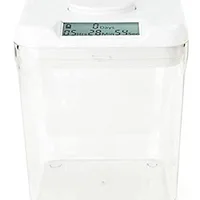
Kitchen Safe kSafe Time Locking Container (Medium)
The article's most personal line: 'the gap between sending a message and compulsively checking for a reply'. A time-locked box makes the self-imposed wait bounded and unmonitorable — the exact intervention Maister's t…
As an Amazon Associate, we earn from qualifying purchases — at no extra cost to you.
How to Use This Starting Today
None of what follows requires a significant lifestyle change. Maister's factors work as practical tools precisely because they're specific. Each factor has a corresponding intervention, and the interventions are small.
1. Name the factor, not just the feeling. When something small sends your mood sideways, run quickly through the three variables: Is this an unexplained wait? An unoccupied one? An open-ended one? The moment you identify which specific factor is operating, you've already partially broken its grip. You've stopped experiencing the wait and started diagnosing it — and those two mental postures produce different responses.
2. Supply the explanation the situation isn't giving you. If your frustration is coming from a delay you have no control over — a frozen screen, an unreturned email, a late reply — give yourself the explanation it isn't providing. "This is taking longer because the server is under load" or "she hasn't answered because she's in back-to-back meetings" might sound like guesswork. But Maister's framework consistently found that even a plausible, self-generated explanation has a real effect on perceived duration, because it shifts your attention from an open, anxious question to a provisional answer.
3. Occupy the gap deliberately. Idle waiting is almost always a choice, even when it doesn't feel like one. Staring at a frozen screen, a loading bar, or an empty inbox is a choice to let your attention land on the one thing that's going to amplify the frustration. Actively redirect it — not to avoid the discomfort, but because unoccupied attention is specifically what Maister's research identifies as the engine of the problem. Redirection here isn't avoidance. It's accurate diagnosis of what's actually happening.
4. Give the wait an endpoint, even an artificial one. If the open-endedness is generating the worst of the agitation, create your own boundary: "I'll check this again in ten minutes." "I'm giving this until tomorrow morning." That small act converts an open-ended, anxiously monitored experience into a bounded one. And a bounded experience, Maister's research makes clear, is psychologically a different thing even when the duration ends up exactly the same.

Clever Fox Habit Calendar Circle (24-Month Habit Tracker)
Action step 1 — 'Name the factor, not just the feeling.' A written tracker is what turns a one-off diagnosis into a repeated one across the small daily waits the article closes on.
As an Amazon Associate, we earn from qualifying purchases — at no extra cost to you.
Clever Fox Habit Calendar Circle (24-Month Habit Tracker)
Action step 1 — 'Name the factor, not just the feeling.' A written tracker is what turns a one-off diagnosis into a repeated one across the small daily waits the article closes on.
As an Amazon Associate, we earn from qualifying purchases — at no extra cost to you.
The Frozen Screen Is Data, Not an Insult
Eight seconds isn't long. Some part of you knew this even while it was happening. The frustration that lasted for twenty minutes after wasn't about the eight seconds — it was about the silence, the uncertainty, and the unoccupied attention that had nowhere to go but back onto itself and onto the wait.
That's the whole argument. And it's useful in a way that most psychological self-knowledge isn't, because it converts a soft, moralistic challenge — "I should be more patient" — into something considerably more tractable: three named factors with three specific, practical interventions.
The next time a tiny, trivial delay sends you somewhere you didn't expect to go, you don't have to meditate it away or just wait until the irritation passes on its own. You can ask a more useful question: which of the three factors is this, exactly? And what's the smallest thing I can do about that specific factor right now?
Designing your evolution means paying that kind of careful attention to the small moments — not just the big ones. The frozen screen, the unreturned message, the quiet gap between sending and hearing back. Those are where most of your nervous system's daily budget actually goes.
What's the smallest, most trivial wait that tends to spike your mood lately? And which of Maister's three factors — the silence, the unoccupied attention, or the open-ended uncertainty — do you think is usually driving it?
See also: How to Simplify Your Life When Complexity Takes Over
Was this helpful?