Mindset· 9 min read
Why Years Feel Faster as You Age (and What Helps)
Why does time speed up as you get older? What time perception research found about novelty, attention and memory, and how to slow your year down.
Why Years Feel Faster as You Age (and What Helps)
There's a moment most people have somewhere in their late thirties. You're at a family gathering, or flipping through photos on your phone, and you notice that something happened five years ago — a move, a relationship, a job — and it feels like last spring. Not 2021. Last spring.
Meanwhile, you remember the summer you were twelve as an almost geological era. Those three months at your grandmother's house felt like a full life lived inside a single season.
That gap — why years feel faster as you age than they did in childhood — isn't nostalgia playing tricks. It's something researchers have been trying to pin down for decades, and while there's still no clean, settled answer, the best available evidence points at a few mechanisms worth understanding — because understanding them is actually the first step to doing something about it.
The Proportional Theory: Compelling but Incomplete
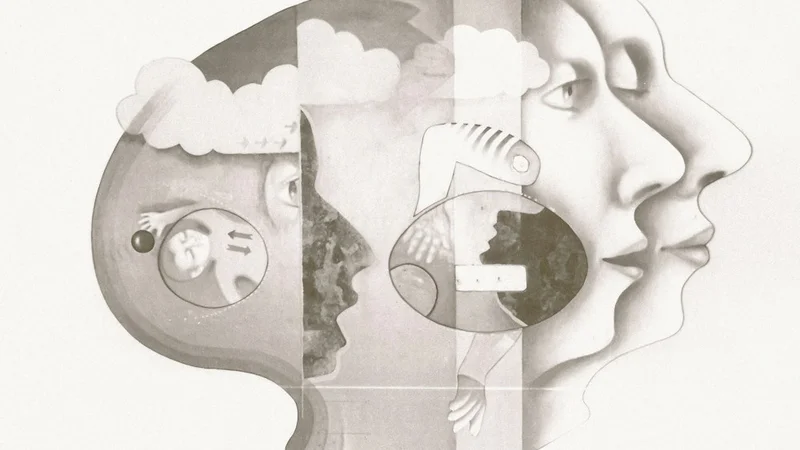
The oldest and most quoted explanation is called the proportional theory, and it's intuitive enough that it shows up in almost every popular article on this subject.
The idea goes roughly like this: when you're ten years old, one year represents ten percent of your entire life. When you're fifty, that same year is two percent. So a year at fifty feels shorter because it is proportionally smaller against everything you've accumulated.
William James wrote about something like this in 1890. And more recently, Wittmann and Lehnhoff (2005), publishing in Psychological Reports, surveyed 499 people aged 14 to 94 and found that judgments of how fast time passes, including retrospective judgments of past periods, depend on age. Their results broadly support the common impression that time speeds up with age. But age explained at most about 10% of the variance, and later work noted that age differences show up mainly for longer spans of around five years or more, not for shorter ones. A Scientific American overview of time perception research covers the landscape of these studies usefully.
But the proportional theory is a compelling hypothesis, not a confirmed mechanism. The surveys tell us that people report faster years as they age — not why. Most laboratory studies on time perception use intervals measured in seconds or minutes, so applying those findings to felt decades involves a substantial leap. The reports are consistent enough to take seriously, but the useful question is: what else might be driving it?
Memory Builds the Record of Your Year
When you think back on a year that felt full — a year of travel, or starting something new, or moving somewhere — what you're actually counting is distinct memories. Your brain doesn't experience duration directly. It reconstructs it. And the raw material of that reconstruction is memories.
A year with thirty distinct new experiences feels longer in retrospect than a year with the same Tuesday repeated fifty-two times, because the second year leaves almost no reconstruction material behind. The timeline compresses because there isn't much to put on it. This isn't just a matter of recalling highlights — it's a structural property of how autobiographical memory timestamps your life. The more varied your experiences, the more reference points memory has to anchor against.
Sylvie Droit-Volet and colleagues have done extensive work on how attention and engagement affect perceived duration, mostly using shorter intervals in laboratory settings. The directional finding is consistent: when you're absorbed in something routine, your attention clock barely runs. When you're doing something new or demanding, it ticks more loudly.
There's also the well-documented reminiscence bump in autobiographical memory — the tendency for older adults to recall a disproportionate number of memories from roughly ages fifteen to twenty-five. The leading explanation is novelty: that period involves more first-time experiences than almost any other. It's both a confirmation of the novelty-memory link and a useful data point. The decade of your life with the most firsts is also the decade you remember most richly.
Time Warped: Unlocking the Mysteries of Time Perception — Claudia Hammond
As an Amazon Associate, we earn from qualifying purchases — at no extra cost to you.
Translated to your year: familiarity is a time vacuum. The more automated your life becomes — same route, same habits, same conversations — the thinner the memory record it leaves. And a thin record collapses into what feels like a short time.
This is not an argument against routine. Routine is powerful for execution. How habit stacking and behavioral design shape daily action But the evidence suggests that the number of genuinely new experiences in your year is one of the stronger predictors of how full that year feels afterward.
Novelty as a Lever — and Its Real Limits
This is where the research becomes both more practically useful and more honest about what it can't promise.
The practical implication of the novelty hypothesis is genuine: more new experiences create more distinct memories, so time feels fuller when you look back. If you deliberately introduce novelty into your months, you're likely to have more to remember.
But novelty isn't infinitely scalable. You can't go on a different trip every week without novelty itself becoming routine. And not all novelty is equal — research on memory encoding suggests that emotional salience matters more than sheer newness. A mildly interesting new experience won't create the same memory anchor as something that genuinely surprised or moved you.
There's also an access dimension worth naming plainly: the kind of novelty most easily available — travel, major experiences, big life changes — isn't equally accessible to everyone. The underlying principle still applies to small novelty: a new restaurant, a different walking route, a first real conversation with someone outside your usual circles. But the effect size for small novelty is probably smaller, and no study has cleanly measured that gap.
Fujifilm Instax Mini 12 Instant Camera with 20 Shots (Clay White)
As an Amazon Associate, we earn from qualifying purchases — at no extra cost to you.
The Attention Piece Is Underrated
If memory is what you count in retrospect, attention is what creates the material in real time.
When you're on autopilot — checking your phone mid-conversation, running the same morning sequence without registering any of it — time doesn't register at all. You have fewer retrievable moments from that period because you weren't fully present to encode them.
Droit-Volet and Wearden's work on attention and duration judgment is mostly laboratory-based, so direct application to felt years involves extrapolation. But the directional finding is robust: attention affects both prospective duration — how long something feels while it's happening — and retrospective duration — how long it seems to have been when you look back.
This is worth sitting with. It means that one of the levers for felt time isn't novelty — it's presence. Being genuinely attentive to ordinary things can slow the experience even without adding anything new.
A ten-minute walk without your phone, with actual attention paid to what's in front of you, creates a different memory trace than the same walk with earbuds in and your mind three tasks ahead. Neither is wrong. But one leaves more behind.
How mindfulness and attention training change what you remember
How to Start Designing Memorable Time
None of this requires overhauling your life. The research, taken with appropriate humility about its limits — survey data, lab extrapolation, real individual variation — points at four habits that work with how memory actually encodes time:
-
Add one new experience per month. Not every week — that becomes exhausting and novelty stops being novel. One genuinely different experience per month: somewhere you've never been, something you've never tried, a conversation with someone outside your usual circles. The goal isn't a highlight reel. It's giving your memory enough anchor points to reconstruct the month as something distinct rather than a blur.
-
Write it down soon after. Writing about an experience while it's fresh is a practical way to capture details before they fade. A journal isn't just a record — it's a way of building a retrievable memory trail. It's a reasonable bet, not a proven way to slow felt time, but you'll have more to look back on.

LEUCHTTURM1917 Some Lines A Day 5-Year Memory Book (A5, Black)
As an Amazon Associate, we earn from qualifying purchases — at no extra cost to you.
- Pick one daily moment to actually inhabit. Not a formal practice — just one moment. Your first coffee. The last few minutes of a walk. The light through a window in the afternoon. Full attention, once a day, without also doing something else. It sounds small because it is small. But over a year, it changes what you have to look back on.
De'Longhi Magnifica S ECAM22.110.B Bean-to-Cup Coffee Machine
As an Amazon Associate, we earn from qualifying purchases — at no extra cost to you.
- Treat firsts as precious. Your brain flags first-time experiences almost automatically — they're inherently more memorable than the hundredth time. The first day in a new place, the first conversation with someone who becomes important, the first real attempt at something hard. You can't manufacture firsts. But you can slow down when they happen instead of moving straight to the next thing. Notice them while they're happening, and they're far more likely to still be there when you look back.
The cumulative logic here is simple: a year that contains more of these moments — more firsts, more recorded experiences, more moments you were actually present for — leaves a richer trail for memory to reconstruct. The year doesn't feel longer while it's happening. It feels longer when you look back and find something there.
Four Thousand Weeks — Oliver Burkeman
As an Amazon Associate, we earn from qualifying purchases — at no extra cost to you.
The Clock Won't Stop
Here's the honest part: none of this reverses the basic effect. The felt acceleration of time is probably real and persistent across a life, even with deliberate effort. The goal isn't to stop the clock. It's to make sure more of your life ends up in memory as something worth having been present for.
You can't add hours to a year. But you can fill the hours you have with enough attention and enough novelty that when you look back, the year doesn't collapse into a single Tuesday on repeat.
That's what "Design Your Evolution" actually means here: not adding more to your calendar, but making what's already there more worth having been in.
What was the last genuinely new thing you did — and do you actually remember it clearly?
Was this helpful?