Mindset· 9 min read
Why You're Making Your Life Harder Than It Needs to Be
Your brain defaults to adding, not removing. Leidy Klotz's Nature research explains why life keeps getting complicated — and what to do instead.

As an Amazon Associate, I earn from qualifying purchases.
Why You're Making Your Life Harder Than It Needs to Be
Three months ago, I was so overwhelmed that I did what any sensible person would do.
I bought a new planner.
It was beautiful — a leather-bound weekly spread with a habit tracker built into each page, a morning intention column, and enough white margin space to feel like a person who has things under control. What it didn't have was any capacity to remove the sixteen obligations that were already making my life feel like an engine running at 110% capacity.
But I added it anyway.
That's the part nobody warns you about when you decide to simplify your life: the instinct for it is wrong. Your brain's suggested solution and the actual solution point in opposite directions.
When your days feel unmanageable, the brain's first response is almost never remove something. It's add a system. Add a structure. Add a new ritual. Add a rule. We reach for the planner, the app, the morning routine, the accountability partner. We add commitment-tracking tools to stay on top of all the things we've committed to. We add calendar reminders so we don't forget any of it. We add weekly reviews to make sure we're doing all of it.
And then we wonder why the word "simplicity" sounds so hollow.
What the Science Actually Says Is Happening
Here's what Leidy Klotz — a professor of engineering and architecture at the University of Virginia — discovered in a series of experiments that landed in Nature in 2021.
He called it subtraction neglect: the systematic, largely unconscious tendency to improve things by adding rather than removing, even when removal is the simpler, more effective, and more economical solution.
The finding replicates across domains with uncomfortable consistency. When editing essays, people add words rather than cut them. When designing travel itineraries, they add activities rather than drop the ones that don't fit. When university administrators are asked to improve academic programs, they propose adding requirements rather than removing the ones that aren't working. When shown a Lego structure that needs stabilizing, participants add pieces — even when the structure's problem is a single extra piece that simply needs to come off.
Klotz's mechanism explains why: additions are cognitively visible. You can point to the new feature. You can show someone the word you added. There is an artifact of the improvement. Subtractions disappear — the piece is gone, the meeting is off the calendar, the commitment is released — and our minds don't register invisible improvements the same way they register visible ones.
We are, at a deep cognitive level, addition machines. Not because we're foolish, but because adding is what the brain generates first. Subtracting requires a deliberate override of the default — and most of us never learned that the override exists.
This matters more than it sounds. Because it means that every time your life feels complicated, your brain is actively running a solution generator that is structurally biased toward making it more complicated. The solution it generates for "I'm overwhelmed" is frequently "add a better system for managing the overwhelm."
The Lego Study That Should Make You Uncomfortable
In the most striking of Klotz's experiments, participants were shown a Lego structure that needed to be made more stable. They could add pieces or remove them. Most of them added pieces.
Even when the fix was removing one block. Even when removal was clearly faster. Even when participants had a financial incentive to use fewer pieces. The addition bias held.
What broke it? A simple reminder that subtraction was an option.
When Klotz's team explicitly cued participants that they could remove pieces, the bias diminished substantially. Not because people suddenly became more rational — but because the reminder made subtraction cognitively available. Before the reminder, most people weren't resisting the urge to remove. The option simply wasn't occurring to them.
That's the design flaw. Not a character flaw, not laziness, not a failure of discipline. A default that runs silently until someone interrupts it.
The same pattern holds in your life. When you're trying to manage an overwhelming week, the option of removing a commitment almost certainly occurs to you less often than the option of managing it better. When a morning routine feels chaotic, shortening it probably feels less available than optimizing it. When work feels unmanageable, taking something off the list probably feels less accessible than becoming more efficient.
This is partly why email inboxes stay full even when people are committed to inbox zero. Every email feels like a problem to be solved by adding a response, a task, a follow-up flag. What almost no one does — without deliberate effort — is unsubscribe, block, or restructure the workflow that generates the emails in the first place. Addition is visible. The removal is not.

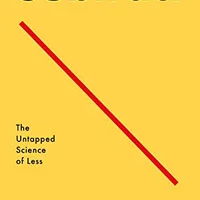
Subtract: The Untapped Science of Less
The book this article is built on. Klotz extends the subtraction neglect research into architecture, policy, medicine, and personal organisation — the most thorough account of why your life keeps filling back up the m…
As an Amazon Associate, we earn from qualifying purchases — at no extra cost to you.
Klotz's book Subtract: The Untapped Science of Less is the most thorough account of this research and extends it well beyond personal organization — into architecture, policy, medicine, and organizational design. It's the best single resource for understanding why your life keeps filling back up the moment you clear it, and why the clearing itself needs to become a deliberate practice rather than an occasional event.
Why Doing Less Feels Physically Uncomfortable
Christopher Hsee at the University of Chicago Booth School of Business documented a parallel phenomenon he called idleness aversion: humans are genuinely, physically uncomfortable when they have nothing to do. Given the choice between busyness and stillness — even when the busyness serves no real purpose and produces more stress than the stillness would — most people choose the activity.
This is the second layer of the problem. It's not just that we add things unconsciously. We're also wired to find the space created by removing things uncomfortable — which means we fill it again before any benefit can materialize.
Think about the last time you had a genuinely open Saturday with nothing on the schedule. Did you sit with it? Or did you find something to fill it within ninety minutes of waking up?
That gravitational pull toward activity isn't a personal weakness. It's idleness aversion running as designed. And it predicts, with uncomfortable precision, what happens when you remove something from your calendar: within a few weeks, something new appears to occupy the space.
How to Build a Morning Routine That Actually Sticks
Greg McKeown in Essentialism calls this the "clarity paradox." The more space you create in your life, the more options appear to fill it, and the more tempting each one seems. The discipline of essentialism isn't a one-time clearing. It's the ongoing, slightly uncomfortable practice of protecting the space you've created — recognizing that the discomfort of emptiness is actually the signal you've done something meaningful.
The Weight You're Carrying Without Knowing It
Ellen Langer at Harvard has spent four decades studying what she calls mindlessness — habitual behavior executed without conscious awareness or evaluation. The majority of what we do in a given day, her research established, runs as automated script: decisions made, behaviors performed, commitments accepted, all without genuine real-time deliberation.
The dark implication is this: we accumulate obligations, tools, habits, rules, and relationships through the same unconscious process. You're not deciding to make your life more complicated. You're doing it automatically, one small addition at a time, in the same low-awareness state in which you agree to things over email without fully reading them.
The specific items that pile up this way are rarely dramatic. The lunch meeting you said yes to because declining felt rude. The productivity tool you adopted because a colleague swore by it. The health protocol you layered in because a podcast described it as non-negotiable. The commitment-tracking app you downloaded specifically to manage how you're doing on all the other commitments.
Each one seemed reasonable in isolation. Collectively, they're the weight you feel on Sunday evenings without being able to name exactly where it's coming from.
Greg McKeown made this the central diagnosis of Essentialism: most people don't choose a less essential life. They slip into it through the accumulated effect of small, undiscriminating additions — each one seemingly sensible, collectively crushing.
Amazon Basics Bamboo Expandable Drawer Organizer
The physical version of the subtraction idea: clearing accumulated drawer clutter is a low-effort first act of removal that reduces cognitive load and mirrors the mental clearing described in this article.
As an Amazon Associate, we earn from qualifying purchases — at no extra cost to you.
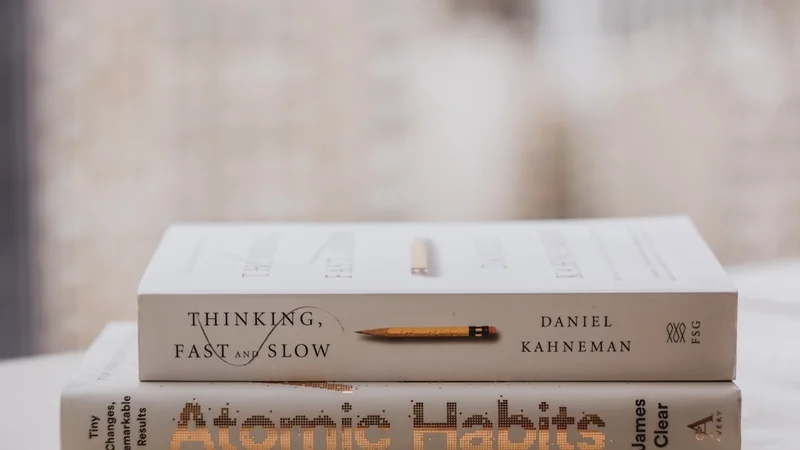
What makes this particularly hard to address is loss aversion. When you consider removing something, the brain frames it as loss — you're giving something up — rather than gain. Kahneman and Tversky established that losses feel approximately twice as painful as equivalent gains feel pleasurable. So even a low-value commitment feels costly to remove, because removal activates the loss framing.
Gary Keller sidesteps this beautifully in The ONE Thing by reframing the question. Instead of "what should I cut?" — which activates loss aversion — he asks: what is the single thing that, if you did it, would make everything else easier or unnecessary?
That question doesn't feel like subtraction. But it performs the same function. It forces you to identify what actually matters, and in doing so, implicitly reveals what doesn't need to be there.
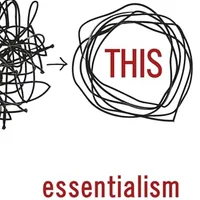
Essentialism: The Disciplined Pursuit of Less
McKeown's two-million-copy bestseller on the ongoing discipline of protecting the space you create rather than filling it — the operating manual for what Klotz's research describes.
As an Amazon Associate, we earn from qualifying purchases — at no extra cost to you.
How to Stop Multitasking and Focus on One Thing
The Opinion That Will Sound Wrong the First Time
Here's something worth sitting with: the most productive thing you might do this week is permanently remove something from your life.
Not optimize it. Not time-block it. Not delegate it or batch it or process it more efficiently. Remove it entirely.
We've been trained to think of productivity as addition — more output, more achievement, more done. Removal feels like retreat. But Klotz's research makes the case directly: some of the greatest gains in quality of life come not from improvement but from elimination. The standing meeting nobody can explain the purpose of. The habit you track daily but haven't genuinely cared about since February. The project that felt urgent in January and now exists primarily as a source of ambient guilt every time you open your task manager.
These things don't show up as costs in a spreadsheet. But they show up in your attention, your energy, and your capacity to be fully present for the things that actually matter.
Thoreau wrote "Simplify, simplify" in Walden in 1854. That's 172 years of people reading that line, nodding enthusiastically, and immediately going home to add a new habit to their morning routine.
The addition bias isn't a character flaw. It's a cognitive default. And cognitive defaults, as Klotz's reminder experiment showed, can be interrupted by a question. The question just has to become a habit.
Your Subtraction Audit — Do This Once a Week
The audit is simple by design. Anything complicated defeats the purpose.
Step 1: Get everything out of your head. List every recurring commitment, active project, relationship that requires maintenance, tool you use, habit you track, and meeting you attend. Don't filter — just get it onto paper. Most people haven't seen their full inventory in one place, and seeing it is genuinely clarifying on its own.
Step 2: Ask one question for each item. If I removed this, what would I actually lose? Not what you might theoretically lose. What you'd actually lose in practice. The answer is usually smaller than the item feels.
Step 3: Keep only what passes. Whatever survives an honest answer to that question gets to stay. Whatever doesn't — the meeting whose absence nobody would notice, the habit you dread tracking, the obligation you accepted under social pressure — is a candidate for removal.

Kindle Paperwhite (2024, 16GB)
Reading Subtract, Essentialism, and Do Less on one device instead of accumulating a stack of paperbacks is, itself, an act of subtraction.
As an Amazon Associate, we earn from qualifying purchases — at no extra cost to you.
Do Less by Kate Northrup is the most practical guide I've found for applying this kind of audit to a full life rather than just a task list. It's particularly useful for people who intellectually accept the subtraction argument but struggle with the mechanics of actually removing things without guilt.
Step 4: Remove one thing this week. Not ten. One. The removal muscle, like every other muscle, needs to be built gradually. Pick the item with the highest ratio of cost to value and take it off the list. Pay attention to what actually happens. Almost always: nothing catastrophic. The meeting was survivable to cancel. The habit tracker didn't collapse without you. The commitment found a natural resolution.
Step 5: Protect the space. This is where people fail most consistently. They remove one thing and fill the space within ten days. Hsee's idleness aversion research predicts this — the space will feel uncomfortable before it feels clarifying. Sit with it. Clarity arrives when you stop immediately converting available time into new commitments.
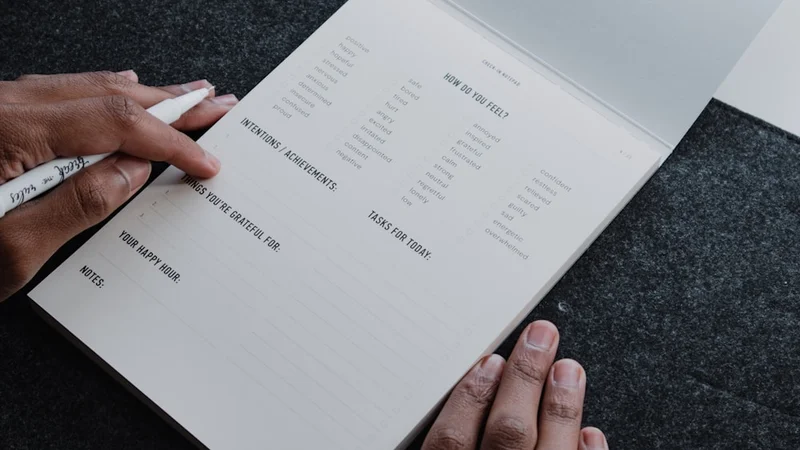
A journal organized around a stop-doing list alongside your to-do list is one of the most consistently useful tools for this practice. Not a productivity journal — a subtraction journal. A record of what you're removing, why, and what you notice in the space it creates.

Clever Fox Habit Calendar
A journal for tracking what you remove each week and what you notice in the space it creates — the physical tool for the weekly subtraction audit described in this article.
As an Amazon Associate, we earn from qualifying purchases — at no extra cost to you.
The Simpler Life Is Already There
Here's what Klotz's research points toward but doesn't quite say directly: the clearer, more intentional life most people want is probably already accessible to them. Not on the other side of a new framework or a better morning routine or a more sophisticated productivity system.
It's underneath everything they've accumulated without noticing.
Design Your Evolution doesn't always mean adding something new. Sometimes — maybe more often than any of us want to admit — it means the deliberate, slightly uncomfortable act of looking honestly at what you've built and taking off the pieces that aren't part of the structure you actually intended to create.
The addition bias is strong. It's quiet. And it starts running again the moment you stop interrupting it.
You don't need a better system for simplifying. You need one weekly question: What am I carrying that I could put down without losing anything I actually value?
What's one thing on your plate right now that wouldn't survive an honest answer to that question? Drop it in the comments — I'd genuinely like to know.
Was this helpful?