Productivity· 11 min read
Are You Busy or Just Avoiding Something?
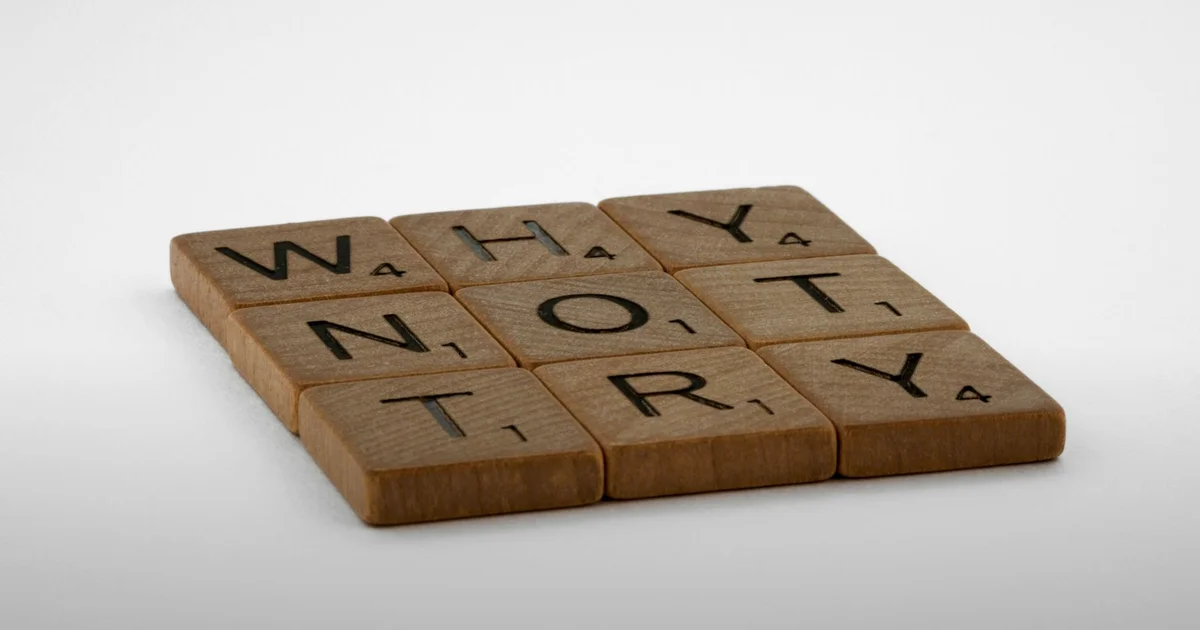
Are You Busy or Just Avoiding Something?
There was a week I kept moving a 30-minute writing block around my calendar. Not cancelling it — moving it. Each time a gap appeared, I filled it with something that felt more pressing: a check-in call, a growing email backlog, a meeting I didn't actually need to attend. I moved that block five times in seven days.
The thing I was supposed to be writing mattered to me. Which was, it turned out, exactly the problem.
In 2017, researchers Silvia Bellezza, Neeru Paharia, and Anat Keinan published a paper in the Journal of Consumer Research with a finding worth sitting with: in the United States, being busy had become a status symbol. Not a side effect of success — an active marker of it. Across their studies, American participants rated busy people as higher-status than people with a leisurely lifestyle. The more overextended you appeared, the more valuable you seemed — someone in demand, with skills worth having. The effect reversed among Italian participants, who still tend to link leisure with high status.
That's a notable cultural reversal. For most of recorded history, leisure was something the wealthy had and the poor didn't. The idle rich. The labouring masses. Then something flipped. Now the person answering emails at midnight reads as more committed than the person who takes a proper lunch break. We've repackaged exhaustion as ambition and handed it out as an identity.
But status is only half the story. In a 2010 study in Psychological Science, Christopher Hsee, Adelle Yang, and Liangyan Wang found something more personal: people dislike idleness and are happier when busy, though they usually need a justification to get moving. In one experiment, participants finished a survey and then had a fifteen-minute wait. They could hand in the survey at a nearby spot and sit, or at a farther spot after a walk that filled the same fifteen minutes. Those who walked reported feeling happier, and busy participants were happier even when they had been assigned the walk rather than choosing it. We don't just signal busyness to others. We use it to protect ourselves from stopping.
You've probably felt this. The moment a to-do list empties, something in you immediately goes looking for the next thing. The quiet doesn't feel like relief — it feels like exposure, like something must be wrong.
Both studies were conducted in controlled settings, and the status effect varies by culture. But the broader pattern — using activity to manage discomfort, what researchers call busyness as avoidance — shows up consistently across the psychology of procrastination and self-regulation.
Why Busy Feels Safer Than Being Still
Here's what most productivity writing won't tell you: busyness is a remarkably effective emotional buffer. When your hours are full, you don't have to think about the thing you're not doing. The difficult conversation you've been circling for weeks. The creative project that matters to you but might not land. The health appointment you keep pushing off. The relationship that needs more than the thirty seconds you give it at dinner.
Any activity — even low-value activity — creates the sensation of forward movement. Checking email, reorganising files, attending meetings for the sake of visibility: all of it produces the feeling of doing something without requiring you to do the specific something that actually matters. A line often attributed to Jim Rohn says we all suffer one of two pains — the pain of discipline or the pain of regret — and that discipline weighs ounces while regret weighs tonnes. Busyness is a third option that line doesn't name: the discomfort you sidestep by staying in motion just long enough that regret never quite catches up.
This isn't a character flaw. The brain genuinely finds unstructured time harder to navigate than structured time. Open hours force a question that structured hours don't: what do you actually want to do with your life? That question carries real risk. Busyness removes it by answering before you can ask.
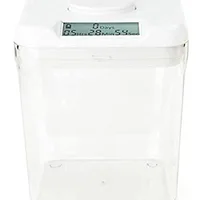
Kitchen Safe kSafe Time Locking Container (Medium)
As an Amazon Associate, we earn from qualifying purchases — at no extra cost to you.
The Status Signal Nobody Talks About
The Bellezza findings add a social layer that makes the habit harder to quit. When busyness signals importance, slowing down can feel like admitting you're less essential — which creates a self-reinforcing loop. You stay busy partly because it feels productive, and partly because everyone around you seems to measure worth in hours booked and calendars blocked.
Think about how you answer "how are you?" these days. "Busy" has become the socially acceptable default. It implies competence, ends the conversation cleanly, and requires no vulnerability. "Pretty relaxed, actually" makes people visibly uncomfortable. It sounds dangerously close to "I don't have enough going on."
The Bellezza research suggests this effect depends on culture: it appeared in the US but reversed in Italy. If a substantial part of who you are is organised around being useful, an empty calendar slot becomes an identity threat rather than a gift.
That's worth examining. Because if you wouldn't feel comfortable telling the truth about how much quiet time you actually have, that discomfort is telling you something about why you keep filling it.
How to Tell If Your Busyness Is Actually Avoidance
Not all busyness is avoidance. Some weeks are genuinely demanding — a hard deadline, a family emergency, a run of creative work that consumes you. The difference between purposeful busyness and avoidance busyness shows up in what it produces and how you feel when it ends.
Purposeful busyness feels directional while it's happening and lighter when it ends. Avoidance busyness feels urgent while it's happening and hollow when it ends — a nagging sense that you moved a great deal without going anywhere in particular.
Three questions tend to separate the two:
Can you name the one thing your schedule is protecting you from? If the answer comes quickly, your calendar is likely doing defensive work. If the question draws a blank, sit with it a little longer. The thing you're avoiding is often the one you least want to name.
How do you feel on Sunday evenings? That particular weight before the week begins is worth decoding. Sometimes it's volume. Often it's one specific thing you know you'll have to face — or avoid — again.
When did you last work on something important to you that had no external deadline? If you genuinely can't remember, that absence is data. The busy vs productive difference usually lives right there.
how to design your most productive week
The 15-Minute Calendar Audit
This isn't about clearing your schedule. It's about making the avoidance visible so you can choose consciously.
Set a timer for fifteen minutes. Open last week's calendar — or yesterday's if that's more useful. Go through each block and ask one question: Did this move something important forward, or did it give me something to do?
Don't justify the answer. Just notice it.
Then look at what isn't there. What got moved to "when I have time"? What did you tell yourself you'd do this week that never made it onto the page? The distance between your intentions and your actual schedule is a rough measure of how much protective busyness is running quietly in the background.
If something has been bumped three weeks in a row, it isn't a scheduling problem. It's a decision you're not ready to make. That delay usually comes from one of three places: you don't know how to start, you're afraid the outcome will disappoint you, or doing it would force a choice you'd rather not face. All three are understandable. None of them improve with more calendar-filling.
After the audit, the practical move is simple: take the one thing you've been avoiding and book a protected block for it this week. Keep it modest — 45 minutes, ideally in the morning. Don't label it grandly. Put it in like any other meeting, give it a start and end time, and honour it the way you'd honour a call with someone you respect.
The resistance you feel when that block arrives isn't a problem. It's information — telling you exactly which version of yourself your busyness has been keeping at a comfortable distance.
How to Stop Being Busy and Start Being Intentional
1. Do the calendar audit before your next task. Open last week's schedule, classify each block honestly, and see what pattern shows up. One clear look changes how you plan the next week. Noticing is the beginning of the whole thing.
2. Write down the one thing. Name the project, the conversation, or the decision your calendar has been protecting you from. Writing it down makes it real — and harder to pretend it doesn't exist.
3. Book a 45-minute block this week. One slot, one thing. Put it in the calendar now, before you talk yourself out of it. Treat it as non-negotiable.
4. Consider a physical planner. There's a friction to writing things down that digital calendars don't have — it slows you enough to be intenti onal about what actually deserves the space. A weekly planner that shows the full week at a glance makes the cost of avoidance visible in a way that drag-and-drop scheduling never does.
5. Set a 15-minute weekly review. Every Friday afternoon, ask two questions: what moved this week, and what got bumped again?
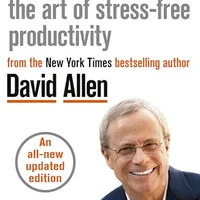
Getting Things Done — David Allen (Revised)
As an Amazon Associate, we earn from qualifying purchases — at no extra cost to you.
A good time management book helps you build this into a sustainable habit rather than a one-time resolve. After four weeks of honest answers, the pattern in your calendar becomes unmistakable.
A full life and a packed one aren't the same thing. A full life is one where the hours went to what you decided mattered. A packed life is one where anxiety, habit, and the desire to appear productive made those decisions for you — quietly, one filled slot at a time.
"Design Your Evolution" isn't about optimising every minute. It's about choosing — deliberately, on purpose — which minutes are worth protecting. That choice doesn't start with a new system or a better app. It starts with the honest question your calendar will never ask for you: what have you been too busy to become?
What's the one thing your current schedule keeps bumping? Drop it in the comments.
Was this helpful?