Recommendations· 18 min read
The Best Productivity Planners of 2026: Top 7 Compared and Ranked
We ranked the 7 best productivity planners of 2026 by goal architecture, daily layout, and habit-building design — find the one for you.
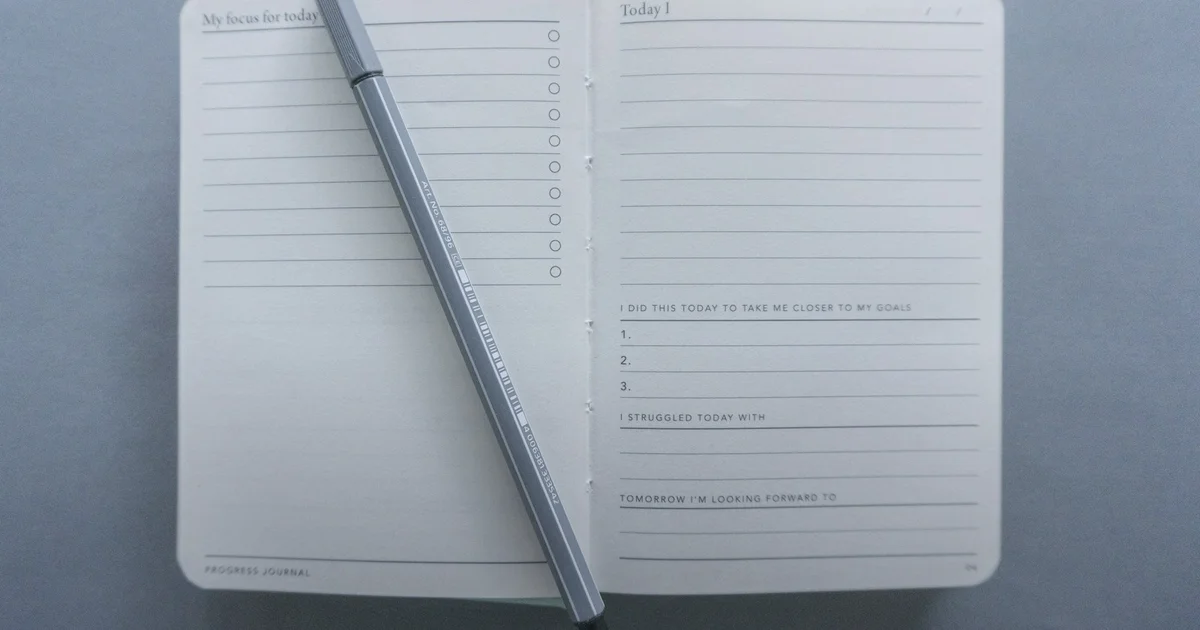
The Best Productivity Planners of 2026: Top 7 Compared and Ranked
As an Amazon Associate, I earn from qualifying purchases.
Why Your Planner Choice Actually Matters
Most people buy a productivity planner in January. By March, it's on a shelf. By June, it's guilt.
The frustrating part isn't the money — it's that you wanted it to work. You wanted the quarterly goal section, the weekly review ritual, the daily Big 3. You just picked the one that looked good in an unboxing video instead of the one that matches how your brain actually operates.
This guide exists to fix that.
The productivity planner market has exploded over the last decade, and not all of it is noise. There's real behavioral science underneath the best systems here — Edwin Locke and Gary Latham's decades of goal-setting research, Peter Gollwitzer's implementation intention research, Ann Graybiel's work on how cue-routine-reward structures become automatic. When a planner's architecture lines up with how the brain actually forms intentions and habits, the difference in follow-through rates is measurable — not marginal.
But when you pick the wrong one? You're fighting the format every single day.
The cost of that mismatch isn't just the $40 you spent. It's the six months of friction that convinces you you're the problem — when the real problem is that a time-blocked hourly layout is completely wrong for someone who does deep project work, or that an open-ended blank journal is a terrible tool for someone who needs specific daily prompts to build a new behavior.
We compared seven of the most popular productivity planners of 2026 on five dimensions that actually predict whether you'll use one past week three:
- Goal architecture — does it have a real system for mapping quarterly and annual goals, or just a "goals" page?
- Daily layout — time-blocked, task-listed, or flexible? Does it match how your day actually runs?
- Weekly review structure — is reflection built in, or do you have to do it yourself?
- Habit integration — how well does the planner track the behavioral routines that compound over time?
- Paper quality and portability — because a planner you don't carry with you is a planner you don't use
Here's what we found.
How We Selected These 7 Planners
What made the list: Each planner had to have a clearly articulated planning philosophy, not just a branded layout. We looked for systems grounded in behavioral research — whether that's the specificity principle from goal setting theory, the implementation intention structure from Gollwitzer's research, or the positive psychology framework that informs cognitive-behavioral habit design. We also required that each one be currently available and consistently stocked.
What we cut: Generic meal-planning hybrids, purely aesthetic journals with minimal structure, and any planner whose "system" was mainly a collection of motivational quotes. We excluded spiral-bound formats that don't hold up to daily carry. We also cut anything that looked like a different planner with a new logo.
The eight here represent genuinely distinct approaches to the same problem.
The 7 Best Productivity Planners of 2026
1. Full Focus Planner by Michael Hyatt — Best for Quarterly Goal Achievement
Full Focus Planner by Michael Hyatt
Quarterly goal planner; 90-day architecture, Weekly Preview/Review, Big 3 daily priorities.
As an Amazon Associate, we earn from qualifying purchases — at no extra cost to you.
For whom it is: Anyone who struggles to connect their annual goals to their daily tasks — and who wants a structured system for doing both, every week, without improvising.
Why we chose it: The Full Focus Planner is the most goal-setting-research-aligned daily planner on the market right now. Its 90-day structure mirrors the brain's optimal goal-commitment window — long enough to see meaningful progress, short enough to stay motivated. The "Big 3" daily priorities force the specificity that Edwin Locke's Goal Setting Theory identifies as the single biggest predictor of goal follow-through: specific, concrete tasks outperform vague intentions by a significant margin, every time. The built-in Weekly Preview and Weekly Review structure operationalizes the reflection cycle that separates people who set goals from people who actually achieve them. You're not relying on willpower to plan your week — the system demands it.
Pros:
- 90-day goal architecture with quarterly goal breakdown and daily alignment
- Weekly Preview + Weekly Review built into every week — no optional rituals here
- "Big 3" daily method forces prioritization that generic to-do lists never do
- High paper quality — fountain pen friendly, minimal ghosting
- Hardcover format holds up to daily carry
Cons:
- Dated format means you commit to starting on a Monday — missing weeks feels wasteful
- At roughly $45 per quarter, it's one of the pricier options on this list
- Not ideal for creative or project-based workers who don't operate on hourly time blocks
2. Panda Planner Pro — Best for Daily Habit + Gratitude Integration

Panda Planner Pro
Undated daily planner; habit + gratitude + priorities integration.
As an Amazon Associate, we earn from qualifying purchases — at no extra cost to you.
For whom it is: People who want their planning and their psychology in the same place — productivity tracking, gratitude, mood check-in, and habit logging on every daily page.
Why we chose it: The Panda Planner Pro is built explicitly on positive psychology research, and you can feel it in the layout. Every daily page opens with a gratitude prompt, a mood rating, and a priority list before you get to your schedule — which is exactly the attentional and emotional priming sequence that the behavioral science of high performance suggests. Positive affect, documented by Alice Isen's research at Cornell, expands cognitive flexibility and creative problem-solving. Starting your day with a micro-dose of reflection before your task list is not soft psychology — it's structural priming. The habit tracker section that runs through the entire planner gives you the daily checkbox that implementation intention research identifies as a cue-completion signal: it makes the habit visible, countable, and psychologically harder to skip.
Pros:
- Every daily page includes gratitude, mood tracking, and habit logging — fully integrated
- Monthly, weekly, and daily layouts give you three levels of time horizon in one planner
- Undated version available — no wasted pages if you travel or miss a week
- Lay-flat binding is actually useful for dual-page spreads
- More affordable than Full Focus at roughly $29–35
Cons:
- Daily pages can feel dense if you prefer minimal structure
- Habit tracker is limited to a set number of habits per month — power users may want a separate dedicated tracker
3. Clever Fox Planner PRO — Best for Flexibility + Goal Mapping Combination

Clever Fox Planner PRO
Weekly & monthly life planner; goal-mapping + flexibility. Per-market color variants.
As an Amazon Associate, we earn from qualifying purchases — at no extra cost to you.
For whom it is: People who want structured goal-setting worksheets and habit tracking without committing to a dated layout — ideal for those who travel, work project cycles, or just don't want to feel behind if they skip a week.
Why we chose it: The Clever Fox Planner PRO threads a needle that most planners miss: it gives you a real goal-setting section — annual vision, quarterly breakdown, monthly focus — without locking you into a calendar. This matters more than most people realize. The dated-planner problem is behavioral, not logistical: when you miss a week and stare at seven blank spreads you'll never fill in, the psychological cost of those empty pages creates a friction that kills consistency. The undated format removes that specific failure mode entirely. The A5 size is also truly portable — it fits in most bags without the "I'm not carrying that today" resistance that kills larger planner formats.
Pros:
- Undated format eliminates the "missed weeks guilt" that kills most planners
- Full goal-mapping section: annual vision, quarterly, monthly, weekly, daily
- Habit tracker included — daily and monthly views
- Available in A5 (portable) and larger formats
- Better value per use than most dated competitors
Cons:
- Less premium paper feel than Ink+Volt or Full Focus
- The design is functional but not inspiring — matters more than you'd expect if aesthetics drive your habit
- No specific prompt structure for daily reflection — you provide the questions
4. Passion Planner Weekly Undated — Best for Visual Thinkers and First-Time Planners
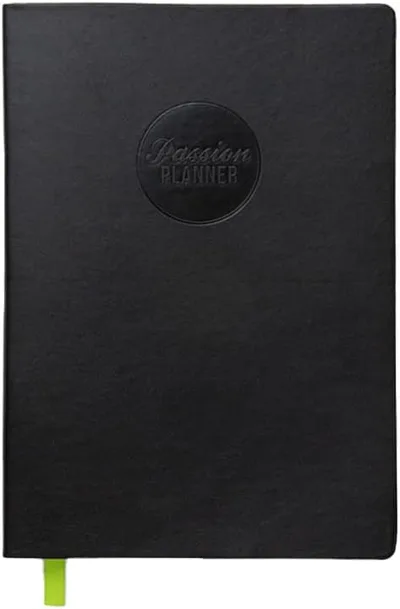
Passion Planner Weekly Undated
Weekly undated goal-oriented agenda (Elite Black, Medium). Good for visual thinkers.
As an Amazon Associate, we earn from qualifying purchases — at no extra cost to you.
For whom it is: Anyone starting their first serious planning practice, people who think visually and spatially, and those who want a roadmap layout that connects long-term purpose to weekly action.
Why we chose it: The Passion Planner's core insight is structural: it starts with your "passion roadmap" — a mind-map-style exercise connecting your life areas to concrete goals — before you ever write a daily task. This is a meaningful behavioral design choice. Most people approach planning backwards: they write tasks, then wonder why those tasks don't add up to anything. The Passion Planner forces you to establish the why before the what, which is the sequence that goal commitment research consistently identifies as the one that survives contact with reality. The open space in the weekly layout is useful for non-linear thinkers who don't operate in hourly time blocks. And at roughly $30, it's the most accessible entry point on this list without sacrificing system depth.
Pros:
- "Passion Roadmap" goal-mapping structure connects purpose to weekly priorities
- Open weekly space works for non-linear, project-based, or creative work styles
- Monthly focus + reflection built in
- Most affordable structured planner on this list with genuine goal architecture
- Available in multiple sizes (mini, classic, large)
Cons:
- Less daily structure than Full Focus or Panda Planner — you build the day yourself
- The open layout can drift into a pretty notebook without intentional use
- Habit tracking is minimal compared to Panda Planner Pro
5. Hobonichi Techo Cousin A5 — Best for Experienced Planners Who Build Their Own System
Hobonichi Techo Cousin A5
2026 English Cousin A5, Jan start; Tomoe River paper. For experienced planners.
As an Amazon Associate, we earn from qualifying purchases — at no extra cost to you.
For whom it is: People who've tried multiple planner systems and found them all limiting — who know what they want from a planning practice and want an exceptional paper substrate to build it on.
Why we chose it: The Hobonichi Techo is not a system. It's the finest daily planner paper you can buy, packaged in a daily-dated layout that treats your time with precision. The Tomoe River paper — thin as 52gsm, ghosting-resistant even with fountain pens, with a surface finish that makes writing feel like moving across silk — is in a different category from anything else on this list. For someone who's worked through two or three structured planner systems and knows what format fits their brain, the Hobonichi gives them a canvas that won't fight them. The Cousin A5 version offers a half-year weekly overview and monthly calendars alongside the daily pages, giving you enough structural skeleton to work from without dictating your approach. The cost is higher, but so is the sensory experience — which matters for habit formation in ways that are easy to dismiss until you've experienced the difference between wanting to open your planner and not.
Pros:
- Tomoe River paper is the best daily planner paper available — minimal ghosting, excellent writing feel
- Lay-flat binding that holds through a full year of use
- A5 Cousin format includes weekly and monthly views alongside daily pages
- Built-in year and half-year overview spreads for macro planning
- Highly customizable — use any system you want
Cons:
- No built-in goal-setting architecture — you bring your own system
- More expensive than structured planners at roughly $55–70 (varies by retailer)
- Thin paper requires care with wet media — not ideal for heavy marker use
6. Leuchtturm1917 A5 Dotted Notebook — Best for Bullet Journal Practitioners
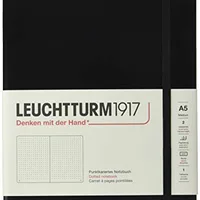
Leuchtturm1917 A5 Dotted Notebook
A5 Medium hardcover dotted, 251 numbered pages. For bullet journalists.
As an Amazon Associate, we earn from qualifying purchases — at no extra cost to you.
For whom it is: Anyone committed to the Bullet Journal method as their planning system — and anyone who wants maximum system flexibility with quality paper and a robust format.
For whom it is NOT: People who want a pre-designed system handed to them.
Why we chose it: The Leuchtturm1917 A5 Dotted is the original Bullet Journal substrate, and it earns its place on this list because the Bullet Journal method — Ryder Carroll's analog system of rapid logging, migration, and reflection — is one of the best-documented frameworks for turning a blank notebook into a living productivity system. The numbered pages and table of contents built into the Leuchtturm are what separate it from generic dotted notebooks: they make the Bullet Journal's index system work the way Carroll designed it. The behavioral design insight behind BuJo is real: the migration step — monthly review of incomplete tasks, deciding whether each still deserves your time — is a forced prioritization ritual that most planners automate away and most people skip as a result. If you've done the work to learn the method, the Leuchtturm is the right substrate for it.
Pros:
- Numbered pages + table of contents built in — essential for the Bullet Journal index system
- 250 pages accommodate 6+ months of daily practice
- Excellent paper quality — most pens and fineliners show no ghosting
- Available in 20+ colors with a sturdy hardcover
- Affordable entry point for a serious customizable system
Cons:
- No built-in planning system whatsoever — you're designing from scratch
- The Bullet Journal method has a real learning curve; expect two weeks before it clicks
- Less ideal for pure task-management use — it shines when used as designed
7. Ink+Volt Goal Planner — Best for Professionals Wanting Premium Paper + Goal Focus
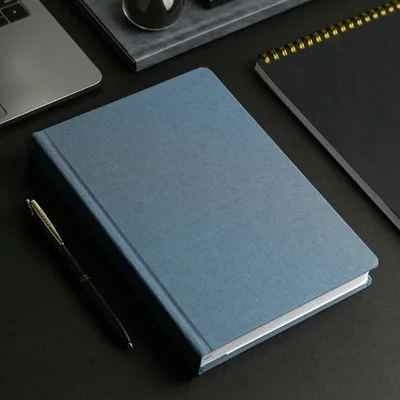
Ink+Volt Yearly Goal Planner (Hardcover)
Yearly goal planner, hardcover bookcloth (Blue Dusk), 6x8.5in. Premium paper + goal focus.
As an Amazon Associate, we earn from qualifying purchases — at no extra cost to you.
For whom it is: Professionals and high-achievers who want a goal-oriented planning architecture, premium paper quality, and a clean, non-distracting aesthetic — and who are willing to pay for it.
Why we chose it: The Ink+Volt Goal Planner has a specific architecture that most planners miss: it separates your quarterly goal-setting from your monthly execution and your weekly rhythm without making them feel like three different products. The opening goal-setting section asks you to define not just what you want but why it matters and what obstacles you might face — which is essentially Gabriele Oettingen's WOOP structure (Wish, Outcome, Obstacle, Plan) applied to a planner format. That obstacle pre-mapping is one of the most evidence-backed additions to goal design: people who identify their specific if-then responses to likely obstacles follow through at significantly higher rates than those who state goals without it. The paper quality is notably above average — thick, smooth, with no bleed-through — and the weekly spreads are clean and uncluttered in a way that invites use without demanding a specific style.
Pros:
- Goal-setting architecture includes obstacle mapping — rare and behaviorally significant
- Premium paper quality: thick, smooth, no bleed-through with most pens
- Weekly layout is clean and flexible — works for both time-blocking and task lists
- Hardcover with elastic closure holds up to daily bag use
- Made in the USA
Cons:
- Higher price point — roughly $38–45 per planner
- Dated format; no undated version currently available
- Slightly smaller habit tracker section than dedicated habit-focused planners
FAQ
What's the difference between a productivity planner and a regular notebook?
A productivity planner is a structured planning system — it has built-in sections for goal-setting, daily task management, weekly reviews, and habit tracking. A regular notebook gives you blank pages to use however you want. The research on implementation intentions suggests that structured prompts significantly reduce the cognitive friction of starting a planning session, which is why most people maintain a structured planner longer than a blank one. If you want maximum flexibility and already know your system, a quality dotted notebook like the Leuchtturm1917 works well. If you're building a new planning practice, start with structure.
Is an undated planner worth it?
For most people, yes — especially if you travel, work non-traditional hours, or have had the experience of skipping a week and feeling behind in a dated planner. The behavioral cost of "lost" dated pages is real: unused spreads create a psychological friction that accelerates abandonment. Undated planners like the Clever Fox Planner PRO and Panda Planner Pro remove that friction entirely. The trade-off is that undated planners require slightly more discipline to start — you need to write in dates yourself, which some people find motivating and others find annoying.
How long does it take to build a consistent planning habit?
The popular "21 days" figure has no empirical support. Phillippa Lally's research at University College London found that habit formation took an average of 66 days in her 2010 study — with a range of 18 to 254 days depending on the behavior and person. For a daily planning practice, expect 6 to 8 weeks before it feels automatic. The first two weeks are the hardest — your brain is still treating it as a deliberate task rather than a routine. Choosing a planner you actually enjoy opening makes a measurable difference in those early weeks.
Do paper planners actually improve productivity compared to digital tools?
The research here is worth examining. A 2021 study from the University of Tokyo found that writing by hand on paper produced significantly greater activation in the hippocampus and language-related frontal regions — areas associated with memory encoding and planning — compared to using digital tablets or smartphones. For goal-setting specifically, the act of writing by hand appears to strengthen the neural encoding of the intention in ways that typing does not replicate. That doesn't make paper better in all situations. Digital tools win on searchability, reminders, and sync. Paper wins on intention-setting, deep planning, and the physical-cognitive connection that makes goals feel real. Many high-performers use both — digital for tasks and capture, paper for weekly reviews and goal mapping.
What planner size should I get?
A5 (roughly 5.5" × 8.3") is the sweet spot for most people: large enough for a full day layout, small enough to carry daily without resistance. A4 or larger formats work for desk-only planners but rarely leave the desk, which limits their actual use. Pocket planners are genuinely portable but most people find the writing space too small for meaningful planning. Start with A5, adjust based on whether you're regularly using the space or feeling cramped.
If I Had to Pick Just One
For most people, the Full Focus Planner is the best productivity planner available in 2026. Its 90-day structure, daily Big 3 method, and mandatory weekly review cycle operationalize goal achievement rather than just supporting it. The research on specificity and commitment in goal-setting is unambiguous — and the Full Focus Planner builds both into its architecture at every level.
If the quarterly commitment and price give you pause, Panda Planner Pro is the strongest runner-up. It integrates habit tracking and positive psychology prompts with the planning structure in a way that most planners don't, at a meaningfully lower price point.
For anyone who's been burned by dated planners and wants to start fresh: Clever Fox Planner PRO removes the most common failure mode (the guilt of missed spreads) without sacrificing the goal architecture that makes a planner worth using.
Whichever system you choose, remember: the planner is not the practice. The practice is what happens when you open it consistently enough for the planning ritual to become automatic — at which point the behavioral science confirms you're no longer relying on motivation to do it. You're relying on habit. That's the whole idea behind designing your evolution one deliberate day at a time.
For more on building the goal-setting foundation that makes any planner work harder, read our guide on how to set goals you'll actually achieve — what the research says. And if you're building a morning planning ritual around your new planner, this piece on how to build a morning routine that actually sticks covers the behavioral architecture behind making it last past January.
Which planner system has worked best for you — or which one are you thinking of trying? Share in the comments below.
Prices and availability are subject to change. Always check current pricing on Amazon before purchasing.
Was this helpful?