Recommendations· 21 min read
Best Habit Formation Books 2026: 8 Ranked by Science
We ranked 8 habit books by scientific rigor, protocol specificity, and real-world use. Find out which one fits your situation — and what each is missing.
As an Amazon Associate, I earn from qualifying purchases.
The Best Habit Formation Books in 2026: 8 Titles Ranked by What Actually Works
You've probably already owned at least one habit book. Maybe you read the first hundred pages, felt a surge of clarity, started one new routine — and then, somewhere around week three, the momentum stalled. The book is on your shelf. The habit is not in your life.
That's not a character flaw. It's a design problem. And interestingly, it's a problem that the best habit books actually diagnose and solve — if you pick the right one.
The habit book market is enormous, and most of it is noise. There are books that recycle the same cue-routine-reward loop with different cover art. There are books that mistake motivation for mechanism. And there are a handful of books that get something fundamentally right: behavior change isn't about wanting it more. It's about designing conditions where the behavior becomes the path of least resistance.
Here's what most people get wrong at the selection stage: they choose a habit book based on popularity rankings or Amazon ratings, but they don't ask whether this particular book matches their current sticking point. Someone who understands the theory perfectly but can't get started needs a different book than someone who starts strong but can't maintain. Someone rebuilding after burnout needs a different approach than someone optimizing from a healthy baseline.
The books in this list aren't ranked by sales figures. They're ranked by what they actually deliver — the quality of the science behind them, the specificity of the protocol they give you, and the honesty with which they identify what they don't cover.
One thing every book on this list understands, to varying degrees: motivation is one of the weakest implementation strategies available to you. Desire fades. Novelty wears off. The books that actually produce lasting behavior change work on a different level — identity, environment, minimum viable action, and the structural conditions that make consistency easier than inconsistency. If you want the neuroscience behind why motivation-first approaches fail, this deep-dive into what willpower actually can and can't do is worth reading before you choose a book — /en/blog/why-willpower-never-breaks-a-bad-habit
Here are the eight books that do that best in 2026.
How We Ranked These Books
We compared each title across five dimensions. Not all habit books need to be strong on all five — but you should know exactly where each one excels and where it leaves you to fill in the gaps yourself.
1. Scientific Foundation Does the author draw on primary research, or are they synthesizing secondhand? Are the studies cited still holding up under replication scrutiny in 2026? Does the core model track with what cognitive neuroscience and behavioral psychology actually show?
2. Protocol Specificity Does the book give you a clear, step-by-step implementation method you can act on this week? Or does it present principles and leave the application entirely to you? The gap between inspiration and implementation is where most habit attempts die.
3. Ease of Entry Can a reader with no prior behavioral science background start applying the framework immediately? Or does it require significant pre-work, worksheets, or coaching context to use effectively?
4. Breadth of Application Does the framework address habit formation across multiple life domains — health, work, relationships, creative practice — or is it narrowly focused on professional productivity or a single context?
5. Honest Gaps Every book has blind spots. We'll tell you what each one doesn't cover — because knowing the gaps is as important as knowing the strengths when you're choosing where to invest your reading time.
We also noted what we excluded. Several high-profile titles didn't make this list because they're primarily inspirational rather than instructional (The 7 Habits of Highly Effective People), narrowly focused on breaking bad habits rather than building good ones, or because their central science claims haven't held up well under recent replication scrutiny.
The 8 Best Habit Formation Books of 2026
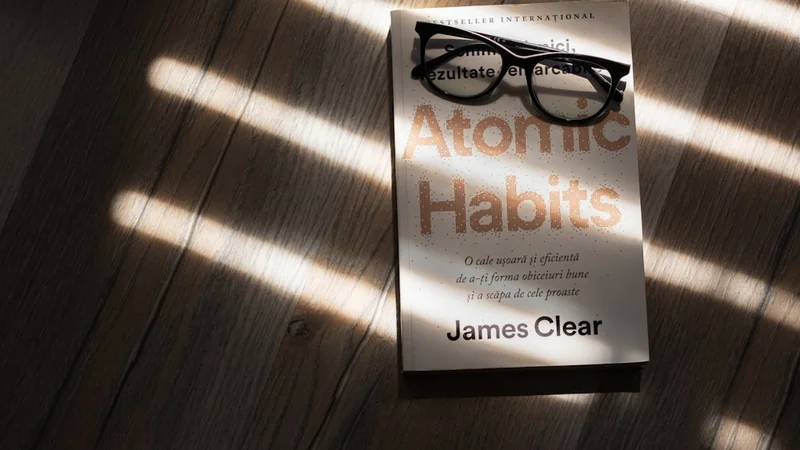
1. Atomic Habits — James Clear
The Most Complete Framework for Systems Thinkers

For who: People who want a comprehensive, end-to-end system — and who are ready to do the identity work, not just the behavioral mechanics.
Why we chose it: James Clear didn't invent the idea that habits are powerful. What he did was build the clearest, most implementation-ready synthesis of identity-based behavior change, environment design, and the four laws of habit formation that currently exists in book form. His core argument — that you don't rise to the level of your goals, you fall to the level of your systems — isn't original, but his operationalization of it is genuinely useful. The "implementation intentions" research he builds on (Gollwitzer & Sheeran, 2006, Advances in Experimental Social Psychology) is among the most replicated in behavioral science, and Clear translates it into a workable protocol without oversimplifying it.
The four laws (make it obvious, make it attractive, make it easy, make it satisfying) function as a diagnostic framework as much as a design one. When a habit isn't sticking, you can run it through all four laws and usually identify which one is failing.
Pros:
- The most complete single-volume habit framework available — covers environment design, identity, cue manipulation, and reward timing in one coherent system
- Identity-based framing ("I am the kind of person who...") addresses the root level that most habit books never reach
- Extremely practical: habit stacking, temptation bundling, and the two-minute rule are immediately actionable without additional coaching
Cons:
- The science is synthesized rather than primary — if you want primary research on habit formation, you'll want Wendy Wood's book as a companion
- The identity reframe, while compelling, can feel abstract for readers who need concrete minimum-viable starting points before they're ready for philosophical shifts
- Limited coverage of social habits, relationship habits, and habits that involve other people's cooperation
Atomic Habits — James Clear (Paperback)
Slot for the #1 ranked title — the most complete single-volume habit framework (four laws + identity).
As an Amazon Associate, we earn from qualifying purchases — at no extra cost to you.
2. Tiny Habits — BJ Fogg
The Stanford Protocol for Starting When Everything Else Has Failed
For who: People who've tried habit books before, started strong, and crashed — especially those who've concluded they "don't have the discipline" to change.
Why we chose it: BJ Fogg spent years directing the Behavior Design Lab at Stanford studying why people fail to build habits, and he arrived at a conclusion that runs counter to most of the self-help genre: the problem isn't motivation, and it isn't discipline. The problem is that the habits are too big. His Fogg Behavior Model (B = MAP: Motivation × Ability × Prompt) established that motivation fluctuates far too much to be a reliable foundation for behavior. The reliable foundation is making the behavior so small that it requires almost no motivation — and then using celebration (the emotion that wires behaviors into neural pathways) to anchor and grow it.
A "tiny habit" is a new behavior you perform after an existing anchor behavior, calibrated to be so small that you can do it even on your worst day. "After I pour my morning coffee, I will do one push-up." That's it. The smallness is the feature, not a temporary workaround.
The celebration protocol — the moment of genuine positive emotion immediately after the behavior — is the part of Fogg's system that most summaries get wrong. It's not positive thinking. It's the specific mechanism by which the behavior becomes neurally encoded as rewarding. Fogg's research suggests this is the missing piece in most failed habit attempts.
Pros:
- The single most effective approach for habit formation in low-motivation conditions — field-tested with over 60,000 participants before the book was published
- Celebration protocol is both scientifically grounded and immediately usable — you can start today
- Removes shame from failed past attempts by correctly identifying the root cause (habit design, not character)
Cons:
- The extreme minimalism can feel too small for people who want significant change — and the scale-up protocol is less detailed than the starting protocol
- Less applicable to complex, multi-step habits that require extended time commitment (e.g., a 45-minute workout routine)
- The writing is warmer and more anecdotal than rigorous — if you want the raw science, pair it with Wendy Wood
Tiny Habits — BJ Fogg (Paperback)
Slot for #2 — Stanford minimum-viable-behavior protocol for starting when everything else failed.
As an Amazon Associate, we earn from qualifying purchases — at no extra cost to you.
3. The Power of Habit — Charles Duhigg
The Best Narrative Introduction to How Habits Actually Work
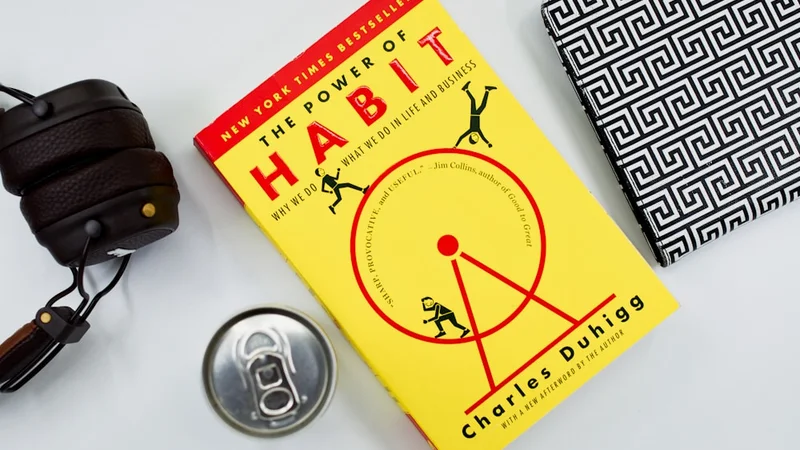
For who: Readers who engage best through stories and case studies, and who want to understand the mechanism before they tackle the method. Also excellent for people changing habits within organizations.
Why we chose it: Duhigg's 2012 book popularized the habit loop — cue, routine, reward — in a way that made it genuinely memorable for millions of readers. The neurological research he draws on (Ann Graybiel's work at MIT on the basal ganglia's role in habit formation) is legitimate and well-explained. More importantly, Duhigg understood that habits are not individual behaviors — they're organizational and social as well as personal. His chapters on Alcoa, Starbucks, and the Montgomery bus boycott make the point that the same principles governing personal habit formation also govern institutional change.
The book's golden rule of habit change — you can't eliminate a habit, only replace it — is grounded in solid neuroscience (the neural pathway doesn't disappear; it gets superseded) and is practically useful for anyone trying to break bad habits rather than just build new ones.
Pros:
- The habit loop framework is the most memorable and transferable mental model in the category
- Organizational and social dimensions of habit formation that most self-development books ignore entirely
- Exceptionally well-written narrative — one of the few science books in this category you'll finish in a single weekend
Cons:
- The practical implementation guidance is thin compared to Clear or Fogg — you'll understand habits deeply without necessarily knowing what to do differently on Monday
- The keystone habits concept, while compelling, needs supplementation from other books to operationalize effectively
- Published in 2012; the neuroscience it references is foundational but the field has developed significantly since
The Power of Habit — Charles Duhigg (Paperback)
Slot for #3 — best narrative introduction to the habit loop (cue-routine-reward).
As an Amazon Associate, we earn from qualifying purchases — at no extra cost to you.
4. Good Habits, Bad Habits — Wendy Wood
The Most Scientifically Rigorous Book in the Category
For who: Readers who want to understand the actual science — not a popularization of it — and who are willing to work harder to extract the practical protocol from the research findings.
Why we chose it: Wendy Wood is arguably the world's leading academic researcher on habit formation. Her research on context stability — the finding that habits form most readily and persist most reliably when they're performed in consistent environments, at consistent times, after consistent preceding behaviors — is among the most robust in behavioral science. Her work established something that most habit books intuit but few prove: the context, not the intention, is what maintains behavior over time.
Wood's central finding is that about 43% of daily behavior is habitual — performed in the same location, at the same time, without active deliberation. The implication is both humbling and practically useful: most of your daily behavior is running on autopilot, not choice. Building good habits means loading the autopilot with behaviors you've deliberately chosen, rather than the ones that were accidentally installed by your circumstances.
Her framework — reward context stability, frictionless pathways, and the disruption of existing cues when breaking habits — is the most evidence-based approach to behavior change available in popular book form.
Pros:
- The strongest scientific foundation in the category — Wood's own primary research, not a synthesis of others'
- Context-dependence research provides a genuine mechanism explanation for why most habit books fail (they focus on motivation, not environment)
- Uniquely useful for breaking habits as well as building them — the disruption of context cues is a practically actionable technique
Cons:
- The writing is denser and more academic than Clear or Fogg — some readers find it slow
- The protocol for implementation is distributed through the research rather than organized into a clear step-by-step framework
- Less applicable to intrinsically motivating habits that don't require autopilot — better suited to behaviors you need to make automatic than behaviors you want to stay conscious about
Good Habits, Bad Habits — Wendy Wood (Paperback)
Slot for #4 — the most scientifically rigorous title (context-stability primary research).
As an Amazon Associate, we earn from qualifying purchases — at no extra cost to you.
5. The Compound Effect — Darren Hardy
The Behavioral Economics of Daily Accumulation
For who: People who understand what they need to do but are struggling to sustain motivation across months and years — especially effective for financial, health, and career habits where results are delayed.
Why we chose it: Hardy's central argument — that the decisions you make every day, regardless of how small they seem, compound into dramatically different outcomes over years — isn't original science, but his visualization of the mechanism is among the most practically motivating in the category. The math of compound growth applied to behavior is genuinely illuminating: a 1% daily improvement becomes a 37× improvement over a year; a 1% daily decline becomes near-zero. That asymmetry changes how you think about consistency.
What Hardy adds that most habit books don't is an explicit framework for long-term motivation management — tracking, accountability, momentum, and the psychological dynamics of sustained effort over extended timelines. Most habit frameworks are excellent at the first 30-66 days; Hardy addresses what happens after that.
Pros:
- The compound growth visualization is one of the most clarifying long-term motivation anchors available
- Accountability and tracking frameworks that complement the design-first approaches of Clear and Fogg
- Particularly strong on financial and career habits, where the compound mechanism is most visible
Cons:
- Less scientific rigor than Wood, and the central thesis — while accurate — is supported more by illustration than primary research
- The writing leans toward motivational rather than instructional in places; pairs better as a complement than a standalone
- The primary use case is maintaining habits over time, not starting them — combine with Fogg or Clear for the launch phase
The Compound Effect — Darren Hardy (Paperback)
Slot for #5 — behavioral economics of daily accumulation; long-term motivation management.
As an Amazon Associate, we earn from qualifying purchases — at no extra cost to you.
6. Mini Habits — Stephen Guise
The Radical Minimum Viable Action Approach for High Procrastination

For who: Chronic procrastinators, perfectionists who freeze at the gap between current behavior and ideal behavior, and anyone who has started new habits with big goals and quit within two weeks.
Why we chose it: Guise's framework predates Fogg's published work but arrives at a remarkably similar conclusion through a different path: make the habit so small that failure is nearly impossible. His original experiment — committing to doing only one push-up per day — led him to daily exercise that has persisted for years. The book documents why this works: the internal resistance to starting is almost entirely about the perceived effort of the full behavior. When the requirement is reduced to something genuinely trivial (one page, one push-up, one sentence), the psychological friction disappears, and you often exceed the minimum because starting was the entire barrier.
Mini Habits is narrower and more practically focused than either Atomic Habits or Tiny Habits, but for readers in specific stuck states — particularly those with significant perfectionism or procrastination patterns — it may be more directly useful than either.
Pros:
- The "stupidly small" design principle is the most immediately applicable technique for overcoming starting resistance
- Addresses perfectionism directly — the insight that perfectionists freeze because the bar is too high is well-argued
- The internal resistance model is useful for diagnosing exactly why a specific habit keeps failing to launch
Cons:
- Less comprehensive than Clear or Fogg — it's a one-idea book, which is its strength and its limitation
- Scaling up from mini habits to meaningful daily practice is less theorized than the starting protocol
- The science foundation is thinner than the other books in this list — more personal experiment than research synthesis
Mini Habits — Stephen Guise (Paperback)
Slot for #6 — radical minimum-viable-action approach for high procrastination/perfectionism.
As an Amazon Associate, we earn from qualifying purchases — at no extra cost to you.
7. Willpower — Roy Baumeister & John Tierney
The Ego Depletion Science That Should Change Your Habit Schedule

For who: People who want to understand why their habits work when they're fresh but collapse under stress, time pressure, or decision-heavy days — and who are ready to restructure their schedule around their cognitive architecture.
Why we chose it: Roy Baumeister's ego depletion research, consolidated in this book, established something that has profound implications for habit formation: willpower is a resource that depletes with use. Every decision, every act of self-control, every instance of suppressing an impulse draws from the same cognitive reservoir. When it's depleted — after a long decision-heavy workday, a difficult conversation, or a period of high stress — the behaviors that are most automatic (habits) persist while the behaviors that require deliberate effort (new habits, resisted temptations) collapse.
The implication for habit formation is structural: the optimal time for new habit execution is when cognitive resources are highest (typically morning, or after recovery periods), and the optimal approach for important habits is to automate them through consistent context cues (Wendy Wood's finding) so they don't compete with the depleted willpower pool. This book explains why habit design matters more than willpower by showing exactly how willpower works — and where it fails.
Note: Baumeister's ego depletion research faced replication challenges in the 2010s; the current scientific consensus is that the effect is real but more context-dependent than the original formulation suggested. The practical implications in this book remain valid and useful.
Pros:
- The best explanation of why habits and willpower interact — essential context for anyone building a habit system
- The glucose and decision fatigue research translates directly into scheduling principles you can apply immediately
- Excellent companion to any of the other books in this list — explains the "when" that complements their "how"
Cons:
- More explanatory than prescriptive — you'll understand willpower deeply without receiving a comprehensive habit-building protocol
- Some of the core science has been partially revised since the 2011 publication — check recent meta-analyses if you want the updated picture
- Better read as a second or third habit book than a first one
Willpower — Roy Baumeister & John Tierney (Paperback)
Slot for #7 — ego-depletion science that should restructure your habit schedule.
As an Amazon Associate, we earn from qualifying purchases — at no extra cost to you.
8. Nudge — Richard Thaler & Cass Sunstein
Choice Architecture for Anyone Who's Serious About Environmental Design

For who: People who want to design their physical and digital environment to make good habits automatic — and who are responsible for designing systems that affect other people's behavior (managers, parents, healthcare workers, product designers).
Why we chose it: Richard Thaler's Nobel Prize-winning work in behavioral economics (co-developed with Cass Sunstein) is the most intellectually rigorous treatment of the idea that environment shapes behavior. Their core insight — that the way choices are presented is as powerful as the choices themselves — underpins the environment design principle that Clear, Fogg, and Wood all invoke. This is the book that provides the theoretical foundation for why "make it obvious" and "reduce friction" work, with decades of empirical evidence from economics, public health, and policy research.
For the self-directed habit builder, Nudge translates into a question about every behavior you're trying to change: what does the default look like in my environment, and how do I redesign the default to favor the behavior I want? Putting the gym bag by the door is a nudge. Using a smaller plate is a nudge. Turning off social media notifications is a nudge. The book gives you the intellectual framework that makes these interventions something more than folk wisdom.
Pros:
- The most rigorous theoretical foundation for environment design — the principle underlying every other habit book's practical techniques
- Application across individual, organizational, and social contexts — uniquely broad applicability
- Updated edition (Nudge: The Final Edition, 2021) addresses many of the policy debates and includes more applied examples
Cons:
- Not a habit book in the traditional sense — you'll need to do more work to extract individual behavior change applications from the public policy framing
- Academic in tone; the most intellectual read in this list, which is its strength but may slow readers expecting a more direct self-development approach
- The individual applicability requires translation — it gives you principles, not protocols
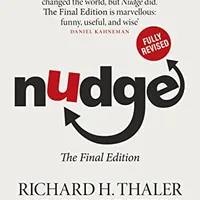
Nudge: The Final Edition — Richard Thaler & Cass Sunstein (Paperback)
Slot for #8 — choice architecture / environmental design foundation behind every other habit book.
As an Amazon Associate, we earn from qualifying purchases — at no extra cost to you.
Frequently Asked Questions
Atomic Habits vs. Tiny Habits — which one should you actually start with?
It depends on where you are right now. If you're someone who's intellectually engaged by systems thinking and you've never had a serious habit framework before, Atomic Habits gives you the most complete architecture. If you've tried and failed — repeatedly — and you're wondering whether habit building is simply not something you're capable of, start with Tiny Habits. Fogg's insight about motivation volatility will reframe what's been going wrong in a way that's both accurate and genuinely motivating.
Do habit books actually change behavior, or just produce temporary motivation?
The research on reading behavior-change books is mixed, and honestly, most of the effect is temporary — for the same reason most other motivational interventions are temporary. What makes the difference is whether the book gives you a protocol specific enough to act on immediately. The books in the Tier 1 of this list (Clear and Fogg) have unusually strong track records partly because they both require action within the first 24 hours, which turns a reading experience into a behavioral experiment.
Can you read more than one habit book at a time?
Yes, and it's often the ideal approach — but sequence matters. Fogg explains the mechanism (minimum viable behavior + celebration). Clear explains the architecture (identity + environment + four laws). Wood explains why environment is more effective than intention (context stability). Hardy explains why consistency compounds. These books aren't redundant; they're addressing different levels of the same problem.
Which book is best for someone building health habits specifically?
Tiny Habits for starting. Good Habits, Bad Habits for maintaining. Wendy Wood's research is specifically strong on health behavior — she's spent years studying why people with good intentions fail to sustain exercise, diet, and sleep habits, and the context-stability findings apply with particular force in health domains where environmental cues are often working against you.
What if I've already read Atomic Habits?
If you've already read Atomic Habits and are looking for what to read next, the highest-value complement is Good Habits, Bad Habits by Wendy Wood. Clear's book is excellent on the design level; Wood's explains the mechanism at the neuroscience and behavioral science level that makes it actually work. After those two, Willpower by Baumeister gives you the scheduling framework that makes both systems more effective.
If You Could Only Choose One
If you've never had a serious habit framework and you're starting from scratch: Atomic Habits. James Clear's four-law system is the most actionable complete framework in the category, and the identity-based approach addresses the layer of change that matters most for lasting behavior — who you're becoming, not just what you're doing.
If you've tried to build habits before and stopped: Tiny Habits. The most common reason people quit isn't lack of discipline — it's that the habits were too big for the motivational conditions they were attempting them in. Fogg's minimum viable behavior protocol will change that.
But here's the honest truth about habit books: the best one is the one you'll actually implement. All eight of these books contain ideas that can genuinely change behavior. The difference between reading and changing is always in the action taken immediately after the last page.
One thing worth understanding before you start: the neurochemistry of why new behaviors feel rewarding — and why that feeling fades at exactly the moment consistency is most important — is explained in detail [here: /en/blog/dopamine-and-motivation-what-neuroscience-actually-reveals]. Understanding that mechanism will make you a better practitioner of whatever system you choose.
Pick the book that matches where you are right now. Start small. Design the environment before relying on the motivation — and design your evolution one habit at a time.
Prices and availability verified at time of publication. As an Amazon Associate, I earn from qualifying purchases at no additional cost to you.
Was this helpful?