Mindset· 10 min read
Grief and Recovery: Why Healing Moves Back and Forth
Grief and Recovery: Why Healing Moves Back and Forth
A friend of mine lost her mother two years ago. Six months in, she told me she'd had a good week — she'd reorganized her apartment, started cooking again, even laughed at a terrible film. She felt guilty about it. "I think I'm over it," she said. Then added, quietly: "Which means something is wrong with me."
Three days later she called again. She'd found one of her mother's scarves in a coat pocket. She sat on the kitchen floor for an hour.
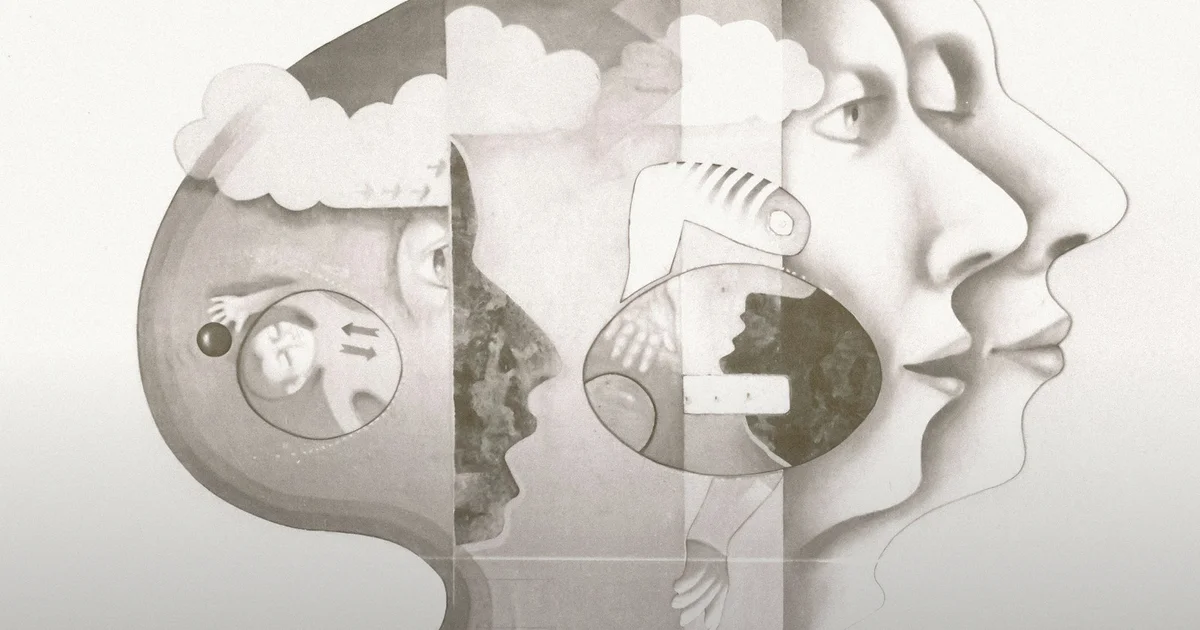
She wasn't broken. She wasn't going backwards. She was grieving exactly as the research says people grieve — not in a straight line, not through a neat sequence of stages, but in waves, oscillating between the ache and the attempt at ordinary life, sometimes within the same afternoon.
That oscillation isn't a failure of healing. It is the healing.
The five-stage model of grief — denial, anger, bargaining, depression, acceptance — entered common language so thoroughly that most people treat it as a clinical prescription. If you're not moving through the stages in order, something is wrong. If you reach acceptance and then feel grief again on a Tuesday, you've regressed.
But Elisabeth Kübler-Ross, who introduced the model in her 1969 book On Death and Dying, was describing patients coming to terms with their own terminal diagnoses, not the experience of bereavement. The stages were never intended to be universal, and Kübler-Ross herself said they didn't need to occur in order. They became a checklist anyway.
Part of the model's enduring appeal was its implied endpoint. If grief has stages, it has an arrival — somewhere you finally get to after a long crossing. What the research that followed Kübler-Ross has consistently found is something less tidy but, arguably, more honest: healing doesn't have a final stage. It has a rhythm. And learning to recognize that rhythm is more useful than waiting to feel finished.
Since the 1990s, a more useful framework has been building in bereavement research. In 1999, psychologists Margaret Stroebe and Henk Schut published what they called the Dual Process Model of Coping with Bereavement in the journal Death Studies. Their core observation was straightforward: bereaved people don't just sit with loss. They alternate. They move between loss-oriented coping — facing the grief directly, crying, remembering, feeling the absence — and restoration-oriented coping — making decisions, learning new skills, restructuring daily life, cautiously building something new.
Neither coping mode is better. Both are necessary. And the movement between them — what Stroebe and Schut called oscillation — is not a sign of instability. In their model, it is the mechanism.
Why Your Brain Needs Both Modes
The dual process model reframes a question people in grief often ask themselves: "Why can't I just feel this and get it over with?" Stroebe and Schut's answer is that adaptive coping involves both confronting the loss and taking periodic respite from it. Restoration-oriented coping isn't avoidance — it's recovery time. Like intervals in physical training.
The two modes address different kinds of strain:
| Loss-oriented coping | Restoration-oriented coping |
|---|---|
| Grieving the person directly | Adjusting to secondary stressors of loss |
| Intrusive memories, crying, yearning | Learning new skills and practical roles |
| Feeling the absence in everyday moments | Building a changed daily routine |
| Revisiting who the person was to you | Developing a new social identity |
| Sitting with the ache | Taking deliberate respite from the ache |
What makes the model useful is that it accounts for the alternation — the good weeks followed by the floor-sitting. It doesn't pathologise that rhythm. The model proposes that people who get stuck in one mode — never reaching toward the ordinary, or never letting themselves grieve — are likely to struggle more than people who move between the two. Later studies have found associations in that direction, though the evidence is still developing. The swing is the signal, not the problem.

It's OK That You're Not OK — Megan Devine
As an Amazon Associate, we earn from qualifying purchases — at no extra cost to you.
The Resilience Finding That Surprised Researchers
In 2004, psychologist George Bonanno published a paper in American Psychologist, "Loss, trauma, and human resilience," that challenged another assumption: that grief is always prolonged and devastating. His research on bereavement described several distinct trajectories people follow after significant loss, and argued that resilience is a pathway distinct from recovery, and more common than is often believed.
| Trajectory | What it looks like | Typical timeframe |
|---|---|---|
| Resilience | Brief disruption, then stable functioning | Weeks |
| Recovery | Significant distress, gradual return to baseline | 1–2 years |
| Chronic grief | Persistent elevated distress | Years (warrants support) |
| Delayed grief | Initial stability, difficulty emerges later | Varies |
The resilience trajectory is exactly what it sounds like: a brief disruption after loss, then a return to stable daily functioning within weeks or months. Bonanno's most counterintuitive argument was that this trajectory is the most common. The person who returns to work quickly, who manages to laugh at the memorial service, who seems from the outside to be coping unusually well: they are probably following a legitimate path, not masking deeper distress. Resilient grievers may experience transient difficulty — a few weeks of restless sleep or intrusive memories — but overall functioning stays stable.
It's worth noting that these trajectories aren't rigid categories, and the timing may look different across cultures, communities, and types of loss. The point isn't any single number; it's the broader finding that rapid recovery is a real pattern, not a red flag.

The Other Side of Sadness (Revised) — George Bonanno
As an Amazon Associate, we earn from qualifying purchases — at no extra cost to you.
Designing Space for Both Modes
Understanding the dual process model changes what you're trying to do when you're grieving. You're not trying to stay in the sadness until it's finished. You're not trying to hold yourself in "moving forward" mode until the sadness is safely behind you. You're trying to give yourself permission to move between both — without guilt in either direction.
That permission is harder than it sounds. The grief police are not always other people. They're often internal: the voice that says you're wallowing if you're sad again, or that you're betraying someone by feeling normal.
One note worth making here: the dual process model applies to loss in its wider sense — not only the death of a loved one, but the end of a long relationship, a significant change in health, the loss of a career or a role that defined your identity. Losses that society doesn't formally acknowledge — the end of a friendship, a miscarriage, leaving a home — can make the restoration-oriented moves harder to justify, because they don't always get named as grief recovery. But the mechanism is the same.
A few things that support healthy oscillation rather than getting stuck in one direction:
Name what mode you're in. When you notice a wave of grief, you don't have to fight it. When you reach toward something ordinary, you don't have to feel guilty about it. Naming — "I'm in loss-orientation right now" — takes some of the drama out of the swing.
Keep small restoration practices. Even in the heaviest periods, a few anchors to ordinary life — a walk, a meal, a brief task — give you recovery time from acute grief.
Write things down. A journal isn't just for expressing grief; it can track the oscillation over weeks and months, help you notice you've been to this feeling before and come back, and build an evidence base that the swings aren't actually getting worse.
how to build a journaling habit
How to Start Today
If you're in a period of loss — or supporting someone who is — a few adjustments can help you work with the oscillation rather than against it.
1. Drop the timeline. Grief doesn't have a schedule. The research shows wide variation across people, and comparing your experience to an imagined average is rarely useful.
2. Let the good days happen. A good day doesn't mean the loss was smaller than you thought. It means your nervous system is doing what it needs to do. Let it.
3. Treat professional support as a tool, not a last resort. If intense distress persists for a long time and keeps you from daily life, a grief-informed therapist can help. Reaching for help is using what's available, not admitting defeat.
4. Find one anchor for each mode. One thing that lets you sit with the loss (a photograph, a regular time to write), and one that pulls you back toward ordinary life (a walk, a small project, a call with a friend). Give both legitimacy.
5. Talk to people who've been through it. Shared experience has a particular power here — not comparing your grief, but hearing another person say "I had a good week and then fell apart at the grocery store" does something that no framework can replicate. Grief support groups, peer communities, and honest conversations with people who've lost someone can quietly dismantle the idea that your oscillation is unusual.
resilience habits and daily rituals
Grief doesn't obey the timelines we'd prefer. The model that puts it into orderly stages is comforting because it implies an end, a destination, a day when it's finally done. The research offers something less tidy but, in a strange way, more generous: you'll move toward the loss and away from it, sometimes within the same hour, and both directions are the right direction.
Designing your evolution doesn't mean designing away the hard parts. It means building a life structured to hold them. Room for the ache. Room for the next small thing. Permission to swing between them as many times as it takes.
What does your current oscillation look like — and are you spending more energy fighting which mode you're in than actually letting it run?
Was this helpful?