Habits· 10 min read
I Stopped Procrastinating Small Tasks With the One-Minute Rule
If a task takes less than one minute, do it now. This deceptively simple rule — backed by habit science — quietly transforms how much you get done daily.
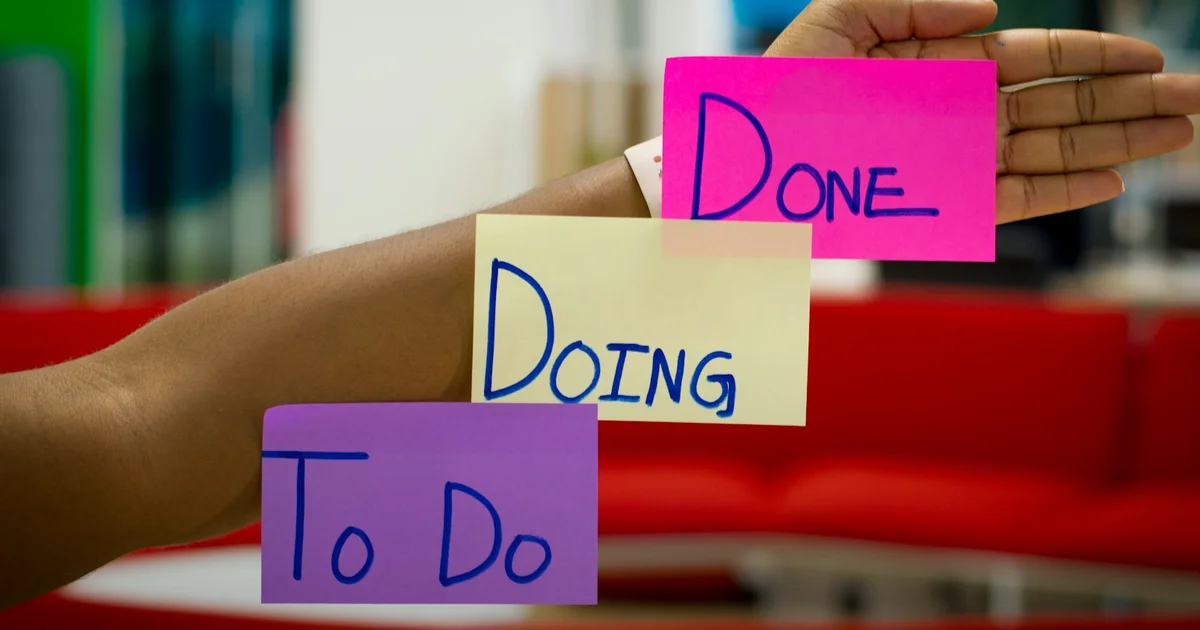
I Stopped Procrastinating Small Tasks With the One-Minute Rule
There were 43 unread emails in my inbox. A permission slip for my kid's field trip sat unsigned on the counter — for the third day in a row. The dishwasher needed emptying. A package needed returning. None of these things were hard. None of them were urgent. And yet, collectively, they'd been following me around like a low-grade headache for over a week.
I didn't have a productivity problem. I had a tiny-task problem. The big stuff — projects, deadlines, strategy — I handled fine. But the small things? They piled up like snowflakes on a windshield until I couldn't see through them anymore. Then one afternoon, I came across a rule so stupidly simple I almost laughed. It changed the way I move through my day, and it took exactly zero willpower to implement.
The Rule That Sounds Too Simple to Work
Gretchen Rubin, the bestselling author of The Happiness Project and Better Than Before, introduced what she calls the One-Minute Rule: if a task takes less than one minute, do it immediately. No exceptions. No "I'll get to it later."
Hang up your coat when you walk in? Do it now. Reply to that yes-or-no email? Now. Put that empty glass in the dishwasher? Right now.
It sounds almost insultingly basic. And that's exactly why it works.
Here's the thing most productivity advice gets backwards: we assume procrastination is about the difficulty of the task. It isn't. Research from Dr. Timothy Pychyl at Carleton University shows that procrastination is primarily an emotion-regulation problem, not a time-management one. We don't avoid tasks because they're hard — we avoid them because they carry some tiny friction. A micro-annoyance. A vague sense of "ugh."
The one-minute rule short-circuits that entire process. By collapsing the gap between noticing and doing, you never give your brain the chance to negotiate. There's no internal debate about whether to do it now or later, because the rule has already decided for you.
Jim Rohn used to say, "What is easy to do is also easy not to do." That line has haunted me for years, because it captures the exact trap: these tiny tasks are so easy that skipping them feels harmless. But skip enough of them, and you're living under a mountain of undone nothings.
Why Small Tasks Create Outsized Mental Drag
You'd think ignoring a 30-second task would have no psychological cost. You'd be wrong.
In 2011, psychologists E.J. Masicampo and Roy Baumeister published a study on unfulfilled goals and cognitive performance showing that uncompleted tasks occupy working memory and reduce cognitive performance — even when you're not actively thinking about them. This is the Zeigarnik Effect in action: your brain keeps an open loop for every unfinished commitment, regardless of how trivial it is.
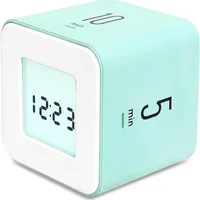
Mooas Pomodoro Multi Cube Timer
After the Zeigarnik Effect section about mental bandwidth — a visual flip timer makes the one-minute threshold tangible: flip it, see the countdown, close the loop before time runs out.
As an Amazon Associate, we earn from qualifying purchases — at no extra cost to you.
Think of your mental bandwidth like RAM on a computer. Every unsigned form, every unanswered text, every jacket draped over a chair instead of hung in the closet — each one occupies a tiny thread of processing power. Individually, they're nothing. Together, they're the reason you sit down to do meaningful work and feel inexplicably foggy.
This is what David Allen, the creator of Getting Things Done, calls "open loops." His two-minute rule (which predates Rubin's one-minute version) was built on the same insight: the cost of tracking a small task in your system is often greater than the cost of just... doing it.
The one-minute threshold is even more aggressive than Allen's, and I think that's what makes it hit different. Two minutes leaves room for debate. One minute doesn't. You either do it or you don't, and you always know which choice you made.
The Compound Effect Nobody Talks About
Here's where the one-minute rule stops being a cute life hack and starts being something genuinely powerful.
When I started applying it consistently, I noticed something unexpected: I wasn't just clearing more small tasks. I was building a different relationship with action itself. Each one-minute completion was a micro-proof that I'm someone who handles things immediately. And over days and weeks, that identity shift started bleeding into bigger decisions.
Darren Hardy wrote about this in The Compound Effect — the idea that small, consistent actions accumulate into massive results over time. But Hardy was mostly talking about habits you build deliberately, like exercising or saving money. What surprised me about the one-minute rule was how passively it compounds. You're not gritting your teeth through a new habit. You're just... not postponing the obvious anymore.
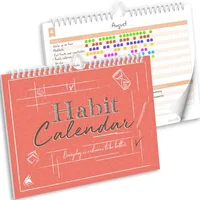
Clever Fox Habit Calendar (24-Month)
A habit tracker calendar makes the compound effect visible — turning invisible micro-wins into a streak you can see on the wall, reinforcing the identity shift the one-minute rule builds.
As an Amazon Associate, we earn from qualifying purchases — at no extra cost to you.
Bob Proctor talked a lot about paradigms — the mental programs running in the background that dictate your behavior. Most people's paradigm around small tasks is some version of "it can wait." The one-minute rule doesn't fight that paradigm head-on. It just quietly replaces it, one completed micro-task at a time, until "just do it now" becomes your default setting.
I've been running this experiment for about four months now, and the shift is real. My kitchen counter stays clear. My inbox rarely goes above single digits. The permission slips get signed when they arrive. None of this required a productivity system, an app, or a morning ritual. It required a single decision repeated throughout the day.
The Hidden Connection Between Clutter and Procrastination
Let me tell you about my friend Daniel. He's a software developer — sharp, organized at work, the kind of person who color-codes his Jira board. But his apartment looked like a storage unit had a nervous breakdown.
He wasn't lazy. He was classic "big-task competent, small-task avoidant." He could architect a database schema before lunch but couldn't bring himself to open the mail sitting on his kitchen table.
When I told him about the one-minute rule, he was skeptical. "That's it? Just... do the small thing?" Yes. That's literally it.
Three weeks later, he texted me a photo of his apartment. Clean counters. Organized shelves. No pile of mail. His exact words: "I don't understand how this works, but it works."
Here's how it works: physical clutter and mental clutter are the same system. A Princeton Neuroscience Institute study found that visual clutter competes for your attention, reduces working memory, and increases stress hormones. Every object out of place is a miniature unfinished task your brain has to process. When you apply the one-minute rule to physical spaces, you're not just tidying — you're reclaiming cognitive bandwidth.
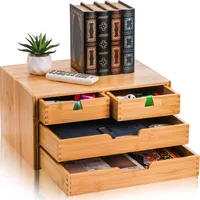
Navaris Bamboo Desk Organiser with Drawers
A bamboo desk organizer gives everything a home, directly addressing the "every object out of place is a miniature unfinished task" insight — so one-minute tidying becomes effortless.
As an Amazon Associate, we earn from qualifying purchases — at no extra cost to you.
This is why decluttering feels so disproportionately good. It's not about the objects. It's about closing dozens of open loops simultaneously. Marie Kondo was onto something real, but you don't need to overhaul your entire home in a weekend. You just need to stop walking past the thing that takes 40 seconds to put away.
Three Daily Habits That Are Quietly Draining Your Potential
What the One-Minute Rule Won't Fix (And What Will)
I want to be honest here, because I think most productivity content oversells its solutions: the one-minute rule is not a universal fix for procrastination.
If you're avoiding a difficult conversation, a career change, or writing the first chapter of your book, the one-minute rule won't help. Those tasks carry emotional weight that no simple heuristic can dissolve. For those, you need different tools — fear-setting, structured planning, accountability, maybe therapy.
What the one-minute rule does fix is the background noise. The constant low hum of undone small things that drains your energy before you even get to the meaningful work. Think of it as clearing the runway so the plane can actually take off.
I Lost All Motivation — Here's What Brought It Back
And this matters more than people realize. Napoleon Hill wrote in Think and Grow Rich that definiteness of purpose is the starting point of all achievement. But you can't access definiteness when your attention is scattered across 47 micro-obligations. The one-minute rule isn't about the small tasks themselves. It's about what becomes possible when they stop cluttering your mental space.
How to Start Today (Your One-Minute Rule Setup)
You don't need a system. You don't need an app. But there are a few things that make the one-minute rule stick faster:
Step 1: Pick one zone. Don't try to apply the rule everywhere on day one. Start with one area — your kitchen, your inbox, or your desk. When you notice a task that would take under a minute, do it. That's the entire instruction.
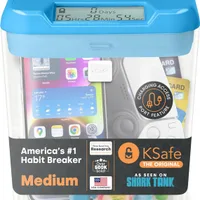
Kitchen Safe Time Locking Container (kSafe)
The biggest obstacle on your desk is your phone. The kSafe phone lock box is a precommitment device that removes the friction source entirely — so those one-minute tasks don't get derailed by doom-scrolling.
As an Amazon Associate, we earn from qualifying purchases — at no extra cost to you.
Step 2: Use physical anchors. The rule works best when your environment supports it. If hanging up your coat takes one minute but the coat hook is in the basement, you've already lost. Put hooks where you need them. Keep a trash can within arm's reach of your desk. Remove the friction that makes small tasks annoying.
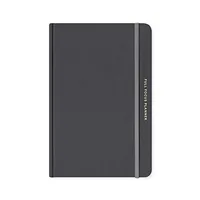
Full Focus Planner by Michael Hyatt
A daily planner with built-in habit tracking and priority setting becomes the physical anchor for your day — helping you distinguish one-minute tasks from deeper, focused work.
As an Amazon Associate, we earn from qualifying purchases — at no extra cost to you.
Step 3: Stack it onto something you already do. When you finish a meal, immediately deal with your plate. When you check your phone, respond to anything that takes under a minute. When you walk through a room, handle one thing that's out of place. You're not building a new habit — you're attaching a behavior to existing triggers, which is what James Clear calls "habit stacking" in Atomic Habits — a concept BJ Fogg pioneered in Tiny Habits under the name "anchoring."
Step 4: Track it for one week. Not with a spreadsheet — just notice. At the end of each day, ask yourself: "How many things did I handle in the moment today?" You'll feel the difference before you can count it.
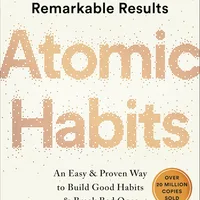
Atomic Habits — James Clear
The article directly references James Clear's habit stacking concept from Atomic Habits — the one-minute rule IS atomic habits in practice. If you want the full framework behind why this works, this is the book.
As an Amazon Associate, we earn from qualifying purchases — at no extra cost to you.
Step 5: Expand the radius. After a week or two in your starting zone, let the rule spread. Apply it in the car (trash out every time you exit), at work (reply to quick emails immediately instead of flagging them), with your phone (delete screenshots and clear notifications in real time).
The Smallest Commitment That Changes Everything
Here's what I find quietly radical about the one-minute rule: it asks almost nothing of you. There's no 30-day challenge, no accountability partner, no $200 planner. It's just a decision about how you relate to small moments throughout your day.
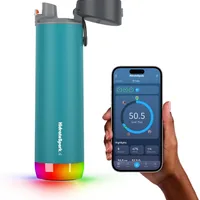
HidrateSpark PRO Smart Water Bottle
A smart water bottle that glows to remind you to drink is the perfect embodiment of the one-minute philosophy: a tiny repeated action that compounds into better health — proving the rule extends beyond tasks.
As an Amazon Associate, we earn from qualifying purchases — at no extra cost to you.
And yet those small moments are your day. Jim Rohn had it right when he said, "Either you run the day, or the day runs you." The one-minute rule doesn't help you run the day in some grand strategic sense. It helps you stop losing it in a thousand tiny surrenders.
T. Harv Eker once pointed out that how you do anything is how you do everything. I used to think that was an exaggeration. I don't anymore. Since I started handling small tasks immediately, I've noticed I'm faster at making bigger decisions too. Not because the rule magically rewired my brain, but because I stopped practicing delay. When your default mode is "handle it now," that mode eventually generalizes.
That's what designing your evolution actually looks like. Not a dramatic overhaul. Not a vision board montage set to cinematic music. Just a quiet, repeated choice to close the loop instead of leaving it open. One minute at a time, you become someone who doesn't let things pile up — in your kitchen, in your inbox, or in your life.
I Kept Hitting the Same Ceiling Until I Found the Belief Behind It
So here's my question for you: what's the one small thing you've been stepping over — literally or figuratively — for the past week? What would it take to handle it right now, before you close this tab?
I bet it would take less than a minute.
Was this helpful?