Mindset· 10 min read
Why 'I Can't' Becomes Real: The Science of Learned Helplessness
Failures you couldn't escape train your brain to stop trying — even after the situation changes. Seligman and Maier's research and what it means for you.
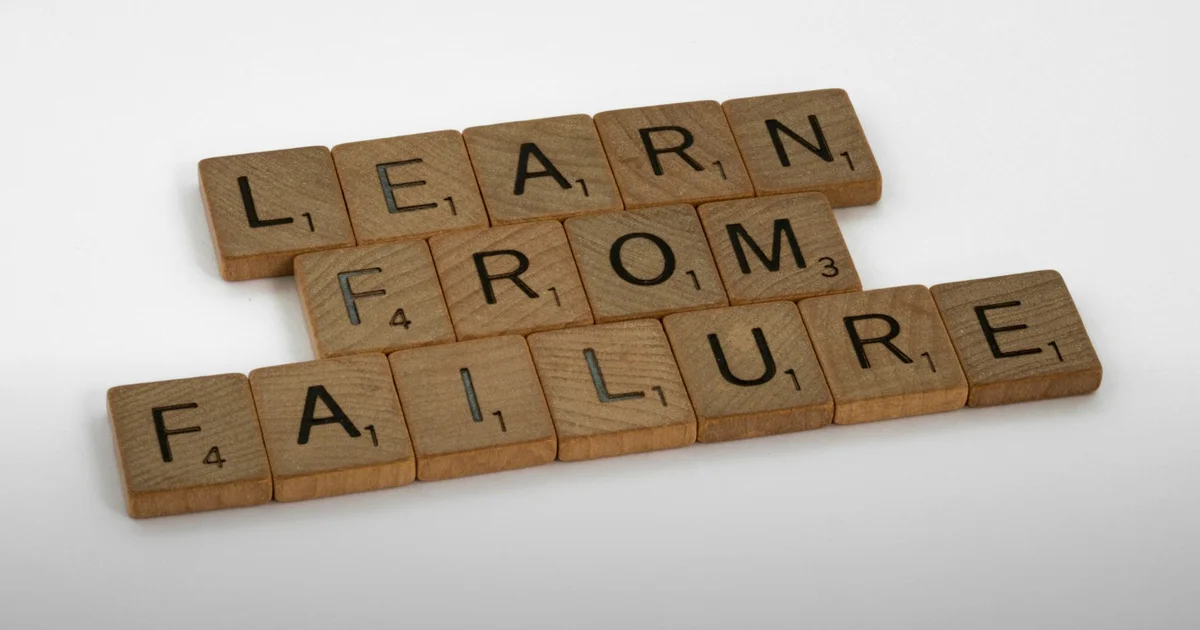
Why 'I Can't' Becomes Real: The Science of Learned Helplessness
She'd applied for the senior role three times over four years.
First time — different candidate, stronger experience, fair enough. Second time — she didn't make the final round and never got a real reason why. Third time — same result, different face in the seat. Then the role came open a fourth time. Her manager left a note saying she should absolutely put her name forward. She didn't even open the application. She'd already made her decision somewhere quiet, in some interior place she couldn't quite name. She told herself she was content where she was.
She wasn't lazy. She wasn't fragile. She was demonstrating something called learned helplessness — a specific, research-documented pattern her nervous system had built after three genuine, consecutive failures to change an outcome that mattered to her. She had stopped trying — not because the situation was the same (it wasn't; the manager who'd sidelined her had moved on two years earlier), but because something had calcified in the gap between effort and outcome. That something has a name, a research history, and a mechanism you can actually work with once you understand it.
What 1967 Research Reveals About Why You Stop Trying
In 1967, Martin Seligman and Steven Maier published a study in the Journal of Experimental Psychology that quietly changed how we think about motivation, setback, and the strange persistence of giving up.
The study ran in two distinct phases. In the first phase, one group of subjects was placed in a situation where a genuinely inescapable, uncontrollable negative event occurred. Nothing they did stopped it. There was no lever that worked, no available escape that led anywhere. The adversity was real. And it was uncontrollable — by design.
Then the situation changed. In the second phase, escape became genuinely easy, genuinely available. A control group — subjects who had no prior experience of uncontrollability — immediately found their way out when placed in this new setup. But the group from phase one? Most of them didn't even try. They remained passive in a situation that now, actually, objectively, they could walk straight out of.
Seligman and Maier called this learned helplessness: a conditioned expectation, built from genuine inescapable adversity, that effort and outcomes are simply unrelated. The defining feature isn't the severity of the original setback — it's that nothing you did actually stopped it, and your brain built a specific expectation from that experience. The control group, which had experienced an equally aversive event but one they could actually stop, showed none of this failure in phase two. They tried, and escaped, without hesitation.

The mechanism Seligman and Maier proposed is elegant and uncomfortable in equal measure. When you repeatedly encounter genuine uncontrollability — when you push and nothing genuinely moves — your brain doesn't quietly file that away as a data point about that specific situation. It builds an expectation. And that expectation gets carried forward. It doesn't check, as you walk into a new situation, whether the underlying facts have actually changed. It simply reports: effort and outcome are unrelated here.
Learned Optimism: How to Change Your Mind and Your Life — Martin E. P. Seligman (Vintage paperback)
Seligman's own accessible follow-up to the 1967 research behind this article — the primary source, straight from the psychologist who identified the pattern.
As an Amazon Associate, we earn from qualifying purchases — at no extra cost to you.
How One Failure Zone Quietly Drains Another
Here's where Seligman and Maier's research gets personally inconvenient: the learned helplessness effect didn't stay neatly contained to the original situation where it was built.
That's the detail most popular summaries quietly skip. The expectation generalized. It applied to new situations, new contexts, situations with genuinely different rules, different obstacles, different people. The feeling of "nothing I do will matter" traveled with the person — not because they were broken, but because that's how learned expectations work.
Think about what that looks like across an actual human life.
Three rounds of rejection on a creative project. You stop submitting — not just to that specific outlet, but you start second-guessing yourself about similar outlets, adjacent opportunities, the broader category of putting your work in front of strangers who might say no.
Five attempts to build a consistent morning routine, five times it collapses by day nine. You don't conclude the routine was poorly designed. You conclude you're someone who "can't do mornings." That morphs from a situational observation into what feels like a fixed fact about your character.
A difficult stretch in a relationship where every hard conversation ended worse than it started. You stop initiating those conversations. Not just in that relationship — sometimes in the next one too.
This is the mechanism. Not laziness. Not lack of desire. A learned expectation, earned in one situation, traveling forward and misfiring in genuinely new ones — the same generalization pattern behind why overthinking makes it worse.
The version of this most people live with is quieter than the original lab setup. Nobody hands you a situation that's clinically inescapable. But you can absolutely develop a learned-helplessness response from a long enough sequence of genuine failures that truly weren't in your control — a manager who moved the goalposts, a market that shifted against you, a health situation that didn't respond to your efforts, a relationship with dynamics too entangled to change alone. Real uncontrollability produces real learned helplessness. That's the honest reading of Seligman and Maier's data — not a metaphor, not an exaggeration.
The Crucial Distinction That Changes What You Do About It
Here's where precision actually matters, because the fix depends entirely on what the problem actually is.
Learned helplessness is not the same as locus of control.
Julian Rotter's locus-of-control research — from around the same era — describes a stable personality tendency: the degree to which you habitually attribute outcomes to your own actions versus external forces. It's a standing trait, baked into your interpretive style, present even before any particular difficult situation arrives. If you have an external locus of control, you carry that lens into new situations as a general default.
Learned helplessness is a different animal. It's state-dependent. It's a specific expectation built from a specific, genuine prior experience of uncontrollable adversity, then carried forward into new situations where it misfires. You didn't have it before that sequence of setbacks. You developed it because of them. And because it came from somewhere particular, it can — crucially — be checked against whether it still actually applies to where you are now.
This distinction matters enormously for what you do next — see how self-efficacy belief predicts whether you follow through for the mechanism in action.
If learned helplessness were a personality trait, the path forward would be long-term, structural character development. But because it's a learned expectation from a particular prior experience — a state, not a trait — the move is more surgical: check whether the specific, current situation still supports that expectation, or whether you're importing a belief earned in one context into a context where it's no longer accurate.

That's what the practical application of Seligman and Maier's research actually looks like. Not raw effort. Not positive thinking. Not telling yourself "this time is different" and hoping the feeling shifts. Deliberately examining the specific evidence in the current situation that confirms or challenges the expectation — and gathering real, small, observable evidence that effort actually works here.

Clever Fox Habit Calendar Circle — 24-Month Habit Tracker (Dark Blue & Red)
A simple way to log small, real evidence that your effort is producing results — exactly the kind of record this research points to as the actual fix.
As an Amazon Associate, we earn from qualifying purchases — at no extra cost to you.
What the Follow-Up Research Actually Found
Subsequent work built on Seligman and Maier's original findings in one direction that's worth knowing clearly.
The helplessness effect could be reversed. But not by simply deciding to try harder, and not by reframing the situation with positive language. What worked was repeated, genuine demonstration — in the actual new situation — that effort produced results. Not affirmations. Not mindset shifts. Real, small-scale evidence that this environment responds to this person's actions.
Each piece of evidence quietly updated the expectation. Enough accumulating evidence, and the carryover from the earlier situation began to erode. It didn't vanish overnight, but it loosened. The person started to act again — not because they'd summoned willpower, but because they now had actual data from the current situation contradicting the imported one.
This is why "just try harder" is genuinely unhelpful advice for someone operating inside a learned-helplessness response. It treats the problem as an effort deficit. The actual problem is an expectation mismatch. The person often has effort available. What they don't have is a reliable belief that effort and outcome are connected here, in this situation. The real ask is not more effort — it's early, observable, low-stakes evidence that the new situation works differently from the old one.
Martin Seligman went on to develop these insights into a broader framework at the Penn Positive Psychology Center, detailed in Learned Optimism — the accessible, research-grounded follow-up that translates the original 1967 findings into a practical explanatory style you can actually audit in yourself. If you've already read that book, the connection to the original research is clearer than most people realize when they pick it up — for the deeper mechanism, see Learned Optimism and Seligman's explanatory style research.
How to Start Today: Testing Whether 'I Can't' Still Fits
Five steps. Specific. Evidence-based.
-
Name the situation where the expectation was originally built. Not the current situation — the earlier one. Where, specifically, did you genuinely and repeatedly push on something and hit a wall that genuinely didn't move? Be concrete: the job market in a particular year, a specific relationship dynamic, a creative project sent to a particular type of outlet, a health intervention that didn't work because of circumstances that have since changed. The more precisely you can name the original situation, the more visible the next step becomes.
-
Identify one way the current situation factually differs from that original one. Not twenty differences. One. Something genuinely, verifiably different — a different manager or structure, a different platform or audience, a body in a different state now, a different collaborator, different market conditions. If you honestly can't find a single factual difference — if the situation is genuinely the same — the expectation might still be accurate. But in most cases, if you look carefully, the difference is real and specific.
-
Design one action whose result you can observe within 48 hours. Not a resolution to "be more consistent." Not a 30-day challenge. A single, small action in the current situation, specific enough that you'll actually know whether it worked or didn't. You send one email to the new editor. You try the revised protocol for three consecutive mornings. You have the specific conversation using the specific different framing. Small enough that you'll actually do it. Observable enough that you'll actually learn something from the result.
-
Treat the result as data, not as a verdict. One data point doesn't confirm or disprove anything. It's evidence. Collect a few. What you're looking for — what the research points toward — is a slow accumulation of experiences in the current situation that begin to rebuild a basic expectation: that effort and outcome are connected here, specifically, in this version of the situation. This takes more than one attempt. It's supposed to.
-
Revisit the original expectation explicitly, with new data in hand. After a week of small evidence, ask directly: is the "I can't" still pointing at the current situation, or is it still pointing at the old one where it was earned? Named explicitly, with a few real data points on the table, most people find the distinction becomes visible — not always comfortable, but visible. The belief doesn't vanish. But it loosens its grip enough to keep moving.

Philips SmartSleep Wake-Up Light HF3520 (Coloured Sunrise Simulation, 5 Natural Sounds, FM Radio)
If mornings have felt impossible, the cause is sometimes structural rather than personal — a gentler, gradual wake-up can remove one real variable before you write off the whole routine.
As an Amazon Associate, we earn from qualifying purchases — at no extra cost to you.

The Uncomfortable Truth About Where 'I Can't' Comes From
Here's the counter-intuitive part — and it's one most personal development writing quietly avoids.
Some self-limiting beliefs were completely rational when they formed.
This is not the feel-good version of the story. "I can't" didn't always start as a cognitive distortion, a fear of success, or a failure of belief. Sometimes it started as an accurate read of a situation that genuinely didn't respond to your effort. The expectation was correct — then. The problem isn't that you formed it. The problem is that it stayed after the situation changed, because expectations don't come with expiration dates.
Seligman and Maier weren't studying irrational people. They were studying what happens when a genuinely rational, accurate expectation — effort doesn't work here — gets over-generalized into situations where it no longer holds. The subjects in phase two weren't delusional. They were running an old, accurate program in a new situation that required a different one.
That framing changes the nature of the work you're actually doing when you try to break this pattern. You're not fighting a delusion. You're not correcting a character flaw. You're updating an expectation that was once genuinely earned in a situation that no longer applies to the one you're in now. That's a fundamentally more respectful — and more accurate — way to look at where your "I can't" came from. And it's a more useful starting point for changing it.
Designing Your Evolution Beyond Where You Got Stuck
"Design Your Evolution" has always meant something specific: not a generic call to improve, but the architectural work of looking clearly at what's shaped you, identifying what's still serving you versus what's been left running past its expiry, and making deliberate changes to the structure beneath.
Learned helplessness is exactly that kind of structural artifact. It was shaped by something real. It served a useful protective function — it stopped you wasting effort on a situation that genuinely wasn't going to yield. Now, in a different situation, it might be quietly costing you something significant. Not because you're broken. Because the program hasn't been updated.
The work isn't to dismiss the old expectation or pretend it never made sense. It's to examine which situation it was actually built in — and then ask, honestly and specifically, whether this current situation actually matches that one. Usually it doesn't. Not quite. And that gap between "not quite the same" and "exactly the same" is where the first piece of new evidence fits.
What's one "I can't" that's been with you long enough that you've stopped asking whether it still fits the situation you're actually in — as opposed to the one where it was first earned?
Leave it in the comments. The moment you put it in words, you're already doing step one.
Was this helpful?