Mindset· 10 min read
Why Overthinking Makes You Feel Worse: Rumination Science
Nolen-Hoeksema's 1991 study: dwelling on bad moods makes them last longer — not what you think, but how long you stay in the loop.

Why Overthinking Makes You Feel Worse: The Science of Rumination
Something happened. Maybe it was a comment in a meeting that landed wrong. Maybe it was a message you read three times and still couldn't quite decode. Maybe it was just a Tuesday that felt inexplicably heavy by 3pm.
And then you did what most people do: you started overthinking it. You replayed the moment, ran the alternate timelines, constructed the argument you should've made, the response you should've given. Two hours passed. You were no closer to resolution — but the feeling had grown heavier, not lighter.
Here's what you probably concluded: you must not have thought about it enough yet.
That conclusion is wrong. And a study published in 1991 explains why in a way that might actually change how you handle the next spiral before it takes hold.
The Researcher Who Asked a Different Question
Susan Nolen-Hoeksema was a psychologist at Stanford who noticed something that clinical depression research had largely overlooked: nobody was paying much attention to what people did with a low mood once it arrived.
The existing work was obsessed with what triggered the mood, and with what the thoughts themselves contained — whether they were distorted, irrational, catastrophic. Aaron Beck had carefully mapped specific distorted thought patterns — catastrophizing, all-or-nothing thinking — and cognitive-behavioral therapy was being built around identifying and correcting those specific patterns. That work was real and important.
But Nolen-Hoeksema had a different question. She wasn't primarily interested in what people were thinking. She wanted to know what happened to the mood depending on how long they kept thinking about it.
She published her response styles theory in the Journal of Abnormal Psychology in 1991, and the finding was stark: the single strongest predictor of how long a low mood lasted wasn't the seriousness of the trigger. It was the style of response a person habitually brought to the mood once it arrived.
She compared two types of responders. Ruminators: people who responded to a low mood by repeatedly, passively dwelling on how bad they felt and why — without moving toward any active resolution. And distractors: people who responded to the identical starting mood by deliberately shifting into an absorbing, unrelated activity that pulled their attention fully elsewhere.
The distractors recovered faster. Consistently. Regardless of how serious the original problem was.
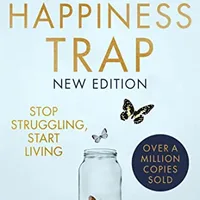
The Happiness Trap (2nd Edition) — Russ Harris
The article has just established the two response styles (ruminator vs. distractor). ACT's defusion work is the trained version of the same move — unhooking from the loop rather than arguing with its content.
As an Amazon Associate, we earn from qualifying purchases — at no extra cost to you.
What Rumination Is Actually Doing to Your Brain
Here's the uncomfortable part: rumination feels productive. It feels like processing. Like you're working through something important, and that if you sit with the feeling long enough, understanding will eventually arrive — maybe even relief.
It doesn't. Not the way you'd hope.
Nolen-Hoeksema's data found that ruminators experienced longer and more severe low-mood episodes than their distractor counterparts — not because their problems were bigger, but because of what the rumination itself was doing beneath the surface.
The mechanism she proposed is elegant and genuinely unsettling: rumination keeps a mood's own cues continuously active and accessible. When you dwell on how bad you feel, you're not analyzing the feeling from the outside. You're keeping yourself inside it. Every loop of the same thought, every "but why did this happen" refreshes the emotional signal rather than processing it toward any resolution.
Worse: the research found that rumination measurably impaired problem-solving capacity and motivation. The person circling the same thought for the third hour isn't getting closer to clarity — they're getting less equipped to act on whatever clarity they might find. The thinking is actually undermining the brain's ability to think its way out. A comprehensive review of the evidence, Rethinking Rumination (Nolen-Hoeksema, Wisco & Lyubomirsky, 2008), confirmed these mechanisms hold across multiple populations and study designs.
This is a specific and important distinction from what Beck's cognitive-distortion research was pointing at. Beck's work says: look at what you're thinking, check whether it's accurate, correct the distortion. That's genuinely useful. But Nolen-Hoeksema's work says something different: even accurate, non-distorted thoughts — if you dwell on them repeatedly in a passive loop without moving toward any active resolution — will still make the mood last longer. It's not the content causing the damage. It's the repetition.

Kindle Paperwhite (2024, 12th Gen, 16GB, Black, Without Ads)
Placed right after the mechanism section — rumination degrades the cognitive resources needed to think. Deep reading is the archetypal absorbing redirect: it demands real engagement and introduces no new emotional sti…
As an Amazon Associate, we earn from qualifying purchases — at no extra cost to you.
The Gender Gap Nobody Wanted to Talk About
One of the most significant, and most debated, implications of Nolen-Hoeksema's research was what it suggested about the well-documented gender gap in depression rates.
Women are diagnosed with depression at roughly twice the rate of men in Western samples — a pattern documented extensively by the National Alliance on Mental Illness. The conventional explanations focused on structure: women face more caregiving burden, more systemic stressors, more adversity on average. Those factors are real. But they didn't fully account for the magnitude of the gap.
Nolen-Hoeksema's data offered a different piece of the puzzle: women in her samples reported a habitually more ruminative response style than men, on average. Men, by contrast, were more likely to default to distraction when a low mood arrived — a run, a project, the game. Not because their problems were smaller or their emotional lives shallower. Because their habitual first response to a low mood pointed away from the mood rather than into it.
If rumination genuinely extends the duration and severity of low-mood episodes — and if women are more likely to ruminate habitually — then a meaningful portion of the depression-rate gap might reflect a difference in coping style rather than a difference in the severity of what people were actually dealing with.
That's a nuanced finding, easy to misread. It doesn't say men are doing it right. It doesn't say women are doing it wrong. What it says is that a specific style of responding to a mood has measurable consequences for how long the mood lasts — and that style is learned, not fixed.
Which means it can be changed.
This same loop gets worse after dark — see why your brain spirals at night and what actually helps for the sleep-specific version of this mechanism.
The Distraction Paradox
Here's where the research collides with a lot of popular psychology — and where I think pop psych loses.
You've probably been told that "avoiding your feelings" is the problem. That you should sit with discomfort, lean into it, process. That reaching for distraction is just suppression wearing a better-looking hat.
Nolen-Hoeksema's data doesn't support that framing. The "distractors" in her research weren't fleeing their problems. They were deliberately shifting attention to an absorbing, unrelated activity until the emotional signal settled enough to allow genuine, productive thought about the problem itself.
The difference is subtle but it matters enormously. Distraction-as-avoidance means never returning to the problem — you just bury it and move on. What Nolen-Hoeksema found beneficial was closer to deliberate redirection: you notice the spiral starting, you engage something else fully, and when you return later, you're actually better positioned to think clearly about what happened.
The ruminator never quite reaches that state. They stay inside the feeling, convinced that staying longer will eventually break through to understanding, while the data suggests the opposite: the loop deepens the mood and degrades precisely the cognitive resources that would allow genuine insight to emerge.
Think of it this way. If you were trying to hear a quiet sound in a room, you wouldn't keep turning up the volume on the noise you're already hearing. You'd turn the noise down, wait, then listen. Rumination is cranking up the volume and wondering why everything is still loud.

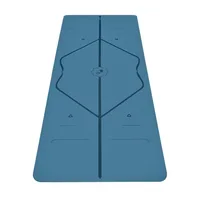
Liforme Original Yoga Mat (Blue, 4.2mm, Yoga Bag Included)
Immediately after the Distraction Paradox section and the walking-path image. The article names 'a physical activity' as a qualifying absorbing redirect — this is the lowest-friction, at-home version of that.
As an Amazon Associate, we earn from qualifying purchases — at no extra cost to you.
What the Research Actually Recommends
Nolen-Hoeksema's work isn't merely descriptive — it points toward a specific, testable intervention. And it's simpler than most people expect.
Not years of therapy (though that addresses separate things). Not learning to think more optimistically. Not identifying and correcting every distorted thought in the loop.
The core recommendation from response styles theory is this: when you catch yourself entering a repetitive low-mood loop — the same thought, again, with no new information arriving — your most effective move is a deliberate shift into an absorbing, unrelated activity.
Absorbing is the operative word here. Checking your phone doesn't count, because it's not engaging enough to fully redirect attention and it tends to introduce new emotional stimuli rather than creating genuine space. What actually works is something that demands real cognitive engagement: a physical activity, a creative task, a conversation about something completely unrelated.
The other thing the research points toward is learning to distinguish reflection from rumination. Reflection involves actively moving toward a new insight, a new angle, or a decision. Rumination involves circling the same material, in the same way, with nothing new arriving. One generates progress; the other generates the feeling of progress — which is a convincing imitation, but not the substance.
A practical test: if you've been sitting with the same thought for more than ten minutes without a new question, a new angle, or any impulse toward action emerging — you're likely in rumination territory. That's your signal to redirect.
If your rumination tends to circle a mistake you made rather than a mood in general, it's worth reading about when high standards help and when they quietly destroy you — the two patterns often feed each other.
How to Start Today
You can't simply decide to stop overthinking. Anyone who has tried that approach knows how that conversation with yourself goes. But you can build a small, practical system around the pattern:
1. Label the loop when it starts. Rumination loses grip the moment you name it accurately — even silently. "This is the loop. I've been here before. Nothing new is arriving." It's not dramatic. It's just precise. That precision creates a tiny window of distance between you and the spiral.
2. Prepare your redirect before you need it. Don't wait until you're already deep in the spiral to figure out what you'll do instead. Pick two or three activities that genuinely absorb your attention — things you actually have to think about while you're doing them.

Clever Fox Habit Calendar Circle (24-Month, Dark Blue & Red)
Inline at step 2 of the action list — 'prepare your redirect before you need it'. The article tells the reader to pre-pick two or three absorbing activities and to track duration, not content. This is where that list…
As an Amazon Associate, we earn from qualifying purchases — at no extra cost to you.
Have that list ready before the next difficult week arrives.
3. Set a deliberate return time. Rather than telling yourself you'll never think about the problem again (which doesn't hold), tell yourself you'll return to it in 30 minutes, or after the walk, or tomorrow morning. Then redirect. This is the critical difference between avoidance and strategic redirection — you're not abandoning the problem, you're giving your brain better conditions to engage it.
4. Track duration, not content. When you're in a difficult stretch, notice how long you've been sitting with a feeling rather than getting lost in analyzing what the feeling means. A mood that's been revisited for five hours has very likely crossed into rumination territory, regardless of how rational the thoughts themselves seem.
5. Give the distraction a genuine trial. Not a reluctant, half-hearted one. The research works because the distraction is real — absorbing enough to genuinely pull attention away from the loop. A redirect that's only 30% committed while you're still mentally chewing on the original thought isn't distraction. It's just doing two things badly at once.
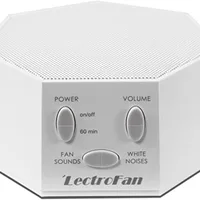
LectroFan Classic White Noise Machine (Global Power Edition, 20 Non-Looping Sounds)
Closes the action list — rumination is worst in silence at 2am, when there is nothing else for attention to hold.
As an Amazon Associate, we earn from qualifying purchases — at no extra cost to you.
Designing the Way Out
Nolen-Hoeksema's research is real, well-replicated, and clinically influential — her response styles work shaped an entire generation of interventions for depression and anxiety. It's worth being honest about where it applies and where it doesn't: response styles theory was developed primarily in the context of mild-to-moderate low moods and depressive episodes. It's not a complete treatment framework for clinical depression, chronic anxiety disorders, or trauma-related rumination patterns more deeply embedded in someone's history. In those cases, the work usually needs to go considerably further than a behavioral redirect.
What the research does offer everyone is a useful corrective to a very common assumption: that more thinking is always better, that going deeper into a feeling will eventually extract the insight you need, that the loop will deliver resolution if you just stay in it long enough.
There's a version of self-development that treats all self-reflection as inherently virtuous. Susan Nolen-Hoeksema spent years of careful research identifying where that assumption breaks down — and the finding holds across decades of follow-up work. The mood that keeps you circling isn't waiting for you to finally arrive at the right thought. It's being sustained by the circling itself.
Designing your evolution doesn't always mean going deeper into the feeling. Sometimes it means knowing exactly when to put the shovel down, walk outside, do something genuinely absorbing for an hour, and return to the problem with a brain that's actually equipped to engage it.
The loop is not insight. The redirect is not avoidance.
That distinction, it turns out, is worth considerably more than another hour in the spiral.
What's the thought you've been circling this week — and what's the one thing that actually absorbs your attention enough to give you a real break from it? Drop it in the comments.
→ Why 'I Can't' Becomes Real: The Science of Learned Helplessness
Was this helpful?