Intentional Living· 10 min read
10 Life Choices You Will Regret in 10 Years
Regret is predictable. Research maps the same patterns. Here are 10 life choices most people delay — and why acting now is the highest-leverage move.
10 Life Choices You Will Regret in 10 Years
Bronnie Ware spent close to a decade working in Australian palliative care, sitting beside people in the last weeks of their lives. She kept a quiet journal of what they told her. What struck her wasn't the variety of regret — it was the repetition. The same confessions, almost word for word, from people who had led radically different lives.
That finding became a book, then a global conversation, and for anyone paying attention, a kind of early warning system.
Because regret, it turns out, is mostly predictable.
Why Regret Research Matters More Than You Think
Cornell psychologist Tom Gilovich has been studying regret for decades. His work, published in journals like Emotion, consistently points to something quietly devastating: people overwhelmingly regret the things they didn't do more than the things they did. In his foundational research with Victoria Medvec, Gilovich found that among older adults reflecting on their lives, roughly three-quarters listed failures to act — not actions taken — as their deepest regrets. A later 2018 paper co-authored with Shai Davidai extended this line of inquiry, finding that the most enduring regrets stem from not living up to our ideal selves.
Jeff Bezos built an entire decision-making philosophy around this pattern. He called it the regret minimization framework. When he was deciding whether to leave his comfortable Wall Street job in 1994 to start an online bookstore, he projected himself forward to age 80 and asked which choice he'd be more likely to regret. The answer was obvious within seconds. He left. You know the rest.
You don't need a multi-billion-dollar outcome to borrow the framework. You just need a willingness to interview your future self — honestly — before the window closes.
Here's the thing most productivity content gets wrong. It treats regret as a motivational tool, a little splash of fear to push you into a morning routine. Regret research is more useful than that. It's a map of the choices that reliably matter, drawn by the people who ran out of time to make them.
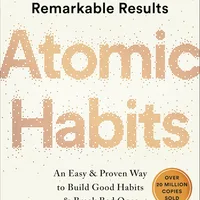
Atomic Habits — James Clear
The article frames regret research as a map of the choices that reliably matter. Atomic Habits is the best-selling companion text on how small, compounded choices become identity — directly supporting the closing thes…
As an Amazon Associate, we earn from qualifying purchases — at no extra cost to you.
Consider this your preview. Ten choices. Ten specific levers. Each one is something most people postpone indefinitely and then, on reflection, wish they had moved on sooner.
1. Staying in the Wrong Relationship Because Leaving Feels Harder Than Staying
The quiet tragedy of adult life is how much of it gets spent in relationships — romantic, familial, professional — that are no longer honest. Not abusive, not dramatic, just quietly mismatched. You stay because leaving is expensive, exhausting, and socially awkward. The cost compounds anyway.
Jim Rohn used to say you're the average of the five people you spend the most time with. He meant it mathematically. If the five people closest to you aren't pulling you toward who you're becoming, the math is going to work against you for every year you delay.
This doesn't always mean ending things. Sometimes it means having the hard conversation you've been sidestepping for two years. Sometimes it means a long-overdue boundary. The regret isn't about the split. It's about the delay.
2. Choosing Salary Over Meaning Without Doing the Math
"Meaningful work" has become a tired phrase, so let me reframe it. Every job trades your finite hours for some mix of money, skill development, relationships, identity, and emotional energy. If you only price the money, you'll routinely take bad trades.
People who hit their 50s and 60s rarely regret earning less. They regret spending a decade doing work they couldn't respect — because the salary was good and the exit cost felt high.
Ask yourself: if the salary were identical, would I still be here in five years? If the answer is an immediate no, you already know. The only remaining question is the timeline of your exit plan.
3. Putting Off the Conversation You Know You Owe Someone
There's a conversation you've been rehearsing for months. Maybe a parent you need to forgive. A friend you need to apologize to. A partner you need to be honest with. A mentor you've been meaning to properly thank.
You're waiting for the "right time." It doesn't come. People die, relationships drift, the moment passes, and the conversation stays on your chest like a weight you never put down.
The conversation you dread is almost always the conversation that would change something. That's why you dread it.
4. Treating Your Body Like a Rental Car
In your twenties, you can abuse sleep, skip meals, skip movement, and pay no visible price. Your body is subsidizing your lifestyle with interest-free credit. The bill arrives later. With interest. And the interest compounds.
The body isn't a vehicle you drive around — it's the material your life is made of. Chronic inflammation, chronic stress, chronic sleep deprivation — these aren't lifestyle quirks. They're slow-moving structural choices.
You won't regret the mornings you moved your body, the nights you protected your sleep, or the hours you spent cooking real food. You will regret the decade you deferred those choices because you were "too busy."
5. Working Harder Instead of Working on Yourself
This one catches ambitious people every time. You believe that if you just work harder, grind longer, sleep less, the next level will unlock. It rarely does. At a certain point, more hours generate smaller returns. What generates the next order of magnitude is a different you — more skilled, more self-aware, more strategic, more emotionally regulated.
Bob Proctor used to say that your income rarely exceeds your personal development. If you want a bigger life, grow a bigger you.
The people who look back with the deepest satisfaction aren't the ones who worked the hardest. They're the ones who invested in learning, reflection, therapy, coaching, books, and honest feedback — the slow work that made everything else possible.
6. Saying Yes When You Mean No and Quietly Resenting Everyone
If you've been reading Vanulos for a while, you already know this pattern. The yes that's really a no. The commitment you agreed to at 9 AM and hated yourself for by lunch. The calendar that fills with other people's priorities.
The regret isn't about the individual meetings. It's about the slow realization that a decade went by while you were running someone else's schedule.
Two practical heuristics. One: if you wouldn't agree to it tonight at 10 PM, don't agree to it in the morning. Two: every yes is a no to something. Decide what you're saying no to, on purpose.
If saying no feels impossible, this guide breaks down the psychology and the practical heuristics.
7. Letting Friendships Quietly Atrophy
Harvard's Study of Adult Development — the longest-running longitudinal study on human flourishing — has been tracking the same people for more than eighty years. Its findings have been publicly shared in TED talks by its current director Robert Waldinger, and in the book The Good Life. The punchline is simple enough to fit on a sticky note: the quality of your relationships predicts your long-term health and happiness more reliably than any other variable.
More than income. More than career. More than genetics.
And the average adult lets friendships drift. Not dramatically — just quietly, under the weight of calendars and distance and small, unreturned messages.
You will not regret the weekend you flew to see an old friend, the Sunday call to a cousin, the slow walk with someone you love. You will regret the years you kept meaning to.

8. Waiting Until You're "Ready" to Start
The thing you've been planning to start — the book, the business, the move, the training, the portfolio — is still in the "someday" drawer. You're telling yourself you're gathering resources. You're actually gathering reasons.
Here's something worth sitting with. You will never feel more ready than you do right now, because readiness doesn't arrive through waiting. It arrives through action. People who look back with regret almost never say "I jumped in too soon." They say "I wish I had started five years earlier."
Start ugly. Start imperfect. Start small and embarrassing. But start. The path clarifies once you're walking.

Kindle Paperwhite (2024)
Section 8 is about starting before you feel ready. Kindle is the lowest-friction way to start the learning habit today — zero excuse, zero setup. Reinforced by Section 10's invest-in-learning compounding argument.
As an Amazon Associate, we earn from qualifying purchases — at no extra cost to you.
9. Not Writing Anything Down
This one surprises people. When Ware catalogued the regrets of the dying, a recurring theme was the loss of self-knowledge — people at the end of their lives wishing they had paid closer attention to what their own life had actually been about.
You cannot remember what you don't record. And a life you don't remember is harder to learn from.
Morning pages. A five-minute nightly log. A single sentence a day. The mechanism matters less than the habit. Joan Didion put it well: "I don't know what I think until I write it down." The people I know with the clearest sense of their own story all share one thing. They've been writing to themselves for years.
Ten years from now you will either have a record of your thinking or you won't. There's no retroactive option.

Clever Fox Habit Calendar Journal
Section 9 is literally about keeping a written record of your life. This journal tracks habits and supports one-line-a-day entries — not gimmicky, just effective. Ties directly to Day 7 of the audit: the journal anchor.
As an Amazon Associate, we earn from qualifying purchases — at no extra cost to you.
10. Not Investing — In Money, In Learning, In Sleep
I'm going to group these because the logic is identical. They're the three compounding systems of a life, and compounding punishes delay more than any other force in personal finance or personal development.
A 25-year-old who invests modestly and consistently will almost always end up wealthier than a 35-year-old who invests aggressively — even if the second person earns far more. The math is ruthless. Same logic applies to learning a skill, building a body of work, or protecting your sleep. The earlier you start, the wider the gap becomes.
The regret at 55 isn't "I saved too much." It's "I didn't understand how early mattered."
Small. Consistent. Unglamorous. Starting now.
How to Start Today: A 7-Day Regret Audit
Reading a list like this is easy. Acting on it is where almost everyone loses the plot. So let me give you a week-long protocol that turns insight into evidence.
Day 1 — The Future Self Letter. Write a letter from your 75-year-old self to your current self. One page. No editing. What does the older version want the current version to stop postponing? This is the Bezos framework as a journaling exercise, and it's more revealing than most people expect.
Day 2 — The Top 3. From the letter, extract the three most repeated themes. Circle them. These are your real priorities, whether you've been admitting it or not.
Day 3 — The One Conversation. Pick the single conversation you've been avoiding. Not the whole list. One. Schedule it. A message today, a call this week.

Amazfit GTR 4 Fitness Smartwatch
Sits right before Day 4 (The Sleep Floor) — gives you the measurement layer for the sleep and body commitments from Sections 4 and 10. Track what you protect. 14-day battery, full sleep analytics, heart rate monitoring.
As an Amazon Associate, we earn from qualifying purchases — at no extra cost to you.
Day 4 — The Sleep Floor. Set a non-negotiable minimum sleep time for the next 30 days. This is the cheapest, fastest input with the largest health return. If your current evenings fight you on this, change the evenings.
Day 5 — The One Investment. Open the account, make the deposit, enroll in the course, book the appointment. Whatever "someday" has been blocking — execute the smallest possible first step today.
Day 6 — The Friendship Call. Contact one person you've been meaning to reach out to for more than three months. No agenda. Just presence.
Day 7 — The Journal Anchor. Buy the notebook. Put it on your pillow, your nightstand, your desk. Write one sentence before bed. Tomorrow, one more. Momentum will do the rest.
Seven days. Six tiny actions and one piece of writing. You'll know by the end of the week whether you're someone who acts on regret research or someone who just enjoys reading about it. Both are valid. Only one compounds.
Design Your Evolution — Starting Before You're Ready
Here's what the regret research really gives you. It gives you a shortlist, generated by thousands of people who ran out of time, of the choices that most reliably matter. You don't have to figure it out on your own. The pattern has already been mapped for you. The only question left is what you do with the map.
A decade from now, you'll be looking back at the week you're currently living. Not the week you plan to live "when things calm down." The one where you're reading this.
The future you is watching. Quietly. Patiently. Not judging — just waiting to see which you showed up.
Which of these ten has been waiting the longest for your attention? Leave a comment — sometimes naming it out loud is the first honest move.
Was this helpful?