Habits· 9 min read
Your Relationship Might Be Running on an Outdated Map
Gottman's Love Maps research: couples who know each other's current inner world show stronger relationship stability. What the Love Lab data found.
Your Relationship Might Be Running on an Outdated Map
Here's a moment that happens in almost every long-term relationship. Your partner comes home carrying something — some low-level stress that's been sitting with them all week. You try to help. You mention a colleague they used to vent about. Suggest they call the friend they've always leaned on. Recommend a walk through the neighborhood you both used to love.
They look at you for a fraction of a second. Not hurt. Not angry. Just... not quite seen.
The colleague transferred out five months ago. The friendship drifted quietly and they haven't quite told you why. The neighborhood walk used to work when things were different, but something about it doesn't fit anymore. You weren't being dismissive. You weren't distracted. You were doing exactly what a caring partner does — you were working from your map.
The problem is that the map had quietly gone stale.
John Gottman, a psychologist who spent decades running what journalists eventually nicknamed the "Love Lab" at the University of Washington, built much of his career on one inconvenient observation: the factors that actually predict whether a relationship lasts aren't the ones most couples spend their energy on. Not passion. Not shared hobbies. Not the frequency of conflict. What Gottman's longitudinal data kept pointing to was something far more specific — and far more actionable.
He called it the Love Map.
The Seven Principles for Making Marriage Work — John Gottman & Nan Silver
This is the primary source text — the article's entire Love Map concept comes from Chapter 4 of this book, and 'Maintain a love map' is literally Principle #1 of the seven. Highest editorial credibility of any product…
As an Amazon Associate, we earn from qualifying purchases — at no extra cost to you.
What Gottman's Love Lab Actually Measured
In his 1999 book The Seven Principles for Making Marriage Work, Gottman described a Love Map as the detailed, continuously updated cognitive representation one partner holds of the other's inner psychological world. Not the surface layer — coffee order, favorite show, how they take their eggs. The actual inner world. Current worries. The professional fear they haven't quite named yet. The friendship that's been quietly energizing them. The hope they've been carrying around but haven't said out loud because it still feels fragile.
Gottman and his team conducted structured interviews and observed real couples in controlled settings — sometimes for days at a time — tracking not just how couples argued but how deeply they actually knew each other. The data that came back was striking. Couples with richly detailed, accurate, and current Love Maps showed measurably stronger relationship satisfaction and stability than couples whose knowledge of each other had gone stale. Not marginally stronger. Meaningfully stronger, in ways that held across years of follow-up data.
This is distinct from Gottman's other well-known research — the Four Horsemen. If you've read anything about couples therapy, you've probably encountered that framework: criticism, contempt, defensiveness, stonewalling. Those are the communication patterns Gottman found during active conflict that predict deterioration when they become habitual. That research lives in the roughly 5% of a relationship that involves escalating disagreement.
Love Maps concern the other 95%.
The Gottman Institute places Love Maps at the base of what it calls the Sound Relationship House — recognizing that detailed, current knowledge of your partner's inner world is the foundational layer on which every other quality of a lasting partnership rests.
You can manage conflict beautifully and still drift apart, slowly and imperceptibly, if you've stopped genuinely updating your knowledge of who your partner is right now. The absence of bad conflict habits doesn't automatically produce a rich Love Map. They're parallel tracks. Both matter. Neither produces the other.
Why Your Map Goes Stale Without Anyone Noticing
The linguist Alfred Korzybski is probably best remembered for the phrase "the map is not the territory." His point was that any mental representation of reality is necessarily incomplete, and that the mistake most people make is confusing their map for the actual thing it describes. He was talking about language and perception generally. But it fits a long-term relationship with uncomfortable precision.
The person you committed to wasn't static. They've changed, almost certainly, in ways that don't get announced. New anxieties have quietly replaced old ones. A friendship that felt central has loosened. A career ambition that seemed fixed has shifted course. Something they used to care about deeply has faded. Something they barely mentioned five years ago has become the thing that takes up the most space in their head.
None of this happens in a single conversation you could have caught. It accumulates, day by day, in the background, until the gap between your mental representation of who your partner is and who they actually are right now is wider than either of you has noticed. And here's what makes this particularly difficult: an outdated Love Map doesn't feel wrong from the inside. It still feels like knowledge.
You know their sense of humor. You know their family dynamics. You know the way they process disappointment. You know the person they were when you built that map. Which is exactly the problem, because the person they were when you built that map may have evolved in twenty meaningful ways since then — and your map hasn't caught up.
De'Longhi Magnifica S ECAM22.110.B Automatic Coffee Machine
Ties directly to the article's opening scene — a couple at a kitchen table with coffee cups between them. The Love Map is built in ordinary domestic moments, and a morning coffee ritual is the most reliable recurring…
As an Amazon Associate, we earn from qualifying purchases — at no extra cost to you.
De'Longhi Magnifica S ECAM22.110.B Automatic Coffee Machine
Ties directly to the article's opening scene — a couple at a kitchen table with coffee cups between them. The Love Map is built in ordinary domestic moments, and a morning coffee ritual is the most reliable recurring…
As an Amazon Associate, we earn from qualifying purchases — at no extra cost to you.
A practical analogy: imagine navigating a city with a map that was accurate when you downloaded it three years ago. Most of the streets are still there. Most of the landmarks still apply. But there are new one-ways, a road that got closed, a neighborhood that changed entirely. You'll still mostly get where you're going. You just won't get there as cleanly as you think, and you won't know the misses are happening until you're already in the wrong place.
why habits of attention shape relationship quality over time
The Stress Test: Where Outdated Maps Fail Most Visibly
Think about the last time you genuinely needed support. Not a platitude. Not reassurance that everything would work out. Actual support — someone understanding exactly what you were afraid of, what specifically you needed to hear, what the particular shape of the problem actually was.
Now think about whether your partner could have provided that without you spelling it out in detail first.
That capacity — to offer support calibrated to your partner's actual current inner state — is precisely what a well-maintained Love Map enables. Gottman's data found that couples with rich Love Maps could do this more reliably during high-stress periods than couples with outdated ones. Critically, the gap between the two widened specifically during stress, not during ordinary life when most support needs are routine enough that a general response lands well enough.
This is what makes the outdated-map problem so easy to miss in good times. When things are going well, an approximate picture of your partner works fine. Your support doesn't need to be precise because the stakes don't require precision. But the moment a real stressor hits — a job loss, a health scare, a family crisis, a career crossroads — the accuracy of your map starts to matter in ways it didn't before.
A partner who knows your current inner world can walk into that moment and say exactly the thing that helps. A partner working from an outdated map offers something that's technically kind but slightly misaligned — comfort for the wrong fear, reassurance about an outcome you're not actually worried about, advice about a problem you already resolved. Each miss is small. But they accumulate into a quiet erosion of the feeling of being truly known, which is, as Gottman's data suggests, among the most powerful things a relationship can provide.

How to Build and Update a Love Map: What the Research Points To
The practical implication of Gottman's Love Maps research isn't that you need to schedule a weekly check-in, or download a relationship app, or set aside a formal "deep conversation night." It's simpler and more continuous than any of those.
It's about treating the small moments of ordinary conversation as map-updating opportunities rather than logistical exchanges. Most day-to-day conversation between long-term partners is transactional: who's picking up dinner, what's the weekend plan, did you call the plumber. That's not a problem. But if that's the only mode of conversation operating, the map stops updating.
Gottman's work, developed across decades of couples research and later formalized in books like Eight Dates (written with his wife Julie Schwartz Gottman), offers specific conversation structures for covering areas of a partner's inner world that often go unaddressed in ordinary life: adventure and personal risk, work and ambition, intimacy and desire, friendship and connection, family and origin. The Gottman Institute's practical guide to building Love Maps treats this as an ongoing practice rather than a one-time exercise — revisited deliberately because the answers genuinely change.

Kindle Paperwhite (2024, 12th Gen, 16GB, Black, Without Ads)
HIGH-TICKET ANCHOR (£160, £4.00/sale). Both Gottman titles are available instantly on Kindle — the reader who wants to start tonight rather than wait for delivery converts here. Placed alongside the Eight Dates recomm…
As an Amazon Associate, we earn from qualifying purchases — at no extra cost to you.
Kindle Paperwhite (2024, 12th Gen, 16GB, Black, Without Ads)
HIGH-TICKET ANCHOR (£160, £4.00/sale). Both Gottman titles are available instantly on Kindle — the reader who wants to start tonight rather than wait for delivery converts here. Placed alongside the Eight Dates recomm…
As an Amazon Associate, we earn from qualifying purchases — at no extra cost to you.
Some of the most effective Love Map questions aren't dramatic at all. "What's weighing on you most this week that we haven't really talked about?" is different from "How was your day?" "Who are you most enjoying spending time with lately?" surfaces information you won't get from status updates. "Is there anything you've been quietly proud of recently?" creates space for the kind of private accomplishment that rarely gets volunteered unless someone directly invites it.
A specific and counter-intuitive nuance from Gottman's research: in a long-term relationship, asking genuine questions isn't a sign that you don't know your partner. It's a sign that you understand knowing someone is a moving target. The couples in Gottman's data with the richest Love Maps weren't the ones who assumed they already had the full picture — they were the ones who kept asking.
Before a major life transition — a move, a career change, becoming parents, navigating a loss — this kind of deliberate map-updating is especially valuable. Transitions accelerate the rate at which a person's inner world shifts, which means entering one with an outdated map increases the risk that your support will miss the mark exactly when accuracy matters most.
how relationship habits compound differently than individual habits
The Four Horsemen and Love Maps: Two Separate Problems
It's worth being precise about what Love Maps research is not.
Gottman's Four Horsemen research identifies four specific communication behaviors during active conflict — criticism, contempt, defensiveness, stonewalling — that become predictive of deterioration when they turn habitual. That research is about how couples fight when the temperature rises. It's important. And it's a completely separate question from how deeply couples know each other during the vast majority of time that isn't conflict.
A couple can argue infrequently and manage conflict with real skill, while still quietly drifting apart because they've stopped actively updating their maps of each other. Conversely, a couple with a genuinely rich Love Map — who know each other's current fears, hopes, and inner texture — may still use destructive communication patterns when things get hard.
Most relationship advice collapses these into one thing: "communicate better." Gottman's research is more specific. Know your partner's inner world, and separately, manage conflict without the Four Horsemen. Both matter. Neither automatically produces the other. And the Love Maps piece is the one that gets dramatically less attention, perhaps because it doesn't generate the kind of visible friction that conflict patterns do. A stale map is quiet. You might not notice it's outdated until the moment you actually need it to be accurate.
Starting Today: One Conversation That Updates the Map
You don't need a formal intervention. You need one genuine question asked this week — not "how was your day," but something specific enough to require an answer that updates your picture of who your partner actually is right now.
Some options from Gottman's own framework:
- What's the biggest thing on your mind lately that we haven't gotten to?
- What are you most hoping for in the next six months — and what's quietly worrying you about it?
- Is there something you've been proud of recently that I might not know about?
- Who are you most enjoying spending time with right now, and why?
The goal isn't to run through a list. It's to ask one question and actually listen — not to confirm what you already assumed, but to update your map with what you hear. Then remember what they said. Ask a follow-up next week. Let their answer change your picture of them, because their picture has almost certainly changed since the last time you genuinely asked.
Gottman's research didn't find that great relationships are built on grand romantic gestures or perfectly managed conflict. They're built on knowing — specific, current, deliberately maintained knowledge of another person's inner world, accurate enough to actually help when help is needed.
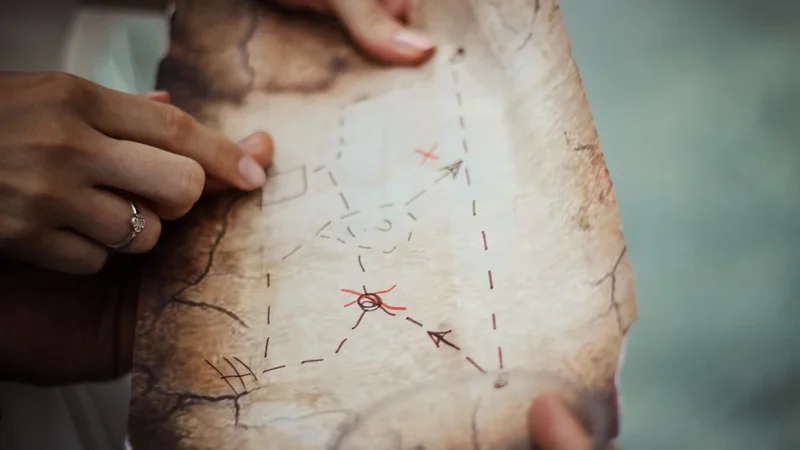
The map is not the territory. But a good map, kept current, is what allows you to show up for someone in the right place at the right time.
Designing your evolution means recognizing that the most important maps you carry — including the ones you hold of the people closest to you — require active updating to remain useful. An outdated map is still a map. It just no longer describes the territory it was drawn from.
What's one thing about the person closest to you that you genuinely don't know right now — and could find out this week?
Was this helpful?
Continue Your Evolution
The Frozen Goal Problem: Why Tiny Wins Beat Grand Plans
Rejection Sensitivity: Why You Keep Assuming They're Upset
The Science of Nostalgia: Why Looking Back Helps
Sedikides and Wildschut found nostalgia boosts mood, meaning, and social connection — not mere sentimentality. Here's the science and how to use it.