Habits· 9 min read
Procrastination Is an Emotion Problem — Here's the Fix
Procrastination isn't a time management problem — it's an emotion regulation problem. Here's the psychology research that changes how you actually fix it.
Procrastination Is an Emotion Problem — Here's the Fix
I once spent two hours reorganizing my desktop folders, cleaning my keyboard with a cotton swab, and making a second coffee I didn't need — all because I had a 4pm deadline I couldn't bring myself to start. When I finally panicked my way through it in 45 minutes, I told myself the obvious thing:
I need to get better at time management.
That was the wrong diagnosis for procrastination. Completely, entirely wrong.
If you've tried every productivity system available — time-blocking, the Pomodoro technique, the two-minute rule, elaborate task managers — and you still can't seem to start the things that matter most, there's a good chance you're making the same mistake. You don't have a time management problem. You have an emotion management problem.
These two diagnoses lead to entirely different treatments. If procrastination is a time problem, the fix is better calendars, tighter schedules, and accountability partners. If procrastination is an emotion problem — which it almost always is, according to three decades of research — those tools are like treating a broken leg with a bandage. They address the surface. They miss the mechanism.
Timothy Pychyl (recently retired from Carleton University) spent more than 30 years studying why people procrastinate, and his conclusion is surprisingly simple: procrastination isn't about managing time. It's about managing the unpleasant emotions that a task generates. Think about the last thing you put off. Not a task you forgot — a task you knew about, probably thought about repeatedly, and still didn't start. What was the emotion underneath the avoidance? Anxiety about doing it badly. Boredom with the task itself. Resentment about having to do it at all. A vague, hard-to-name dread. The task triggered the feeling, and avoidance was the brain's fastest exit.
That's the entire mechanism.
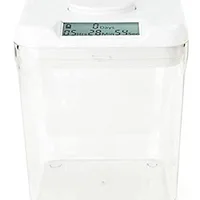
Kitchen Safe kSafe Time Locking Container
When the fastest escape route from an uncomfortable task is your phone, a time-lock box removes that option — without relying on the willpower the research says is unreliable.
As an Amazon Associate, we earn from qualifying purchases — at no extra cost to you.
The Procrastination Loop (And Why It's So Hard to Break)
Avoidance works. That's the problem.
When a task generates discomfort — anxiety, dread, boredom — and you avoid it, the discomfort temporarily disappears. That's a clean, immediate reward signal. Your brain files it away: avoidance equals relief. The next time that task appears in your awareness, the brain reaches for the same solution.
But the task doesn't go anywhere. It accumulates psychological weight every hour you don't touch it. The anxiety that made it hard to start on Monday is twice as heavy by Wednesday. By Friday it's a presence in the room. This is the procrastination loop: avoidance produces temporary relief, which reinforces avoidance, which produces greater anxiety about the growing pile, which demands stronger avoidance the next time around.
It has nothing to do with discipline, motivation, or how much you want to succeed. It's a reinforcement loop, and you're caught in it.
Most productivity advice tries to break the loop at the motivation end — generate enough enthusiasm to override the discomfort. This works occasionally, for some people, on some tasks. But motivation is the most unreliable psychological resource you have. It fluctuates with sleep quality, blood sugar, the last conversation you had, whether it rained on your walk to work. Designing your behavior-change strategy around motivation is designing a bridge that only holds on sunny days.
The loop needs to be broken at a different point — and it's not where most people think.
Why Beating Yourself Up Makes Procrastination Worse
Here's where the research gets genuinely uncomfortable.
Fuschia Sirois at Durham University asked a straightforward question: after a procrastination episode, what's the most helpful response? If you've been telling yourself to be tougher, hold yourself accountable, stop making excuses — her findings have some bad news.
Procrastinators who responded to an episode of procrastination with self-criticism subsequently procrastinated more. Not less.
The mechanism makes sense once you see it. Self-criticism is itself an aversive emotional experience. It produces shame, anxiety, and the kind of diffuse psychological discomfort that the brain wants to escape. What does the brain do with discomfort? Avoid the source. The source is the task. So the task becomes even harder to approach after the self-criticism than it was before.
The group that did better? They responded with self-compassion — acknowledging what happened without self-attack, with the tone you'd use talking to a close friend who'd had the same experience. They subsequently procrastinated less.
This isn't about lowering your standards. Kristin Neff at UT Austin defines self-compassion precisely as the emotional regulation skill that lets you see your own failure or difficulty clearly without flooding your nervous system with threat-level self-attack. When the emotional cost of approaching a task includes the original discomfort plus a layer of shame for not having done it sooner, the math of starting becomes brutally worse with every passing day. Self-compassion removes the shame layer. It doesn't excuse the avoidance — it just stops compounding it.

The Five Minute Journal
Sirois and Neff found that self-compassion reduces future procrastination more than self-criticism does. A daily gratitude and self-reflection journal makes 'respond without self-attack' a two-minute practice, not jus…
As an Amazon Associate, we earn from qualifying purchases — at no extra cost to you.
Your Brain Treats Your Future Self Like a Stranger
Hal Hershfield at UCLA put participants in fMRI scanners and asked them to think about different people: their current self, their future self, a stranger, a celebrity. The scans were quietly alarming.
When imagining their future self, participants' brain activity patterns looked nearly identical to when they were thinking about a stranger. Not a family member. A stranger.
This is temporal discounting in its sharpest form: the brain systematically underweights future experiences compared to immediate ones, not gradually but dramatically. The person who will experience the consequences of your procrastination isn't processed by your brain as you. They're a vague, psychologically distant entity. No wonder the future self keeps getting handed the difficult tasks.
Daniel Kahneman documented the planning fallacy — the consistent tendency to underestimate how long tasks take when you're personally invested in them. Combine temporal discounting with the planning fallacy and you get the specific cognitive error that sustains procrastination: I'll feel more ready tomorrow, and it won't take as long as I'm imagining right now. Both predictions are almost always wrong.
Hershfield found a practical intervention: participants who viewed age-progressed photos of themselves before financial decisions made significantly more future-oriented choices. The psychological distance shrank. The writing equivalent is a brief, concrete letter from your future self — not motivational, just descriptive. What are you doing the afternoon after you finished the project? What does the physical sensation in your chest feel like? What does tomorrow morning look like without this thing hanging over you? Two minutes of specific imagining reduces the distance that lets temporal discounting win every time.
Implementation Intentions — The Actual Fix
Peter Gollwitzer at NYU has probably done more for the science of actually starting things than any other researcher working today. His concept of implementation intentions sounds academic. The practical version is almost embarrassingly simple.
Instead of setting a goal — 'I will work on the presentation' — you create a when-then plan: 'When I sit down at my desk at 9am on Tuesday, then I will open the presentation file and write the first slide before I open email.'
That's the whole intervention.
Gollwitzer and Paschal Sheeran analyzed results across 94 independent studies and found a medium-to-large effect size (d = .65) on goal-directed behavior — a significant and consistent boost that reliably outperformed goal intention alone.
Here's why. Standard goal-setting leaves the decision about when exactly to start open every single time the context arises. Which means every morning at 9am, you're having a fresh negotiation with your own emotional resistance about whether now is the right moment. That negotiation creates the exact opening that avoidance exploits. It takes cognitive effort to decide, and in that decision-making gap, the emotions that trigger avoidance get their foothold.
Implementation intentions pre-load the decision. When the context cue appears — 9am, at your desk — the behavior fires without deliberation. You're not choosing whether to start. You already decided, days ago, in a moment when you weren't in the emotional state that makes starting feel impossible.
James Clear's framework in Atomic Habits operationalizes the same principle through habit stacking: attach a new behavior to an existing reliable cue. 'After I pour my morning coffee, I will sit at my desk and open the document I've been avoiding for a week.' The coffee cue activates the behavior. The decision is made in advance, in writing, not in the moment of temptation.
The single most counter-intuitive thing the research keeps finding: the people who struggle most with procrastination are often not the least motivated. They're frequently the most motivated — and that motivation generates the most anxiety, which feeds the most avoidance. The fix isn't more motivation. It's less deliberation.
How to Start Today
The research points toward four shifts that are immediately applicable. None of them require you to feel motivated first.
1. Name the emotion, not the task. The next time you catch yourself avoiding something, don't ask 'why am I procrastinating on this?' Ask 'what emotion is this task generating right now?' Anxiety? Boredom? Resentment? Naming the emotion creates a small gap between you and the avoidance reflex. You can't solve 'I'm procrastinating' — it's too vague. 'I'm anxious about being judged for this work' is something you can actually address.
2. Write one when-then plan before you go to sleep tonight. Pick the task you've been negotiating with yourself about the longest. Write it like this: 'When [specific time, specific location], then I will [the most minimal version of the task] before [any other screen-based activity].' Keep it small enough that starting feels physically easy. You're not trying to win a negotiation with your emotional resistance — you're bypassing it entirely.
A well-structured daily planner with dedicated space for implementation intentions is one of the simplest environmental tools for anchoring these when-then plans where you'll actually see them when the cue appears.

Full Focus Planner by Michael Hyatt
A daily planner with dedicated space for when-then plans is one of the simplest tools for anchoring your implementation intentions where you'll see them when the cue arrives.
As an Amazon Associate, we earn from qualifying purchases — at no extra cost to you.
3. After your next procrastination episode, respond with curiosity instead of criticism. You didn't fail because you're weak. You avoided because the task generated an aversive emotional state and avoidance is the brain's most efficient short-term response to that. What was the emotion? What specifically made this task feel threatening? Can you make the emotional cost of starting slightly lower — breaking it smaller, changing the location, removing the specific trigger?
The book that makes this shift most practically usable is Pychyl's own guide to the psychology behind why we delay and how the emotion-first diagnosis changes the intervention.
Solving the Procrastination Puzzle — Timothy A. Pychyl
The concise, emotion-first guide to why we procrastinate and how to actually change it — written by the researcher who spent 30 years studying this problem.
As an Amazon Associate, we earn from qualifying purchases — at no extra cost to you.
4. Spend two minutes with your future self before you close your laptop. Three sentences, written as your future self — the one who finished the thing. What are you doing this evening? How does your chest feel compared to right now? What does tomorrow morning look like without the weight of this sitting on you? Two minutes. The psychological distance shrinks. The future person feels a little less like a stranger.
For readers who want the full research synthesis on what causes procrastination and what actually stops it, Piers Steel's comprehensive work on the subject remains the most rigorous single-volume treatment.
The Procrastination Equation — Piers Steel
The most comprehensive research synthesis on the science of procrastination — for readers who want to understand the full evidence base behind what causes it and what consistently stops it.
As an Amazon Associate, we earn from qualifying purchases — at no extra cost to you.
The Person Who Always Gets Things Done Isn't More Disciplined
There's someone you know who seems to always start things on time. They don't appear to struggle with the tasks that paralyze you. The story you've probably told yourself is that they have more discipline, more willpower, or some motivational operating system that skipped you in the queue.
Almost certainly, they don't.
What they likely have — whether they've built it deliberately or stumbled into it — is a set of conditions that reduce the emotional cost of starting. Their environment is arranged so that the cue activates the behavior before the emotions can mount a counter-argument. They don't negotiate with themselves every morning about whether now is the right moment, because the decision was already made. And when they do procrastinate, they don't spend three days in shame spirals about it — which would make the next attempt meaningfully harder.
Jim Rohn had a version of this: you don't have to change that much to make a dramatic change in your results. The gap between the person who consistently starts and the person who consistently avoids is narrower than it looks — and almost none of it is discipline.
Designing your evolution means working with your psychology as it actually functions, not as the motivational poster version of it should function. Your brain is running a protection mechanism when it avoids. It's not broken. It's doing exactly what it was built to do — minimize short-term discomfort. You just need to give it a different set of tools for managing the emotional experience of beginning.
The task you've been putting off the longest already knows what it's waiting for.
What's the when-then plan you're going to write for it tonight?
What's one task you've been avoiding for more than a week — and what emotion do you think is underneath it? Drop it in the comments. You might find it's far more common than you think.
Was this helpful?