Mindset· 9 min read
The Science of Word of Mouth: Build a Real Fan Base
Your second circle — the people your fans tell — matters more than any ad. Learn the science of word of mouth and how to engineer it.
The Science of Word of Mouth: How to Build a Real Fan Base
She had built a following of 47,000 people. Three years of daily posts, reels, carousels — the algorithm grind that people pretend isn't exhausting but absolutely is. Then she launched her first course. Word of mouth, as it turned out, was entirely absent from her strategy.
She made nine sales.
I know someone else — a consultant in the industrial equipment space, of all things — who sends a monthly email to 800 subscribers. No Instagram. No reels. No "content strategy" deck. When he launched a new offering last year, he filled it in six days without a single paid ad. The gap between them had nothing to do with talent, aesthetic, or even quality of product. It had everything to do with a mechanism most people building an audience have never seriously thought about: the second circle.
The Second Circle Is Your Real Audience
The second circle is everyone your fans tell.
Here's the math almost nobody runs. If you have 1,000 followers and 2% convert to buyers, that's 20 sales. But if you have 200 genuine fans — people who feel something — and each of them tells two people, and half of those people check you out, you've added 200 new potential buyers who arrived with trust already installed. They didn't need convincing. Someone they know already vouched for you.
This is why a real word-of-mouth marketing strategy beats paid reach in almost every market, not just because it's cheaper — though it is — but because of the physics of trust. When a friend says "you have to read this book," you don't Google the author's credentials. You read the book.
Jonah Berger spent years researching what actually makes things spread. His conclusion: virality isn't random. Word of mouth follows a psychology. There are specific triggers, emotions, and identity signals that cause people to pass things along — and most businesses and creators are activating exactly none of them.
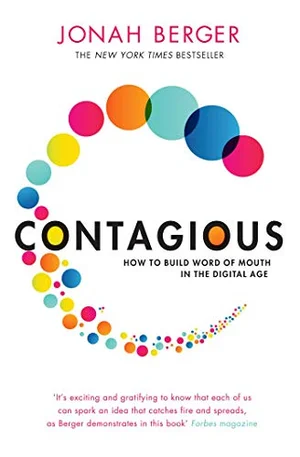
Contagious: Why Things Catch On
The primary source for the STEPPS framework introduced in this article. Berger's research decodes why word of mouth happens — and how to design for it deliberately.
As an Amazon Associate, we earn from qualifying purchases — at no extra cost to you.
The obsession with reach — followers, impressions, views — is a proxy metric dressed up as a strategy. It's the kind of thinking that produces a 47,000-follower creator who sold nine courses. More people saw her work. But none of them cared enough to tell anyone. That's the real metric that matters.
Seth Godin has been making this case for twenty years, and it's still not fully absorbed by the culture. His argument in This Is Marketing is simple: the goal isn't to reach everyone — it's to matter deeply to a specific someone. The smallest viable audience. Once you have that, word of mouth does the rest.
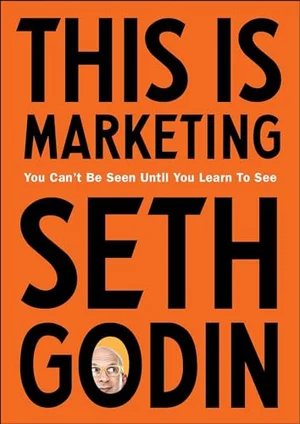
This Is Marketing
Godin's clearest case for the smallest viable audience — the foundation of every word-of-mouth growth strategy that actually compounds. The "someone specific" principle starts here.
As an Amazon Associate, we earn from qualifying purchases — at no extra cost to you.
The question is: how, exactly, do you engineer it?
Why Word-of-Mouth Psychology Comes Down to Identity
Before tactics, there's a framework worth understanding.
Berger's research identified six drivers of sharing behavior — he calls them STEPPS: Social Currency, Triggers, Emotion, Public, Practical Value, and Stories. The most overlooked is the first one.
Social currency is the idea that people share things that make them look good. When your friend recommends a restaurant, they're not being purely generous. They're curating their identity. They're the person who knows the hidden gem. The one who's dialed in. Your recommendation is part of how you signal who you are.
This is why the worst approach to building genuine brand advocates is simply being good. Good is expected. Good doesn't give people anything interesting to say. What you need is something Godin calls a purple cow — something so distinctive that people can't help but mention it. As he puts it in Purple Cow (Portfolio/Penguin, 2003): being safe is the riskiest thing you can do when the goal is to be remembered.
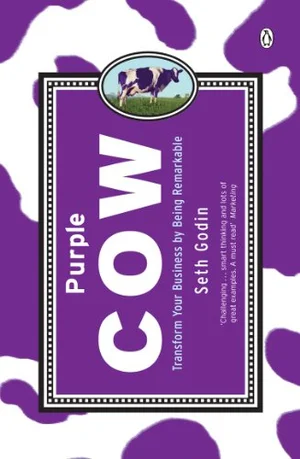
Purple Cow: Transform Your Business by Being Remarkable
The book that first made the case for remarkable over reliable. If word of mouth requires a story worth telling, Purple Cow is the blueprint for building something talk-worthy.
As an Amazon Associate, we earn from qualifying purchases — at no extra cost to you.
Think about the last five things you recommended to someone. A book, a restaurant, a podcast, a product. What made you bring them up? Almost certainly, they gave you a story. They surprised you. They exceeded an expectation in a way that felt worth sharing. You wanted a little credit for discovering them.
Your word-of-mouth strategy lives or dies on one question: are you giving your core fans a story worth telling?
The Difference Between Fans and Loyal Brand Advocates
This is where most creators and small business owners lose the thread.
A fan consumes your work. An advocate transmits it.
The gap between them isn't enthusiasm — it's identity. Advocates don't just enjoy what you do. They see themselves in it. Your work becomes part of how they explain who they are to other people.
This is why being specific beats being broad almost every time when you're building word-of-mouth growth. When your content or product speaks precisely to a particular kind of person, that person thinks "this was made for me." And people who feel personally seen don't quietly appreciate it — they evangelize.
Kevin Kelly's 2008 essay "1,000 True Fans" captured this perfectly. You don't need a million casual followers. You need a thousand people who would be genuinely sad if you stopped. That's a fundamentally different design challenge. It asks different questions: not "how do I reach more people?" but "how do I matter more to the right people?" You can read Kelly's original essay at kk.org/thetechnium/1000-true-fans — it's short, and it reframes everything.
The industrial equipment consultant I mentioned earlier matters to every buyer in a niche supply chain that covers maybe 4,000 businesses globally. He knows their specific problems. He uses their exact vocabulary. When one of his 800 subscribers forwards his newsletter to a colleague — which happens constantly — that colleague already feels like a potential insider before they hit subscribe. That's designed advocacy.

The Trigger Map: Engineering When People Think of You
Berger's second STEPPS driver — Triggers — is the most tactically underused.
A trigger is an environmental cue that brings something to mind. Peanut butter makes you think of jelly. Monday makes you think of whatever you've mentally tethered to Monday. The smell of coffee makes millions of people think of a specific morning ritual.
For word-of-mouth to compound over time, you need to own a trigger. Not a generic one — a specific, contextual one that lives inside your audience's actual daily experience.
James Clear owns "habits." Brené Brown owns "vulnerability." Tim Ferriss owns "4-hour everything." Most people starting out can't stake a claim on a universal term. But you can own a specific context.
If you're a nutritionist who works exclusively with endurance athletes eating whole food — that's a trigger. Every time one of your readers preps a race-day meal, finishes a long run, or watches an ultramarathon documentary, they think of you. And when they meet someone who fits that exact profile, they say your name without thinking about it.
Here's the exercise that makes this concrete: write down every situation, environment, and experience your ideal reader moves through during a typical week. Morning commute, workout, lunch break, evening wind-down, weekend projects. Where do your ideas, products, or perspective show up naturally in that context? The overlap between their daily life and your specific angle — that's your trigger to build around.
How to Get People to Recommend You: Four Levers That Work
Word-of-mouth isn't luck. It's a system you can deliberately design. These are the four levers that matter most:
1. Create one unforgettable moment. Every interaction with your audience contains a moment that could genuinely surprise them. Most people aim for competent and consistent — both important, but neither memorable. Aim for one thing per interaction that exceeds expectations in a way people will mention later. A note that shows you actually read their email. A line in your article that they screenshot without thinking. A product detail so thoughtful it temporarily stops them in their tracks. One moment is enough. It's the seed of a story.
2. Design for the sharer's identity, not just the recipient's value. Ask yourself a question that most creators never ask: when someone shares my work, what does it say about them? The content or product that spreads fastest is the one that makes the person passing it along look smart, caring, generous, or ahead of the curve. Build with that in mind. The framing you put on your work matters as much as the work itself.
3. Eliminate the friction of the recommendation. The biggest silent killer of word-of-mouth growth is the effort required to recommend you. If explaining what you do requires a paragraph, it won't happen in casual conversation. Test this: can your most enthusiastic fan describe what you do in one sentence? If not, the signal isn't clean enough. "She helps first-generation immigrants navigate US tax law" travels instantly. "He does content strategy and brand consulting for B2B SaaS companies in the growth stage" needs a business card. Simplify until the concept travels by itself.
4. Map and invest in your core 100. Before you think about scaling, identify the people most likely to send high-quality second-circle traffic your way. These are your highest-signal advocates — people whose recommendation carries specific weight with the exact audience you want to reach. They might be peers with overlapping audiences, readers who are unusually vocal in communities, or clients who talk to ten others like themselves. Invest in them disproportionately. Know their names. A dedicated marketing journal to track these relationships isn't overcomplicated — it's treating your most important growth channel like the asset it actually is.

Moleskine Classic Hardcover Notebook
The advocate map exercise in this article calls for something durable. A hardcover notebook you'll actually carry is the right tool for a relationship ledger you'll return to every week.
As an Amazon Associate, we earn from qualifying purchases — at no extra cost to you.
How to Start Your Word-of-Mouth Strategy This Week
Don't try to redesign everything at once. Five focused days, one action each:
Day 1 — Audit your trigger. Name the specific moment in your ideal reader's week when they most need your perspective. Is your content visible in that context? If not, that's your first gap to close.
Day 2 — Find your remarkable moment. Review your last three touchpoints with readers, clients, or customers. Where did you meet expectations rather than exceed them? Pick one and add something unexpected this week.
Day 3 — Simplify the recommendation. Ask someone who follows your work: "If you were telling a friend about me, what would you say?" Don't coach them. Listen. If their answer is long or hesitant, your positioning needs sharpening.
Day 4 — Start your advocate map. Open a fresh journal — a dedicated business notebook works well for this exercise — and list 20 people who are most likely to send ideal readers your way. These are your first-circle fans with real second-circle reach.
Day 5 — Invest in one of them, for no reason. Send a useful resource. Write them a genuine recommendation on LinkedIn. Make an introduction you didn't have to make. Generosity almost always precedes advocacy. Not because people feel obligated, but because it signals you're the kind of person worth talking about.

Design Your Signal, Not Just Your Reach
Here's what ties all of this together. Word-of-mouth isn't a marketing tactic. It's a signal that you've built something worth transmitting.
When people talk about you — unsolicited, to friends, in rooms you'll never enter — that's the most honest validation available. Not a follower count. Not an open rate. Just: someone pulled out their phone mid-dinner and said "you have to check this out."
That's what you're actually designing toward.
Designing your evolution means building systems that compound. Word-of-mouth is one of the few growth loops that accelerates on its own over time. Every genuine advocate creates new ones. The second circle expands. The trust you've carefully built in one conversation travels into communities you've never reached. Researchers at Nielsen have documented this consistently: recommendations from people you know remain the most trusted form of marketing by a wide margin — see Nielsen's Trust in Advertising research for the data behind that claim.
The 47,000-follower creator and the 800-subscriber consultant both spent years building something. One built an audience. The other built signal.
They are not the same thing. And only one of them is worth designing toward.
What's one relationship in your current network where you could invest more — not for what you'd get back, but because they're exactly the person who would tell exactly the right people?
Was this helpful?