Mindset· 10 min read
Self-Compassion Science: Why Kindness Builds Resilience
Research shows self-compassion, not self-esteem, builds real resilience. Kristin Neff's three-part framework tells you why harsh self-talk backfires.

The Real Science of Self-Compassion: Why Being Kind to Yourself Actually Builds Resilience
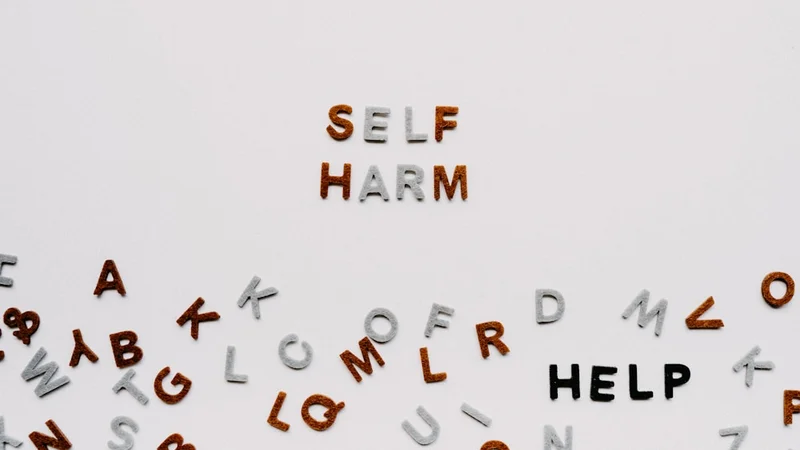
I blew a deadline I'd been building toward for three months. Not by a day — by a week. And instead of thinking through what had actually gone wrong so I could fix it, I spent two days in a loop of internal contempt that would have sounded alarming if I'd said it out loud to anyone else. You're undisciplined. You always do this. You're not serious enough about anything. The criticisms weren't calm or instructive. They were sharp, repetitive, and — here's the part that bothers me in retrospect — completely useless for producing any actual correction.
I'm not alone in this — self-compassion research confirms it. Most of us were taught, implicitly or explicitly, that being hard on yourself is how you stay accountable. That if you let yourself off the hook after a failure, you'll just do it again. The internal critic feels like a performance tool. It feels responsible. Except — according to two decades of research launched by a single 2003 paper — it isn't either of those things.
The Study That Changed How Psychologists Think About Self-Regard
In 2003, a psychologist named Kristin Neff published "Self-Compassion: An Alternative Conceptualization of a Healthy Attitude Toward Oneself" in the journal Self and Identity. It wasn't a flashy paper. It didn't generate immediate headlines. But the construct it proposed — a specific, measurable, three-part framework for relating to yourself after a failure — quietly launched one of the most replicated bodies of research in contemporary psychology. Neff has continued building and publishing that evidence base for over two decades; the full compilation is available at self-compassion.org/the-research.
Neff's central argument was this: the field of psychology had spent decades obsessing over self-esteem as the gold standard of psychological health. High self-esteem, the thinking went, predicts wellbeing. Protect and build it. The problem, as Neff identified clearly, is that self-esteem is fundamentally comparative. It requires you to evaluate yourself favorably relative to other people. And that comparison, by its very nature, is fragile — it works fine until someone more talented comes along, until you fail at something that mattered, until the favorable ranking you've been leaning on suddenly collapses.
What Neff proposed instead was a form of self-regard that doesn't depend on winning the comparison. One that's stable precisely because it doesn't require favorable evaluation at all.
Related read: How to Build Self-Confidence as an Adult — why self-esteem collapses under pressure and what to build instead.
The Three-Part Framework You Actually Need to Know
What is self-compassion? Treating yourself after a failure with the same warmth and understanding you'd offer a close friend — not dismissing what went wrong, not compounding it with contempt. Kristin Neff built a three-component framework that makes this measurable and trainable.
Here's where most articles about self-compassion lose the thread. They describe it as "being nice to yourself" or "talking to yourself like you'd talk to a friend." Those aren't wrong — but they miss the precision of what Neff actually proposed.
Her framework has three distinct, independently measurable components. You need to understand all three, because they each pull a different lever.
Self-kindness versus self-judgment. This is the one most people know about. It means actively responding to your own suffering or failure with warmth instead of harsh criticism. Not pretending the mistake didn't happen. Not making excuses. Just refusing to compound it with a second injury on top of the first.
Common humanity versus isolation. This one is subtler — and, I'd argue, more powerful. It's the recognition that suffering, failure, and imperfection aren't uniquely your problem. They're part of the shared human experience. When you're deep in self-criticism after a mistake, there's a cognitive distortion that makes you feel like you are the only one who fails this way, that everyone else is executing cleanly while you're the broken exception. Common humanity cuts that distortion off at the knees. It's not toxic positivity. It's just factually accurate.
Mindfulness versus over-identification. The third component is about how you hold the painful feeling, not whether you acknowledge it. Mindfulness in Neff's framework means observing your negative emotions with balanced awareness — neither suppressing them nor catastrophizing into them. Over-identification is the opposite: you become the feeling. The failure doesn't just happen to you; it is you.
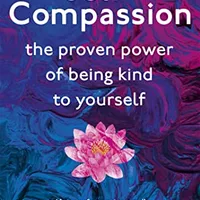
Self-Compassion: The Proven Power of Being Kind to Yourself — Kristin Neff
The article's entire spine is Neff's 2003 paper and her three-component framework. Readers who just learned self-kindness / common humanity / mindfulness want the primary source. Highest-intent placement in the piece.
As an Amazon Associate, we earn from qualifying purchases — at no extra cost to you.
What makes this framework genuinely useful is that each component addresses a different failure mode of self-criticism. Harsh self-judgment doubles the injury. Isolation amplifies it by making it feel exceptional. Over-identification makes it feel permanent. All three components are doing real structural work.
Why Self-Esteem Gets the Mechanism Exactly Backwards
The research Neff's paper launched found that self-compassion consistently predicted lower anxiety, lower depression, and greater emotional resilience after a setback — and it did so without the specific downside that self-esteem research had spent years documenting.
Self-esteem's downside is this: because it depends on favorable comparison, it's psychologically linked to what researchers call self-enhancement — the motivated tendency to distort your self-assessments upward to protect your sense of worth. When that self-enhancement is threatened by a genuine failure, it can produce defensiveness, blame-shifting, and outright avoidance of accurate feedback. Not because the person is a bad actor, but because their psychological equilibrium literally depends on preserving the favorable comparison. The self-esteem is fragile, and the mind protects fragile things.
Self-compassion doesn't create that dynamic because it isn't built on comparison in the first place. There's nothing to protect. The stability it provides is unconditional — it doesn't evaporate the moment you get a bad performance review or miss a goal by a week.

Liforme Original Yoga Mat (Blue, 4.2mm, Free Yoga Bag)
Follows the self-esteem-is-fragile section. Mindfulness — component three of Neff's model — is the balanced-awareness practice the article says you cannot fake; a dedicated grounding surface is the physical commitment…
As an Amazon Associate, we earn from qualifying purchases — at no extra cost to you.
There's a common saying in behavior-change psychology that you can't think your way into a new feeling — you have to act your way there. The research on self-compassion suggests something parallel: you can't criticize your way into resilience. You can only create the psychological conditions where genuine learning becomes possible. And those conditions require a baseline of internal safety that self-criticism actively destroys.
Related read: The Science of Resilience: You're Stronger Than You Think
What Harsh Self-Criticism Actually Does to Your Body
This is the mechanism most people don't know about — and it's the part that makes the research genuinely hard to argue with.
Neff's work, and the neuroscience that grew up alongside it — most notably psychologist Paul Gilbert's research on the body's threat and soothing systems, detailed at the Compassionate Mind Foundation — identified a specific physiological pathway. Self-criticism activates the body's threat-response system (rooted in the sympathetic nervous system and the HPA axis) in much the same way an external attack would, triggering the release of cortisol. Cognitively, this narrows your focus onto the immediate threat — which, in this context, is you. Your attention contracts. Your perspective shrinks. Your capacity for flexible, creative problem-solving drops measurably.
This is why sitting in harsh self-criticism after a failure rarely produces a useful action plan. It's not a moral failing. It's a physiological one. You're running analysis on a nervous system that's in threat mode, and threat mode isn't built for nuanced self-assessment. It's built for avoidance and self-protection.

Self-compassion, by contrast, activates what researchers have associated with a caregiving and soothing response — a parasympathetic-linked system that can down-regulate the threat system's stress-hormone output. Physiologically, this is closer to a state of safety — one in which the nervous system can actually support the kind of honest, open-eyed reflection that real learning requires. You're not less accountable when you're in that state. You're more capable of being accountable, because your brain isn't busy protecting itself.

Philips SmartSleep Wake-Up Light HF3520
Placed directly after the cortisol / HPA-axis / threat-response section. The article argues resilience needs a nervous system in a safety state rather than threat mode — a gentle sunrise wake instead of an adrenaline-…
As an Amazon Associate, we earn from qualifying purchases — at no extra cost to you.
The Objection You're Already Having (and What the Research Actually Says)
I know what the objection is, because it's the one I had: won't self-compassion just let me off the hook? If I'm kind to myself after a failure, what's the incentive to do better next time?
Neff's research — and a related 2007 study by Mark Leary and colleagues published in the Journal of Personality and Social Psychology — addresses this directly, and the finding is genuinely counterintuitive. Self-compassionate people took just as much personal responsibility for their mistakes as their highly self-critical counterparts, acknowledging their role in negative events without being overwhelmed by negative emotion. Because they weren't managing a defensive ego that needed to preserve its self-image, they could look at what actually went wrong without flinching away from it.
The difference wasn't in accountability. It was in what came after accountability. Self-critical people acknowledge the mistake and then compound it with contempt. Self-compassionate people acknowledge the mistake, feel the appropriate discomfort, and then move to genuine problem-solving — without the extra overhead of self-directed punishment that doesn't serve any corrective purpose.
Think of it this way: a good coach doesn't yell at a player after they miss a shot and then keep yelling at them for the next three plays. A good coach gives honest, direct feedback, and then creates the conditions for the player to recalibrate and execute better. The harsh internal critic has no off switch. A well-functioning self-compassion practice does.
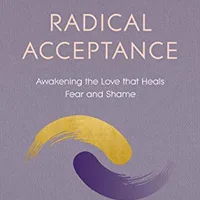
Radical Acceptance — Tara Brach
Lands right after the 'won't self-compassion let me off the hook?' objection. Brach's work is the standard companion route for readers who accept the research but need a practice (the RAIN method) rather than more the…
As an Amazon Associate, we earn from qualifying purchases — at no extra cost to you.
How to Start Practicing This Today
The three-component framework gives you something concrete to work with — which is unusual in the mindset space. Here's how to apply each component in the minutes and hours after a genuine setback:
Step 1: Acknowledge it plainly. Don't skip or suppress the discomfort. Mindfulness in Neff's framework starts with actually noticing what you're feeling — naming it specifically, without amplifying it. "This is disappointing. I feel frustrated with myself." Not "I'm a disaster" and not "I'm totally fine." The accurate middle.
Step 2: Write the self-kindness response. There's an exercise Neff outlines in her work that researchers have used in intervention studies: write a short paragraph to yourself about the failure in the same tone and with the same kindness you'd use writing to a close friend who was describing the identical situation. Not dismissive. Not minimizing. Just genuinely kind. The act of writing shifts the cognitive mode.

Clever Fox Habit Calendar Circle (24-Month Habit Tracker Journal)
Sits at Step 2 — 'Write the self-kindness response.' The article explicitly says the act of writing shifts the cognitive mode, and Step 4 asks for a time-bounded reflection window. A structured tracker converts that f…
As an Amazon Associate, we earn from qualifying purchases — at no extra cost to you.
Step 3: Invoke common humanity explicitly. The specific thought is this: this kind of failure is part of what it means to be human, not evidence of a unique personal defect. If you've never said that to yourself out loud after a genuine failure, try it. The resistance you feel is probably proportional to how much you need it.
Step 4: Give yourself a defined reflection window. Self-compassion isn't avoidance. Schedule a specific, time-bounded analysis session — 30 minutes, not two days — where you look at what actually went wrong and what you'd do differently. The combination of compassionate acknowledgment followed by structured reflection is what the research actually supports. Not one without the other.
Step 5: Watch for the over-identification signal. If you find yourself using "I am" language — "I am undisciplined," "I am a failure" — rather than "I did" language — "I missed the deadline," "I underestimated the scope" — that's the over-identification pattern showing up. The correction is simply to restate it with behavioral rather than identity language. Small shift. Measurably different effect.

Related read: Rewire Your Brain for Resilience: What Neuroscience Shows
Designing the Next Version of Yourself From Solid Ground
There's an old saying that you can't build character on sand. It's usually applied to character, but the same principle holds for the psychological foundation you're trying to build a productive life on. If the base layer is chronic self-contempt — dressed up as accountability — the structure above it is always one bad week away from collapse.
What Kristin Neff's research actually offers isn't permission to be mediocre. It's the counter-intuitive argument that the path to genuine high standards runs through a stable, compassionate relationship with yourself — not through a self-attack loop that activates your threat response every time you fall short.
The irony is almost amusing: the harshest inner critics are usually the ones producing the most avoidance, the most procrastination, and the least actual reflection after failure. Because the criticism has become the punishment, and once you've been punished, the account feels settled — even if nothing structural changed.
Self-compassion asks a different question. Not "how do I deserve to feel right now?" But: "what do I actually need in order to do better next time?" That question only gets answered honestly from a place of psychological safety.
You're designing your evolution. You can't do that from a state of self-siege.
What's the harshest thing your inner critic says to you that you'd never say to someone you care about — and what would it take to start retiring that line?
Research Reference: Kristin Neff, "Self-Compassion: An Alternative Conceptualization of a Healthy Attitude Toward Oneself," Self and Identity, 2003. Additional research: Neff, K.D. & Germer, C.K. (2013), "A Pilot Study and Randomized Controlled Trial of the Mindful Self-Compassion Program," Journal of Clinical Psychology; Leary, M.R., Tate, E.B., Adams, C.E., Batts Allen, A., & Hancock, J. (2007), "Self-Compassion and Reactions to Unpleasant Self-Relevant Events," Journal of Personality and Social Psychology.
Related read: Post-Traumatic Growth: Why Hard Times Build You
Was this helpful?