Mindset· 10 min read
When to Trust Your Snap Judgments, According to Science
Snap judgments carry real signal in specific domains. Ambady & Rosenthal's thin-slicing research shows when to trust your quick reads and when to pause.

Your Brain Judges People in 2 Seconds. Here's What the Science Actually Says
There's a specific kind of awkward I used to dread at dinner parties. Someone gets introduced across the table, and before they've finished saying their name, your brain has already filed a verdict: this person is going to be insufferable. Then they spend the next two hours being the most interesting person in the room.
Or the reverse — you meet someone at a networking event, feel an immediate, almost gravitational pull toward them, and three months later you're quietly cleaning up the damage of trusting them too quickly.
Both experiences point to the same question. When your brain makes a judgment in two seconds, is it reading something real — or just generating noise?
The answer, it turns out, is more interesting than either "always trust your gut" or "you're obviously just biased." Nalini Ambady and Robert Rosenthal published "Thin Slices of Expressive Behavior as Predictors of Interpersonal Consequences: A Meta-Analysis" in Psychological Bulletin in 1992, and what they found was genuinely strange: brief, often silent, exposures to a person's expressive behavior could meaningfully predict real, independently measured outcomes about that person. Above chance. In specific domains. In ways a careful person should understand — and use.

Here's what the research actually shows, and what it means for the quick reads you're making every day without realising it.
What "Thin-Slicing" Actually Means (and Why the Name Matters)
Ambady and Rosenthal coined "thin slices" as a technical term to describe a very brief sample of someone's expressive behavior — the way they move, gesture, stand, use their face and voice in a particular moment. The "thin" isn't a metaphor for shallow judgment. It's a precise description of sample size: a thin slice of observed behavior, rather than extended contact over time.
Their 1992 meta-analysis reviewed 38 findings from a range of studies asking the same basic question: can these thin samples of behavior — typically under five minutes, and often far shorter — predict independently measured real-world outcomes about the person being observed? Outcomes gathered by different people, through different methods, without access to the same brief clip the judges watched.
The consistent answer across studies was yes. Not perfectly. Not universally. But above chance, and in ways that couldn't be explained away as coincidence or measurement error. Notably, longer observation didn't reliably produce better accuracy — judgments based on under 30 seconds of behavior held up about as well as judgments based on four or five minutes.
This is the research Malcolm Gladwell drew on in Blink — his argument for the hidden intelligence of rapid cognition.
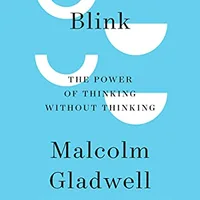
Blink: The Power of Thinking Without Thinking — Malcolm Gladwell
The book that put thin-slicing into public vocabulary — read alongside the actual Ambady & Rosenthal findings the article corrects it against
As an Amazon Associate, we earn from qualifying purchases — at no extra cost to you.
Gladwell captured something genuinely real. But he also left most readers with a slightly wrong takeaway: that snap judgments are generally trustworthy, that the gut is a kind of shortcut to wisdom. The actual research is more specific and more interesting than that. Thin-slice accuracy doesn't generalize. It holds in specific, narrow domains — and it falls apart predictably outside them. That distinction is the thing worth understanding.
The Teacher Study That Made Researchers Stop Cold
The most striking result to come out of Ambady and Rosenthal's thin-slicing research program involves college instructors and their students — and it's the kind of result that makes you want to read it twice to make sure you understood it correctly. It comes from a focused follow-up study the pair published in 1993, a year after their original meta-analysis, in the Journal of Personality and Social Psychology.
Here's the setup. Observers who had never met or taken a class with a particular instructor watched short, silent video clips of that instructor teaching. No audio. Clips as brief as six seconds, built from combining three even shorter two-second excerpts of footage. The observers then rated the instructor on dimensions like warmth, competence, physical expressiveness, and general confidence.
Those ratings were compared against actual end-of-semester student evaluations gathered from students who'd spent an entire term in that instructor's classroom — students who'd attended every lecture, completed assignments, had office-hours conversations, and formed their views over months of real contact.
The correlation between the brief-clip stranger rating and the semester-long student evaluation was substantial — strong enough that researchers described it as one of the largest effects typically seen in this kind of social-judgment research.
A complete stranger watching a few seconds of silent footage of someone they'd never met predicted how real students would rate that instructor after a full term of contact.

Sit with that for a moment. The mechanism Ambady and Rosenthal proposed is this: certain expressive cues — a person's physical animation, the openness or containment of their body language, the quality of their movement and gestural expression — carry genuine, relatively honest signal about stable traits. These cues are largely below conscious control. You can't easily suppress them in a brief clip, because you're not consciously generating them. So an observer's rapid, automatic read of those cues isn't pure noise. It's tracking something that's genuinely there.
What it's tracking is narrow. But it's real.
Related read: The Cognitive Biases That Secretly Run Your Life
Where Snap Reads Are Actually Smart
Here's the implication most people resist: some of your snap judgments are correct.
Not the ones about character. Not the ones about who someone is in difficult situations, or whether they're trustworthy when no one's watching. But specific reads — particularly around warmth, role-based competence, social confidence in structured settings — carry real signal that extended contact often only confirms, rather than dramatically revising.
Ambady and colleagues found thin-slice accuracy was highest when three things were true simultaneously. The observer was watching expressive, behavioral cues — not demographic signals or surface appearance. The domain being predicted was directly related to the behavior on display. And the situation being observed was structured enough that the relevant cues were actually visible.
An instructor's physical expressiveness while teaching predicts how engaging they are as a teacher. A salesperson's warmth and energy in an opening thirty seconds predicts how a client will describe the meeting afterward. A therapist's nonverbal attunement in a first session correlates with therapeutic alliance months later.
These aren't mystical. They're pattern-recognition by a brain that's processed thousands of similar social situations and developed a working model of which cues signal which things. The model is imperfect, but it's not random.
Logitech C920 HD Pro Webcam (1080p, Stereo Audio, HD Light Correction)
Your own thin slice is being read on every video call — light correction and a sharp lens change what cues a stranger actually receives
As an Amazon Associate, we earn from qualifying purchases — at no extra cost to you.
The problem isn't that you have fast reads. The problem is what you do with them after the first two seconds.
The Specific Boundary You're Probably Crossing
This is where the research gets important, and where Blink arguably misled a generation of readers in a direction the data doesn't support.
Thin-slice accuracy doesn't scale with confidence. You can feel completely certain about a quick judgment and still be reliably wrong when you've moved outside the narrow domain where accuracy actually holds.
Ambady and subsequent researchers found thin slices predict expressive and role-based cues well. They predict deeper character traits — honesty, loyalty, how someone behaves under genuine pressure when consequences are real and no one is watching — much less reliably. The signal actually is thinner there. There's less to read from a brief clip about things a person doesn't express overtly, and the cues that are visible can mislead.
This is where the fundamental attribution error — the tendency to overweight personal traits and underweight situational pressures cuts in. When you make a snap judgment, you're reading expressive behavior in a specific moment and context. But you'll almost always draw a conclusion about the person's character — a much larger inference than the slice of behavior you observed actually supports.
The person who seemed closed-off at the dinner party might be grieving. The one who radiated brash confidence might be running on anxiety. The one who came across as warm and immediately competent might be an excellent performer of those qualities rather than someone who actually holds them consistently under different conditions.
None of this means your read was worthless. It means the read was accurate about a slice of behavior — and then you decided, without realizing you decided, to extend it into a verdict about who that person is.

Kindle Paperwhite 2024 (12th Gen, 16GB, Black, Without Ads)
The antidote to the two-second read is the long-form one — the research this article draws on rewards actually reading it
As an Amazon Associate, we earn from qualifying purchases — at no extra cost to you.
Lee Ross and Richard Nisbett's The Person and the Situation is useful here. Ross's fundamental attribution error research shows we systematically overweight internal traits and underweight situational pressure when explaining behavior. Ambady's thin-slicing research adds the complementary finding from the other direction: even when we're tracking genuine signal, we tend to generalize it past what we actually observed into territory the data we collected doesn't support.
The research isn't arguing against quick reads. It's making a precise case for narrow, calibrated ones.
The Line Between Signal and Story
There's a distinction that makes all of this practically useful, and it's worth being exact about.
Signal is what you actually observed: whether someone's eye contact was steady or evasive, whether their voice was relaxed or tight, whether they moved with ease or containment, how their body occupied the space they were in.
Story is what you added afterward: they're untrustworthy, they're probably arrogant, they'll let you down when it matters, this is someone you want in your corner for years.
Thin-slicing research says the signal part is often real. The story is yours. And you wrote the whole thing in about two seconds without noticing you were writing it.
The exercise isn't to eliminate the signal — that's neither possible nor desirable. Your brain's speed is genuinely useful. The exercise is to catch yourself at the exact edge between signal and story, especially when the stakes of being wrong are meaningful: a hiring decision, a partnership, a friendship you're about to invest in or pull back from.
Know what slice you actually have data for. Then be honest about how much story you've written on top of it.

How to Actually Audit Your Own Quick Reads
Four specific practices, not a philosophy:
Name the observation, not the conclusion. "He seemed guarded and gave short answers" is an observation. "He's someone who'll withhold information when it matters" is a conclusion. You have evidence for the first. You have almost none for the second.
Check whether you're in a thin-slice-accurate domain. Role-related expressiveness in a structured situation — a presentation, a sales call, a first meeting where someone is performing a specific function — tends to carry real signal. Someone's moral character, long-term reliability, or how they'll behave when they're frightened or under pressure? The research doesn't support your quick read there. Be honest about which situation you're actually in.
Treat your confidence level skeptically. This one is counterintuitive and important. The feeling of certainty about a snap judgment doesn't track with the accuracy of the judgment. You can feel completely sure and be wrong for reasons that have nothing to do with your intelligence or perceptiveness. High confidence in a quick read is information about your subjective state. It's not evidence that the read is accurate.
Create a feedback loop. This is the one most people skip, and it's the only practice that actually changes your calibration over time. Write down your quick reads. Come back to them after extended contact. Check whether the signal held, whether the story held, and whether your confidence was warranted. You can't improve your calibration without knowing where you're currently off.

Clever Fox Habit Calendar Circle (24-Month Tracker Journal)
A dated record is the only thing that turns a quick read into calibration — you cannot audit judgments you never wrote down
As an Amazon Associate, we earn from qualifying purchases — at no extra cost to you.
A structured reflection journal is genuinely useful for this — not for journaling in the diffuse, anything-goes sense, but for creating a real, dated record of specific judgments and specific outcomes. The research tells you what to look for. Writing it down is the mechanism that actually changes how you read people over time.
How to Start Today
You don't need to overhaul how you think about people. You need one small, specific practice.
After your next significant first impression — a job interview, a new client, a first date, a new colleague — write down three things before you discuss that person with anyone else:
- What specific behavior you actually observed. Not what it means. What you saw.
- What conclusion you immediately drew about their character. Be honest here. Write the unfiltered version.
- How confident you feel about that conclusion, on a scale of one to ten.
Then come back to those notes thirty days later. Check what held. Check what the story added that the signal never actually justified.
That practice — observation separated from conclusion, confidence recorded before feedback — is how you build real calibration. Ambady and Rosenthal's research tells you that your quick reads contain genuine signal in specific domains. The thirty-day feedback loop tells you which domains those actually are, for you, in your particular pattern of social judgment.
Design Your Evolution Through This
There's a well-known line, often attributed to Jim Rohn, about how you become the average of the five people closest to you. Whatever its exact origin, the sentiment is real and useful — it's making a point about proximity and influence, about who you let into your daily environment. But the mechanism underneath that observation is this: you're constantly making judgments about who deserves that proximity. Who to trust. Who to partner with. Who to move toward and who to quietly step back from.
Those judgments aren't built only on extended experience. They're built, in part, on quick reads you made years ago, in specific moments, that you've since forgotten making. Those reads shaped your story about who someone is. And you've been acting on that story ever since.
Ambady and Rosenthal's research gives you something precise: a way to take your fast social intuition seriously in the narrow domains where it earns that trust, and to pause, deliberately, before letting it write a character verdict you'll act on for years without ever returning to check whether the original slice actually supported the whole story.
Your brain is going to keep making two-second judgments. That's not a flaw — it's a feature. The question isn't whether to make them. It's whether you understand what they actually contain, and what they reliably don't.
What's a snap judgment you made about someone that turned out to be genuinely wrong — and what did it actually cost you to find that out?
Sources:
- Ambady, N., & Rosenthal, R. (1992). Thin slices of expressive behavior as predictors of interpersonal consequences: A meta-analysis. Psychological Bulletin, 111(2), 256–274.
- Ambady, N., & Rosenthal, R. (1993). Half a minute: Predicting teacher evaluations from thin slices of nonverbal behavior and physical attractiveness. Journal of Personality and Social Psychology, 64(3), 431–441.
- Ross, L., & Nisbett, R. E. (1991). The Person and the Situation: Perspectives of Social Psychology. McGraw-Hill.
- Gladwell, M. (2005). Blink: The Power of Thinking Without Thinking. Little, Brown and Company.
Was this helpful?