Mindset· 10 min read
The Social Comparison Loop Your Brain Runs All Day
Your brain runs social comparison automatically — dozens of times daily. What 70 years of research reveals about the triggers rewiring your self-image.

The Social Comparison Loop Your Brain Runs All Day
Picture this: it's 7:43 a.m. You're standing in your kitchen, coffee in hand, and you open Instagram before you've said a single word out loud. Twenty-eight seconds later — you checked the timer once, you know how this goes — you've already seen your neighbor's new car, a startup founder's "humble" brag about their latest round, and three photos from someone's holiday in Portugal. You close the app.
You feel vaguely unsatisfied with your morning.
Nothing changed in those twenty-eight seconds. Your kitchen is the same. Your plans for the day are the same. Your actual life hasn't moved. But something shifted in how that life feels to you, and it happened faster than you had breakfast.
Here's what's striking about that: it wasn't a choice. The dissatisfaction wasn't a conclusion you reached after reflection. It was a calculation your brain ran automatically, without asking for your authorization, and delivered to your emotional system as a fait accompli (a done deal).
That's not a character flaw. That's the social comparison mechanism doing exactly what Leon Festinger described back in 1954 — in an environment he could never have anticipated.

Why Your Brain Compares Without Asking
Festinger was a social psychologist at the University of Minnesota, and in 1954 he published a theory that, once you understand it, you can't unsee. The argument was clean: humans have a fundamental, built-in drive to evaluate themselves. We want to know if our opinions are correct, if our skills are adequate, if our outcomes are reasonable relative to what's possible.
When an objective external standard exists — a finish-line clock, a test score, a weight on a barbell — we use it. But when no objective standard is available, which is the case for the vast majority of things that actually matter to us (our careers, our relationships, our direction in life), we do something else.
We look at other people.
What Thomas Mussweiler at London Business School discovered decades later is the part Festinger didn't fully clock: this evaluation doesn't wait for you to consciously decide to compare. In priming experiments, subjects who were briefly — and subliminally — exposed to a high-performing other showed measurable shifts in self-evaluation within milliseconds. Before conscious awareness. Before any deliberate thought.
The comparison reflex initiates the moment you encounter another person's performance information. It doesn't require your permission. It doesn't care if you're in a hurry or in a good mood or trying not to do this anymore.
You can't opt out of the mechanism. You can only change the environment it operates in.
The Trigger You're Missing Is the Frequency
Most conversations about social comparison treat it like an occasional event — you compare yourself to someone, you feel bad, you try to reframe it.
The problem with that framing is that it radically underestimates the frequency.
Research on app usage patterns shows the average adult unlocks their phone 58 times per day. Not all of those are social media, but a significant portion deliver exactly the input Mussweiler's research identifies as triggering automatic comparison: information about how someone else is performing in a domain you care about. The promotions and partnership announcements on LinkedIn. The fitness transformation posts on Instagram. The house renovations. The side businesses. The parenting wins. The productivity setups.
Every one of those is a comparison input. And your brain is processing each one whether you notice it or not.
Jim Rohn used to say that you become the average of the five people you spend the most time with. What he meant as a metaphor about proximity and influence, behavioral neuroscience has confirmed as a literal statement about comparison calibration: the people you're exposed to most frequently become the reference class your brain uses to evaluate where you stand.
The average person in 2026 is "spending time" — in the Rohn sense — with hundreds of people per day through their feeds. Most of them show only their best moments. Almost none show the work that preceded the outcome, the failure before the success, or the ordinary Wednesday afternoons that make up most of any real life.

The Good Life — Robert Waldinger & Marc Schulz
The 85-year Harvard Study of Adult Development found that relationships — not achievements or income — are the strongest predictor of lifelong wellbeing. Essential reading if you're ready to change what you measure yo…
As an Amazon Associate, we earn from qualifying purchases — at no extra cost to you.
The Two-Direction Problem (and Why One Backfires)
Festinger's original theory identified two directions comparison could go.
Upward comparison: you measure yourself against someone performing better. Downward comparison: you measure yourself against someone performing worse. The naive reading is that upward is bad and downward is fine. But the research tells a more complicated story.
The actual variable that determines whether upward comparison motivates or deflates you is perceived controllability — whether the gap between you and the comparison target feels bridgeable or fixed.
Compare yourself upward to someone ahead of you in a way that feels genuinely achievable — a peer five years older who built something you want to build, someone in your field whose path is visible and followable — and the comparison functions like useful information. It expands your sense of what's possible. It motivates.
Compare yourself upward to someone whose advantage feels structural, genetic, or inherited — the person who built their startup on family capital while framing it as self-reliance, the influencer who was already conventionally attractive before the camera, the success story that omits the specific advantages that made it possible — and the same comparison produces what researchers call contrastive self-evaluation. You don't feel inspired. You feel smaller.
The brutal design of most social platforms is that they maximize upward comparison inputs while stripping out exactly the contextual information that would make those comparisons useful. You see the outcome, not the process. The finish line, not the runway. The published book, not the seven years of drafts preceding it.
Why Your Friend's Promotion Stings More Than a Stranger's
There's a specific kind of pain that social comparison research has identified and named, and if you've felt it, you'll recognize it immediately.
Someone in your orbit — not a stranger, but a peer, a colleague, someone from the same university cohort or professional world — gets the thing you want. The promotion. The grant. The recognition. The relationship.
And it hurts more than when a stranger gets it. Often significantly more.
Abraham Tesser's Self-Evaluation Maintenance Model explains the mechanism precisely. When someone at psychological proximity to you — a close peer, a colleague at your level, a friend in your domain — succeeds in an area that genuinely matters to you, two factors combine to make the comparison maximally threatening.
First, psychological proximity amplifies relevance. A close peer's advantage in your domain doesn't let you off the hook the way a stranger's does. You can't dismiss it as happening in a different world; it's happening in yours.
Second, the gap is simultaneously visible and personally meaningful. "They got there from where I am. Why haven't I?" is a question the Tesser model predicts you'll ask, usually not out loud, and often without fully acknowledging you're asking it.
Tesser's research documents something darker too: people unconsciously rate a close friend's achievement as less impressive when the domain is personally relevant to them. Relationships sometimes cool after a significant achievement gap opens — not through any deliberate decision, but because the comparison mechanism is quietly doing the emotional accounting.
This isn't something to be ashamed of. It is a structural feature of how human social cognition works. The question isn't whether it happens — it does — but whether you're aware enough of the mechanism to decide what to do with it.
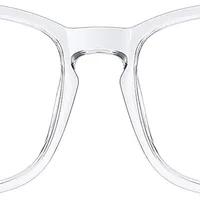
TIJN Blue Light Blocking Glasses (Clear Square)
If cutting the 58-unlocks-a-day habit completely isn't the first step, reduce the physical toll. Blue-light blocking glasses ease the eye strain that comes with heavy screen time — a low-friction starting point while…
As an Amazon Associate, we earn from qualifying purchases — at no extra cost to you.
The Smartphone Inflection Point
Jean Twenge at San Diego State University has spent decades researching psychological wellbeing trends across American generations, using datasets that span back to the 1930s. For most of that time, the data showed gradual, predictable shifts. Then around 2012 to 2013, something changed sharply.
Life satisfaction among adolescents dropped. Depression rates rose. Loneliness increased. Self-reported social comparison frequency went up. The timing aligned almost exactly with two events: smartphone adoption crossing a saturation threshold and Instagram reaching mass scale.
Twenge spent the decade following her 2017 book iGen investigating whether the correlation reflected causation. The research that followed — including large longitudinal studies, randomized experiments with social media reduction, and cross-national data — consistently supported the same conclusion: heavy social media use correlates with increased social comparison frequency, and increased social comparison frequency correlates with lower wellbeing, particularly in domains where comparison inputs skew heavily upward.
That distinction matters: this isn't a "technology is bad" finding. The data points at something more precise — the way these platforms exploit the comparison mechanism, and the measurable psychological effects that follow. The platforms aren't neutral delivery systems; they're comparison engines, algorithmically optimized to surface the content that generates the most emotional activation. High-performing social comparison inputs — achievements, transformations, milestone announcements — generate that activation reliably.
The adult version of this is less systematically studied but observationally consistent. Every LinkedIn notification that tells you a connection got promoted is a comparison input delivered to your reflex before your rational mind has a chance to contextualize it. Every Instagram story from someone whose vacation looks more luminous than your Tuesday is a data point your comparison machinery processes whether you want it to or not.
The frequency has simply changed the game. And the fix isn't to feel differently about the inputs. It's to change the architecture that determines which inputs you receive.
What the Happiest People Do Differently
Sonja Lyubomirsky at the University of California Riverside has produced what might be the most practically useful finding in the entire social comparison literature, because she came at it from an unusual direction.
Instead of asking "what happens when people compare?", she asked: what are chronically happy people actually doing differently?
The answer was counterintuitive. Happy people don't compare less. They compare differently.
Specifically: they compare against themselves more readily than against others. They use past performance as the primary benchmark — "am I better than I was six months ago?" — rather than defaulting to the social standard the environment makes most visible. When they do compare upward, they're more likely to frame it as "this shows what's possible" rather than "this shows what I lack."
The orientation shift is small in description. It's significant in outcome.
What this means practically: the most powerful intervention on the social comparison loop is not the suppression of comparison — which Mussweiler's research tells us isn't achievable anyway — but the substitution of the comparison standard. Replace "how do I compare to the most visible people in my feed?" with "how do I compare to myself three months ago?"
The answer to the second question is always honest, always relevant, and always within your control to influence. The answer to the first is systematically skewed by selection effects, curation, and an algorithm optimized for activation rather than accuracy.
How to Start Today
The research on social comparison condenses into one reorientation and four concrete practices. None of them require willpower. All of them work upstream of the reflex, where the leverage actually is.
The reorientation first: The standard of comparison is the most controllable variable in this equation. You can't control the comparison reflex. You can't choose what your platform serves you. But you can choose — and deliberately reinforce — the benchmark you apply.
1. Set a "past-self review" as a weekly ritual. Every Sunday, spend five minutes reviewing one domain that matters to you — your fitness, your craft, your financial habits, your relationships — and write down where you were in that domain three to six months ago. A dedicated journal for this practice keeps progress visible and the benchmark concrete. When a social comparison input arrives during the week, you already have a competing reference point loaded.

Clever Fox Habit Calendar Circle (24-Month)
The weekly past-self review only works when progress is visible over time. A dedicated habit-tracking calendar makes your own trajectory concrete — so when the comparison reflex runs, you already have an accurate inte…
As an Amazon Associate, we earn from qualifying purchases — at no extra cost to you.
2. Run a one-week trigger audit. For seven days, note in real time when you close an app or leave a context feeling worse than when you entered it. You don't need to do anything with the observation yet — just make it. Most people discover within three days that their comparison pain is concentrated in two or three specific accounts or content types, not distributed evenly. That specificity is actionable in a way that "use social media less" is not.

Kindle Paperwhite 2024 (16GB)
Replace the feed optimised for emotional activation with reading you actually chose. The Paperwhite's six-week battery makes it a frictionless swap for the phone you're trying to put down — every page is a curated inp…
As an Amazon Associate, we earn from qualifying purchases — at no extra cost to you.
3. Apply the controllability test. When you notice a comparison running — or as soon as you can catch it — ask: is the gap between where I am and where they are something I could close, given time and effort? If yes, use the comparison as information. If the gap is structural, inherited, or dependent on factors you don't have access to, log it as noise and return to your own benchmark. This is a skill that improves with practice.
4. Design the architecture, not just the response. The point of app time limits, phone-free mornings, and curated follow lists is not restriction for its own sake — it's reducing the frequency of automatic comparison inputs so the reflex has less material to work with. Every trigger you remove from your morning is a comparison your brain doesn't have to run. You're working upstream, where the leverage actually is.
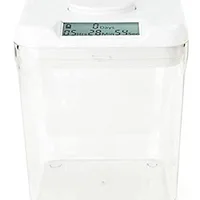
Kitchen Safe kSafe Time Locking Container (Medium)
The most effective way to reduce comparison inputs is to stop them reaching the reflex before it fires. A timed lock box turns phone-free mornings into a physical commitment instead of a willpower exercise.
As an Amazon Associate, we earn from qualifying purchases — at no extra cost to you.
The Benchmark You Actually Own
There's a deeper principle inside all of this that goes beyond social media habits or comparison triggers.
Festinger's original insight — that human beings need to evaluate themselves, and that in the absence of objective standards they will reach for social comparison — contains a hidden implication that most people miss.
You can provide your own objective standard.
The comparison drive is not inherently destructive. It's calibration equipment. The problem is that in a digital environment, the default calibration reference is a curated distribution of other people's best moments — which guarantees that most comparisons return a signal of inadequacy, regardless of how well you're actually doing.
When you substitute the self-as-comparison-standard — your own progress, your own history, your own trajectory — you're not opting out of the calibration drive. You're pointing it at a reference that's accurate, relevant, and responsive to your actual effort.
Napoleon Hill wrote that whatever the mind can conceive and believe, it can achieve. The caveat he didn't spell out is that the mind first has to stop measuring itself against a standard it can never satisfy. You become what you measure yourself against.
So it matters, quite a lot, what you choose to measure yourself against.
That recalibration — away from the algorithm's default and toward your own history — is the quieter version of what it means to design your evolution.
What benchmark has been running quietly in the background of your self-evaluation this week — and is it one you chose, or one the algorithm chose for you?
Was this helpful?