Mindset· 9 min read
Posttraumatic Growth: How Crisis Can Change You
Tedeschi and Calhoun's research found real, measurable growth often follows a diagnosis or crisis. Here's the actual science, not toxic positivity.

Posttraumatic Growth: How Crisis Can Change You
There's a particular kind of guilt that nobody warns you about.
It's the feeling that creeps in a year or two after the worst thing that happened to you — the diagnosis, the sudden death of someone close, the loss that genuinely unmade your life for a while. You notice, slowly and then all at once, that something shifted. Not just that you survived. That you're actually different. That some of what you care about, some of how you see people, some version of yourself you're living as now feels more honest and more deliberately chosen than whatever was there before.
And then the guilt kicks in. Am I saying it was worth it? Am I minimizing what I lost? Does feeling this way mean I didn't grieve hard enough?
Richard Tedeschi and Lawrence Calhoun ran into this exact phenomenon — what they would later name posttraumatic growth — in their clinical work at the University of North Carolina at Charlotte. And they didn't dismiss it. They measured it.
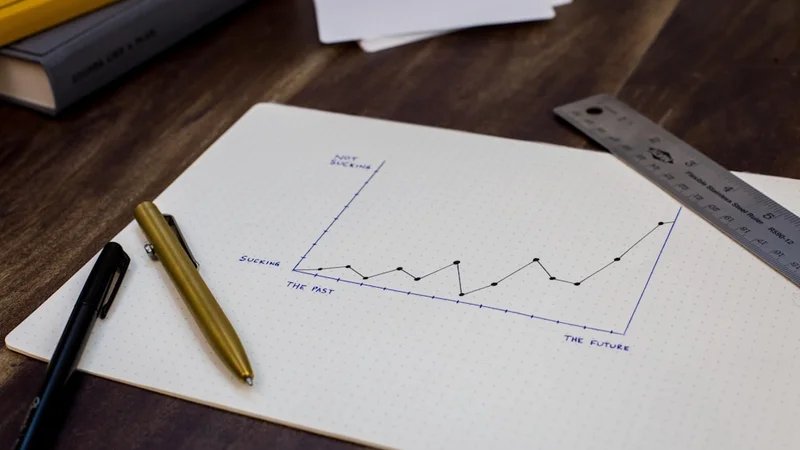
What Tedeschi and Calhoun Actually Found About Posttraumatic Growth
Posttraumatic growth (PTG) describes a documented pattern of positive psychological change that emerges from the struggle with highly challenging life events — not just surviving the crisis, but measurably exceeding where a person was before it, across five specific domains.
In 1996, Tedeschi and Calhoun published The Posttraumatic Growth Inventory: Measuring the Positive Legacy of Trauma in the Journal of Traumatic Stress, formally naming and measuring something their clients kept reporting but that the psychological literature had almost no useful language for.
They called it posttraumatic growth — and the core finding was specific enough to be worth taking seriously.
Some people who experience a serious diagnosis, loss, or crisis don't simply return to their prior psychological baseline after recovery. They report genuine positive change that measurably exceeds where they were before. Not just resilience. Not just coping. Something qualitatively different from the person they were before the crisis began.
Tedeschi and Calhoun identified five domains where this growth consistently appeared across their studies:
- A greater appreciation for life — not in a bumper-sticker sense, but a genuine reorientation toward what actually matters day to day.
- Deeper, more honest relationships with the people who mattered most through the crisis.
- A stronger sense of personal strength — the hard-won knowledge that if you got through that, you can probably deal with what comes next.
- New possibilities the person hadn't previously considered for their own life.
- Spiritual or existential change — a genuine reexamination of what they believed about meaning, identity, and what a life is actually for.
What made this research stand apart from pop-psychology silver-lining narratives was the methodological rigor. Tedeschi and Calhoun weren't collecting testimonials. They built a 21-item validated scale and found the same five-domain pattern replicate across people dealing with cancer, bereavement, military combat, sexual assault, and natural disasters. The growth wasn't specific to one type of crisis. That consistency across fundamentally different kinds of loss was the real signal.

Kindle Paperwhite (2024, 12th Gen, 16GB, Black)
A lightweight, glare-free e-reader for going straight to the source material — Tedeschi and Calhoun's original research and the wider literature on posttraumatic growth, whenever you want more than a summary.
As an Amazon Associate, we earn from qualifying purchases — at no extra cost to you.
How Posttraumatic Growth Is Different From Simply Bouncing Back
This is where the distinction gets important — because posttraumatic growth gets confused with resilience constantly, and the confusion actually matters.
| Resilience | Posttraumatic Growth | |
|---|---|---|
| Core pattern | Stable functioning through the crisis | Growth that exceeds prior baseline |
| Who shows it most | Those who navigate crisis smoothly | Often those hit hardest |
| Mechanism | Maintaining psychological equilibrium | Shattering and rebuilding assumptions |
| Outcome | Return to baseline | Measurable gains across five domains |
Resilience research describes people who navigate through a serious crisis with relatively stable psychological functioning throughout. They hurt, they grieve, but they maintain something close to their baseline without major disruption. That's a genuine and valuable human capacity. Resilience is real.
But posttraumatic growth describes something different: people whose fundamental assumptions about life were genuinely disrupted — people for whom the crisis really did shatter their sense of how the world worked, who they were, and what they could count on — and who then engaged in a rebuilding process that, for some of them, produced something measurably better than the original baseline.
Here's the part that surprised me when I first worked through this research. The people who showed the most posttraumatic growth in Tedeschi and Calhoun's studies weren't the ones who handled the crisis most smoothly. They were often the ones who got hit hardest. Their model specifically suggests the disruption is part of the mechanism — because unless the crisis actually breaks your prior set of assumptions, there's no rebuilding to do. You can only grow beyond where you were if who you were before got genuinely challenged at the root level.
Viktor Frankl documented this pattern decades before Tedeschi and Calhoun had names for it. Man's Search for Meaning, his account of finding purpose while surviving Nazi concentration camps, is a sustained examination of what happens when everything a person assumed about their own life is taken from them — and what some people build in the aftermath. Frankl's concept of meaning as the fundamental human driver maps directly onto the existential reexamination Tedeschi and Calhoun would later measure as their fifth PTG domain.

Man's Search for Meaning — Viktor E. Frankl
Frankl documented this exact pattern of finding meaning through suffering decades before researchers gave it a name — essential reading on how meaning becomes the engine of genuine change.
As an Amazon Associate, we earn from qualifying purchases — at no extra cost to you.
If you want the practical groundwork before your assumptions get tested, the actual science of resilience is more specific than 'just be tougher'.
Why Your Assumptions Matter More Than the Event Itself
Tedeschi and Calhoun's model of how posttraumatic growth actually operates is specific enough to be genuinely useful.
Every person carries what psychologists call an assumptive world — a working model of how the world operates, what they can expect, what they're capable of, and what life is for. Tedeschi and Calhoun built their model on this concept, developed earlier by trauma researcher Ronnie Janoff-Bulman, to describe the core beliefs — about identity, predictability, fairness, and safety — that most people never consciously examine. Those beliefs run in the background and do their job without being questioned.
The crisis matters, in this model, not primarily because of the external harm it causes, but because of what it does to those background assumptions.
A serious health diagnosis, for example, doesn't just affect your body. It demolishes the assumption that you have indefinite time, the assumption that your body will perform on demand, the assumption that tomorrow will look like today. When those background beliefs crack — really crack, not just wobble — a person is forced into a kind of existential rebuilding project they never chose to start. The old assumptions don't work anymore. They have to construct something new.
And Tedeschi and Calhoun's data found that some people, given the right conditions, use that rebuilding to construct a more examined, more deliberately chosen set of beliefs and priorities than the ones they held by default beforehand. They don't just patch the cracks. They rebuild differently — and the new structure is, on Tedeschi and Calhoun's measurable domains, stronger than the one before.

A quality guided reflection journal is worth mentioning here — not as a shortcut through grief, but as a structured way to externalize the rebuilding process. Writing out what you believed before, what the crisis actually challenged, and what you're consciously choosing to believe now isn't therapy. But it does slow down and make visible a process that otherwise happens in fragments, in the middle of the night, and mostly gets forgotten.
The Paradox: Growth and Grief Aren't Opposites
Here's where most accounts of posttraumatic growth go wrong — and getting this wrong causes real harm.
Posttraumatic growth and ongoing distress are not mutually exclusive. Tedeschi and Calhoun were explicit about this in their follow-up research, and it's probably the most practically important nuance in their entire body of work.
Many of the people who showed measurable growth on their inventory also continued to report real grief, fear, and pain related to the same event — sometimes years later. The growth didn't replace the loss. It didn't dissolve the grief. It coexisted with it.
This matters because of how posttraumatic growth gets weaponized in certain self-help circles. "Everything happens for a reason." "This will make you stronger." "You should be grateful for what this taught you." These framings, whatever the intention behind them, effectively tell someone in genuine pain that their pain is contradicting the narrative — that if they were really growing, they wouldn't still be hurting this much.
Tedeschi and Calhoun's data says otherwise. A person can report genuine positive change in their relationships, their sense of what matters, and their own resilience, while also reporting they'd give all of it back if they could have the person they lost back instead. Those two things can be simultaneously true. Treating a person's account of both as a contradiction misreads the actual research.
Sheryl Sandberg explored this directly in Option B, her account of processing her husband Dave Goldberg's sudden death. What she encountered wasn't growth instead of grief — it was both, running in parallel, with neither one negating the other. Working through this with psychologist Adam Grant, she documented precisely the paradox Tedeschi and Calhoun's data described: that experiencing real positive change after a loss doesn't mean you're "over it," and continuing to grieve doesn't mean you haven't grown.
This is also why grief doesn't move through the neat five stages most people were taught — the research on what's actually happening in your brain tells a messier, more honest story.
How to Tell Whether What You're Feeling Is Genuine Growth — or Something Else
Not everyone who experiences a serious crisis will show posttraumatic growth. Tedeschi and Calhoun never claimed otherwise. The research is descriptive of a documented pattern, not prescriptive of an outcome every hardship owes you.
That's a specific and important boundary. Expecting growth as a kind of moral obligation attached to suffering — "you should have grown from that" — is a straightforward misuse of this research. The data describes conditions under which growth sometimes occurs, not a universal guarantee or a test people can pass or fail.
What the research does offer is a way to recognize genuine growth when it's actually happening in you — which matters because it can look, from the inside, indistinguishable from rationalization or forced positivity.
Genuine posttraumatic growth, per Tedeschi and Calhoun's validated inventory, is specific rather than general. It shows up in concrete domains: a specific relationship that deepened in a way it hadn't before the crisis, a specific priority that genuinely shifted, a specific door that opened because the crisis closed another one. It doesn't feel like gratitude for the crisis. It often coexists with the clear wish that the crisis had never happened. And it tends to be forward-facing — less about reinterpreting what occurred and more about what you're doing differently now.
If you're trying to figure out whether what you're experiencing is genuine growth or a coping mechanism, the question worth asking isn't "am I grateful for what happened?" It's this: "Am I living differently than I would have if it hadn't?"
How to Start Working With This — Today
You don't manufacture posttraumatic growth, and you shouldn't try. But if you've been through something serious and you're noticing changes in yourself — in what you care about, who you want to spend time with, what you no longer tolerate — a few things from the research are worth doing deliberately.
-
Name the domains. Tedeschi and Calhoun's five-domain framework is a useful diagnostic, not as a checklist to complete, but as a lens. Has your relationship with one specific person genuinely deepened since the crisis? Are you pursuing something you previously dismissed? Has your sense of what you can handle shifted in a way that's now visible to you? Naming specific changes anchors them in reality in a way vague "I've grown" doesn't.
-
Write toward the changes, not around them. A structured reflection practice — even ten minutes after anything that feels significant — creates a record of the rebuilding process. That record is useful because posttraumatic growth is typically gradual and easy to miss in real time. Looking back over three months of brief entries is often how people first notice the actual pattern.
-
Allow both things at once. If you're growing and still grieving, you don't have to resolve that into a single coherent narrative right now. Tedeschi and Calhoun's data says it isn't actually a paradox — it's the documented pattern of how this works. You don't have to be okay before you're allowed to have grown.
-
Don't import a timeline. The studies Tedeschi and Calhoun reviewed were measuring people who'd had significant time to begin rebuilding — not weeks after a crisis, but often a year or more out. If you're in the middle of something hard right now, the relevant finding isn't "this will change you for the better." It's simpler: the rebuilding, when it comes, may produce something more deliberately chosen than what was there before.
The Design Work Nobody Asks For
There's a version of "design your evolution" that sounds like a productivity strategy — optimize your calendar, stack your habits, front-load your mornings.
And then there's the version Tedeschi and Calhoun's research points toward.
The version where your assumptions get cracked open by something you didn't choose. Where your prior model of yourself and the world doesn't survive the encounter. Where the design work happens during the rebuilding — slowly, honestly, and with full acknowledgment that the original structure needed to come down before something better could go up.
The data doesn't say crisis is good. It says the aftermath of a genuine crisis — one that really does shatter your prior assumptions rather than just disrupting your schedule — creates an unusual opportunity for deliberate reconstruction that ordinary life rarely offers. Most of us inherit our beliefs and priorities; we absorb them from family, circumstance, the particular decade we were born in. A crisis, brutal as it is, sometimes creates the conditions for choosing them for the first time.
What did the hardest thing you've faced cost you?
And what, if you look honestly, did it quietly install?
Those two questions aren't in opposition. The research says you're allowed to sit with both.
What changed for you after the hardest thing you've faced — and did it feel like growth at the time, or something you only recognized looking back?
Related read: Post-Traumatic Growth: Why Hard Times Build You
Was this helpful?