Mindset· 9 min read
Social Comparison Theory: How Others' Lives Rewire You
Social comparison is hardwired in your brain. Here's what Festinger's theory and 70 years of research reveal about breaking the compare-and-despair loop.

Social Comparison Theory: How Others' Lives Rewire You
A few years ago I was sitting in a coffee shop when I made the mistake of opening LinkedIn during my lunch break. A university friend had just announced a promotion — VP of something, at 29. I genuinely wanted to feel happy for him. I did, in the part of my brain that forms complete, grammatically correct sentences. But somewhere faster and deeper, a different signal fired: Why not you?
I closed the app in about seven seconds. The thought stayed for three days.

That involuntary sting wasn't a character flaw. It wasn't insecurity, ingratitude, or some deficiency in my character development. It was a 300,000-year-old survival mechanism running at full speed in a 2026 environment it was never designed for.
In 1954, a psychologist at the University of Minnesota named Leon Festinger published a paper that explained the experience you just read about — and probably the one you had this morning when you opened your phone. His Social Comparison Theory made a deceptively simple observation: human beings have a fundamental drive to evaluate themselves, and when no objective external standard is available, they evaluate themselves by comparing to other people.
That's the whole engine.
You can't opt out of it. The drive exists because in the small, tribal groups where human social cognition evolved, knowing your relative standing — in skill, status, and resources — was genuinely useful information. It told you what was plausibly achievable. It calibrated your aspirations. It guided your alliances. In a group of 150 people, keeping mental track of where you stood was a reasonable cognitive strategy.
The problem is that the same mechanism that helped your ancestors navigate a small band now runs every time you scroll through a curated feed of thousands of people's highlight reels. The hardware is unchanged. The environment is unrecognizable.
This is why the solution most people reach for — "just compare yourself to yourself, not others" — sounds right but doesn't stick. You can't override an automatic process by telling yourself not to run it. You have to understand what's actually happening in your brain first.
Why Comparison Happens Before You Can Stop It: The Automaticity Research
Thomas Mussweiler at London Business School took Festinger's theory into the lab and discovered something that makes the challenge much more concrete. Social comparison isn't something you choose to do. It's automatic.
In priming experiments, Mussweiler's team found that comparison responses initiated within milliseconds of encountering another person's performance information — operating below conscious awareness, prior to any deliberate evaluation. You don't decide to compare. The comparison happens, and then you arrive at the result.
This is not a minor technical point. It means: if you're scrolling a feed algorithmically designed to surface the most impressive-looking content, your comparison drive is firing dozens of times per session without your permission or even your awareness. The apps didn't create the drive. But they engineered an environment where it runs at full volume, all day, against a highly filtered sample of peak-performance outcomes.
Knowing this is valuable — not as an excuse, but as an accurate diagnosis. You're not weak for feeling the comparison sting. You're running ancient, fast, automatic hardware in a context that exploits it precisely because the engineers understood Festinger better than most people do.
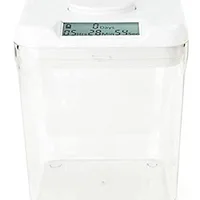
Kitchen Safe kSafe Time Locking Container (Medium)
The comparison drive fires automatically the moment you start scrolling — a physical lock on the device interrupts the loop at the source rather than relying on willpower.
As an Amazon Associate, we earn from qualifying purchases — at no extra cost to you.
The Upward Comparison Problem — And Why It Hurts Most When It's Someone You Know
Not all comparisons sting equally. The research explains the asymmetry with uncomfortable precision.
Abraham Tesser at the University of Georgia developed the Self-Evaluation Maintenance Model in the 1980s, mapping the two different mechanisms that activate during upward comparison. The first is reflection: if someone close to you succeeds in a domain that doesn't touch your sense of identity, their success can reflect positively on you. Your friend wins a local chess tournament; if chess isn't part of how you define yourself, you bask in their achievement. You feel proud, genuinely happy, connected.
Flip the domain — make it one that matters to your sense of self — and the exact same mechanism produces comparison threat instead of reflection. Your peer publishes the book you've been meaning to write. Your colleague lands the client you were pitching. Your university friend gets the promotion at 29. Now the success is threatening precisely because it's relevant: it directly measures you in a domain where the measurement means something about your standing.
Here's what Tesser's model captured that most people miss: psychological proximity amplifies the effect. A stranger publishing a bestselling book registers as impressive. A friend publishing one is threatening, because the friend exists in the same experiential universe as you — which makes the gap harder to rationalize, harder to dismiss, and harder to let go of.
Jim Rohn used to say you become the average of the five people you spend the most time with. That's genuinely good news for habits and standards. But it also means you're most frequently comparing yourself to the people whose successes carry the most comparison weight. The people closest to you produce the most powerful comparison responses, which is why the most specific pain is almost never about celebrities. It's about the peer who's two years ahead of you on the path you're both on.
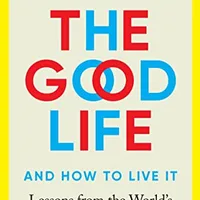
The Good Life — Robert Waldinger & Marc Schulz
The article's core insight is that relationships and your own trajectory beat status comparison. The Harvard Study book reframes what 'ahead' actually means — directly answers the upward-comparison sting.
As an Amazon Associate, we earn from qualifying purchases — at no extra cost to you.
How Instagram Became the World's Most Efficient Comparison Engine
Festinger's original theory had no social media in it. He was describing the comparisons that happen at dinner parties, in office hallways, at school reunions. But the structural logic of the theory maps onto digital platforms with a precision that feels almost deliberate.
Social media is, by design, a comparison environment. Algorithmic curation surfaces the most engaging content — which disproportionately means the most impressive-looking outcomes. The feed is not a random sample of your peers. It's a filtered set of peaks, selected for maximum emotional activation and extended engagement. You're comparing yourself not to a representative cross-section of your actual social world but to the top percentile of visible performance, with all context stripped away.
Jean Twenge at San Diego State University has been documenting the generational consequences for over a decade. Her longitudinal research shows a sharp inflection in adolescent wellbeing — life satisfaction, depression rates, self-esteem measures — that correlates precisely with the moment smartphone saturation shifted social comparison from occasional to constant. The timing is too clean to be coincidental. Adults aren't immune; they're just less likely to report it.

TIJN Blue Light Blocking Glasses (Clear Frame Square)
If the feed is going to run your comparison engine for hours, at least protect the eyes doing the scrolling — a low-friction screen-comfort upgrade for heavy-screen days.
As an Amazon Associate, we earn from qualifying purchases — at no extra cost to you.
The issue isn't that social media shows you other people's lives. The issue is which lives, at what frequency, and with what context removed. The comparison drive is automatic. Feed it a curated showcase of peak performances stripped of all cost and context, and it will run those comparisons automatically and return assessments that systematically underestimate your own standing — not because you're doing anything wrong, but because the input set is designed to make you feel that way.
That is not an accident of the product design. It's a feature.
What Happy People Do Differently With Social Comparison
Sonja Lyubomirsky at the University of California Riverside spent years studying what psychologically happy people actually do differently — not as a matter of circumstance or genetics, but as a matter of cognitive habit. One of the most consistent findings was in how they handle social comparison.
Happy people don't compare less. They compare differently.
Lyubomirsky's research documented that chronically unhappy people engage in more frequent, more automatic, and less selective comparison than their happier counterparts. They compare upward more often, in more domains, and with a specific default framing: deficit. "This shows what I lack."
Happy people, by contrast, compare selectively. They compare downward more deliberately — not to feel superior, but as a genuine recognition of how much is already present. When they compare upward, they use a possibility framing rather than a deficit one: "this shows what can be done" instead of "this shows what I haven't done."
Same comparison drive. Completely different cognitive transformation. Completely different emotional outcome.
The direction of comparison you default to isn't fixed by your personality or your past. But if you've never examined it deliberately, you've probably inherited the deficit default — because most high-achieving, ambitious people were raised in environments where the gap between current performance and ideal performance was the primary motivational lever. That framing builds drive. But it never turns off, and it applies to social comparison inputs automatically, whether or not the comparison is actually informative.

Clever Fox Habit Calendar Circle (24-Month Habit Tracker)
Happy people compare differently — to their own progress. A visible habit tracker makes 'how do I compare to six months ago' a daily, concrete practice instead of a nice idea.
As an Amazon Associate, we earn from qualifying purchases — at no extra cost to you.
The One Comparison Standard That Costs You Nothing
Here is the most practical intervention the research consistently supports, and it's simpler than most prescriptions acknowledge:
Change the standard. Not the frequency of comparison — the standard.
Instead of "how do I compare to the most visible people in my feed" — a comparison structurally designed to produce inadequacy — ask "how do I compare to myself six months ago?"
This isn't a feel-good reframe. It's an epistemically defensible substitute. When you compare yourself to other people, you're comparing your actual life to a curated performance of someone else's life, with all context removed. You don't know what they're not posting. You don't know what the cost was. You don't know what they gave up to get there. The comparison is informationally contaminated at the source.
When you compare yourself to yourself six months ago, you're comparing the same variable across time. The information is accurate. The context is yours. The benchmark is meaningful. And if you're growing, the results are genuinely encouraging rather than systematically deflating.
Dan Sullivan, the co-founder of Strategic Coach, built an entire methodology around this distinction — what he calls "the gap" (measuring against an ideal you haven't reached yet) versus "the gain" (measuring against where you started). His data showed that consistently measuring backward — toward the gain — produced higher motivation, greater resilience to setbacks, and more stable confidence than the forward measurement that most ambitious people default to. It sounds counterintuitive if your whole identity is built around striving. But it works, and there's a solid empirical case for why.

How to Start Today — Five Steps That Don't Require You to Quit Instagram
You don't need a social media detox to break the comparison loop. You need a deliberate comparison practice to replace the automatic one.
Step 1: Map your comparison triggers this week. Spend seven days noticing when you feel the comparison sting. What platform, what time of day, what type of content? Most people's triggers cluster tightly — and once you know yours, you can interrupt the pattern at the source rather than managing the fallout downstream.
Step 2: Switch your standard deliberately, not just when you remember. Every time you catch an automatic upward comparison firing — "they have X and I don't" — replace it with a backward measurement: "six months ago, I didn't have Y, and now I do." This is not forced positivity. You're replacing an uninformative comparison with an accurate one.
Step 3: Apply the possibility framing to the upward comparisons you can't avoid. When you see someone ahead of where you are, ask "what does this show is possible?" rather than "what does this show I lack?" This is the exact reframe Lyubomirsky's data identifies as the differentiator between high- and low-wellbeing comparison patterns. Same stimulus, completely different cognitive output.

Kindle Paperwhite 2024 (12th Gen, 16GB, Black, Without Ads)
The deepest fix for compare-and-despair is changing the input: swap the curated highlight reel for long-form reading. A dedicated e-reader is the high-intent 'read instead of scroll' upgrade.
As an Amazon Associate, we earn from qualifying purchases — at no extra cost to you.
Step 4: Audit your follows, not your usage. You don't have to quit the platforms. But every account you follow is a vote for what gets included in your comparison reference pool. Ask deliberately: does following this person add genuinely useful information to my worldview, or does it mainly trigger deficit comparison in a domain I care about? That's a question worth answering explicitly rather than defaulting on.
Step 5: Write your own benchmarks before the social environment writes them for you. Most people never explicitly define what progress looks like on their own terms. That leaves the definition available to be hijacked — and the social environment is very happy to provide one. Take 20 minutes and write out what growth means in the three or four domains that genuinely matter to you. Not what success should look like according to your LinkedIn feed. What matters to you when you're being honest about your actual values.
Once you have that written, you have a comparison standard that belongs to you. The social environment's version doesn't disappear — but it no longer has the default position.
The comparison drive isn't going anywhere. Festinger documented it in 1954, but the mechanism is far older than the paper. You're not going to think your way out of it, or meditate it into submission, or uninstall the apps and have it stop. It will fire every time you encounter someone's performance information, which in 2026 is approximately four hundred times before noon.
What you can do is change what you're feeding it.
Switch the input from curated peaks to your own trajectory. Switch the framing from deficit to possibility. And write down what progress means on your own terms — so the definition isn't available to be supplied by whoever posts something impressive this morning.
Festinger was describing a mechanism that evolved to help humans calibrate against reality. Most of us are running it against a synthetic highlight reel and using the results to judge ourselves. Designing your evolution means reclaiming that calibration for something that's actually yours.
One question to sit with: when you felt the comparison sting most recently, was the comparison actually telling you something useful — or was your brain just running its oldest software in the wrong environment?
Was this helpful?