Mindset· 9 min read
Job Crafting: How to Redesign Your Work Without Quitting
Wrzesniewski and Dutton's 2001 research: meaning at work comes from redesigning tasks, relationships, and framing — not your title. Here's how.

Job Crafting: How to Redesign Your Work Without Quitting

There are two hospital cleaners working the same floor. Same shift. Same cart, same disinfectant, same supervisor, same pay stub. One of them moves through each room efficiently and leaves. The other stops at a comatose patient's bedside and rearranges his family photos so they face him — in case he wakes up. She pops into the waiting room to check on anxious relatives. She doesn't think of herself as janitorial staff. She thinks of herself as part of the healing team.
Same job. Completely different work. The psychologists who studied this divide gave it a name: job crafting.
No manager told either of them how to approach the role. No HR initiative separated their experiences. The difference came entirely from choices each woman made — daily, quietly, invisibly — about what her job actually was. And when organizational psychologists Amy Wrzesniewski and Jane Dutton spent years trying to understand that difference, they found something that has enormous implications for anyone who's ever suspected the problem with their work might not be the job itself.
The Research That Reframed Everything About Work Satisfaction
Wrzesniewski and Dutton published "Crafting a Job: Revisioning Employees as Active Crafters of Their Work" in 2001 in the Academy of Management Review. It's one of those papers that feels like it's describing something everyone half-knew already — but had never been given a clear name for.
Their core finding: two people in the identical role can experience fundamentally different levels of meaning and engagement, not because of their manager, their company culture, their title, or their compensation, but because of the degree to which they've actively reshaped the actual daily texture of the work.
That reshaping — which Wrzesniewski and Dutton called job crafting — was happening spontaneously and without any management directive, across populations as different as hospital cleaners, administrative assistants, and software engineers. And crucially, it predicted engagement more reliably than the formal job description did.
That's worth sitting with for a moment. Your official job title is, according to this research, a surprisingly poor predictor of how meaningful you'll find the work. What predicts meaning is something you're doing — or not doing — right now, whether or not you're conscious of it.
Job crafting operates along three distinct dimensions. Understanding each one is the difference between knowing this is a real phenomenon and actually being able to use it.
Task Crafting: Quietly Rewriting What You Actually Do
The first dimension is the most intuitive: changing the type or scope of tasks you actually spend your time on.
This isn't about ignoring your responsibilities or bending your role so dramatically that your manager starts asking questions. It's about making small, often invisible additions — tasks that sit at the margins of your formal role and happen to connect to something you're genuinely curious about or skilled at.
The hospital cleaner who rearranged the patient's photos wasn't violating any protocol. She was expanding what her role actually contained, without changing a word of what it officially said. That expansion was entirely hers, made without permission and at no cost to anyone.
The same dynamic shows up in virtually every working environment. A customer service rep who starts documenting recurring complaints and sends the patterns to the product team is task crafting. A junior analyst who volunteers to present the monthly numbers to stakeholders is task crafting. A designer who takes on a small internal brand audit that wasn't in anyone's plan is task crafting. None of them changed their job title. All of them changed what they actually spent their days doing.
The most practical question to ask yourself: What's one task I currently do that consistently drains me? And what's one task I could reasonably add — even informally — that connects to something I genuinely care about?
If you're looking for a structured framework for this kind of role audit, Bill Burnett and Dave Evans's Designing Your Work Life is one of the more honest books I've found on this subject. It doesn't tell you to love whatever you're doing. It offers specific tools — including a "good time journal" for tracking where your energy actually goes — for mapping what's working and what isn't within your current role before concluding the only solution is to leave.
See also: why willpower isn't what actually builds habits
Why Your Relationships at Work Matter More Than Your Role
The second dimension is relational — and it's probably the most underused of the three.
Relational crafting means actively shaping who you interact with at work, and how much, and at what depth. Not every job gives you full control over this. But most people operate with a dramatically smaller relational world than their actual environment would allow.
The hospital cleaner who checked in on anxious families wasn't going out of her way in any burdensome sense. She was expanding her relational world within the existing job — building connections with the people whose lives her work actually touched. Those interactions weren't on any task list. They were entirely self-initiated. And they were what made the difference between a job that felt transactional and a job that felt human.
Here's what makes relational crafting counterintuitive: the people with the most meaningful professional lives are rarely those with the largest contact lists. Adam Grant's research, summarized in Give and Take, finds something more nuanced — that the most sustainably successful people tend to approach relationships as contributors first, asking what value they can genuinely add before considering what they might receive. That posture, it turns out, is just another form of proactive crafting. You're shaping the relational dimension of your work by deciding to show up as a giver rather than waiting for the right relationship to present itself.
You don't have to be naturally extroverted for this to work. One genuine connection with someone whose work intersects meaningfully with yours often does more for your daily experience than a dozen shallow check-ins. The question is whether you're leaving those connections to chance or making them deliberately.
Cognitive Crafting: The Reframe That Costs Nothing and Changes Everything
This is the dimension that tends to get dismissed as "just positive thinking" — until you understand what it actually involves.
Cognitive crafting means changing how you think about your role without changing the role itself. It means asking: what is the actual purpose of what I do, at a scale that feels genuinely meaningful to you?

The hospital cleaner who saw herself as part of the healing team wasn't deceiving herself. Infection control is genuinely connected to patient outcomes. A clean hospital isn't just an aesthetic preference — it's a clinical necessity. Her role had always been meaningful. She had simply chosen to see that meaning explicitly, where her colleague chose not to.
This is the distinction worth holding: cognitive crafting isn't about manufacturing enthusiasm you don't feel. It's about deliberately zooming out from the immediate task to the actual human system your work is embedded in — and asking honestly whether the level of abstraction you're using to describe your job is unnecessarily small.
A software developer who thinks of themselves as "writing functions" is working with a very different frame than one who thinks of themselves as "building the infrastructure that lets a team of forty people collaborate across four countries." Both descriptions are technically accurate. One is simply more connected to what the work is actually for.
This shift tends to compound in interesting ways. Wrzesniewski's follow-up research suggests that people who craft cognitively — who actively construct a wider understanding of their role's significance — tend to also expand relationally and in tasks over time. Once you've understood who your work is genuinely for, you naturally want to interact with those people and expand what you do for them.
For building this kind of reflection into your week in a structured way, a purpose-oriented career journal is more useful than a generic productivity planner — specifically because the questions are different. Productivity planners ask what did you complete. Purpose journals ask what did it matter for. That gap in question design is larger than it sounds.
Why Job Crafting Beats Waiting for a Better Role
Here's the finding I find most significant — and most uncomfortable for the conventional wisdom about dissatisfaction at work.
Wrzesniewski and Dutton's data found that job crafting predicted meaning and engagement independently of the external conditions of the job. Two people in an identical role, with the same manager and the same compensation, showed meaningfully different levels of engagement based purely on how much active crafting they were doing.
That's a direct challenge to the most common response to work dissatisfaction, which typically sounds something like: "I'll engage more when things improve. I'll invest more when I get a better role. I'll care more when I have a better boss."
The data doesn't really support that sequence. And there's a structural reason why: the habits of engagement — the tendency to add tasks, build relationships, and actively reframe meaning — are built through practice over time. The person who hasn't developed those habits in their current role is unlikely to suddenly develop them in a new one, because the external conditions will eventually stop being new and the same underlying tendencies will reassert themselves.
The awkward implication is that job crafting isn't just a technique for surviving a mediocre role. It's a set of habits that determine whether you extract value from any role, including future ones you're hoping will finally be the right fit.
There's also a compounding return embedded in this research that's easy to miss. Job crafters tend to accumulate more skills over time, because they've added tasks outside their formal description. They tend to build broader internal networks, because they've self-initiated relationships across the organization. Both of those make them more capable and more visible — which creates the conditions for external opportunities that passive waiters are statistically less likely to encounter.
You're already designing your experience of work every day. The question is whether you're doing it deliberately or by default.
See also: finding your purpose: what the science actually shows
How to Start This Week
You don't need your manager's approval, a new job, or a career coach for any of this. What you need is about thirty minutes and some honest attention to what your days actually look like right now.
Step 1: Map your current job honestly across three columns. Write three headings: Tasks, Relationships, Purpose. Under each, write what's actually happening — not what your job description says, but what you genuinely spend time doing, who you genuinely talk to, and how you actually tend to think about what the work is for. Be specific and honest, not aspirational.
Step 2: Find the drain and the energy. Where does your time feel slow and resistant? Where does it occasionally disappear in a good way, where an hour feels like fifteen minutes? The gap between those two experiences is where your crafting opportunity lives.
Step 3: Pick one change from one dimension. Not a restructuring. One specific, small, immediately actionable change. Add one task at the edge of your formal responsibilities. Reach out to one person whose work intersects with yours. Reframe one aspect of your role's purpose at a wider scale. One change from one dimension is enough to start.
Step 4: Use a planning structure you'll actually stick to. Adam Grant's Give and Take is worth reading alongside this process — not just for its insights on professional reciprocity, but because it reframes what "building relationships" actually means in practice. Most professional relationship advice focuses on strategy; Grant's work focuses on genuine contribution, which is a meaningfully different orientation.
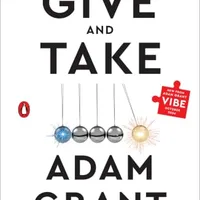
Give and Take — Adam Grant (Paperback)
The book is named verbatim in the relational crafting section — Adam Grant's research on giving/contributing as the foundation of relational job crafting.
As an Amazon Associate, we earn from qualifying purchases — at no extra cost to you.
Step 5: Track what you notice over two weeks. A few sentences in a notebook at the end of each week is enough. You're not looking for transformation. You're looking for evidence that the variable is actually yours to move — because once you see that clearly, it changes how you approach everything that follows.

One note worth adding: this process works best when your administrative overhead isn't eating all the mental bandwidth you'd need for this kind of intentional reflection. David Allen's Getting Things Done remains the most practical system I've encountered for getting open loops out of your head and into a trusted external system — which is the prerequisite for having the mental clarity to actually think about how you want to show up in your work, rather than just scrambling to keep up with it.
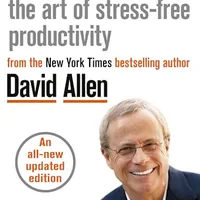
Getting Things Done — David Allen (Paperback)
Named verbatim in the article's closing productivity-system section — David Allen's GTD as the prerequisite mental-bandwidth system for intentional job crafting.
As an Amazon Associate, we earn from qualifying purchases — at no extra cost to you.
See also: the Sunday night ritual that resets your whole week
The Person Who Didn't Wait for Permission
Wrzesniewski and Dutton describe job crafters not as uniquely talented or particularly lucky people, but as people who treat themselves as active shapers of their work experience rather than passive recipients of it.
That's exactly what "Design Your Evolution" means, applied to the third of your waking life you spend at work. Not waiting for circumstances to improve. Not betting everything on a title change that may or may not come. Making deliberate, small, compounding decisions about the one thing you have more direct control over than most people acknowledge: the actual daily shape of the work you're living inside.
The hospital cleaner who stopped to rearrange a patient's photos wasn't doing it because someone told her to. She had decided — quietly, without fanfare, without asking anyone's permission — who she was in that role. That decision didn't change the job. It changed her experience of it entirely.
You're already shaping your work experience whether you intend to or not. You're already crafting — in tasks, in relationships, in the mental frame you use to make sense of what you do each day. The only question is whether you're doing it deliberately, or by default.
What's one small thing you could change about how you work this week — a task you could add, a relationship you could build, or a frame you could expand — that would make today feel even slightly more yours?
Wrzesniewski, A., & Dutton, J. E. (2001). Crafting a job: Revisioning employees as active crafters of their work. Academy of Management Review, 26(2), 179–201. DOI: 10.5465/amr.2001.4378011. For a broader overview of job crafting research, see Amy Wrzesniewski's published work via Yale School of Management.
Was this helpful?