Mindset· 10 min read
Stoicism for Real Life: 5 Practices That Actually Work
Forget the philosophy lecture. These five Stoic and Zen practices — used daily — create real calm, focus, and resilience in a noisy world.
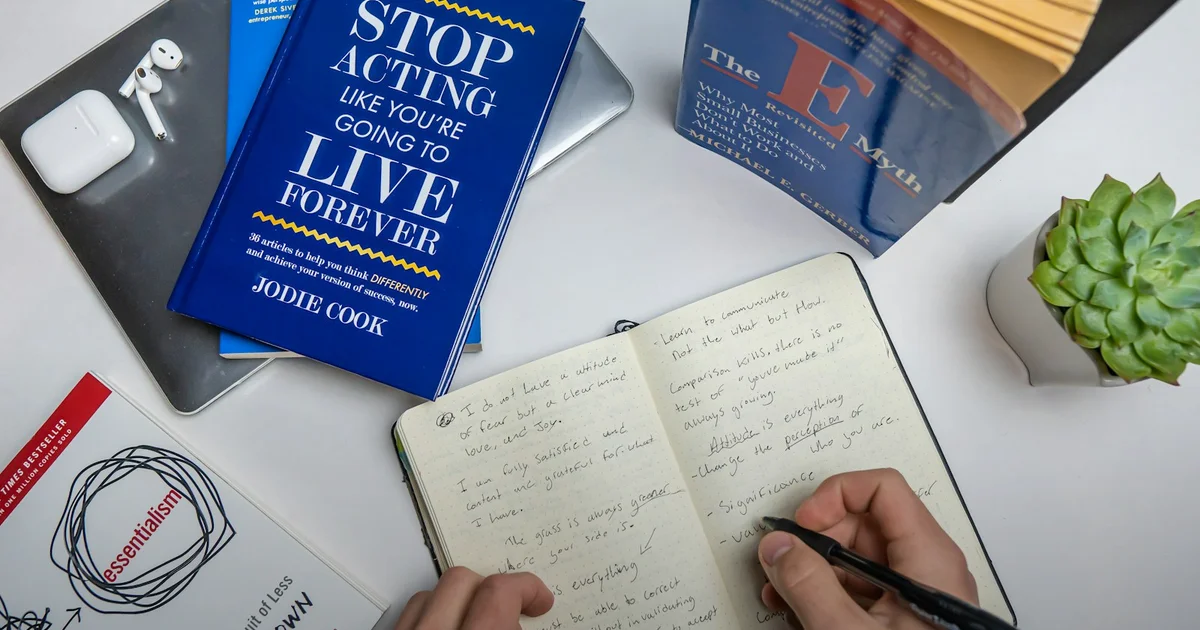
Stoicism for Real Life: 5 Practices That Actually Work
A few years ago, I sat in a parked car for twenty minutes after a meeting that had gone sideways. My boss had just reassigned my project to someone else — in front of the entire team. My hands were shaking. Not from sadness. From the white-hot certainty that I'd been disrespected, and from the dozen revenge fantasies already playing on loop in my head.
Then I remembered something I'd read the night before, underlined twice in a battered copy of Marcus Aurelius' Meditations: "You have power over your mind — not outside events. Realize this, and you will find strength." I didn't feel strong. But I did something I'd never done before. I sat with the anger instead of texting three friends about it. I asked myself a single question: What is actually within my control right now? The answer was embarrassingly short. My breathing. My next move. That's it.
That was the first time Stoicism stopped being a philosophy I admired from a distance and became something I actually used.
Why Stoicism Keeps Showing Up in Your Feed — and Why Most of It Misses the Point
You've probably noticed Stoicism is having a moment. Ryan Holiday's books sell millions. Tech founders quote Seneca on podcasts. There's a whole Reddit community dedicated to Marcus Aurelius memes. And yet, for all the noise, most people walk away from Stoic content with the same misunderstanding: that it's about suppressing emotion, becoming some kind of marble-faced robot who never reacts to anything.
That's not Stoicism. That's emotional shutdown — and it'll wreck your relationships faster than any temper tantrum.
Real Stoicism, the kind practiced by Aurelius while running the Roman Empire and by Epictetus while living as a formerly enslaved man, is about something far more useful: designing your inner response to the world around you. It doesn't ask you to feel nothing. It asks you to choose what you do with what you feel.
Research from Modern Stoicism's annual Stoic Week studies has found that participants who practiced authentic Stoic techniques — specifically the ability to distinguish between what they can and cannot control — reported meaningful reductions in anxiety and significant gains in life satisfaction after just one week of structured practice. Not because they cared less, but because they wasted less energy on things that weren't theirs to fix.
Jim Rohn used to say, "You cannot change your destination overnight, but you can change your direction overnight." Stoicism is the compass that makes that direction change possible. It's not about the destination. It's about what you do with the next hour.
Here's where it gets interesting. Stoicism shares a spine with Zen Buddhism — something most Western self-help conveniently ignores. Both traditions teach the same core move: observe what's happening inside you without immediately acting on it. The Stoics called it prosoche (attention). The Zen teachers call it shikantaza (just sitting). Different words. Same muscle.
What follows are five practices drawn from both traditions. Not because I want to impress you with philosophy — but because these are the five that survived my own messy, imperfect attempts to use them in daily life. They work in traffic. They work in arguments. They work at 2 AM when your brain won't shut up.
how to build a morning routine that sticks
1. The Morning Preview: Rehearse the Worst Before Breakfast
Marcus Aurelius opened every morning by telling himself he'd encounter ungrateful, arrogant, and dishonest people during the day. Sounds grim. But here's the thing — it works like a vaccine.

Philips Wake-Up Light HF3519
The Morning Preview — running premeditatio malorum before you check your phone — only works if you don't reach for your phone the moment you wake up. The Philips Wake-Up Light replaces your phone as the alarm, waking…
As an Amazon Associate, we earn from qualifying purchases — at no extra cost to you.
The practice is called premeditatio malorum (premeditation of adversity), and it takes about three minutes. Before you check your phone, before coffee, sit on the edge of your bed and mentally walk through the day ahead. Don't visualize everything going perfectly. Instead, identify the two or three moments most likely to test your patience or trigger a reaction.
Maybe it's that 10 AM meeting with the colleague who interrupts you. Maybe it's the commute. Maybe it's the conversation you've been avoiding with your partner.
Now — and this is the part most people skip — decide in advance how you want to respond. Not react. Respond. There's a canyon between those two words.
When I started doing this, my mornings felt heavier for about a week. Then something shifted. The difficult moments still showed up, but they'd lost their ambush power. I'd already met them at dawn. Bob Proctor often talked about how the mind doesn't distinguish between a vividly imagined experience and a real one. The morning preview exploits that wiring. You're not manifesting problems — you're pre-building the neural pathway for a calm response.
Try this tomorrow: Set your alarm two minutes earlier. Eyes closed, run through your day. Find the friction point. Decide who you want to be in that moment. Then get up.
2. The Dichotomy Filter: The One Question That Dissolves 80% of Your Stress
Epictetus taught this nearly two thousand years ago, and it remains the single most practical mental tool I've ever found: "Is this within my control, or not?"
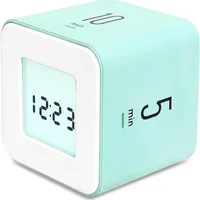
Mooas Cube Timer
The Dichotomy Filter works best when it has a defined container — a few deliberate minutes to sort what is and isn't in your control, rather than an open-ended spiral. The Mooas Cube Timer lets you flip to a 5 or 10-m…
As an Amazon Associate, we earn from qualifying purchases — at no extra cost to you.
That's it. One question. Applied to every frustration, every worry, every spiral.
Your coworker's attitude? Not in your control. Your preparation for the meeting? Fully in your control. The economy? Not yours. Your spending habits? Yours.
The trick isn't just asking the question — it's acting on the answer. When something falls outside your control, you practice letting it pass through you the way a Zen monk watches a thought during meditation. You notice it. You don't chase it.
When something falls inside your control, you move. Immediately. No complaining, no "processing" that's really just marinating in resentment. Action.
A friend of mine — a startup founder who'd burned through two companies — told me this filter saved his third venture. "I used to spend four hours a day furious about competitors copying our features," he said. "Then I started asking Epictetus's question every single time I felt that heat rising. Within a month, those four hours turned into product development time. Turns out, angry scrolling isn't a business strategy."
Here's the counter-intuitive part: this practice doesn't make you passive. It makes you ferociously effective. By refusing to spend energy on what you can't change, you suddenly have more of it for what you can.
how to stop overthinking and take action
3. The Evening Audit: Three Questions Before You Sleep
Seneca had a nightly ritual so ingrained that his wife learned to fall silent once the lamp was dimmed, aware of her husband's habit. Every evening, after the house went quiet, he asked himself three questions:
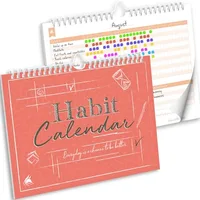
Clever Fox Habit Tracker Journal
Seneca's three-question Evening Audit — what went well, where I fell short, what I'll adjust — only becomes powerful when you do it consistently enough to spot patterns, and that requires a dedicated place on your nig…
As an Amazon Associate, we earn from qualifying purchases — at no extra cost to you.
- What did I do well today?
- Where did I fall short?
- What can I do differently tomorrow?
No dramatics. No guilt spirals. Just an honest inventory, the way an accountant reviews the books.
This practice has roots in Zen as well. Japanese Zen monasteries use a version called hansei — structured reflection without self-punishment. The goal isn't to feel bad about what went wrong. It's to notice what went wrong so the pattern doesn't repeat.
I've done this in a notebook for the past three years. Some nights the entries are boring: "Ate too fast at lunch. Reacted to the Slack message before I thought it through. Did well staying focused until 2 PM." Other nights, patterns leap off the page. I noticed, for example, that I consistently lost my composure on days when I skipped exercise. Three months of entries made that connection impossible to ignore.
The key is brevity. Five minutes, not fifty. If the evening audit turns into a therapy session, you're doing it wrong. Seneca wasn't journaling his feelings — he was debugging his operating system.
Practical setup: Keep a small notebook on your nightstand. Three lines. That's the only rule. If you write more, fine. But three lines is the floor.
4. Voluntary Discomfort: The Cold Shower You Don't Need (But Should Take Anyway)
This is the one that makes people roll their eyes. But hear me out.

Kitchen Safe Time Locking Container
Voluntary discomfort — the Stoic practice of deliberately removing a comfort to build tolerance — doesn't get more modern than locking your phone away for a set period. The Kitchen Safe Time Locking Container is the p…
As an Amazon Associate, we earn from qualifying purchases — at no extra cost to you.
The Stoics regularly practiced voluntary discomfort — deliberately choosing small hardships to weaken the grip of luxury and fear. Seneca would fast for days, wear rough clothing, sleep on a hard surface. Not as punishment. As training.
The modern equivalent doesn't require anything that dramatic. Cold showers. Walking instead of driving when you have time. Eating a simple meal when you could order delivery. Sitting with boredom instead of reaching for your phone.
Here's why this matters more than it sounds: your comfort zone is not neutral territory. It's slowly contracting. Every convenience you add, every discomfort you avoid, narrows the range of experience you can tolerate without anxiety. Voluntary discomfort pushes that boundary back out.
There's a parallel in Zen practice. The sesshin — a multi-day meditation retreat — is deliberately uncomfortable. You sit for hours. Your legs ache. Your back screams. And through that discomfort, something loosens. You discover that the pain you feared was mostly the anticipation of pain. The thing itself was manageable.
I'm not going to pretend I love cold showers. I don't. But I take one every morning — about 90 seconds at the end of my regular shower — and the effect isn't physical. It's psychological. For the rest of the day, I've already done something hard. Everything else feels slightly more possible.
Napoleon Hill wrote about the "definiteness of purpose" — the idea that your willingness to endure discomfort is directly proportional to the clarity of your goals. Voluntary discomfort trains that willingness the way a gym trains muscle. You're not suffering. You're building tolerance.
5. The View From Above: Zoom Out Before You Spiral
This is my favorite, and it comes straight from Aurelius' journal. He called it "the view from above" — a mental exercise where you imagine pulling back from your current situation like a camera zooming out. First you see the room. Then the building. The city. The continent. The planet.
Your argument with your sister about Thanksgiving plans? It's still real. But from 30,000 feet, it looks different.
This isn't minimizing your experience. It's contextualizing it. Zen practitioners do something similar when they meditate on mu (emptiness) — not to erase meaning, but to loosen the death grip we have on every passing frustration as though it's the most important thing that's ever happened.
I use this one in real time. Stuck in traffic and feeling my blood pressure climb, I'll mentally pull the camera up. I picture the highway from above — thousands of people, each with their own story, their own frustrations, none of them thinking about me. The irritation doesn't vanish. But it loosens. It becomes something I'm having rather than something I am.
Bruce Lipton's work on perception and biology supports this: when you shift your perspective — literally changing the story you're telling yourself about a stressor — your cellular response changes too. The body follows the mind's frame. Zoom out, and the stress chemistry dials down.
Quick version: Next time you're spiraling, close your eyes for ten seconds and picture yourself from above. Keep pulling back until the situation looks small. Then open your eyes and decide what actually needs your attention.
stoicism and zen similarities for beginners
How to Start Practicing Stoicism Today
You don't need to read all of Epictetus before breakfast. Here's a five-day on-ramp:

Kindle Paperwhite (2024)
The five-day on-ramp in this section works best when paired with the primary texts — Marcus Aurelius' *Meditations*, Epictetus' *Discourses*, Ryan Holiday's *The Daily Stoic*, and William Irvine's *A Guide to the Good…
As an Amazon Associate, we earn from qualifying purchases — at no extra cost to you.
Day 1: Morning preview only. Two minutes. Identify one friction point and pre-decide your response.
Day 2: Add the dichotomy filter. Every time you feel frustrated, ask: "Is this within my control?" If yes, act. If no, release.
Day 3: Start the evening audit. Three lines in a notebook. What went well, what didn't, what you'll adjust.
Day 4: Introduce one voluntary discomfort. A cold shower. A skipped snack. Sitting with five minutes of silence instead of scrolling.
Day 5: Practice the view from above once during a stressful moment. Pull the camera back.
After a week of this rotation, you'll notice something strange. Not that life gets easier — it won't. But that you get steadier. The gap between stimulus and response starts to widen. And in that gap — a formulation often attributed to Viktor Frankl, though scholars debate its precise source — is where your freedom lives.
The Evolution Is Internal
Here's what nobody tells you about Stoicism: the results are invisible to other people for a long time. You won't get compliments for not reacting. Nobody throws a party because you sat with discomfort instead of complaining about it. The scoreboard is entirely internal.
But over months — and I mean this literally — people around you start to shift. They'll say things like, "You seem calmer lately" or "I don't know, you just handle things differently now." They won't be able to name what changed. You will.
Stoicism isn't about feeling nothing. It's about designing your evolution from the inside out — choosing your response to everything rather than having it chosen for you. That's not suppression. That's growth in its most practical, daily, unsexy form. It happens in parked cars after bad meetings. It happens in cold showers and three-line journal entries. It happens every time you ask one ancient question — Is this within my control? — and actually listen to the answer.
What's one situation this week where you've been pouring energy into something you can't control — and what would it look like to redirect that energy toward something you can?

Was this helpful?