Mindset· 9 min read
Stress Doesn't Kill You. Believing It Does Might.
Stanford psychologist Alia Crum proved your belief about stress changes its biology. The stress mindset research — and how to actually use it.

Stress Doesn't Kill You. Believing It Does Might.
In 1998, researchers at the University of Wisconsin-Madison tracked 29,000 adults over eight years. At the start, they asked two questions: how much stress have you experienced in the past year — and do you believe that stress is harmful to your health?
Eight years later, they checked the death records.
The result should have been straightforward: more stress, worse health, higher mortality. Instead, they found something that doesn't fit the story we've been telling about stress for the last fifty years. People who reported high stress and believed it was harmful had a 43% increased risk of dying. That part holds. But the second group — people with equally high stress who did not believe it was harmful — had the lowest mortality risk of any group in the study. Lower even than the people who reported very little stress.
The belief about stress was more predictive of mortality than the amount of stress itself.
Why This Finding Is Still Being Misunderstood
Kelly McGonigal, a Stanford health psychologist, opened her 2013 TED talk with a confession: "I am a health psychologist, and my mission is to help people be happier and healthier. But I fear that something I've been teaching for the last 10 years is doing more harm than good, and it has to do with stress." That talk has now been viewed over 20 million times, and the headline that spread from it — stress only hurts you if you believe it will — is, at best, half the story.
The "stress kills" message has genuine research behind it. Chronic, uncontrolled, meaningless stress is harmful — to cardiovascular health, to immune function, to the hippocampus, to longevity. None of that is invented. The problem is that popular health communication collapsed a complex relationship into a simple directive: reduce stress, protect your health.
What the Wisconsin study suggested — and what a decade of subsequent research has made increasingly difficult to dismiss — is that the harmful effect of stress is not fully separable from the meaning you assign to it. What you believe stress is doing to your body changes, in measurable biological terms, what it actually does.
This is not positive thinking. It's not telling yourself everything is fine when it isn't. It is something more specific and more interesting: the appraisal of the physiological stress response itself — the interpretation of the racing heart and the tight chest — appears to change the downstream biology in ways that matter.
The mechanism is the research. And the research is where this gets practical.
The Two Completely Different Things Stress Can Be
Hans Selye coined "stress" in its modern biological sense in 1936, though the eustress/distress distinction only emerged in his 1970s writings — a nuance that most popular stress coverage still ignores.
Distress: prolonged, uncontrollable activation of the stress response without meaningful context, recovery time, or agency over the outcome. This is the variety that earns stress its reputation — the cortisol-flooding, immune-suppressing, cardiovascular-battering form associated with chronic overwork, financial ruin, or trapped helplessness.
Eustress: the same hormonal cascade — cortisol, epinephrine, elevated heart rate — but deployed in service of a challenge that feels meaningful, timebound, and within some degree of your control. The stress of a race you've trained for. A presentation on something you know. A creative project that's demanding and exciting in the same breath.
The subjective experience is different. The physiology is different.
In distress, the cardiovascular signature resembles fear: peripheral resistance increases, blood vessels tighten while the heart pumps harder against them. In eustress, the signature resembles excitement: cardiac output increases and blood vessels dilate, more blood moving more freely — the body genuinely preparing to perform, not defending against catastrophe.
And then there's DHEA. Dehydroepiandrosterone is a neurosteroid produced alongside cortisol by the adrenal glands. It buffers cortisol's effects on the brain, promotes neural growth, and supports the prefrontal cortex's capacity to regulate the response. Chronic distress produces elevated cortisol with suppressed DHEA. Challenge-type stress — eustress — produces elevated cortisol with proportionally elevated DHEA. The DHEA-to-cortisol ratio is one of the cleaner biological markers of whether a stress state is building you or wearing you down.
The question is what determines which way a given stress event goes. And that's where the Stanford research lands.
What Alia Crum Found (And Why It Changes the Frame)
Alia Crum runs the Mind & Body Lab at Stanford, and her work sits at the intersection of behavioral science and physiology in a way that most research doesn't. Her 2013 study in the Journal of Personality and Social Psychology had a deceptively simple design.
Workers at a financial services company — during a period of genuine organizational stress — were divided into two groups. One watched a short video explaining that stress is enhancing: the physiological activation it produces is the body mobilizing energy and attention to meet a challenge. The other watched a video explaining that stress is debilitating: it impairs judgment, damages health, undermines performance.
Same workplace. Same stressor. Different frames.
The stress-is-enhancing group showed better attention and higher work engagement in subsequent weeks. More crucially, they showed a hormonal profile shifted toward the eustress pattern — higher DHEA-to-cortisol ratios than the stress-is-debilitating group. The meaning assigned to the activation changed the body's response to it.
Not through relaxation. Not through reducing the stress. Through cognitive reappraisal — what psychologist James Gross identifies as the most effective emotion regulation strategy in his process model research: reinterpreting the meaning of a physiological state to change its emotional and biological impact.
"My heart is pounding because I can't handle this" and "my heart is pounding because this matters and my body is preparing me" are descriptions of the same pounding heart. The appraisal is the variable. And according to Crum's data, the appraisal changes the biology downstream.
How High Performers Actually Use Stress
Michael Gervais has spent years working with Navy SEALs, Olympic athletes, and elite executives on performance under extreme pressure. He describes what he calls the "signal-to-noise ratio" in stress activation: the trained capacity to distinguish what the physiological activation is communicating rather than treating it as interference to be managed away.
Most people, when stress activates, interpret the sensation as noise — evidence that something is wrong, that they're not coping, that they should try to stop feeling what they're feeling. High performers have learned — often through deliberate practice, sometimes through experience that forced the reframe — to read the same activation as signal. Information. The body's announcement that something significant is happening and that resources are being mobilized to meet it.
The SEAL culture phrase "the only easy day was yesterday" is a systematic encoding of the eustress orientation. The difficulty is not evidence of a problem. It's confirmation that the work worth doing is underway.
This isn't about suppressing stress or performing toughness. Gervais is explicit that genuine recovery — sleep, restoration, recovery time between activation — matters as much as the capacity to activate fully. The high-performer pattern isn't continuous stress. It's the ability to move fully into activation when circumstances require it and fully into recovery when they don't, without spending either phase fighting the state you're in.

The practice Gervais identifies: when the stress response activates, create one moment of recognition before the interpretation follows. "My body is activated." That's the whole first step — noticing without immediately labeling it as bad. The interpretation that comes next is modifiable in a way the activation itself is not.
Florensi Meditation Cushion (Zafu)
Gervais is explicit that full recovery matters as much as full activation. A dedicated seat for breathing and restoration makes the recovery phase a deliberate practice, not an afterthought.
As an Amazon Associate, we earn from qualifying purchases — at no extra cost to you.
The Threat-vs-Challenge Switch (And How to Find It)
The psychological literature has a technical name for what Crum and Gervais are describing: the threat-versus-challenge distinction in appraisal theory. Richard Lazarus, who developed the foundational cognitive model of stress and coping, identified two types of appraisal that determine which physiological response a situation produces.
Threat appraisal: you evaluate the situation as exceeding your current resources to cope with it. The gap between what's demanded and what you believe you can provide triggers the defensive stress response — cortisol dominant, vascular constriction, attentional narrowing toward potential harm.
Challenge appraisal: the same gap exists — the demand still exceeds your current resources — but the gap is framed as a stretch rather than an impossibility. The physiological response shifts toward the eustress pattern. Performance follows.
The critical thing: challenge appraisal doesn't require certainty that you'll succeed. It requires the belief that your skills, your experience, your capacity to adapt are relevant to the demand, even if they're currently insufficient. That belief is usually more accurate than the threat appraisal it replaces — because threat appraisal under pressure systematically underestimates what you've already built.
You've probably felt this switch. There's a moment before a hard conversation, a difficult workout, or a high-stakes decision where you can feel the activation and it goes one of two ways: "I can't do this" or "let's go." The physiology is the same. The framing is different. And the performance that follows is consistently different in the direction the research predicts.

The Five Minute Journal (Intelligent Change)
Tracking which situations trigger threat vs. challenge appraisal turns an abstract practice into a daily log — a structured journal makes the reappraisal habit concrete.
As an Amazon Associate, we earn from qualifying purchases — at no extra cost to you.
The Honest Caveat the Research Includes
Here's what the stress mindset research is careful not to claim — and where some of the popular coverage of the Wisconsin study goes wrong.
The finding is not that all stress is good. Prolonged, uncontrollable, resource-depleting stress without recovery time or agency — the kind associated with poverty, abusive environments, chronic exploitation, or caregiving without support — remains genuinely harmful regardless of what you believe about it. The stress mindset effect operates at a given level of stress: between two people experiencing equivalent demands, the one with the enhancing mindset fares better. It doesn't make unlimited activation harmless.
The other caveat: the mindset shift isn't a one-time affirmation. Crum's research documents that the effect is dose-dependent — multiple brief interventions over time produce more durable shifts than a single exposure. This is a practice, not a hack.
The stress response exists because it works. It mobilizes energy, sharpens attention, prepares you to meet demands that your nervous system has assessed as significant. When you treat that preparation as malfunction, you add a second layer of activation on top of the first — the anxiety about the anxiety, the stress about being stressed — that converts a functional challenge response into chronic distress.
The design work here isn't managing stress away. It's building a relationship with stress activation that lets you use what it provides.

How to Rewire Your Stress Appraisal (Starting This Week)
The intervention the research most consistently supports isn't a breathing technique or a meditation timer. It's a cognitive reappraisal practice — a deliberate change in the story you tell about what your body is doing when stress activates.
Step 1: Name the activation without interpretation. When you feel the stress response — elevated heart rate, tightened chest, heightened alertness — notice it before interpreting it. "My body is activated." Full stop. This one moment of observer perspective creates the space before the automatic threat interpretation follows. That space is where the practice lives.
Step 2: Ask a different first question. Instead of "what's wrong?" try "what is my body preparing me for right now?" The question alone redirects toward challenge appraisal. Your nervous system has flagged something as significant. What is it — and what are you about to need?
Step 3: Track which situations trigger threat vs. challenge appraisal by default. The situations where your automatic response is "I can't handle this" are exactly where the practice is most valuable — and usually where your actual skills are most relevant but your confidence is lowest. The map of your threat appraisals is also a map of your highest-leverage growth areas.
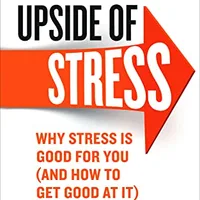
Step 4: Read the primary research, not just the summary. Kelly McGonigal's The Upside of Stress synthesizes Crum's work and the broader stress mindset research into the most accessible treatment available. Reading the mechanism — actually understanding why the belief changes the biology — does something that a tip list doesn't: it makes the reappraisal available in the moment, because the pounding heart means something different once you know what it's for.
The Upside of Stress — Kelly McGonigal
The article explicitly names this book as the most accessible synthesis of Crum's work and the stress mindset research. Reading the mechanism makes the reappraisal available in the moment.
As an Amazon Associate, we earn from qualifying purchases — at no extra cost to you.
Step 5: Monitor your HRV during high-demand periods. Heart rate variability is the most accessible real-time measure of your autonomic nervous system's state — the balance between sympathetic activation and parasympathetic recovery. Tracking HRV during periods of high demand tells you, objectively, whether your stress response is operating in adaptive territory or running into the distress range where physiological cost exceeds benefit. It makes an internal state legible. When you can see the data, the appraisal work becomes concrete rather than speculative.
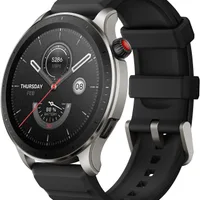
Amazfit GTR 4 Smart Watch (46mm, GPS, HRV/Heart Rate, 14-Day Battery)
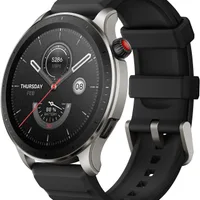
Step 5 of the practice is monitoring HRV during high-demand periods. A wrist HRV/heart-rate tracker makes the autonomic state legible — turning appraisal work from speculative to data-backed.
As an Amazon Associate, we earn from qualifying purchases — at no extra cost to you.
What You're Actually Designing
The 1998 Wisconsin study is easy to misread as permission to ignore your wellbeing — if belief matters more than stress, just decide to believe it's fine.
That's not the finding.
The finding is that the harmful effects of stress are mediated by meaning. The same activation that produces distress in one person produces eustress in another — not because of different stress levels, but because of different appraisals of what the activation signifies and what it's for. And those appraisals, unlike the activation itself, are modifiable through deliberate practice.
The pressure doesn't have to change. Your relationship with what the pressure means can — and the research is now clear that this change is possible, measurable, and consequential enough to show up in eight-year mortality data.
Designing your evolution means designing how you meet the demands that evolution requires. The stress response isn't your enemy. It's the announcement that something worth doing is being attempted.
What's the situation in your life right now where you're running threat appraisal on autopilot — and what changes if you ask what your body is preparing you for instead of assuming something is wrong?
Was this helpful?