Mindset· 9 min read
The Uncanny Valley: Why Fake Feels Off
Masahiro Mori's 1970 uncanny valley research shows why near-human imitations feel wrong. The science — and why it matters more now than ever.
The Uncanny Valley: Why Fake Feels Off
You've probably felt it.
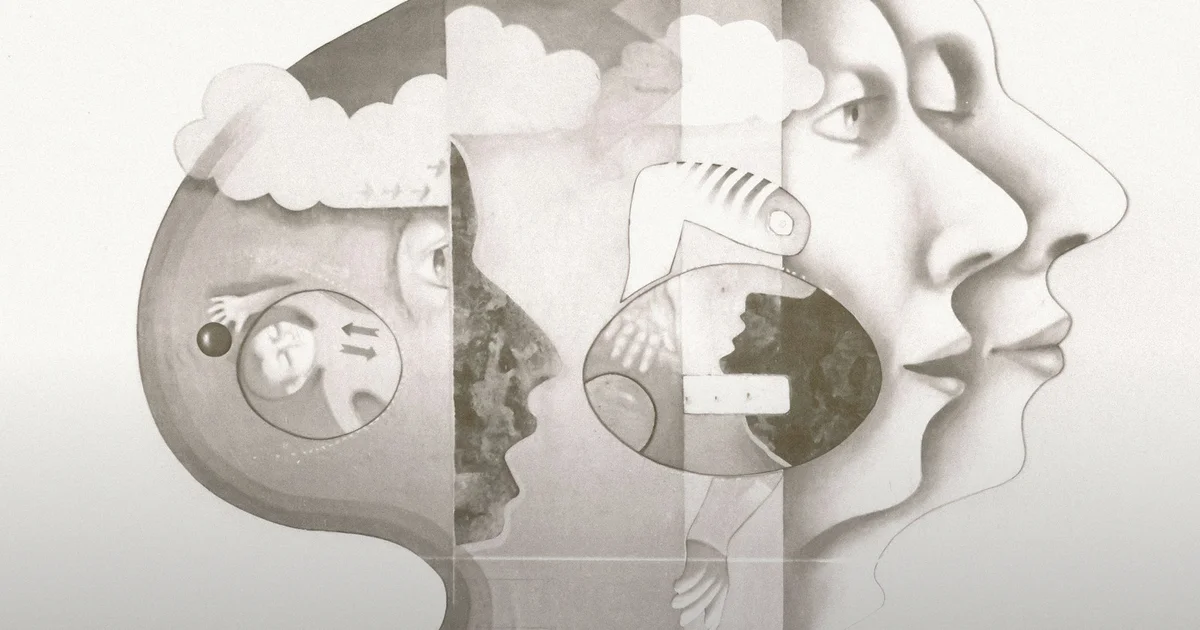
A video starts. The figure looks human — or close enough that for one second your brain accepts it. Then something happens. A head turns at a slightly wrong speed. A smile lasts a fraction of a second too long. And before you've consciously registered what's wrong, you're uncomfortable.
Not slightly uncomfortable. Viscerally uncomfortable. The kind that makes you close the tab before you can even say why.
That reaction isn't a quirk or a bias you should logic yourself out of. It has a name, a mechanism, and over fifty years of research behind it. And understanding it might be one of the most practically useful things you can know right now — as AI-generated imagery and video moves from novelty to background noise in everything you consume.

The uncanny valley describes the sharp drop in comfort that occurs when a robot, avatar, or AI-generated figure approaches — but doesn't quite reach — real human likeness. The term comes from roboticist Masahiro Mori's 1970 observation that near-human imitations produce more unease than obviously artificial ones do.
The Robotics Professor Who Saw It Coming in 1970
In 1970, a Japanese robotics professor named Masahiro Mori published a short essay in a journal called Energy (republished in English by IEEE Spectrum). The essay proposed something that seemed almost too intuitive to need writing down: as a robot's appearance grows more human-like, people should feel increasingly comfortable with it.
Up to a point.
Mori plotted this relationship on a graph and found that just before a figure becomes truly indistinguishable from a real human being — when it looks almost human, but still carries small tells — the comfort curve doesn't continue to rise.
It collapses.
He named this drop bukimi no tani genshō: literally, the valley of eeriness. In English, it became the uncanny valley.
The reason Mori proposed this happens is specific and worth understanding clearly. When a figure is obviously artificial — a cartoon, a clearly mechanical robot, a stick drawing — your brain evaluates it against a relaxed standard. Call it the "artificial figure" template. Small errors don't register as errors at all. They fit the template perfectly.
But once a figure crosses a certain threshold of human resemblance, something shifts. Your brain stops applying the "artificial figure" template and starts comparing it to the "actual human" template. And that template is extraordinarily refined.
You've spent your entire life reading human faces and human movement. The precise calibration of a genuine smile spreading from the mouth before it reaches the eyes. The specific weight shift that happens in the hips a fraction of a second before a real person takes a step. Blink timing. Gesture transitions. The natural asymmetry in how a real face moves.
Your pattern-matching system for real human beings is one of the most sophisticated biological instruments you carry — and it runs mostly below conscious awareness.
So when a nearly-human figure does something fractionally wrong, the mismatch registers with unusual force. Not as a mild "hmm, something's off," but as something closer to a neurological alarm. Not because the error is large. Because the template you're comparing it against is so precise that small deviations hit hard.
Steal Like an Artist — Austin Kleon
Austin Kleon's manifesto on authentic creative work — collect your real influences, mix them, and let your own fingerprint show instead of chasing a polished imitation.
As an Amazon Associate, we earn from qualifying purchases — at no extra cost to you.
What Happens Inside Your Brain — The 2012 fMRI Evidence
Mori's original hypothesis was observational. He had no brain imaging equipment — just a clear conceptual model and the consistent reports from his engineering students that near-human figures produced unease that obviously artificial ones didn't.
The empirical backing came forty-two years later.
In 2012, neuroscientist Ayse Saygin and her colleagues published a study in Social Cognitive and Affective Neuroscience that put people inside brain scanners and showed them three versions of a figure doing the same actions: a clearly mechanical robot, a human actor, and an android designed carefully to look near-but-not-quite-human in both appearance and movement.
The results were striking.
The android produced measurably heightened activation in the brain's action-perception system — specifically the network that processes observed movement and matches it against expectations of what movement should look like. But crucially, the mismatch wasn't a general "this is unfamiliar" response of the kind that shows up with anything novel. The brain appeared to be simultaneously categorizing the figure as human and as not-human, and struggling to resolve the conflict between those two categorizations firing at once.
This is the neural signature of the uncanny valley. Not simple dislike. Not simple novelty aversion. A specific, category-level conflict — two templates active at the same moment, pulling in opposite directions — with measurable evidence of the brain's effort to reconcile them.
There's something worth sitting with in that. The discomfort you feel watching certain AI-generated content isn't a bias you could reason yourself out of with more open-mindedness or more exposure. It's a structural feature of how your perceptual system works. Your brain is doing its actual job — and doing it with remarkable precision — when it flags a near-human figure as wrong.
Your brain runs the same automatic comparison machinery on people that it runs on faces — and it's just as involuntary.
Why AI Video Lands Exactly in the Valley Right Now
Current AI-generated imagery and video has a specific technical problem that makes all of this relevant at an unusually practical level.
The tools have gotten extraordinarily good at surface-level realism. Skin texture, lighting conditions, individual hair strands, fabric folds — these are now convincingly rendered at a level that would have seemed impossible five years ago. But movement is harder. Timing is harder. The sub-millisecond calibration of a real human gesture — the way a person's weight shifts fractionally before they step, the specific tempo of a natural smile warming across a face, the involuntary micro-expressions that flash and resolve faster than conscious thought — these don't reduce cleanly to patterns that training data can fully capture.
The result is that much AI-generated video lands precisely in the zone Mori identified as most uncomfortable: human enough to activate the "actual human" template, imperfect enough to fail it at the detail level.
This is why the reaction to AI-generated video so often feels disproportionate to what's technically on screen. A person who can watch a Pixar film without any discomfort — despite the characters being obviously and completely artificial — feels genuinely unsettled by AI footage of a synthetic human walking down a street. The Pixar characters never tried to pass the "real human" threshold. The AI footage did, almost made it, and landed in the valley instead.
A useful contrast: a clearly stylized illustration, an overtly animated figure, a deliberately lo-fi aesthetic — these don't activate the valley at all. They ask to be evaluated by the "stylized" or "artificial" template, which your brain is perfectly willing to apply without distress.
The valley only opens when a figure reaches for the "real human" standard and almost — but not quite — earns it.
The Counterintuitive Upside: Your Imperfections Are an Asset
Here's the part most discussions of the uncanny valley miss entirely.
If the valley is a consequence of high-but-not-quite-perfect similarity to authentic human expression, then the inverse is equally real: genuinely handmade, visibly human-authored work carries a form of authenticity that no amount of AI polish can replicate — because it was never trying to pass the "real human" test. It simply is human.
A sketch with visible pencil pressure. A voice recording with the natural stumble of a real thought being spoken for the first time. A piece of furniture with the grain of actual wood and the small asymmetry that comes from a real person's hands.
None of these trigger the uncanny valley. They trigger something closer to the opposite response — a recognition, often felt before it's consciously identified, that a real person made this. That real decisions were made at the micro-level of execution. That the imperfections are evidence, not failure.
If deliberate, handmade practice is the goal, a system for staying a lifelong learner is where that practice actually gets built.
This matters beyond creative work. Daniel Coyle's research in The Culture Code found that trust and cohesion in high-performing groups consistently trace back to signals of genuine human investment — effort that could have been faked or outsourced but wasn't, vulnerability that cost something real to express. The uncanny valley's inverse operates in interpersonal trust the same way it operates in visual perception: visible authenticity builds confidence in a way that optimized, frictionless output simply doesn't.

The Culture Code — Daniel Coyle
Daniel Coyle's research on how trust and cohesion in strong teams trace back to visible, un-fakeable signals of genuine human investment.
As an Amazon Associate, we earn from qualifying purchases — at no extra cost to you.
Your authentic voice, your specific creative fingerprint — the idiosyncratic choices and preferences that only come from years of genuine practice — are precisely what places your work outside the valley entirely.
What This Means for How You Actually Work
There's a practical question underneath all of this, and it's worth asking directly.
If AI-generated content reliably falls into the uncanny valley when it approaches but doesn't reach human authenticity, and if visibly human work carries an authenticity premium as a result, what does that actually mean for how you're spending your time?
Here's an honest read: the instinct to outsource every step of a creative or communicative process to AI tools is understandable. Efficiency is real. Speed is real. But it may be quietly undermining exactly what makes your output worth paying attention to in the first place.
Not because AI assistance is inherently wrong. It isn't. But because the parts of any process that feel genuinely effortful — that require real judgment at the detail level, that leave small fingerprints of a specific human being making specific choices — are doing work that no amount of surface-level polish can replace.
Austin Kleon's argument in Steal Like an Artist — that authentic creative work comes from actively collecting, mixing, and transforming your real influences, not from performing originality — turns out to have neuroscientific grounding that Kleon probably didn't anticipate. The work that carries a person's genuine fingerprint, the output shaped by real accumulated judgment and preference, is also the work that your viewer's action-perception system will recognize as authentically human. Not because the viewer is consciously running quality-checks. Because the system Saygin's team found in those fMRI scanners is doing it automatically, below conscious awareness, every time.
Your specific creative practice — actual work done at the detail level, with your judgment, your instincts, your accumulated sense of what feels right — is the one consistent producer of output that lives entirely outside the valley.
How to Start Today
You don't need to swear off AI tools. You need to be honest about which parts of your work can afford to be processed and which can't.
Here's a framework drawn directly from what Mori's research and Saygin's fMRI data actually show:
1. Identify your high-authenticity outputs. Anything that asks another person to read you directly — a client conversation, a piece of writing meant to carry your perspective, a presentation built on your credibility — is high-risk for uncanny valley effects if it's been processed too far from your actual voice.
2. Protect the judgment layer. Use AI for research, rough structure, and iteration. But the decisions about tone, emphasis, what to include and what to cut — keep those with you. Those decisions are where your fingerprint lives, and they're what the action-perception system is reading for.
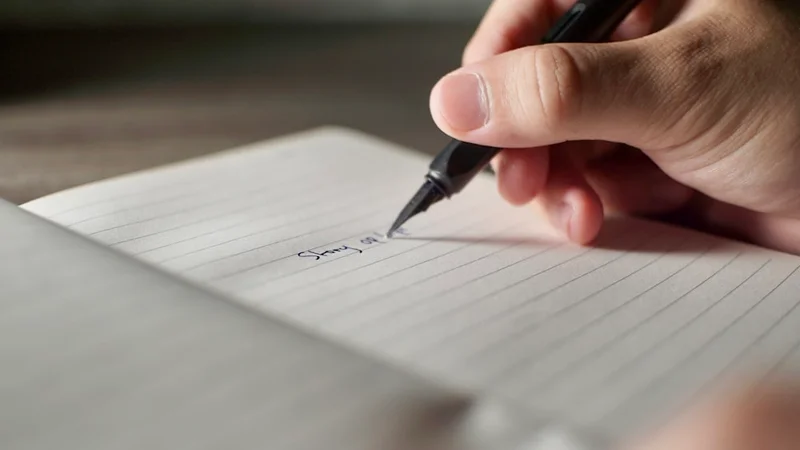
3. Build your handmade practice on purpose. Keep a physical notebook for ideas you don't intend to publish. Write rough paragraphs that won't survive editing. Sketch things you don't expect anyone to see. This isn't nostalgia — it's training for the specific quality of judgment that produces recognizably human output.
4. Trust your own uncanny valley response. When you feel that specific, hard-to-name wrongness watching or reading something — that subtle "off" sensation before your conscious mind has caught up — take it seriously. Your action-perception system is flagging a category mismatch. That data is real and it's running faster than your verbal reasoning is.
5. Calibrate against your own genuine voice. Write one paragraph today — on anything — entirely without assistance. Just what you'd actually say. Then read it back. Notice what it sounds like when nobody's averaging your language toward anything. That's the template you're working to preserve and develop.

De'Longhi Magnifica S Automatic Coffee Machine
An analog ritual for the workspace — notebook, pen, a fresh cup of coffee, no screens in sight.
As an Amazon Associate, we earn from qualifying purchases — at no extra cost to you.

The Lasting Implication
Masahiro Mori published his essay in 1970, when the robots he was concerned about were clunky physical machines in university labs. He couldn't have anticipated that his insight would land, fifty-six years later, in a world where synthetic near-human imagery is a scroll away on anyone's phone.
But the brain hasn't changed. Your action-perception system is still running the same precise calibration it always has, reading faces and movement and timing with a sophistication that no current generative system has managed to fully close the gap on.
That precision isn't a liability. It's not a bias worth overriding. It's an inheritance — the product of an entire evolutionary history of reading other humans with extraordinary care, because reading them accurately once mattered enormously.
And here's what Mori's research ultimately points toward: the discomfort you feel when something lands in the valley isn't the story. The story is what generates the opposite response — the recognition, faster than thought, that something is genuinely, irreducibly real. Something a person actually made, with real decisions at every level of execution, without smoothing away the evidence of human presence.
That recognition is still the most compelling thing a piece of work can earn.
What would it mean to build work — in your professional output, your communication, your creative practice — that never triggers the valley in the first place? Not because it's perfect. But because it's unambiguously, specifically, and unmistakably you.
Design your evolution. Build the real thing.
Was this helpful?