Mindset· 9 min read
Allostatic Load: Why Chronic Pressure Wears You Down
Chronic pressure builds physiological damage even when you feel fine. Allostatic load research explains the hidden cost — and how to reduce it.
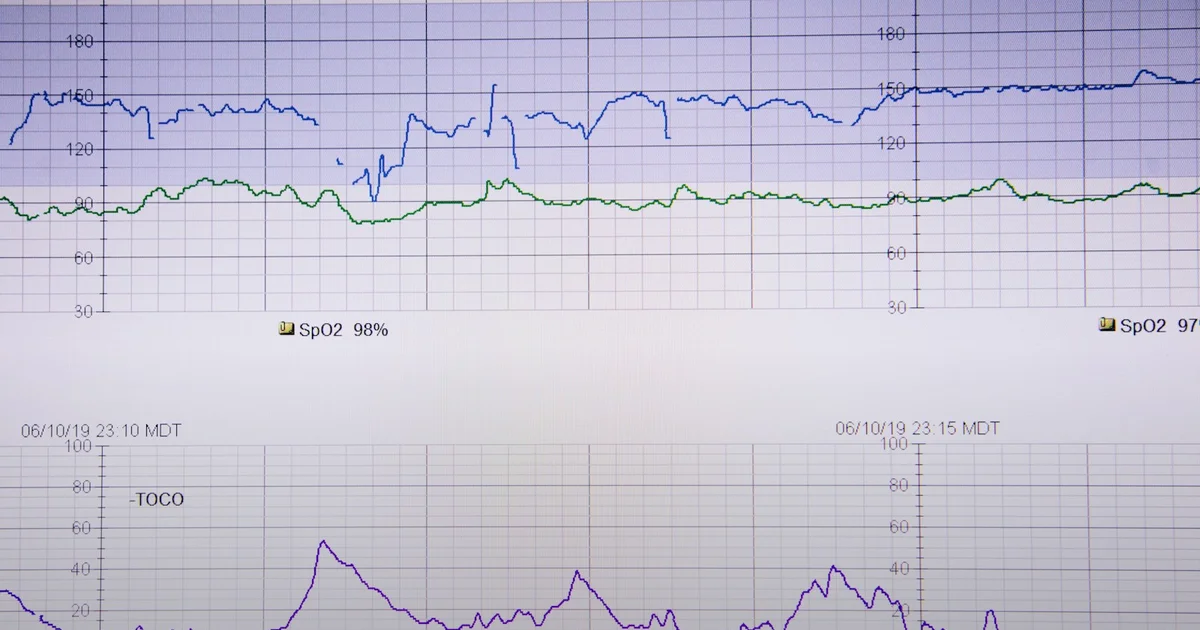
Why Chronic Pressure to Succeed Is Wearing Down Your Body (Even When You Feel Fine)
There's a specific kind of tired that sleep doesn't fix.
You know the one. You wake up after a full night's rest and the first thing your brain does — before coffee, before the phone — is quietly calculate how many hours are left before you can sleep again. You're not depressed. You're not sick. Everything looks fine on the outside. You're productive. You're hitting your targets. You're handling the pressure.
Then one day your body calls the bluff.
Maybe it's a week of inexplicable brain fog during a stretch of work that really shouldn't feel this hard. Maybe it's the third cold in four months, or noticing your resting heart rate creeping upward, or the strange flatness that's settled over things you used to genuinely look forward to. Nothing dramatic. Nothing you'd call a crisis. Just a quiet accumulation of small signals you've been ignoring, because no individual day ever felt severe enough to justify slowing down.
Bruce McEwen spent decades as a neuroendocrinologist at Rockefeller University studying exactly what happens when a body operates under that kind of pressure for a sustained period. He had a name for what you're actually experiencing: allostatic load. And his research reveals something that should fundamentally change how you think about "handling the pressure."

Your Stress System Was Built for Bursts, Not Marathons
Before getting into what allostatic load actually is, it helps to understand what your stress response was originally built to do — because it genuinely wasn't designed for the kind of sustained pressure most high achievers are operating under.
Your body's stress response is an elegant, short-term survival system. When it detects a threat — physical danger, sudden loss of control, an acute confrontation — it floods your system with cortisol and adrenaline, elevates heart rate, shunts blood toward your muscles, and temporarily suppresses long-term processes like digestion and immune regulation. Then, when the threat resolves, the system returns to baseline. The entire architecture is optimized for a sharp, time-limited activation followed by genuine recovery.
Robert Sapolsky, a Stanford neuroendocrinologist who has spent decades studying stress physiology, put it memorably: zebras don't get ulcers. When the lion stops chasing, the zebra stops stressing. It doesn't replay the chase on a mental loop at 2am or spend Sunday evening anxious about next week's predator outlook. The threat ends; the activation ends; the body returns to baseline.
The Upside of Stress — Kelly McGonigal
Sits right after the Sapolsky zebra passage — the reader has just learned their stress system is misfiring on modern threats. McGonigal is the natural next step: not 'eliminate stress' but 'change what activation cost…
As an Amazon Associate, we earn from qualifying purchases — at no extra cost to you.
Your nervous system doesn't make that same clean distinction between a predator and a performance review. Both register as threat. Both activate the same cortisol and adrenaline cascade. And if that cascade is triggering repeatedly — five days a week, across months and years — without genuine recovery periods built in between, the physiological cost starts stacking in ways the stress response was never designed to handle.
That stacking is what McEwen called allostatic load. Understanding how it accumulates changes what "handling the pressure" actually means.
What Allostatic Load Actually Is
Allostatic load defined: Allostatic load is the cumulative physiological cost that builds when your body's stress-response systems activate repeatedly without full recovery between episodes. It's measured through biomarkers — cortisol output, blood pressure, cholesterol ratios, inflammatory markers — and a chronically elevated score predicts worse health outcomes regardless of whether any single day felt like a crisis.
McEwen and Eliot Stellar published Stress and the Individual: Mechanisms Leading to Disease in 1993 in the Archives of Internal Medicine. McEwen followed it five years later with Protective and Damaging Effects of Stress Mediators in the New England Journal of Medicine. The core concept across both papers: your stress-response systems are adaptive and necessary, but they carry a maintenance cost every time they're activated. The more frequently and the longer they stay activated, the more that cost accumulates — across your cardiovascular system, immune function, and metabolic regulation.
McEwen measured this through a specific composite of biomarkers: cortisol output, resting blood pressure, cholesterol ratios, waist-to-hip ratio, and a handful of inflammatory markers. He called the composite an allostatic load score. His data showed that a chronically elevated score predicted measurably worse health outcomes — not because any single stressor had been catastrophic, but because the system had been activated too frequently without adequate opportunity to genuinely reset.
This is the distinction that matters most, and the one that tends to get lost in how we talk about burnout. We tend to frame health damage from stress in terms of dramatic events — a traumatic loss, a visible breakdown, a crisis you could point to. McEwen's data pointed somewhere less cinematic and more insidious: toward the compounding cost of frequent, moderate activations that individually felt manageable but never fully resolved.
You're never having a crisis. You're just never fully recovering. Those aren't the same situation, but over enough time, they produce the same physiological result.
The Gap Between Feeling Fine and Actually Being Fine
Here's the specific finding from McEwen's broader research program that deserves far more attention than it typically gets: allostatic load is measurable through biomarkers, not through subjective self-report.
That means a person can genuinely believe they're managing chronic pressure well — and be entirely accurate about their subjective experience — while their actual physiological load accumulates silently in ways their self-assessment simply doesn't capture.
This isn't denial. It's not weakness. It's a structural mismatch between what you can accurately perceive about your internal state and what's actually occurring in your stress-response systems. You feel like you're coping. Your cortisol output, blood pressure trend, and inflammatory markers are keeping a different set of books.
This gap shows up in high-achieving environments with almost predictable regularity. The person staying late to finish the project doesn't feel like they're in crisis — and objectively, they're not. But if that's happening across 180 working days without adequate recovery built in between, the cumulative load doesn't adjust based on how any single day felt from the inside. It accumulates according to frequency and duration of activation.
One nuance McEwen's research emphasizes: allostatic load tends to build in domains the person isn't tracking. You might be sleeping well and exercising regularly. But if low-grade psychological activation — the background hum of unresolved deadlines, unread emails, ambient performance anxiety — runs nearly continuously, the physiological cost keeps accumulating in metabolic and immune domains even when cardiovascular signals look fine.
This is why waiting until you feel burned out before addressing chronic pressure is a losing strategy. By the time burnout registers subjectively — the flattened affect, the inability to concentrate on things you used to find easy, the creeping cynicism about work you used to care about — the physiological accumulation has already been underway for months. You're reading the last paragraph of a chapter that started much earlier.

Amazfit GTR 4 Fitness Smartwatch (46mm, Black)
Placed at the exact paragraph where the article says allostatic load is measurable through biomarkers and NOT through self-report. The reader has just been told their own judgement is unreliable — this is the highest-…
As an Amazon Associate, we earn from qualifying purchases — at no extra cost to you.

Why "I'll Rest When This Phase Is Over" Doesn't Work
There's a belief pattern common among high achievers that McEwen's research quietly dismantles. It goes something like this: I'll push hard during this intense stretch, and then I'll properly recover when it's done. Recovery gets treated as a deferred expense — something you'll settle once the project ships, once the quarter closes, once the thing creating all this pressure finally resolves.
The problem is that allostatic load doesn't run on that accounting logic.
Your stress response doesn't track your intentions. It doesn't know the pressure is temporary, that you have a vacation scheduled, that you're planning to decompress once this deliverable is out the door. It responds to the current state of activation. And if the current state has been elevated for months, the load is accumulating on a physiological level regardless of your future plans.
More critically: recovery that arrives "eventually" doesn't undo the accumulation that happened before it. It stops new accumulation during the recovery period. It doesn't zero out the balance the previous six months built.
This is why two weeks off after a sustained period of chronic overactivation often doesn't feel restorative in the way you expected — the vacation stops the accumulation for those two weeks, but the physiological baseline you're starting from is already elevated. You come back less exhausted than you would have been without the break, but not reset the way you might have been if the recovery had been distributed throughout the intense period rather than deferred to the end.
What McEwen's research actually points toward is recovery that happens at a much finer grain than most high achievers build in: not quarterly, but daily and weekly, integrated into the rhythm of the work itself rather than scheduled as a future reward for finishing.
What Actually Reduces Allostatic Load (With Evidence)
This is where the science becomes practically useful. The recovery mechanisms that measurably lower allostatic load scores tend to be things you've heard before — which is part of what makes the conversation frustrating. The problem usually isn't information. It's that these interventions haven't been properly weighted against the pressure to keep going.
Sleep is the primary recovery mechanism, not a lifestyle variable. Seven to nine hours for most adults isn't a preference; it's the main window in which your nervous system downregulates the cortisol activation from the previous day, consolidates learning, and restores immune function. Research on mild chronic sleep restriction — routinely cutting to six hours because you "function fine on less" — consistently shows measurable accumulation of cognitive and physiological deficits across weeks that the person themselves often doesn't register, because they're adapting to a gradually declining baseline and mistaking the adaptation for normal. A quality sleep tracker helps you see the actual data rather than relying on subjective impression.

Philips SmartSleep Wake-Up Light HF3520/60
Slot 3 sits in the paragraph declaring sleep the primary recovery mechanism, not a lifestyle variable. The article's own action section says 'protect sleep first... with a consistent sleep window and a hard stop on de…
As an Amazon Associate, we earn from qualifying purchases — at no extra cost to you.
Low-to-moderate intensity physical movement helps clear stress hormones more efficiently than sitting still through the activation. This isn't about fitness optimization — it's about giving your physiology an actual discharge mechanism for the cortisol that built up across the workday. A 20-minute walk at a non-exhausting pace achieves this. It doesn't have to be a workout.
Genuine psychological detachment from work during non-work hours is a separately measurable variable. Sabine Sonnentag's research at the University of Konstanz found that whether people mentally detached from work — rather than spending their leisure time in a lower-grade activation state, thinking about tomorrow's problems while sitting on the couch — predicted next-day energy and cognitive performance better than the sheer amount of time off taken. A physical boundary without a psychological one doesn't function as recovery.
Tracking your actual physiological recovery state closes the gap McEwen's research identified. Heart rate variability — now readable in most modern wearables — gives you a daily readout of how recovered your autonomic nervous system actually is, independent of how rested you feel. A sustained downward HRV trend across weeks is one of the earliest physiological signals that your allostatic load is accumulating faster than you're recovering from it, often weeks before subjective burnout registers.

Clever Fox Habit Calendar Circle (24-Month Tracker)
Slot 4 closes the HRV paragraph and hands off directly into 'Spend one week tracking three things: sleep duration, morning HRV, and a 1-to-5 energy rating.' The article prescribes a one-week manual baseline log — this…
As an Amazon Associate, we earn from qualifying purchases — at no extra cost to you.
How to Start Reducing Your Allostatic Load Today
You don't need a major protocol overhaul. You need a different accounting system — one that treats recovery as a non-negotiable variable to be measured and protected rather than a bonus you earn after finishing everything else first.
Start by establishing an actual baseline. Spend one week tracking three things before changing anything: sleep duration, morning HRV if your wearable reads it, and a simple 1-to-5 subjective energy rating when you wake up. The goal isn't optimization yet — it's seeing the actual gap between what you assume your recovery looks like and what it actually is. Most people are surprised.
Audit where genuine recovery windows currently exist in your week. Not where you plan for them to be — where they actually are. Most chronically overloaded people have leisure time scheduled in principle and almost none implemented in practice, because the leisure time gets colonized by lower-grade work activation: inbox checking, mentally rehearsing the next day, consuming stress-adjacent content. The audit usually reveals more boundary erosion than you consciously registered.
Protect sleep first, before optimizing anything else. Not with supplements or apps, but with a consistent sleep window and a hard stop on devices that maintain activation. McEwen's data doesn't offer a shortcut around this one. The other interventions compound on top of adequate sleep; they don't substitute for it.
Add one deliberate, complete disconnection window per day — 20 to 40 minutes. A walk without earbuds, without mentally running tomorrow's agenda. Not a productive break. Not an optimized recovery session. A genuine downregulation window where you're not managing a lower-grade version of the same activation.

Kitchen Safe kSafe Time Locking Container (Medium)
Slot 5 sits on 'Add one deliberate, complete disconnection window per day — 20 to 40 minutes. A walk without earbuds.' The article's own diagnosis is that leisure time gets colonised by low-grade work activation. A ti…
As an Amazon Associate, we earn from qualifying purchases — at no extra cost to you.
Treat a sustained low HRV trend as information rather than inconvenience. If your wearable has been showing a declining recovery score for two or three weeks, that's your allostatic load becoming legible — earlier than any subjective signal would have given you. The appropriate response isn't to push through until the subjective signal arrives.
How to build a morning routine that actually sticks
The Part of "Design Your Evolution" Most People Skip
There's a version of ambitious self-development that looks like permanent intensity — always pushing, always optimizing, treating any period without visible output as wasted time. It's compelling because it produces visible results, at least for a while.
McEwen's research is essentially a long-form argument for why "at least for a while" deserves more weight than we typically give it. The physiological systems underlying your performance — immune regulation, cardiovascular function, the cortisol response itself — don't operate on willpower. They operate on load and recovery. Apply too much load for too long without genuine recovery, and the system doesn't simply plateau; it degrades in ways the person inside the system is typically the last to accurately perceive.
The more durable version of the same ambition takes McEwen's finding seriously: recovery isn't what you do when you've failed to keep up the pace. It's the other half of the cycle that makes the pace sustainable in the first place. Biological systems that evolve — that genuinely get stronger over time — do so through alternating phases of stress and adaptation. The adaptation happens in the recovery phase. Skip the recovery, and you're just accumulating load without getting the adaptation that would make the load worth it.
Designing your evolution means being as deliberate about the recovery half of that cycle as you are about the pressure half. Why you can't outwork bad sleep — and what the science says to do instead.
So here's the question worth sitting with: if someone reviewed your actual week — not the version you'd describe, but the one that actually happened — how much of it would qualify as genuine physiological recovery? And what would need to change for that fraction to be large enough to actually matter?
Was this helpful?