Mindset· 9 min read
Why You Need Things Clean (It's Not What You Think)
Struggling to focus until things are tidy? Science reveals why your need for order is an anxiety strategy — and what to actually do about it.

Why You Need Things Clean (It's Not What You Think)
There's a pile of laundry on the chair. You know it's there. You're trying to write, or read, or think — but the pile keeps tugging at your attention like a low-grade alarm that won't quite stop beeping.
So you fold it. And then, suddenly, you can work.
This happens to a lot of people, more than they admit. The inability to concentrate while surrounded by mess. The physical discomfort — not aesthetic preference, but something closer to dread — when a surface is cluttered. The relief that arrives when things are back in their place, which feels, honestly, a bit disproportionate to the act.
Here's what most people assume: I just like things tidy. Clean personality. Good habits.
Here's what the research actually shows: your nervous system learned to use your physical environment as a survival tool, probably before you were old enough to know that's what it was doing.
Understanding the difference between choosing a clean space and being driven to one — that's one of the more useful things you'll ever learn about yourself.
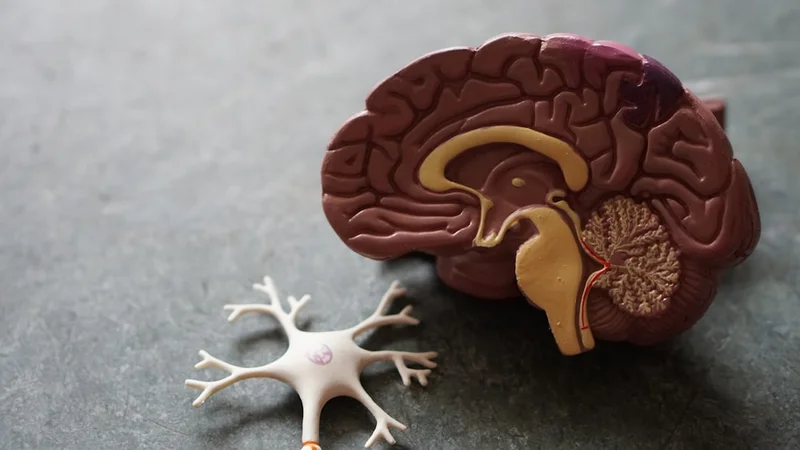
Your Space Is Talking to Your Nervous System Right Now
Stephen Porges is a Distinguished University Scientist at Indiana University whose Polyvagal Theory has become one of the more influential frameworks in modern trauma-informed clinical work. His research tracks how the human autonomic nervous system — specifically its several branches — responds to signals in the surrounding environment.
The part most people know: your nervous system responds to social cues. Faces, voices, proximity of safe people.
The part most people miss: it responds to environmental cues too.
A predictable, ordered physical environment reduces the demands on your sympathetic threat-response system. An unpredictable, cluttered environment — where things are not where they should be, where visual complexity is high, where nothing feels settled — quietly raises them.
This isn't a metaphor. A 2011 study published in the Journal of Neuroscience found that competing visual stimuli in a cluttered environment measurably impair the brain's visual cortex processing. Clutter isn't just aesthetically unpleasant. It's actively consuming cognitive bandwidth, because your visual attention system is doing exactly what it evolved to do: scanning the environment for anomalies.
Roger Ulrich's environmental psychology research at Texas A&M University established decades ago that the human nervous system did not evolve in featureless, neutral spaces. It evolved in environments where visual complexity signaled either resource abundance or potential threat. It's still running that same program — in your kitchen, in your office, in whatever room you're sitting in right now.
So the relief you feel when you tidy a room? It's not about virtue. It's your autonomic nervous system moving from mild alert to genuine calm — and that shift is neurologically real.
`
LectroFan Classic White Noise Machine (Global Power Edition)
Right after the section on how a clean room shifts your autonomic nervous system from alert to calm — a white noise machine is a DIRECT environmental regulation tool, the kind the article later recommends as an altern…
As an Amazon Associate, we earn from qualifying purchases — at no extra cost to you.
`
The question worth sitting with: when does that relief become something you're chasing rather than something you're choosing?
The Room That Was Always Under Your Control
Here's the finding that clinical psychologists keep returning to.
For many adults, the compulsion to clean has almost nothing to do with cleanliness. It began as a childhood strategy — and often a remarkably intelligent one.
Peter Fonagy and Mary Target at University College London spent years studying how early attachment relationships shape emotional regulation in adult life. Their core insight: when a child grows up in an environment that's emotionally unpredictable — a parent whose moods are difficult to anticipate, a home where conflict erupts without warning, a relationship that offers warmth inconsistently — the child develops what you might call a compensatory regulation strategy.
They cannot control whether a parent will be available, patient, or calm. They cannot make the emotional environment safe.
But they can make their bedroom floor clear. They can arrange their books by size. They can keep one corner of their world exactly as they intend it to be.
This isn't neurotic or strange. It's one of the more elegant solutions a child's mind can generate. Organizing a physical space requires no other person's cooperation. It produces immediate, visible results. And it offers genuine neurological relief: the prefrontal cortex activates during planning and completion, dopamine ticks up with each finished task, and the amygdala's threat-scanning quiets down when the environment has been verified as safe and ordered.
The problem isn't that the strategy works. It's that it works so well.
John Bowlby, whose attachment theory laid the groundwork for all of this research, described how early experiences of unpredictability don't just affect how we feel — they calibrate how the nervous system operates as a default. Children from emotionally unpredictable environments don't typically become chaotic adults. Often, they become adults who are extremely good at controlling the things that can be controlled.
Their homes. Their schedules. Their desks. The exact placement of the stapler.
If you've ever felt a disproportionate spike of anxiety when a partner moves your things without asking, or felt inexplicably irritable when your routine is disrupted — this research is worth sitting with for a few minutes. These patterns, rooted in early attachment experiences, often shape how we relate to order and control throughout our adult lives.
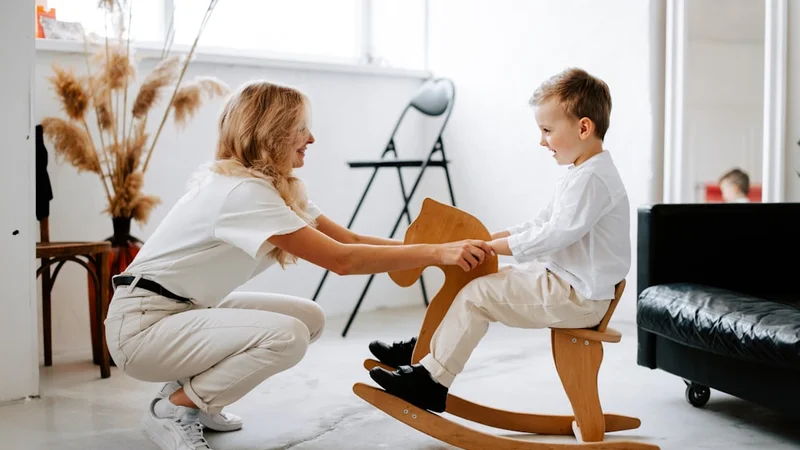
Why the Cleaning Habit Keeps Itself Going
Stanley Rachman, a clinical psychologist at the University of British Columbia, spent much of his career studying what he called safety behaviors — the actions people take to prevent or reduce feared outcomes.
Some safety behaviors are obvious. Checking the lock three times before bed. Always sitting near the exit. Calling a loved one to make sure they arrived safely.
Others are subtler. Reorganizing a drawer when you're anxious about a conversation you need to have. Deep-cleaning the bathroom the morning before an important meeting. Rearranging the kitchen when you don't know what to do with something that happened at work.
These behaviors work. That's the problem.
When you clean because you're anxious, the anxiety reliably decreases. Your brain registers this: cleaning eliminates anxiety. It files this as important information and makes the connection automatic — every time.
Paul Salkovskis at the University of Bath identified the paradox at the heart of safety behaviors: they provide such immediate, reliable relief that they prevent the learning that would actually reduce the anxiety long-term. The person who cleans whenever anxiety rises never discovers that the anxiety would have subsided on its own. The cleaning always removes it first, so the disconfirmatory experience never arrives.
You never find out that the meeting was fine. That the discomfort passed on its own. That you could have sat with the messy kitchen and been completely okay.
The behavior appears to manage the anxiety. In reality, it maintains it.
`
The Happiness Trap (2nd Edition) — Russ Harris
Lands on the safety-behaviour paradox (Salkovskis): cleaning prevents you ever learning the anxiety would fade on its own. ACT's whole premise is learning to sit with discomfort instead of escaping it — the exact skil…
As an Amazon Associate, we earn from qualifying purchases — at no extra cost to you.
`
This isn't a case against clean spaces. Intentionally designed environments are genuinely helpful for focus and nervous system regulation — and we'll get to that. But there's a meaningful difference between choosing to create an orderly space because it supports your best work and being driven to clean by an anxiety you've never learned to sit with for even ten minutes.
One is design. The other is something older, more automatic, and worth getting curious about.
What the Pile of Laundry Is Actually Doing to Your Brain
Here's a practical question: why does the pile of laundry on the chair bother you even when you're not looking at it?
Because, in a sense, you are looking at it. Your visual attention system processes far more of your environment than conscious awareness receives. The brain is continuously running background scans — checking whether the environment is as expected, flagging anything that represents an unresolved item.
Clutter is full of unresolved items.
Every object that isn't in its intended place represents an open cognitive loop. An unmade bed is a small, unfinished task. A stack of unsorted mail is a collection of unresolved decisions. A counter of unwashed dishes is a chain of incomplete actions. Your working memory is genuinely taxed by these open loops — not dramatically, but persistently, all day.
The compound effect of dozens of minor environmental incompletes is measurable: reduced executive function, more difficulty initiating focused work, greater susceptibility to distraction. This is the legitimate scientific case for an orderly environment. Not aesthetics. Not personality. Actual cognitive load reduction that comes from closing the loops.
What environmental psychology adds is the threshold insight: at some point, the effort to maintain perfect order costs more in vigilance and anxiety than the disorder would cost in cognitive load. The research suggests the optimal environment for most people is organized enough to reduce open loops — without requiring constant maintenance behavior to sustain it.
The anxious cleaner often overshoots this threshold significantly. They're not maintaining an environment that supports their work. They're managing their nervous system through their environment, because no one ever gave them another way to settle. Research consistently shows that our physical surroundings have a measurable impact on both focus and cognitive performance, but there's an optimal point where more order yields diminishing returns.
How to Start Today
1. Notice what triggers the urge. The next time you feel a compulsion to tidy or reorganize, pause five seconds before you begin. Ask: what was I just thinking about? What was I feeling a moment ago? Often the impulse to clean arrives as a response to something unrelated — an uncomfortable email, a decision you've been avoiding, an anxious anticipation about something later today. You don't have to stop cleaning. But knowing why you're cleaning is worth something.
2. Define a daily baseline — then stop there. Rather than maintaining constant perfect order (which is exhausting and anxiety-sustaining), decide what "good enough" looks like for your main spaces. The clear desk. The made bed. The clean kitchen counter. Set that baseline once at the start of your day and leave it. This closes the open cognitive loops without creating an ongoing maintenance vigilance that quietly drains you.
`
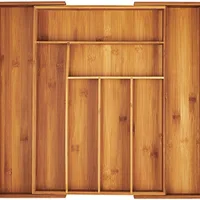
Amazon Basics Bamboo Expandable Drawer Organizer
Sits inside 'Define a daily baseline' — closing the open cognitive loops the article describes (every misplaced object = an unfinished task). This is environment DESIGN, not control.
As an Amazon Associate, we earn from qualifying purchases — at no extra cost to you.
`
3. Add a direct nervous-system tool. If cleaning is primarily a nervous-system regulation strategy, try adding one more direct regulation option — a brief breathing practice, a five-minute walk, two minutes of progressive muscle relaxation before a difficult conversation. Your physical environment affects your autonomic state; so does your physical body. And your body goes everywhere with you, which the room can't.
4. Sit with minor disorder intentionally. This sounds uncomfortable, and briefly, it is. Pick something small: leave one dish in the sink for an hour while you work. Let the opened mail sit on the counter while you finish something important. The goal is to discover, with a low-stakes example, that the mild anxiety about the disorder fades on its own. You don't need the cleaning to make it go away. You just haven't had the chance to find that out yet.
`
Outer Order, Inner Calm — Gretchen Rubin
Directly after 'Sit with minor disorder intentionally' and the Marie Kondo reference — Rubin's book is the bridge from compulsive cleaning to intentional, joy-led decluttering. Mirrors the article's own thesis.
As an Amazon Associate, we earn from qualifying purchases — at no extra cost to you.
`
5. Design your space for regulation, not for control. Here's the distinction that matters: an environment designed for nervous system regulation is one where the default state is calm — good light, clear surfaces, organized storage, minimal visual complexity. An environment maintained for control is one where every deviation from the ideal triggers the urge to restore it. The first is sustainable. The second is exhausting. Design the space that restores you, not the one you're constantly defending from entropy.
What the Pile of Laundry Was Always Saying
Here's what I keep coming back to when I sit with this research.
The person who cannot focus until their space is clean is not neurotic. They're not fragile or high-maintenance or excessively particular. They found a survival strategy — probably early, probably in a context where it genuinely made sense — and it worked reliably for years. The fact that it's now automatic and sometimes disproportionate doesn't erase how intelligent it originally was.
What changes isn't the behavior itself. What changes is the relationship to it.
Porges, Fonagy, and Salkovskis's work, read together, points toward the same place: becoming someone who understands their own nervous system well enough to work with it rather than being managed by it without knowing that's what's happening. That's what designing your evolution actually means in practice. Not optimizing away every discomfort, but developing the awareness to choose your response rather than inherit it automatically — to clean because you want a space that supports you, not because anxiety left you no other choice.
The laundry pile isn't the problem. It never was.
What's your version of the laundry pile — the task you consistently reach for when something more uncomfortable is waiting? Drop it in the comments.
Was this helpful?