Habits· 9 min read
Why You Procrastinate: The 3 Psychological Traps Behind It
Not laziness — procrastination is an emotion regulation problem. 30 years of research explain the 3 psychological traps behind delay and how to break them.

Why You Procrastinate: The 3 Psychological Traps Behind It
The task has been on your list for eleven days.
You know exactly what it involves. You know how long it will take — probably two hours, maybe three. You've opened the document at least four times. Each time, something else called for your attention: a message that needed a reply, a cup of coffee, a vague urge to reorganize your desk. By the time you closed the tab, you'd convinced yourself you'd get to it tomorrow.
If that sounds familiar, you've probably also tried the usual fixes. Calendars. To-do apps. Motivational podcasts. The promise — made to yourself, with genuine sincerity — that you'll start first thing in the morning.
And yet.
What most productivity advice gets fundamentally wrong about procrastination is the diagnosis. It treats procrastination as a scheduling failure, a discipline failure, a time management failure. Hire a better app. Make a better plan. Work harder on yourself.
But Timothy Pychyl, a psychologist at Carleton University's Procrastination Research Group in Ottawa who has studied procrastination for more than 30 years, made a finding that demolishes that entire framework. Procrastination isn't a time management problem. It's an emotion regulation problem. You're not avoiding the task. You're avoiding the feeling the task generates.
That single reframe changes everything about how to fix it.

Trap #1: The Task Isn't the Problem — The Feeling Is
Here's what actually happens when you open that document and close it thirty seconds later.
Some version of anxiety activates. Maybe it's uncertainty about where to start. Maybe it's fear that your effort won't be good enough. Maybe it's a quiet, low-grade resentment about having to do something you didn't choose. Whatever the specific flavor, it's aversive — and your brain, which is exquisitely designed to move away from pain, immediately produces a solution: do something else. Anything else.
The relief is real. And it's instant. Which is the problem.
Pychyl's research establishes that the avoidance behavior is reinforced precisely because it works in the short term. The negative feeling dissolves. You feel better. And the lesson your nervous system records is: when that task generates that feeling, leave. This is why the standard advice to "just start" so often fails — it asks you to enter the situation that your brain has already learned to associate with discomfort, without addressing the discomfort itself.
The specific emotions Pychyl's data identifies as most commonly driving avoidance: anxiety (about quality or outcome), boredom (the task is tedious and intrinsically unrewarding), self-doubt (uncertainty about competence), frustration (the task is harder than expected), and resentment (the task was assigned, not chosen). These aren't character flaws. They're normal human responses to the kinds of tasks that generate them.
The intervention that follows logically from this is also different from what most people try. Instead of asking "how do I make myself do the task despite the feeling," the question becomes "how do I reduce the emotional cost of approaching the task in the first place." Task decomposition — breaking the avoided project into steps small enough that each one generates only manageable aversion — works precisely this way. Starting isn't "finish the report"; starting is "open the document and write one paragraph." The emotional bar is low enough to step over.

Sony WH-1000XM5 Noise Cancelling Headphones
Trap #1 is about the aversive feeling a task generates. A physical focus barrier lowers the emotional cost of approaching the task by removing the ambient distractions your brain reaches for when avoidance kicks in.
As an Amazon Associate, we earn from qualifying purchases — at no extra cost to you.
Trap #2: Your Brain Is Discounting Your Future Self
Piers Steel, a professor at the Haskayne School of Business at the University of Calgary, spent years synthesizing the procrastination literature and published what is probably the most comprehensive analysis of the field: a 2007 meta-analysis in Psychological Bulletin that synthesized 691 correlations across hundreds of published studies on procrastination. His finding: procrastination is most severe under a very specific set of conditions.
When the task's reward is distant in time. When the probability of success feels low. When the task is intrinsically aversive (boring, frustrating, anxiety-producing). And when the person has high trait impulsivity — a strong tendency to prefer smaller, immediate rewards over larger, delayed ones.
Steel formalized this as temporal motivation theory: a mathematical model predicting that the motivation to act on a task decreases as its deadline moves further into the future, even when the task's actual importance stays constant. The brain, in other words, applies a discount rate to future rewards — and the rate is steep enough that a project due in four weeks feels significantly less urgent than a project due tomorrow, regardless of how much you consciously know that starting early would serve you better.
This explains a pattern almost everyone recognizes: the sudden burst of productivity that arrives 48 hours before a deadline that has been ignored for three weeks. The deadline hasn't changed the importance of the work. It has changed the temporal math. It has made the cost of avoidance feel present.
The practical implication isn't "create fake deadlines" — that stops working quickly. The implication is to restructure when the reward arrives. Learning, feedback, or completion of a meaningful unit of work earlier in the timeline makes the benefit of starting feel less distant. Working with an accountability partner — someone who will see your progress this week, not in a month — serves the same function.
The two-minute rule, popularized by David Allen in Getting Things Done and anticipated by William James's writing on habit formation, addresses the temporal discount problem directly for small tasks: if something takes less than two minutes to complete, do it immediately. The reasoning isn't efficiency. It's that the tiny immediate reward of closure outweighs the tiny immediate discomfort of starting, making the calculus simple enough that the brain doesn't discount it away.
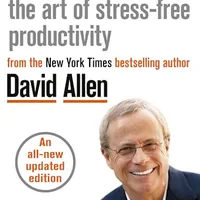
Getting Things Done — David Allen (Revised)
Trap #2 closes on the two-minute rule, which the article explicitly credits to David Allen's Getting Things Done — the canonical source for restructuring when a task's reward arrives.
As an Amazon Associate, we earn from qualifying purchases — at no extra cost to you.
Trap #3: Your Unfinished Tasks Are Exhausting You Right Now
In the 1920s, a Lithuanian-Soviet psychologist named Bluma Zeigarnik noticed something odd about the waiters she was observing in a Vienna café. They could recall the details of uncompleted orders with remarkable precision — but they forgot completed orders almost immediately after they were settled. She followed up with formal research and documented what is now known as the Zeigarnik effect: the brain maintains incomplete tasks in a state of active cognitive processing, consuming working memory until they're resolved.
Your brain treats every task you've started and not finished, every project you've promised yourself to begin, every email sitting in your drafted folder — as an open loop. Each one demands a small but continuous allocation of mental bandwidth. Not a lot. But all of them together? That's why you can feel exhausted and unfocused before you've actually done anything productive today.
The chronic procrastinator who has delayed not just one task but twelve of them is not merely behind on their work. They're carrying a cognitive load that explains the subjective fog — the inability to fully concentrate on whatever they are doing, because part of the brain is perpetually cycling through the unfinished list in the background.
The Zeigarnik research also points toward a counterintuitive relief valve: you don't have to complete a task to remove it from the active queue. You have to commit to a specific plan for it. Psychologist Roy Baumeister at Florida State and E.J. Masicampo found in a 2011 study published in the Journal of Personality and Social Psychology that simply writing down when and how you plan to complete a task measurably reduced its intrusion into unrelated cognitive work. The brain, apparently, is satisfied with a credible plan. It stops cycling the open loop.
This is why implementation intentions — the research framework developed by Peter Gollwitzer at New York University that specifies the when, where, and how of a planned action in advance — show such strong effects on follow-through. "I will complete the project outline" is an aspiration. "I will spend 30 minutes on the project outline tomorrow at 9am at my desk before checking email" is a plan. The brain treats them very differently.

Full Focus Planner by Michael Hyatt
Trap #3 (Zeigarnik effect) shows that writing a specific when-and-where plan closes the open loop. A structured daily planner is the physical tool for converting circling tasks into committed implementation intentions.
As an Amazon Associate, we earn from qualifying purchases — at no extra cost to you.
The Self-Criticism Trap (It's Making Things Worse)
There's a fourth trap, less obvious than the others, and in some ways the most important to understand.
After a procrastination episode, most people do the same thing: they feel guilty. They criticize themselves. They think, if only I were more disciplined, more motivated, more focused — this wouldn't keep happening. And then, from a place of self-critical guilt, they attempt to approach the avoided task again.
Fuschia Sirois, a health psychologist at Durham University who has studied the relationship between procrastination and physical health outcomes, tested what actually happens next in this scenario. Her findings are counterintuitive enough that they're worth stating clearly: self-criticism after a procrastination episode significantly increases the probability of procrastinating again. Self-compassion — responding to the lapse the way you'd respond to a friend in the same situation — significantly reduces it.
The mechanism isn't soft. Self-criticism generates exactly the aversive emotional state that Pychyl's research identifies as the driver of avoidance in the first place. Feeling bad about yourself for having avoided a task makes approaching the task generate even more negative emotion, which strengthens the avoidance motivation. The harsh inner voice that says you're pathetic, just do the work is, neurologically speaking, adding fuel to the fire it's trying to put out.
Self-compassion, in Sirois's research, doesn't mean excusing the avoidance or pretending it didn't have costs. It means acknowledging what happened without piling on — "I didn't get to this today; that's human; I can try differently tomorrow" — which reduces the emotional cost of re-engagement enough to make return more likely.
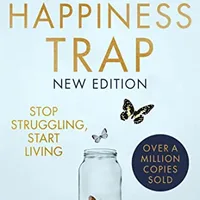
The Happiness Trap (2nd Edition) — Russ Harris
The self-criticism trap section maps directly onto ACT and self-compassion. The 2nd edition of The Happiness Trap explicitly adds chapters on self-compassion, perfectionism and procrastination — a precise thematic fit.
As an Amazon Associate, we earn from qualifying purchases — at no extra cost to you.
How to Start Today
The theory is useful. But it only earns its keep when it produces a change in what you do Monday morning. Here are the interventions that the procrastination research actually supports:
-
Name the feeling first. Before you label yourself lazy, ask: what emotion does this task generate? Anxiety? Boredom? Resentment? Naming it doesn't eliminate it, but it shifts your relationship to it — from automatic avoidance to conscious choice. You're no longer fleeing something unnamed. You're deciding whether to proceed despite a specific emotion.
-
Make the entry point smaller than your resistance. Don't begin a report. Open the document. Don't start a workout. Put on your shoes. The goal is to make the first action so low-stakes that the aversion generated doesn't exceed your tolerance. Motion produces momentum; momentum reduces aversion.
-
Close loops in writing, not in your head. For every task you're mentally circling, write down a specific when-and-where commitment. Not "I'll do it this week" — that stays open. "Thursday at 10am" closes the loop in the Zeigarnik sense, freeing the working memory it was occupying.
-
Use time-limited commitment instead of open-ended tasks. The Pomodoro method — 25 minutes of focused work, 5-minute break — works not because of the number but because of the bounded commitment. You're not agreeing to finish the project. You're agreeing to work on it for 25 minutes. That's an easier emotional negotiation with yourself.
-
Apply self-compassion after lapses, not self-criticism. This is the one most people will resist most strongly, because it feels like letting yourself off the hook. It's the opposite. It's removing the additional emotional barrier that self-criticism places in front of re-engagement. The sooner you stop compounding the lapse with shame, the sooner you can actually start.

Designing Your Way Out
The reason procrastination persists despite decades of productivity advice is that it keeps being addressed at the wrong level. Time management tools, scheduling systems, and motivational content all assume the problem is a missing plan. But you probably don't lack a plan. You lack a plan that accounts for the emotional reality of the person who has to execute it.
Designing your evolution doesn't mean becoming someone who never experiences the pull toward avoidance. It means building systems that work with your psychology instead of against it — systems that reduce the emotional cost of starting, close the cognitive loops that drain your focus, and repair your relationship with yourself quickly enough that a missed day doesn't become a missed month.
The task isn't going anywhere. But neither are you.
What's the one task you've been circling for the longest — and what emotion do you think is actually driving the avoidance? Drop it in the comments. Sometimes just naming it in writing is the first intervention.
Was this helpful?