Productivity· 10 min read
Why You Procrastinate: It's Not Laziness, It's Emotion
Tim Pychyl's research proves procrastination is emotional avoidance, not a time management failure. Here's how to rewire the cycle at the root.
Why You Procrastinate Even When You Care: It's Not Laziness, It's Emotion
The email had been sitting in my drafts folder for nine days. It was five sentences. The person on the other end was someone I genuinely liked, the thing I was writing about was something I actually wanted to do, and every time I opened the draft I found myself — somehow — checking the weather, refilling a coffee that didn't need refilling, or responding to a message that was objectively less important. By day nine, I had a solid internal narrative about being busy. I was lying to myself.
That's the thing about procrastination that nobody warns you about. From the outside — and often from the inside — it looks like laziness, poor discipline, or a time management failure you should be able to will your way through. Timothy Pychyl, a psychologist at Carleton University who has spent thirty years studying exactly this behavior, has a different explanation. Procrastination isn't a time problem. It's an emotion problem. And once you understand that distinction, almost everything about how to address it changes.
The Real Reason You Avoid Tasks You Actually Care About
Pychyl's research has documented something that tends to land differently every time you hear it: when you procrastinate, you're not avoiding the task. You're avoiding the feeling the task produces.
The task itself might generate anxiety, self-doubt, boredom, resentment, or the specific dread that comes with doing something that could expose your inadequacy. Your brain — which is extraordinarily efficient at protecting your mood in the present moment — runs a fast calculation: feel uncomfortable now while doing this, or feel better now by switching to something easier. The switch happens so quickly it doesn't register as a choice. It feels like getting distracted.
Fuschia Sirois, a professor of psychology at Durham University, describes procrastination precisely as "emotional regulation through avoidance." The avoidance is the strategy. The relief you feel when you close the document or set the task aside is real, physiological, and immediate. The problem is that it's borrowed.
See also: Experiential Avoidance: Why Fighting Feelings Backfires
The task comes back. But now it's heavier — the deadline has moved closer, guilt has accumulated, and the emotional weight of the avoided thing has grown — which makes the next avoidance episode easier to justify, which adds more guilt, which makes starting feel even worse. This is the self-amplifying feedback loop that makes procrastination feel genuinely intractable over time.
Sirois's data reveals the full cost: chronic procrastinators report higher perceived stress, worse sleep quality, more health-compromising behaviors, and — this is the part that surprises people — significantly worse mood overall than people who don't procrastinate. The relief that avoidance produces is real, but it's bought at a high interest rate. Every avoided task returns with more weight than it started with.
behavioral design and habit formation
One more thing worth naming before we get into the fixes: the tasks you procrastinate on most reliably tend to be the ones that matter most to you. That's not a coincidence. The avoidance response is triggered by stakes, and stakes come from caring.
The Motivation Equation That Explains Every Task You're Avoiding
Piers Steel, a researcher at the University of Calgary, spent years trying to reduce procrastination to mathematics. His 2007 meta-analysis published in Psychological Bulletin, which examined 691 correlations across 216 independent samples, produced the Temporal Motivation Theory, and with it a formula that turns out to be a genuinely useful diagnostic tool.
Motivation = (Expectancy × Value) / (1 + Impulsiveness × Delay)
Each variable represents something concrete:
- Expectancy is your honest belief that you can do the task — and do it well enough. Low expectancy means a task feels threatening before it begins.
- Value is how much the task genuinely matters to you. Not how much it should matter, but how much you actually feel that it does.
- Delay is how far in the future the reward lands. The further away, the weaker its pull on your behavior today.
- Impulsiveness is your susceptibility to whatever's available right now — every notification, open tab, and more immediately rewarding alternative.
Most productivity advice attacks delay and impulsiveness. Manage your time better. Block your phone. Use a website blocker. That matters. But Steel's data suggests the most common and stubborn driver of procrastination isn't delay or distraction — it's low expectancy. The quiet, often unnamed fear that you'll try and it won't be good enough.
The email sitting in my drafts for nine days? I wasn't avoiding the typing. I was avoiding the possibility of the response.
Solving the Procrastination Puzzle — Timothy A. Pychyl
The research behind this article is Pychyl's. This is his own practical guide — concise, direct, and grounded in the same emotion-regulation framework we cover here. The shortest path from understanding the mechanism…
As an Amazon Associate, we earn from qualifying purchases — at no extra cost to you.
When a task has been stuck on your list for two weeks, the question worth asking isn't "how do I manage my time better around this?" It's "which variable is suppressing my motivation?" Is the value genuinely unclear? Is the reward so delayed that it doesn't feel real? Or is there an expectancy problem — a fear of failure or inadequacy that you haven't put into words yet? Each answer points to a different solution. Only one of those is a time management problem.
Why Willpower Always Loses This Fight
Here's the mistake people make once they understand procrastination as an emotional regulation problem: they try to overpower the emotion with willpower. Sit down. Force yourself. Be more disciplined. Push through.
That strategy works. Until willpower depletes — usually by early afternoon — and the avoidance returns stronger. Willpower is a finite resource competing against an emotional system that regenerates constantly. It's not a fair fight.
The intervention that Pychyl's research most consistently supports is both simpler and less glamorous than you'd probably like: just start. Not "power through." Not "commit to the full project." Just create the smallest possible action that constitutes genuine beginning.
The reason this works is the Zeigarnik effect — a phenomenon first identified when Soviet psychologist Bluma Zeigarnik's supervisor, Kurt Lewin, observed that a waiter in a Berlin restaurant could recall every unpaid order in precise detail, yet forgot them completely the moment the bill was settled. Zeigarnik designed formal experiments to investigate the effect, publishing her findings in 1927. Incomplete tasks create an open cognitive loop the brain keeps active. Once you start a task, this completion drive activates. The neurological momentum you're looking for isn't there before you begin. It arrives through beginning.
Brian Tracy captures the practical version in Eat That Frog: do the most aversive, high-value task first, before the day's decision-making budget has been spent on anything else. The practical implementation looks less heroic than it sounds — open the document and write one sentence. Open the spreadsheet and update one cell. The first five minutes of any avoided task are almost always more tolerable than the anticipated version.

The Five Minute Journal — Intelligent Change
Neff's research shows self-compassion after avoidance reduces future procrastination more than self-criticism. A two-minute morning and evening reflection practice makes responding without self-attack a daily habit ra…
As an Amazon Associate, we earn from qualifying purchases — at no extra cost to you.
Pychyl is careful about this in his research: the gap between the anticipated discomfort of starting and the actual discomfort of doing is one of the most robust findings in this literature. We are systematically, reliably wrong about how bad it will be. The emotional prediction that drives avoidance is almost always an overestimate.
The If-Then Protocol That Removes the In-the-Moment Decision
Peter Gollwitzer at New York University has spent decades studying what he calls "implementation intentions" — a specific planning structure that, across study after study, dramatically outperforms simple goal-setting for translating intention into action.
The difference is precisely where the decision gets made. A goal says "I will work on the report." An implementation intention says "If it's 8am on Monday and my coffee is made, then I will open the report before I check anything else."
The specificity isn't pedantry. When you set a vague intention, you're handing the decision about when and how to start to the in-the-moment version of yourself — the one who, at that exact moment, is being pulled toward avoidance by the emotional weight of the task. When you make an implementation intention, you remove that decision entirely. The action is triggered by the situation, not chosen under emotional pressure.
Gollwitzer and Sheeran's meta-analysis published in 2006 across 94 independent tests found a medium-to-large effect on goal attainment — substantially outperforming simple goal-setting across every domain of behavior studied. Not because the if-then structure creates motivation — but because it bypasses the precise moment when the avoidance response wins.
The practical structure is blunt. Pick your most avoided task. Specify:
- When exactly (day, time, specific context)
- Where exactly (the chair, the desk, the app)
- What the first physical action is (not "work on it" — what your hands actually do)
"I will work on my article" — something you might not do. "If it's 7:30am and I'm sitting at my desk with coffee, then I will open the document and write the first sentence before I check anything else" — something you almost certainly will do.
morning routine design and habit triggers
Why Beating Yourself Up Guarantees the Next Episode
The chronic procrastinator has usually added a layer on top of the original problem: they feel terrible about procrastinating. The guilt, the self-criticism, the quiet "I'm so bad at this" — none of that is motivating. It's actively disabling.
Here's the mechanism: shame produces the same negative emotional state that procrastination was designed to avoid. When you procrastinate and then feel shame about it, you've created a more intense version of the exact uncomfortable feeling that triggered the avoidance in the first place. The shame makes the task feel even heavier, which makes the next avoidance episode more compelling. You're not holding yourself accountable. You're adding fuel to the fire.
Kristin Neff, a researcher at the University of Texas at Austin, has produced some of the most counterintuitive findings in this area. The conventional assumption is that self-criticism creates accountability. Her research shows something different: people who respond to failure and setbacks with self-compassion are more likely to try again after an avoidance episode — not less. Self-compassion doesn't excuse the behavior. It interrupts the shame loop that makes the behavior harder to change.
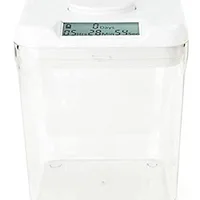
Kitchen Safe kSafe Time Locking Container
When the fastest escape route from an uncomfortable task is your phone, a time-lock box removes that option without relying on the willpower the research says is unreliable. Environment design, not discipline.
As an Amazon Associate, we earn from qualifying purchases — at no extra cost to you.
The practical shift is small and specific. After an avoidance episode, instead of the familiar self-criticism, try: "Avoidance is a normal response to tasks that feel threatening. I can still start now." That second sentence is the critical one. You're not making excuses for having avoided. You're removing the additional emotional weight that shame was piling onto an already heavy task — and then, immediately, creating the possibility of beginning.
This is also why the emotion-regulation frame matters so much for understanding how to fix this. If the problem is the feeling, changing the feeling is the intervention. Self-compassion changes the feeling. Willpower doesn't.

Designing the Emotional Environment Around Your Most Avoided Work
There's a harder version of this conversation that most productivity articles skip, and it's worth naming directly.
Pychyl's framing — if procrastination is an emotion regulation problem, the intervention is changing the emotional environment — doesn't just mean self-compassion and if-then plans. It also means being honest about what the task is triggering, specifically.
The most reliably avoided tasks are almost never the boring ones. They're the ones that carry real stakes. The creative project that might be rejected. The difficult conversation that might not land well. The business pitch that might reveal you're not as capable as you need to be. These tasks threaten something you care about, and that threat is the avoidance trigger.
James Clear's environment design framework in Atomic Habits addresses the structural piece: make the right behavior easier than the avoidance behavior.
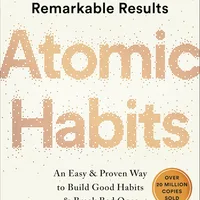
Atomic Habits — James Clear
James Clear's environment design framework — make the right behavior easier than the avoidance behavior. Keep the project document open, leave the journal where you will see it before your phone. This is the structura…
As an Amazon Associate, we earn from qualifying purchases — at no extra cost to you.
Keep the project document open on your screen. Leave the book face-up on your desk. Put the journal on your kitchen table where you'll see it before you see your phone. Reducing the friction between you and the first action matters.
But the environmental design piece also includes the internal environment — your relationship to the emotional stakes. Sometimes the honest answer is: this task feels genuinely important, and I'm afraid of what it will reveal about me. The compassionate, realistic response to that is: start anyway, imperfectly, because not starting guarantees the failure you're trying to avoid by staying away.
cognitive reappraisal and reframing difficult emotions
How to Break the Cycle Today — Not Next Monday
You don't need a new planning system. You need to address the actual mechanism, which is emotional. Here's what that looks like in practice:
1. Name the emotion before you reschedule the task. Before any avoided task goes back on your list, spend thirty seconds with it. What does starting feel like? Anxious? Bored? Vulnerable? Naming the emotion accurately changes how you process it — it shifts the response from automatic avoidance to deliberate acknowledgment. That gap is everything.
2. Build your if-then structure for the one task you're most avoiding. Full specificity: if [exact time and context], then [exact first physical action]. Write it down. Put it where you'll see it tomorrow morning.

Full Focus Planner — Michael Hyatt
A structured daily planner with dedicated space for implementation intentions — the 'if-then' when-then plans anchor where you will actually see them when the cue appears.
As an Amazon Associate, we earn from qualifying purchases — at no extra cost to you.
3. Make starting embarrassingly small. Your first commitment to the task should be almost offensively modest. One sentence. Five minutes on a timer. One row on the spreadsheet. The Zeigarnik effect takes over from there. The momentum you're waiting for is generated by beginning, not by preparation.
4. Write your self-compassion response now, before you need it. Decide in advance what you'll say to yourself after the next avoidance episode. Not a lecture. Not an affirmation. Something honest and brief: "This is hard and avoidance is normal. I can start now." The key is having it ready before the shame arrives — because shame is faster than reflection.
5. Diagnose the equation, not just the schedule. If a task has been avoided for more than a week, run it through Steel's variables. Is this an expectancy problem — a fear that trying will reveal inadequacy? A value problem — you don't actually want this, and you're avoiding the admission? A delay problem — the reward is so abstract and distant it has no motivational pull?
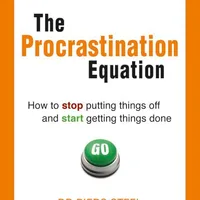
The Procrastination Equation — Piers Steel
Steel's meta-analysis is the backbone of the temporal motivation theory covered in this article. The book expands on the expectancy-value equation in accessible terms — useful for anyone who wants to diagnose which va…
As an Amazon Associate, we earn from qualifying purchases — at no extra cost to you.
Each answer points to a specific intervention. Rescheduling the task only addresses one of them, and usually not the right one.
The research doesn't promise that starting will always feel easy. Pychyl is careful about this: the gap between anticipated discomfort and actual discomfort is real and consistent, but it doesn't mean the task becomes comfortable. You don't fix procrastination by becoming someone who never feels avoidance. You fix it by building a different relationship with that feeling — one where it becomes informative rather than decisive.
There's something worth holding onto here. The tasks you avoid most faithfully aren't random. They're almost always the ones that carry the most meaning, the ones where failure would sting because you actually care about the outcome. The procrastination isn't pointing at your weakness. It's pointing at where your development most wants to happen — and where it feels most threatening, which is the same place.
Designing your evolution doesn't mean eliminating resistance. It means understanding what the resistance is made of well enough that you can choose your response to it, rather than letting your nervous system make that choice for you.
What's the one task that's been sitting on your list the longest? And if you're genuinely honest with yourself — what feeling does starting it produce?
Related read: Why the Finish Line Always Looks Closer Than It Is
Was this helpful?