Mindset· 12 min read
Why Experts Trust Their Gut (And When You Should Too)
Expert decision-makers skip comparing options — they pattern-match. Gary Klein's Recognition-Primed Decision research reveals why fast expertise wins.

Why Experts Trust Their Gut (And When You Should Too)
The fire commander stepped into the doorway and stopped.
The room didn't look wrong. The smoke was normal. The flames were manageable. But something about the heat — the way it pressed down from the ceiling rather than rolling outward — made every nerve in his body say: get out now. He pulled his team back without a word of explanation. Thirty seconds later, the floor caved in.
When researchers interviewed him afterward, he couldn't fully explain what he'd noticed — which turns out to be exactly what expert decision-making under pressure looks like. He said the fire was "behaving oddly." No formula. No risk matrix. No list of alternatives to evaluate. Just a fast, wordless recognition and a decision made in about four seconds that saved everyone in that room.
Here's what's interesting. He wasn't guessing. He was pattern-matching. And the research behind that distinction is about to change how you think about every fast, confident decision you trust — and the ones you absolutely shouldn't.
What Gary Klein actually found (the study nobody summarizes correctly)
Gary Klein wasn't supposed to find what he found.
In 1986, Klein — a cognitive psychologist working with Roberta Calderwood and Anne Clinton-Cirocco on a US Army-funded study — went into the field to document how experienced fireground commanders made decisions under genuine pressure. The working assumption baked into virtually every organizational decision model at the time was that good judgment follows a predictable sequence: generate multiple options, evaluate each against explicit criteria, pick the best one.
Klein expected to see that process happening under stress.
He didn't find it.
What he found instead was that veteran commanders, facing real emergencies, almost never generated multiple options to compare. They didn't pull up three possible approaches and run them against each other. They identified a type of situation — one that matched a pattern from hundreds of prior calls — and retrieved a single course of action associated with that recognized pattern.
Then they did something subtle but critical: they mentally simulated that one option forward, running it through a brief internal film of how it would likely unfold. If the simulation revealed a problem, they adjusted or moved on. If it didn't, they committed and acted.
The whole process took seconds. And it produced more reliable decisions, under real pressure, than deliberate option-comparison in the same conditions.
Klein formalized this as the Recognition-Primed Decision model — first in a 1989 chapter, later developed into his 1998 book Sources of Power: How People Make Decisions (MIT Press).
The RPD model, in plain terms: an expert recognizes a situation type from their pattern library, retrieves the single most plausible response associated with that recognition, mentally simulates that option forward for potential flaws, and commits if it holds up — all without generating alternatives to compare. The analysis isn't absent. It has already been embedded in the recognition itself.
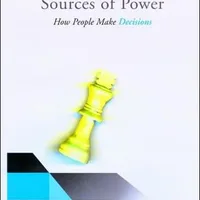
Sources of Power: How People Make Decisions — Gary A. Klein (MIT Press paperback)
This is the primary source text the article is built on. Reader has just met the RPD model in plain terms and is primed to want the original fieldwork.
As an Amazon Associate, we earn from qualifying purchases — at no extra cost to you.
The central implication is something most people miss entirely: in high-stakes, time-pressured, genuinely expert domains, the comparison step you've been told is the hallmark of good judgment is frequently a step that experienced people have already done — in advance, implicitly, across years of direct, feedback-rich exposure. The pattern library they've built is the analysis. They don't skip the thinking. They've front-loaded it into recognition itself.
That's not a hunch. It's categorically different from guessing.

Why expert gut decisions aren't actually gut decisions
The word "intuition" has poor PR in professional circles, and for understandable reasons. We've all watched someone confidently follow their gut into a catastrophic mistake and then insist their instinct was sound. We've seen entire companies collapse on the conviction of a leader who "trusted their gut" in a domain they didn't actually understand.
So the natural reaction to Klein's research is skepticism: are we just dressing up gut reactions by calling them pattern recognition?
The answer is no — and the distinction matters enormously.
What Klein's data shows is that expert pattern recognition is domain-specific, experience-dependent, and verifiable over time. The veteran commander who sensed the wrong heat distribution had responded to hundreds of structural fires. That specific pattern — ceiling heat disproportionate to visible flame, the wrong kind of silence — had a specific, known meaning in his accumulated experience. He didn't feel that the fire was wrong. He recognized it as a type he'd encountered before, even if he couldn't articulate the exact cues in the moment.
Experts are often unable to fully verbalize what they noticed when they make a fast, accurate call. The pattern recognition runs below the level of conscious articulation. But that doesn't make it mystical. It means the cues are real and the library is real, built from genuine, repeated exposure to situations where the feedback was unambiguous.
The mental simulation step is what keeps it honest. Before committing, the expert runs a brief internal test: if I do this, what happens? It's not comparing alternatives. It's quality-checking the one option the pattern library already surfaced. That step alone separates recognition from reaction.
The pattern library that replaces options-comparison
Think of it this way. Every time you encounter a situation in your domain — a hiring conversation, a negotiation, a client call, a product decision — and you get real feedback on how it resolved, you're adding an entry to your pattern library. Not consciously, not through deliberate note-taking (though that accelerates things), but through the natural accumulation of direct experience in a specific, feedback-rich environment.
Daniel Kahneman, in Thinking, Fast and Slow, distinguishes between System 1 thinking (fast, automatic, pattern-based) and System 2 thinking (slow, deliberate, analytical). His framing is often read as pro-System 2 — and for good reason, since System 1 misfires in well-documented and predictable ways. But Kahneman himself is careful about experts. Seasoned chess players, veteran clinicians, experienced practitioners in genuine expert domains can develop System 1 responses that are genuinely reliable, because those responses have been calibrated by real feedback over an extended period.
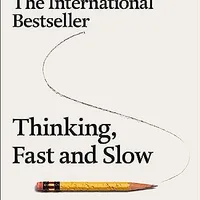
Thinking, Fast and Slow — Daniel Kahneman (Penguin paperback)
The article leans on Kahneman to explain WHEN System 1 can be trusted — this is the natural companion purchase to Klein.
As an Amazon Associate, we earn from qualifying purchases — at no extra cost to you.
The operative phrase is "calibrated by real feedback." This is what separates the veteran commander's four-second call from a novice's four-second call made with equal confidence. The novice's pattern library is thin. It hasn't been tested against real outcomes with real stakes. The fast, certain feeling they experience is genuine — but the pattern it's drawing on isn't robust enough yet to trust without running slower analysis alongside it.
Klein's research doesn't argue that fast is always right. It argues that fast is right when the pattern library it's drawing on has been built through genuine, extended, feedback-rich experience in that specific domain. Domain specificity is everything here. A pattern library built in one field doesn't automatically transfer to an adjacent one, even when the surface confidence feels identical.
how deliberate practice builds real expertise faster than raw hours
The most dangerous half-truth in decision-making
Here's the counter-intuitive piece that Klein's research actually implies — one that almost no one pulls out of it.
Fast confidence in an unfamiliar domain doesn't feel different from fast confidence in a domain you know deeply.
That's worth sitting with for a moment.
The subjective experience of "I know what to do here" is nearly identical whether your pattern library is rich and well-calibrated or essentially nonexistent. Which means a first-year investor who's read twenty books on venture capital can experience the same internal certainty as a partner who's seen two hundred real deals come apart and reconvene. The feeling isn't the data. The feeling is a signal — and what that signal is actually pointing to depends entirely on the quality of the library it's drawing from.
This is what makes confident novices genuinely dangerous — to themselves and to anyone following their lead.
One of the subtler forms of self-deception works like this: being genuinely right in one area, developing real confidence from that, and then letting it bleed into areas where you're still essentially beginning. You carry the feeling of the expert into territory where you're not one yet. And the feeling doesn't warn you. It just feels like knowing.
Klein's framework gives you a practical test for this: how many times have you actually been in this type of situation, with real stakes, and received clear feedback on what happened afterward? If the honest answer is "not many" and "not very clear," the fast feeling of certainty is not pattern recognition. It's a strong prior belief being projected onto unfamiliar territory — and that specific error has cost people far more than careful analysis ever would.
The mental simulation step: where experts still do the work
One nuance Klein's research consistently highlights is that expert decision-making isn't purely reflexive. The mental simulation step represents real analysis. It's just compressed and sequenced differently from what classical decision models assume.
Rather than: generate five options → compare them against criteria → select the best one
Klein's experts do: recognize the situation type → retrieve the associated option → simulate it forward → commit if it holds up
The simulation is the analytical check. It's where the expert asks, even wordlessly: does this actually play out the way I expect it to? If a mismatch surfaces — if the simulated outcome contradicts what the situation seems to be calling for — the expert backs off and recalibrates. But the starting point isn't a blank slate of alternatives. It's the single most plausible option the experience library already surfaced.
This matters practically because it tells you where to put your attention when you're making fast calls in domains where you genuinely have experience. The question isn't "am I missing an option I haven't considered?" The question is "does my most plausible option, when I mentally run it forward, actually hold up under this specific set of conditions?"
That's a concrete, repeatable check — one you can build into your own decision process regardless of whether you're making a hiring call, a strategic bet, or a creative commitment.
How to build your own pattern library (without waiting decades)
Klein's research has a frustrating implication if you read it passively: expertise takes time, and real pattern libraries only develop through genuine accumulated experience. There are no meaningful shortcuts to the library itself.
But there's a more useful implication if you read it actively: the quality of experience matters far more than the raw quantity. Most people accumulate experience passively. They go through situations, reach outcomes, and move on without deliberately consolidating what they just encountered into anything retrievable. That's a waste of perfectly good pattern-building material.
Here's how to accelerate the process deliberately:
Seek feedback-rich environments. A pattern library only builds when you get real, clear, fast feedback on your decisions. If you're making calls in a domain where feedback is slow, ambiguous, or absent, your library isn't growing even if you're putting in hours. Find ways to shrink the feedback loop wherever you can.
After each significant decision, log what you recognized — not just what you decided. What was the specific feature of the situation that made you reach for this particular response? Articulating the cue, even imperfectly, accelerates the consolidation of the pattern into something retrievable later. A dedicated decision log pays compounding returns here.
Run your own mental simulation before committing. Even when your library surfaces a clear option, spend thirty seconds playing it forward. What's the most likely way this goes wrong? If you can't spot a plausible failure mode, that's informative. If you immediately see one, that's a signal to adjust before you act.
Distinguish domain confidence from adjacent confidence. Before trusting a fast, confident call, ask honestly: how many times have I actually been in this specific type of situation, with real stakes and clear feedback? If the number is low, slow down — not because fast is wrong in principle, but because your library isn't calibrated enough yet in this domain to trust its outputs.
Debrief your near-misses, not just your wins. The pattern library gets calibrated by both, but most people only formally examine their successes. Near-misses — moments where your fast read was almost right but off in one critical dimension — contain more usable pattern-building information per event than almost anything else. They're free education that most people discard.
why you stop noticing the warning signs that matter most
How to start today
You don't need a decade of fireground experience to apply Klein's framework. You need a domain where you're putting in genuine, feedback-rich reps — and a deliberate system for turning those reps into a retrievable library.
Step 1. Identify your highest-stakes decision domain — the arena where you're making calls regularly and actually receiving feedback on outcomes.
Step 2. Start a thirty-day decision log. After each significant call, write two lines: what you recognized about the situation (the cue that triggered your response), and what you did in response. Don't analyze yet. Just capture the pattern.
Step 3. Before your next fast decision, pause for one mental simulation. Play the most obvious option forward for thirty seconds in your head. What's the most plausible way it breaks down?
Step 4. Audit your confidence in adjacent domains. For every area where you're making fast, confident calls, ask honestly whether your pattern library there has actually been tested against real stakes and clear feedback. If not, reach for deliberate analysis alongside the fast read.
Step 5. Go deeper on the actual research. Klein's Sources of Power is the primary text and reads nothing like a textbook — it's built on real field stories and interviews. Kahneman's Thinking, Fast and Slow gives you the broader cognitive architecture that explains when the library can be trusted and when it can't.

Kindle Paperwhite 2024 (12th Generation, 16GB, Black, Without Ads)
Step 5 sends the reader to two books at once. The Kindle is the device that makes 'go deeper' frictionless — and carries the article's only high-ticket margin.
As an Amazon Associate, we earn from qualifying purchases — at no extra cost to you.
why writing things down changes how your brain processes decisions
The fireground commander who pulled his team back couldn't explain his decision in real time. But it wasn't a guess. It was the distilled output of hundreds of real-world encounters, compressed into a pattern recognition that ran faster than language could catch.
That's what genuine expertise actually is: not the ability to think faster, but the ability to have already thought — in advance, across years of real experience — so that the pattern library can now do the work a spreadsheet would take an hour to produce. The mental simulation step still runs the analysis. It's just built on a foundation that novices don't have yet, and that no amount of confidence can substitute for.
The invitation from Klein's research is specific. Trust your fast, confident calls in domains where you've genuinely built the library — where you've put in real reps, received clear feedback, and have a track record of accurate recognition. Treat the same fast confidence in unfamiliar territory as a warning sign rather than evidence of skill. And keep building deliberately: log the cues, run the simulations, debrief the near-misses.
Your intuition isn't a gift. It's a record.
What you do with that record — how deliberately you build and calibrate it — is what designing your evolution actually looks like.
In which domain do you most trust your fast, confident calls — and have you genuinely tested that trust against clear feedback? Share your experience in the comments.
Was this helpful?