Mindset· 10 min read
Why You Sabotage Yourself When Things Start Going Well
Self-sabotage isn't weakness — it's a survival pattern. Here's the psychology of why you undermine your own success and how to interrupt it for good.

Why You Sabotage Yourself When Things Start Going Well
She'd been dating the most thoughtful person she'd ever met for four months. Things were going well — genuinely, measurably well. No drama, no mixed signals, no late-night anxiety spirals. Just easy, consistent, good.
So on a Wednesday evening, for no reason she could identify afterward, she picked a fight about a text message. Within two weeks, she was single again.
He'd finally landed the client that could change his year — the kind you tell your friends about. Three days after signing the contract, he found himself somehow unable to respond to their first project brief. It sat in his inbox for ten days while he busied himself with work that didn't matter.
You might recognize one of these stories as a form of self-sabotage. Or you might have your own version — the promotion you quietly let slip, the creative project that became impossible to continue after someone called it brilliant, the habit streak you broke on the day you were proudest of it. The relationship that reached a new depth of ease, right before one of you started a war over something small.
This is not a story about being your own worst enemy. It's a story about a protection mechanism so effective, so well-calibrated to conditions that no longer exist, that it kept running long after those conditions passed.

The Thermostat You Didn't Know You Had
Gay Hendricks, a psychologist with forty years of clinical practice, spent decades watching high-achieving clients succeed and then immediately do something to undermine that success. He watched people who had worked for years toward something — a relationship, a breakthrough in their career, a creative project coming to life — arrive at the thing and then inexplicably dismantle it.
The pattern was too consistent across too many different people to be coincidental. So he built his entire clinical framework around it. He called it the Upper Limit Problem.
The idea is this: every person carries an internal thermostat — a set-point for how much positive experience, success, intimacy, or joy they'll allow themselves to sustain before an unconscious mechanism fires and pulls them back toward familiar ground. You've seen this in other areas of life without naming it. The person who loses thirty pounds and slowly regains them over eighteen months. The entrepreneur who breaks six figures and then makes a series of inexplicably poor financial decisions. The relationship that finally reaches genuine ease, right before someone picks a fight about the dishes.
The thermostat isn't malfunctioning. It's doing exactly what it was set to do.

The Big Leap — Gay Hendricks
The Upper Limit Problem was named and documented in this book. Gay Hendricks spent four decades watching clients sabotage their own successes and built his entire clinical framework around what he found.
As an Amazon Associate, we earn from qualifying purchases — at no extra cost to you.
Hendricks identifies four beliefs that, in various combinations, trigger the upper limit mechanism: the deep conviction that being too happy or successful makes you bad or undeserving; the fear that expanding into more success will harm or leave behind the people you love; the belief that your inherent flaws make success fraudulent and therefore temporary; and the anticipation that success will bring a level of demand or visibility that you won't be able to sustain.
You don't need to consciously hold any of these beliefs. The mechanism operates below the surface of language and logic, which is precisely why it can't be countered with positive thinking. It doesn't respond to what you tell yourself. It responds to what your body has learned to expect.
You've probably felt this without knowing what to call it. That strange tightness that shows up with good news. The way a sincere compliment can land like an accusation. The restlessness — the need to introduce complexity, to find the flaw, to move on before the good thing ends — that arrives when life is actually working.
That's the thermostat reading the temperature.
Your Nervous System Is Running an Outdated Prediction
The thermostat metaphor is useful, but it's imprecise about the mechanism underneath it. What's actually happening is more specific — and more important, because it points directly toward what can change.
Stephen Porges, a neuroscientist at Indiana University, spent decades developing what he called polyvagal theory — a framework for understanding how the nervous system manages threat and safety. One of its central concepts is neuroception: the body's continuous, sub-conscious scan of the environment for signals of danger or safety. This scan operates faster than conscious thought. Before you've formed a single word about a situation, your nervous system has already categorized it.
Neuroception is built from pattern recognition. It learns from the environments you inhabited — particularly the early ones — and updates its predictions accordingly. This is where the upper limit problem gets its teeth.
For people who grew up in environments where stability was reliably followed by disruption — where calm periods were the calm before the storm, where expressing pride or happiness reliably attracted punishment, jealousy, or withdrawal from the people they depended on — the nervous system learned a specific and durable pattern: good experiences are the leading edge of bad ones.
The child who learned this doesn't carry it as a thought. They carry it as a response program. The adult version: their body begins generating anxiety, restlessness, and the impulse to disrupt as soon as life reaches a certain threshold of positive experience. Not because they've decided to. Because their nervous system is executing a prediction it has every historical reason to trust.
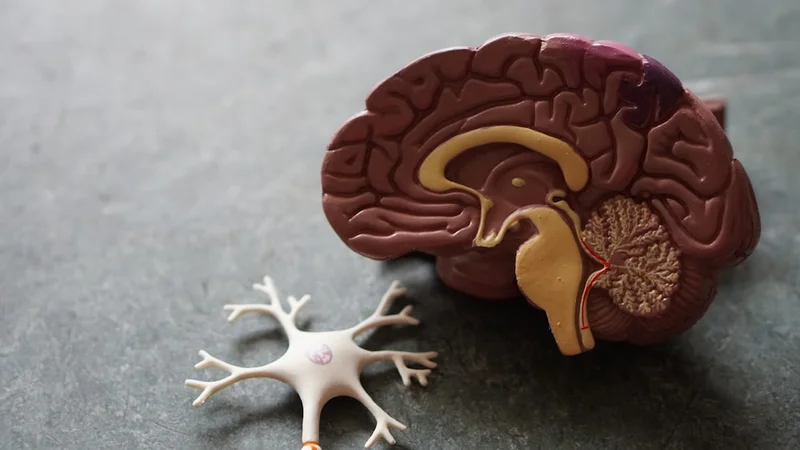
Bessel van der Kolk's work documented the physiological substrate of this process. The body isn't merely thinking about danger — it's re-experiencing a physiological state that was encoded as dangerous, a process that can bypass the prefrontal cortex entirely. You can know intellectually that your current success is stable and real. Your amygdala doesn't consult what you know. It pattern-matches, and the pattern says: this is where things go wrong.
This is why understanding why you self-sabotage — the insight alone — rarely changes the behavior. The behavior lives below the level of insight. You can't talk the amygdala out of a pattern it learned through experience. You can only show it new experience, slowly and repeatedly, until the prediction updates.
The Four Signatures of the Upper Limit Firing
The behavioral output of the upper limit mechanism is remarkably consistent across different people, different contexts, and different life domains. Learning to recognize these signatures in your own history is the first concrete step toward catching them in real time.
Starting fights. Immediately after a particularly good period — a weekend that went genuinely well, a stretch of ease in a relationship, a period of creative momentum — one person manufactures conflict. About something small. With surprising intensity. The fight is rarely about what it's ostensibly about. It's the nervous system restoring a more familiar emotional temperature. Instability, however painful, feels more predictable than unusual happiness.
Getting ill. Vacations. First days of important new projects. Major milestones. The timing is too consistent across too many people to be coincidental. When the upper limit fires through physical symptoms, it's not calculation — it's the body generating a genuine output of a physiological state it's working to manage. The timing is the diagnostic.
Generating drama or crisis. A surprising proportion of what looks like "external" disruption is, on closer inspection, self-generated. The careless email sent to the wrong person during the best month of the year. The bill that somehow didn't get paid during a period of financial ease. The commitment that was forgotten at precisely the moment it mattered most. Each restores the familiar disruption the nervous system was calibrated to expect.
The careless error at the highest-stakes moment. The stumble during the presentation you prepared most thoroughly. The typo in the email to the most important client. The specific, inexplicable lapse in the conversation that meant most. This isn't a performance problem. It's the upper limit problem wearing performance clothes.
The common thread in all of these: the mechanism isn't punishing you. It's protecting you — from an outcome that your nervous system, based on everything it has learned, is predicting will end badly anyway. The protection is just arriving early.
Fear of Success Is Real — and Measurable
Fear of failure is culturally legible. We build entire productivity systems around its management. Fear of success — the genuine anxiety that emerges specifically in proximity to achievement — is less discussed, despite being equally well-documented in the research literature.
In 1978, Canavan-Gumpert, Garner, and Gumpert identified three specific cognitive patterns consistently associated with success fear. First: the concern that achievement will generate escalating demands that exceed your capacity to meet them — I'll get the promotion, and then everyone will see I can't handle it. Second: the worry that success will alter relationships by generating envy or by removing the common ground you share with people you're close to — if I earn more than my friends, I won't belong anymore. Third: the anticipation that being seen as successful will attract scrutiny that will reveal the inadequacy behind the performance.
Notice what each of these has in common. They're not irrational. They're accurate assessments of real risks.
Success does sometimes bring escalating demands. It does sometimes alter relationships. It does increase visibility. The fear of success is not confused — it's a risk assessment based on real things. The problem is that the assessment was made by a younger version of you, in conditions you no longer inhabit, using a model that hasn't been updated since. Imposter syndrome runs on the same outdated file.
The child who learned that excelling reliably attracted punishment or jealousy from caregivers was making an accurate prediction about that specific environment. The adult running that same prediction model hasn't checked whether the current environment still matches the one that calibrated it. Your nervous system isn't wrong about the past. It's wrong about the present. But it won't discover that until you give it new evidence.

The Body Keeps the Score — Bessel van der Kolk
The foundational text on how the body stores traumatic patterns. Van der Kolk's work explains why self-sabotage operates below the level of insight — and what it takes to update the nervous system's outdated predictions.
As an Amazon Associate, we earn from qualifying purchases — at no extra cost to you.
Why Self-Criticism Makes It Worse
When you catch yourself in a self-sabotage episode — when you see, clearly, that you've just done the thing again — what's your first response?
For most people, it's something in the direction of what is wrong with me.
This response is understandable. It's also the most reliable way to make the pattern harder to change.
Kristin Neff at the University of Texas has spent over two decades building the most comprehensive empirical account of self-compassion in psychology, and one of its most consistent findings is direct and uncomfortable: self-criticism does not reduce self-sabotage. It amplifies the shame the nervous system is already managing and increases the probability of further avoidant behavior.
The shame loop works like this. The self-sabotage episode produces shame. Shame activates threat circuits — the same threat circuits that generated the self-sabotage in the first place. Threat circuits produce more avoidance and more disruption. Which produces more shame. The self-criticism that feels like accountability is, mechanically, just more fuel in the same cycle.
The research on self-compassionate responses to failure — by Neff, and replicated by Mark Leary at Duke University — consistently documents three specific differences in how high-trait self-compassion individuals respond to setbacks: less negative affect, more honest acknowledgment of their actual role in the failure, and more willingness to try again with a different approach. Three outcomes that are precisely opposite to what "being harder on yourself" is supposed to produce.
The functional alternative to self-criticism is a different question.
Not: What is wrong with me? — which has no actionable answer.
But: What was my nervous system protecting me from?
This question is more accurate, not more indulgent. It redirects toward the specific belief or threat that the self-sabotage was managing — the fear that you'd be abandoned if you became too successful, the expectation that this good thing would be taken away, the anticipation that visibility meant scrutiny. When you can name the threat, you can examine it. When you can examine it, you can start showing your nervous system evidence that the old prediction no longer applies. The science of self-compassion goes deeper into how to make this shift in practice.
That examination is where the thermostat starts to move.
How to Start Today
The interventions that trauma-informed psychology supports for upper limit patterns are not primarily cognitive. Understanding the mechanism doesn't automatically change the behavior — and the expectation that it should is its own kind of trap. What works is gradual, behavioral, and repetitive.
1. Find your specific ceiling. Your upper limit doesn't fire randomly — it fires at a threshold. Track when you characteristically self-disrupt. After how many good weeks of a project? After what level of intimacy in a relationship? After what kind of compliment? The pattern is more specific than it feels. Writing it down with precision is the first interruption — because you can't notice something you haven't named.
2. Practice staying in good — slowly. When something good happens, resist the immediate impulse to move forward to the next problem. Sit with the positive experience for sixty seconds. Deliberately. Notice your body's response — the tightness, the restlessness, the pull to find the complication. That discomfort is data. It's showing you exactly where the thermostat is set. Over time, staying present with positive experience builds the nervous system's tolerance for it.
3. Slow down at moments of success — don't accelerate. When things are going well, the instinct for most people is to press harder: to prove they deserve it by working more, achieving more, staying ahead of the collapse they're sure is coming. This acceleration is often itself an upper limit behavior — a way of introducing strain before something else introduces it. The counterintuitive response is to slow down. To notice what's working. To stay in the experience before rushing past it toward the next thing to prove.
4. Replace "what's wrong with me" with "what was I afraid of." Run the accurate question after a self-sabotage episode, not the shame spiral. It will usually produce a specific answer. That specific answer is the belief that needs examining. You can examine it in a journal, in a conversation, or in work with a therapist. Building better morning habits is one practical way to start creating a container for this kind of reflection. But it starts with the right question — and the right question starts with curiosity rather than self-prosecution.

Kindle Paperwhite (2024, 12th Generation)
The two books in this article — The Big Leap and The Body Keeps the Score — are available on Kindle. For the slow, deliberate re-reading that updating a nervous system actually requires, having them in one device matt…
As an Amazon Associate, we earn from qualifying purchases — at no extra cost to you.
5. Build evidence for an updated prediction. The nervous system doesn't update through insight. It updates through repeated experience that contradicts the old prediction. Every time you allow something good to continue without disrupting it — every successful stretch you don't end prematurely — you're providing new data to a system that learns from data. Each instance is small. Over months, they accumulate into a genuinely different set-point.

The Ceiling Isn't Your Talent
Here's the reframe that changes how you read your own history.
Every time you've stepped back from something going well — every fight picked from nowhere, every opportunity quietly let expire, every stretch of momentum interrupted at the worst possible moment — none of it was evidence of your character. It was evidence of your conditioning.
Conditioning built accurately, in the specific environment that shaped your nervous system. Conditioning that served a genuine protective function once. Conditioning that has been running on autopilot ever since, in environments that no longer require it, producing costs you no longer need to pay.
The ceiling on your success isn't your talent. It isn't your strategy or your work ethic or your discipline. It's the set-point your nervous system was calibrated to, in conditions that have expired. That set-point is not fixed. It can be moved — incrementally, through experience, through the practice of tolerating increasingly large amounts of good before reaching for the dial. Why smart people self-sabotage explores how this pattern shows up specifically in high-achievers and what breaks it.
Designing your evolution means designing a new set-point. Not by forcing yourself to feel differently, but by providing the evidence — one survived success at a time — that the old prediction is out of date.
The question worth sitting with: which moment this week did you find a reason to step back from something that was going well? And what, specifically, did you tell yourself was about to go wrong if you didn't?
That answer is exactly where the next version of your design begins.
Was this helpful?