Intentional Living· 11 min read
The 4-Hour Workweek Playbook: Build Freedom Deliberately
Brian Dean built a 4HWW life from his dad's basement to two sold companies. The real playbook: geoarbitrage, testing, automation, and what freedom costs.

The 4-Hour Workweek Playbook: Build Freedom Deliberately
Brian Dean was in his early twenties, living in his dad's basement, and reading a book that everybody else treated as either gospel or snake oil. The book was The 4-Hour Workweek. It was 2008, during the height of the financial crisis, and Dean had just dropped out of a PhD program at Purdue and couldn't find work as a dietician. And the path that started there ended, years later, with two companies sold and a life spent mostly abroad — Berlin, Lisbon, and the Algarve region of Portugal.
What people usually miss about that story is the sequence. Dean didn't read the book and immediately buy a one-way ticket. He didn't quit his job on a Monday. He built something slow and almost boring: a muscle for testing small ideas, a spreadsheet habit, and the willingness to look stupid for about eighteen months while nothing worked. The freedom came later, and when it came, it didn't look the way the book promised either.
The Book Everyone Misreads
When Tim Ferriss published The 4-Hour Workweek in 2007, most readers pulled out the wrong lesson. They saw the title. They assumed the point was to work less. That's not quite right.
The book is actually about designing a life first, and then engineering income systems backward from that life. The four-hour figure was Ferriss's own — it was never meant to be yours. What Ferriss was really arguing, in his restless and sometimes cocky way, is that most of us build our work and then squeeze life into the margins. The trick is to invert the equation.
Ferriss borrowed heavily from Vilfredo Pareto, the nineteenth-century Italian polymath and economist who observed that 80% of Italy's land was owned by 20% of the population. That same ratio, Ferriss argued, shows up everywhere: 80% of your results come from 20% of your effort. 80% of your problems come from 20% of your customers. The implication isn't just to work smarter. It's to ruthlessly identify the 20% that matters and delete almost everything else.
That's the foundation. Everything that follows — geoarbitrage, mini-retirements, muses, virtual assistants — is engineering built on top of it.
If you want to read the original source rather than a summary of a summary, the book holds up surprisingly well almost twenty years later.
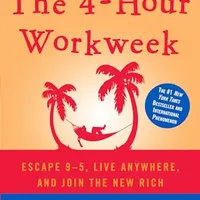
The 4-Hour Workweek, Expanded and Updated
As an Amazon Associate, we earn from qualifying purchases — at no extra cost to you.
DEAL: The Framework Beneath the Buzzwords
Ferriss organized the book around an acronym: DEAL. Definition, Elimination, Automation, Liberation. It sounds corporate until you actually apply it.
Definition is the part most people skip. Before you optimize anything, you have to define what you're optimizing for. Ferriss called it "dreamlining" — picking specific, dated, dollar-quantified outcomes rather than vague goals like "more freedom." Not "travel more." Instead: "Live in Lisbon for three months, rent a two-bedroom apartment, take Portuguese classes twice a week, cost: $4,200/month." Specificity kills fear because it makes the target measurable.
Elimination is what Pareto enables. Once you know what you're aiming at, you can delete the tasks, obligations, and people that don't move you toward it. Ferriss is famous for his low-information diet — the idea that most news, most meetings, and most emails are noise dressed up as importance. Brian Dean's version was even more aggressive. He stopped reading blogs in his own industry. He cut his email check to once a day, then once every other day. His results didn't drop. They climbed.
Automation is where the systems start doing the work. Ferriss's original version involved Indian virtual assistants and clunky dropship businesses. The 2026 version involves AI agents, Zapier-style workflows, and products that can be delivered without human intervention. The principle hasn't changed: design income streams that don't require your hourly presence.
Liberation is the final move. Once the systems run, you're free to be anywhere. This is where geoarbitrage enters.
Geoarbitrage, Without the Guru Gloss
Geoarbitrage is a clunky word for a simple idea: earn in a strong currency, spend in a weaker one. A remote worker making $90,000 in dollars lives comfortably in Austin. The same person lives like minor royalty in Medellín, Chiang Mai, or Porto.
The 2026 version of this is more nuanced than the 2007 version. Rent in Lisbon has risen dramatically since the book came out — national house prices in Portugal more than doubled between 2015 and 2024 alone, with Lisbon seeing the steepest increases. Mexico City's trendy neighborhoods now cost more than mid-sized American cities. The gold rush destinations have been discovered.
But the principle still works — you just have to look harder. Tbilisi. Medellín's lesser-known suburbs. Tirana. Small towns in southern Spain outside the tourist corridors. Split, in Croatia, during the off-season. The arbitrage is always there; it just migrates.
What most people underestimate is how much the physical setup matters. You can't run a location-independent business on a thirteen-inch laptop screen and the Wi-Fi of a random Airbnb. Digital nomads who last more than six months are usually the ones who invested early in the gear that lets them work anywhere at the same quality level they'd work at home. A portable second monitor. Noise-cancelling headphones for loud cafés and thin apartment walls. A reliable backpack that doesn't scream "expensive electronics inside."
For the screen, the game changed when lightweight portable monitors got good.

ASUS ZenScreen MB16ACV Portable Monitor
As an Amazon Associate, we earn from qualifying purchases — at no extra cost to you.
For the headphones, the rule is simple: if you're going to be on calls from three continents, don't cheap out.

Sony WH-1000XM5 Noise Cancelling Headphones
Industry-leading ANC, 30-hour battery, 8 microphones for crystal-clear calls from anywhere. The category king for digital nomads.
As an Amazon Associate, we earn from qualifying purchases — at no extra cost to you.

The Part Brian Dean Got Right That Most Don't
Here's the thing most 4HWW enthusiasts miss, and it's the part that made Brian Dean different.
The book frames elimination and automation as the hard part. They aren't. The hard part is the moment after you've built the systems, escaped the job, and arrived in whatever beachfront or mountain town you fantasized about. You sit down on the balcony. And you realize you don't know what to do with yourself.
Dean has spoken about this openly. After selling his companies, he described losing his sense of structure, purpose, and connection — the psychological dangers that arrive when the thing you optimized toward is suddenly gone. He had spent so long building toward freedom that he hadn't thought clearly enough about what freedom was for. That's the chapter the book never wrote.
Jim Rohn used to say: "Work hard at your job and you can make a living. Work hard on yourself and you can make a fortune." The 4-hour workweek can accidentally solve the income problem while deepening the personal one. If you don't have a strong personal philosophy, a set of projects that feel meaningful, and relationships that travel with you, freedom metastasizes into loneliness pretty fast.
The fix is unglamorous. Before you optimize your way out of work, you build a parallel infrastructure for meaning. A creative practice that isn't monetized. A relationship with your health that doesn't depend on a gym subscription. A reading habit. A writing habit. Friendships you maintain across time zones through effort, not proximity. building a morning routine for remote work
Testing Before Scaling: The Muse Principle
Before you get to freedom, you need income that doesn't require you to be somewhere. Ferriss called these "muses" — small, focused businesses designed to generate $5,000 to $10,000 a month with minimal ongoing involvement.
The modern muse playbook has evolved. In 2007 it was physical products sold through infomercials. In 2026 it's more likely to be digital: a niche Shopify store, a course, a SaaS tool targeting a specific professional audience, an affiliate content site, or a community with recurring membership fees.
The test Ferriss proposed still works. Before you build anything, see if anyone will pay for it. Put up a landing page. Run $100 of ads. If nobody clicks, nobody wants it. If people click but don't buy, you have a positioning problem. If people buy, congratulations — you've skipped the most common mistake, which is building something beautifully and watching it sell to nobody.
Brian Dean's first business, Backlinko, started as a blog with almost no readers. The muse wasn't the blog. It was the SEO course he built after years of free writing told him exactly what his readers would pay for. That sequence — give first, measure demand, then build — is the one almost every successful creator has followed, usually without admitting they read it in a book.
This is the kind of thinking that separates hobbyists from operators. If you're serious about building something testable, there's a small category of founder-focused books worth reading alongside Ferriss.
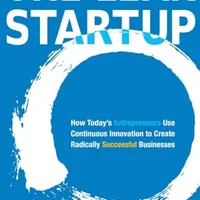
The Lean Startup by Eric Ries
As an Amazon Associate, we earn from qualifying purchases — at no extra cost to you.
Designing the Day You Actually Want
Here's a question worth sitting with: if you stripped away every obligation — every client call, every notification, every "should" — what would a Tuesday actually look like?
Most people can't answer. They've spent so long reacting that they've never defined what they'd construct if no one were watching.
Ferriss's dreamlining exercise is worth doing on paper, slowly. List the things you'd do, have, and be if money and time weren't constraints. Then attach costs and dates. Then calculate the monthly "target monthly income" that would fund that life. For most people, the number is shockingly lower than their current salary.
That gap — between what your life actually costs when designed deliberately and what you currently earn — is the leverage. It tells you how much income replacement you need to engineer, and how much of your current work is funding a life you didn't consciously choose.
A good journal helps here. Not a bullet-point planner. Something where you can write messy, half-formed versions of the life you'd build if nobody was grading you.

Leuchtturm1917 A5 Dotted Hardcover Notebook
As an Amazon Associate, we earn from qualifying purchases — at no extra cost to you.
How to Start Today
You don't need to quit anything this week. You don't need to book a flight. Start here:
1. Audit your 80/20. For one week, track where your time actually goes in thirty-minute blocks. Then look at the output. Which 20% of your effort produced 80% of your meaningful results? Which tasks could you delete tomorrow without anyone noticing?
2. Run the dreamlining exercise. Sit down for an hour, alone, with a notebook. Write the six- and twelve-month versions of your ideal life, specific and dated. Attach real dollar costs. Calculate your target monthly income. Don't edit yourself.
3. Launch one test. Pick the smallest possible version of a muse — a $20 ebook, a one-page service offering, a Substack newsletter with a paid tier. Build it in a weekend. Run $100 of ads or tell your network. Watch what happens. The data teaches you more than any book.
4. Build your elimination list. Cancel three subscriptions you forgot you had. Unsubscribe from twenty email lists. Mute the channels that drain you. Create one full day per week where you don't check email. Start small or you'll quit.
5. Prepare the physical infrastructure. If your plan involves any location independence, audit your gear now, not when you're already in a rental apartment realizing your chair is destroying your back. A good portable setup isn't optional — it's what makes sustained remote work possible.
6. Read Ferriss alongside one grounding text. The 4-Hour Workweek is optimization. It works better when balanced by something that asks why. Pair it with a book on purpose, philosophy, or meaning — otherwise you optimize your way into a successful, empty life.
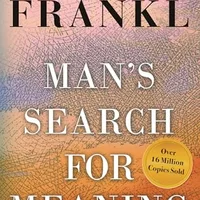
Man's Search for Meaning by Viktor Frankl
As an Amazon Associate, we earn from qualifying purchases — at no extra cost to you.
7. Give yourself eighteen months. Brian Dean's timeline wasn't weeks. It was years of quiet compounding. The social media version of lifestyle design lies to you about speed. The real one doesn't.

The Part About Freedom Nobody Writes
You can build the systems. You can quit the job. You can land in the city with the cheaper rent and the prettier light. And then one morning, six weeks in, you'll find yourself on a balcony at 10 AM with nothing urgent to do, and the question will arrive uninvited: what now?
That question isn't a failure. It's the actual starting line.
The 4-Hour Workweek framework is genuinely useful — maybe the most useful operating manual written this century for people who want to decouple income from location. But it only gets you to the door. Walking through it is a different project, and that project is about who you are when no system is forcing you to perform.
The Vanulos version of this, if we're being honest about it, is that freedom without design becomes drift. You already know how to work hard. The skill you build next is how to live on purpose — to choose a Tuesday that actually means something, to protect relationships that don't require a shared office, to keep evolving when there's no deadline making you. the difference between goals and purpose
Tim Ferriss built the playbook for the income side. The rest — the part that makes the freedom worth having — you have to design yourself.
So here's the question I'd leave you with: if you got everything the 4-Hour Workweek promises, starting six months from today, what would you actually do with a Wednesday? Not on the first week. On the thousandth.
The answer to that question is the life you're actually trying to build. Everything else is just engineering.
What would your Wednesday look like?
Was this helpful?