Recommendations· 13 min read
8 Best Books to Learn Anything Faster in 2026
We compared 8 science-backed books on learning faster — Peak, Make It Stick, Ultralearning and more. See which one fits where you are right now.
As an Amazon Associate, I earn from qualifying purchases. Prices and availability may vary.
Why the Right Book About Learning Is Worth More Than a Dozen Books About Your Subject
Here's an uncomfortable truth: most people read dozens of books a year and retain almost nothing from them.
It's not a motivation problem. It's not even a memory problem — not exactly. It's a method problem. The way most of us were taught to learn in school (read the chapter, highlight the parts that feel important, move on) is one of the least effective approaches cognitive science has ever documented. We just never got a better alternative. These eight books on learning faster exist to close that gap.
The science of how we learn has exploded in the last three decades. Researchers like Anders Ericsson spent careers studying the actual mechanisms of expertise. Cognitive psychologists at Washington University ran rigorous experiments on what makes knowledge stick versus what creates the illusion of knowing. Educators like Barbara Oakley translated decades of neuroscience into practical protocols any adult could use starting tomorrow.
The problem is that most of this research stayed locked in academic journals — or got flattened into the same generic "read actively and take notes" advice you've been hearing since high school.
This review cuts through that. We compared eight of the most important books in the learning science genre — the ones that genuinely shift how you acquire skills, retain information, and move from knowing something to being able to use it under pressure.
The stakes of getting this wrong are real. If you spend six months studying a new language, a new skill, or a new domain using inefficient methods, you don't just waste time — you often build bad learning habits that compound over years. Worse, you might conclude you're just "not a language person" or "not technical" when the real problem was the approach, not the ability.
The books on this list won't all be right for everyone. A competitive chess player working toward mastery has different needs than someone trying to finally understand financial modeling or pick up conversational Spanish before a trip. We'll tell you exactly who each book is for — so you spend your reading hours on the one most likely to change how you actually learn.
Because that's the goal: not just a good book to read, but a new operating system for acquiring knowledge that compounds for the rest of your life.
How We Evaluated These Books
We didn't rate these on cover design or Amazon star counts. We evaluated them across four dimensions that actually matter for the self-directed learner:
1. Research Depth — Does the author draw on peer-reviewed studies, or are they mostly packaging intuition in scientific-sounding language? We prioritized books grounded in primary sources.
2. Practical Protocol Specificity — Does the book tell you exactly what to do differently starting Monday morning, or does it stay at the level of inspiring principle? A good learning book should produce behavior change, not just belief change.
3. Domain Applicability — Is this book relevant to a narrow category (only academics, only athletes) or genuinely useful across professional skills, creative domains, languages, and complex subjects?
4. Return on Reading Investment — Some of these books are 350 pages. Does the depth justify that investment, or is the core insight available in 60 pages? We flagged cases where a shorter companion covers the same ground more efficiently.
What we excluded: Books that are primarily motivational ("you can do it!") without specific evidence-based protocols. Books older than 15 years without updated editions that still hold up empirically. Pop science titles that cite a few studies but don't engage with the underlying mechanisms.
The 8 Best Books on Learning Faster in 2026
1. Peak: Secrets from the New Science of Expertise by Anders Ericsson & Robert Pool — The Gold Standard

For whom: Anyone serious about building a skill to high levels — especially adults who've been told talent is the limiting factor.
Why we chose it: Anders Ericsson spent nearly three decades at Florida State University studying elite performers across chess, music, sports, surgery, and memory. His conclusion fundamentally dismantled the "10,000 hours" oversimplification that Malcolm Gladwell popularized (Gladwell cited Ericsson's research; Ericsson spent years clarifying what Gladwell got wrong). Peak is the actual source text: what deliberate practice is, why it works neurologically, and exactly how it differs from the kind of practice most people do that produces the illusion of progress without real improvement. If you're going to read one book that changes how you approach any skill, this is the one. It's both the research and the roadmap.
Pros:
- The foundational text — every other book in this genre builds on or responds to Ericsson's work
- Shatters the talent myth with specific experimental evidence, not anecdote
- Practical framework applies to any domain: professional skills, creative work, sports, music
- Co-authored with science writer Robert Pool, making the research genuinely readable
Cons:
- Can feel dense in the middle chapters where Ericsson walks through domain-specific studies in detail
- Doesn't give you a structured 30-day practice protocol — that translation work is on you
Peak: Secrets from the New Science of Expertise — Anders Ericsson & Robert Pool
The foundational text on deliberate practice — the book that dismantled the 10,000-hour myth. Every other book in this review builds on Ericsson's framework. The most on-theme purchase for any reader serious about ski…
As an Amazon Associate, we earn from qualifying purchases — at no extra cost to you.
2. Make It Stick: The Science of Successful Learning by Peter Brown, Henry Roediger & Mark McDaniel — The Retention Bible

For whom: Students, professionals, or anyone who reads a lot but finds it doesn't "stick" — and wants to know why, specifically.
Why we chose it: This is the book that should replace everything you think you know about studying. Written by two memory researchers from Washington University and a science writer, Make It Stick synthesizes decades of cognitive psychology experiments on what actually makes knowledge durable. Retrieval practice (testing yourself from memory rather than re-reading) substantially outperforms re-reading in long-term retention — in a landmark 2006 study by Roediger and Karpicke published in Psychological Science, students who practiced retrieval recalled roughly 50% more material a week later than those who simply reread. Spaced repetition outperforms massed practice ("cramming") across almost every domain. Interleaving different types of problems — even though it feels harder and slower — produces more robust learning than blocked practice. None of this is intuitive. All of it is backed by evidence so consistent it belongs in the same category as hand-washing in medicine: we know it works, most people still don't do it.
Pros:
- The retrieval practice and spacing research is the most robust, replicable finding in all of educational psychology
- Written for a general audience without dumbing down the evidence
- Concrete strategies you can implement immediately: flashcards, self-quizzing, spaced review calendars
- Directly challenges what you were taught about studying — in the best possible way
Cons:
- Some readers find the case studies repetitive by the second half
- Doesn't address the emotional resistance to harder study methods (interleaving feels bad even when it's working)
Make It Stick: The Science of Successful Learning — Brown, Roediger & McDaniel
The retention bible: retrieval practice, spacing, interleaving — the most consistently replicated findings in educational psychology. If you read one book from this list, the Conclusion recommends this one.
As an Amazon Associate, we earn from qualifying purchases — at no extra cost to you.
3. A Mind for Numbers by Barbara Oakley — The Applied Framework for Difficult Subjects

For whom: Anyone who's ever decided they're "not a math person," "not technical," or "not a science brain" — and anyone who struggles to learn subjects that don't come naturally.
Why we chose it: Barbara Oakley's personal backstory is inseparable from why this book works: she failed math and science through high school, then retrained herself to become an engineering professor. A Mind for Numbers is what she learned about learning along the way, backed by the neuroscience she subsequently studied. The focused/diffuse mode alternation she describes — switching between concentrated effort and relaxed, unfocused thinking — is now well-supported by research on the default mode network and memory consolidation. The practical implication: taking breaks isn't procrastination when you use them right. It's when your brain actually integrates what you've been studying. The book also gave rise to the Learning How to Learn course on Coursera, which became one of the most-enrolled online courses in history with over four million students worldwide.
Pros:
- Deeply practical: chunking, the Pomodoro technique, sleep and learning, procrastination as a specific problem with a specific solution
- Accessible to people who don't have a science background
- Makes the neuroscience of learning feel like a conversation, not a lecture
- The focused/diffuse mode framework genuinely reshapes how you approach any difficult material — especially if you've been fighting it rather than working with your brain's natural rhythms
Cons:
- The title oversells the math angle — it's really a universal learning book, which occasionally causes people interested in non-quantitative domains to skip it unfairly
- Some of the neuroscience has been updated since publication; a few specific claims are simplifications
4. Ultralearning by Scott Young — The Project-Based Intensive

For whom: Self-directed learners who want to compress years of conventional study into months — and who have the capacity to design their own curriculum rather than follow a structured course.
Why we chose it: Scott Young became famous for completing MIT's four-year computer science curriculum in twelve months without attending a single class. Ultralearning is the distilled methodology behind that project and nine others he subsequently attempted: learning four languages in a year, mastering portrait drawing from scratch, and more. What makes this book different from motivational "you can do anything" territory is that Young is specific. He identifies nine principles — metalearning, focus, directness, drill, retrieval, feedback, retention, intuition, experimentation — and explains the research behind each one while showing exactly how he applied them in his projects. The "directness" principle alone (practice the skill in the exact context you'll use it, not in an abstracted simulation) is worth the price of the book.
Pros:
- The most ambitious methodology in the genre: genuinely transforms how you structure a learning project
- Case studies are concrete and diverse, not just one domain
- The directness principle is underrated and immediately actionable
- Excellent for career pivots, language learning, or any skill domain where you can self-direct
Cons:
- The ultralearning approach requires significant self-discipline and schedule flexibility — not everyone can structure their own curriculum from scratch
- Less useful if you're learning within a structured program (school, corporate training) rather than independently
5. Range: Why Generalists Triumph in a Specialized World by David Epstein — The Counterintuitive Case
For whom: Adults who started late, switched fields, or feel guilty about their broad interests rather than deep specialization — this book is their permission slip backed by data.
Why we chose it: Range is the best intellectual counterweight to Peak in this list. Where Ericsson documents the power of early specialization and deliberate practice in "kind" learning environments (chess, music, golf), Epstein documents the domains — which turn out to be most of the complex, ambiguous, real-world domains — where breadth and interleaved learning outperform early specialization. The research he draws on, particularly Roger Federer's late start in tennis and the studies on interleaved practice in medical education, makes a compelling case that the optimal learning path depends heavily on what you're learning for. In wicked environments where the rules are unclear and feedback is delayed, the generalist's pattern-matching ability often outcompetes the specialist's depth.
Pros:
- The most intellectually honest book in this genre: doesn't just advocate for one approach
- The interleaved learning research is directly applicable to how you structure any study curriculum
- Challenges the cult of the 10,000 hours narrative with specific counter-evidence
- Deeply reassuring and practically useful for career changers and late bloomers
Cons:
- The argument can feel like it requires you to choose "generalist vs. specialist" — real-world application is messier
- Some readers want more direct protocol guidance and find the narrative-heavy approach less actionable than other books on this list
6. The Art of Learning by Josh Waitzkin — The Phenomenology of Mastery

For whom: High-performers who want to understand the inner experience of mastery — especially athletes, artists, or professionals who've hit a plateau they can't explain technically.
Why we chose it: Josh Waitzkin became a national chess champion as a child (documented in the movie Searching for Bobby Fischer), then walked away from chess and started over as a martial arts student, eventually winning multiple Tai Chi Push Hands world championships. The Art of Learning is his account of what he discovered about the learning process through both journeys. It's unlike any other book on this list because it operates at the phenomenological level — what mastery feels like from the inside — while still being grounded in specific techniques: the "making smaller circles" principle of incrementally deepening fundamentals, the psychology of losing and recovery, building and using the pre-performance mental state. It won't give you a study schedule, but it might change your relationship to the learning process itself.
Pros:
- The only book in this list that addresses the psychological and emotional dimensions of mastery directly
- The "making smaller circles" concept is the best description of how genuine skill deepening works
- Short enough to read in a weekend; dense enough to revisit for years
- Particularly valuable for performance contexts (competition, creative work under pressure)
Cons:
- Less useful if you want a research-validated protocol — this is wisdom literature, not a cognitive science textbook
- The chess and martial arts examples are so specific that some readers struggle to see the transfer to their own domain
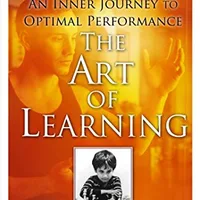
The Art of Learning — Josh Waitzkin
The phenomenology of mastery: the inner experience of skill development from a chess prodigy turned martial arts world champion. The making-smaller-circles concept is the best description of genuine skill deepening.
As an Amazon Associate, we earn from qualifying purchases — at no extra cost to you.
7. How We Learn by Benedict Carey — The Forgotten Techniques

For whom: People who want the scientific case for counterintuitive study strategies without the academic weight — written by a science journalist for a general audience.
Why we chose it: Benedict Carey spent years covering neuroscience and psychology for the New York Times, and How We Learn reads like his notes from the most surprising studies he encountered. The core contribution is surfacing research on techniques that are well-established in the academic literature but almost entirely unknown in everyday practice: the value of strategic forgetting (forgetting isn't just failure — it makes subsequent relearning more durable), the sleep-learning connection (sleep during a learning sequence, not just after), the interleaving of different subjects in a single study session, and the "context variation" effect (studying in different physical locations produces better retention than studying in the same place). Each chapter is tight, evidence-based, and immediately applicable.
Pros:
- The most readable book on the scientific evidence for counterintuitive study strategies
- The strategic forgetting and context variation research is genuinely surprising and well-documented
- Short, focused chapters make it easy to implement one change at a time
- Strong complement to Make It Stick — covers different experiments with significant non-overlap
Cons:
- Lighter on the deliberate practice / skill-building side than other books in this list — it's primarily about retention and recall, not complex skill acquisition
- Some readers find the narrative structure more meandering than they'd like
8. Learn Like a Pro by Barbara Oakley & Terrence Sejnowski — The Condensed Protocol
For whom: Someone who wants the practical implementation guide without the 350-page commitment — or who has already read A Mind for Numbers and wants the condensed, updated version.
Why we chose it: This is the book that distills the "Learning How to Learn" Coursera course (taught by Oakley and neuroscientist Terrence Sejnowski, and taken by over four million students) into 160 pages. It's the shortest book on this list and arguably the most immediately actionable. The advice is specific: use the Pomodoro technique to manage procrastination, practice active recall rather than passive re-reading, space your practice using a concrete schedule, sleep between study sessions rather than cramming. Nothing on these pages is speculative — all of it is backed by the same cognitive science research that the longer books on this list cover in more depth. If you want one book that you can implement this week, start here.
Pros:
- The most immediately actionable book on the list — small, dense, practical
- Co-authored by a neuroscientist: the science backing each recommendation is solid
- Designed for readers who learn by doing, not by reading about doing
- An excellent companion or entry point before tackling the longer books
Cons:
- If you've already read A Mind for Numbers, the overlap is significant — don't buy both
- The brevity means limited nuance: edge cases and domain-specific variations aren't covered
Frequently Asked Questions
Which book should I read first?
If you're a complete beginner to learning science, start with Learn Like a Pro (Oakley & Sejnowski) — it's short, practical, and gives you a working system in a weekend. Then read Make It Stick for the retention science, and Peak if you're building a serious skill. That three-book sequence covers the core of what the field has established.
Is Peak really that different from Gladwell's 10,000-hour rule?
Very different — and Ericsson said so publicly. Gladwell's simplified version ("put in 10,000 hours of practice and you'll become expert") is not what Ericsson's research shows. Peak is specific: it's deliberate practice — defined by precisely targeting skills just beyond your current level, with immediate corrective feedback — that produces expertise, not mere repetition. You can spend 10,000 hours practicing something badly and get worse at it relative to your potential.
Should I read Range or Peak first?
Read Peak first. Range is more valuable when you understand what it's arguing against. Epstein's counterpoints to deliberate practice specialization land harder once you've read what he's pushing back on.
Do any of these books work for learning languages specifically?
Ultralearning is the strongest language-learning resource of the group — Scott Young completed his four-language project using the methodology in that book. Make It Stick's retrieval practice principles also apply directly to vocabulary and grammar acquisition. The app Anki, while not a book, implements the spaced repetition research that several of these books describe.
What's the difference between A Mind for Numbers and Learn Like a Pro?
A Mind for Numbers (320 pages) is the full version — richer context, more stories, deeper exploration of the focused/diffuse mode research. Learn Like a Pro (160 pages) is the condensed system with less narrative. If you have time to invest, read A Mind for Numbers. If you want the protocol immediately, read Learn Like a Pro first and come back to the longer version later.
Are these books relevant if I'm not a student?
Completely. The research in Peak, Ultralearning, and The Art of Learning is drawn heavily from professional domains — music, sports, chess, surgery, programming. The cognitive science in Make It Stick and How We Learn was specifically studied in adult learners, not just university students. If you're learning a professional skill, a new role, or any complex domain as an adult, these books are directly applicable.
Conclusion: If I Could Only Choose One
If I had to pick a single book from this list for someone starting their learning science journey, I'd choose Make It Stick.
Not because it's the most inspiring book here (that's probably The Art of Learning). Not because it has the most ambitious methodology (Ultralearning wins that). But because its core finding — that retrieving information from memory is dramatically more effective than re-reading it, and that spaced practice over time beats cramming — is the most consistently replicated, most universally applicable, and most immediately actionable insight in the field.
If you finish Make It Stick and implement just two things — self-quizzing instead of re-reading, and spacing your review sessions over days instead of hours — your retention of everything you read and study will improve measurably. Not eventually. Starting this week.
The other books on this list are valuable extensions: Peak for serious skill development, Ultralearning for structured self-directed projects, Range for reconsidering whether specialization is really what you need, A Mind for Numbers for understanding the neuroscience behind the methods.
But start with the science of what makes knowledge stick. Everything else builds on that — and so does the capacity to design your own evolution from here.
If you found this review useful, you might also want to read why most people forget everything they read — and what memory science says to do instead, and our deep dive into the forgetting curve: why your brain is wired to discard what you learn and how to override it.
Which of these eight books are you planning to tackle first — or which one already shifted how you approach learning? Let us know in the comments.
Prices and availability change frequently. Always check current price on Amazon before purchasing. As an Amazon Associate, I earn from qualifying purchases.
Was this helpful?