Productivity· 9 min read
Busy But Going Nowhere? The Status Trap Explained
Why do we wear busyness like a badge? Research on status and time offers a simple audit to tell real progress from performed productivity.

Busy But Going Nowhere? The Status Trap Explained

You cleared your inbox at 11 PM. You had seven meetings. You ate lunch standing up. And when someone asked how your week was going, you heard yourself say it: Insane. Absolutely insane.
And you felt, if you're honest, a small pulse of pride. Not shame. Pride.
That quiet satisfaction at how packed the schedule was — the signal that you're needed, in demand, important. That feeling isn't a personal quirk. It's cultural. And according to research published in the Journal of Consumer Research, it's actively working against you in ways most people don't name clearly enough.
Why Busyness Became a Status Symbol
In 2017, researchers Silvia Bellezza, Neeru Paharia, and Anat Keinan published a study examining how busyness is perceived in contemporary Western culture. Their finding was counterintuitive: being visibly overloaded, in demand, and perpetually rushed makes people seem higher-status, more competent, and more desirable.
The signal had flipped. Thorstein Veblen's classic idea of the "leisure class" held that, historically, leisure was the marker of wealth and status. In the research Bellezza and her colleagues describe, that script has reversed, and now time scarcity has become the new luxury.
The researchers also found that the effect depended on culture: it showed up in North America, where people tend to believe in social mobility, and was weaker or reversed in parts of Europe. The more a culture believes that status can be earned through effort, the more effort itself — or the visible performance of it — becomes a status signal. Which means you're not just fighting a personal habit. You're fighting a cultural reward system that actively reinforces the wrong behavior.
This is what social scientists call a status signal: a behavior that communicates social position. And here's the problem — status signals are performative by nature. You don't wear expensive clothes because they're warmer. You don't schedule back-to-back meetings because they're the most productive use of your hours. You do it, in part, because of what it says about you to others.
Jim Rohn used to say that you have to modify your dreams or magnify your skills. The version nobody talks about: you have to modify your identity before you can modify your calendar. If your identity is "the busy person," you'll unconsciously protect that identity — even when it costs you.
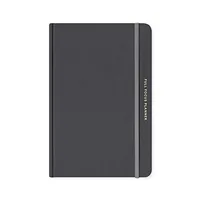
Full Focus Planner by Michael Hyatt (Gray Linen Hardcover)
As an Amazon Associate, we earn from qualifying purchases — at no extra cost to you.
Activity Is Not the Same as Output
Here's the distinction that changes everything: activity and output aren't the same thing.
Most people measure their days in activity. Forty emails answered. Three meetings attended. One document reviewed. Notifications cleared. And at 6 PM, when someone asks what they got done, they recite this list like a receipt.
But receipts aren't progress. They're records of motion.
Cal Newport, in Deep Work, draws a sharp line between shallow work — reactive, logistical, easily replaceable — and the kind of focused, cognitively demanding work that actually moves your biggest goals. Most "busy" days are almost entirely shallow.
Jim Rohn put the distinction plainly: "Don't mistake movement for achievement." You can move all day and arrive at the exact same place you started. The scenery changes. The destination doesn't.
The Bellezza research offers an uncomfortable explanation for why this persists: the social reward for appearing productive is often more immediate than the reward for being productive. Writing twelve emails and mentioning it at dinner gets a sympathetic nod. Spending four hours in deep, uninterrupted work on one thing gets nothing visible at all.
So the brain, which is ruthlessly social, bets on the visible action. Every time.
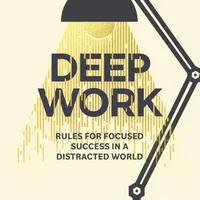
Deep Work — Cal Newport (Paperback)
As an Amazon Associate, we earn from qualifying purchases — at no extra cost to you.
The Identity Underneath the Calendar
Ask yourself: if you had a week where nothing urgent happened — no fires, no one pulling at you — would that feel productive? Or would it feel uncomfortable? Like something was missing? Like you should be doing more?
If it would feel uncomfortable, that's the signal. The discomfort isn't coming from the work. It's coming from the story you've built around being needed. Busyness becomes evidence that you matter. And when that evidence disappears — even briefly — the identity wobbles.
Tony Robbins, in his work on identity and personal transformation, has argued that the most powerful force in the human personality is the need to stay consistent with how we define ourselves — which includes keeping behaviors that match your self-concept even when they stop serving you. The structure is the same here. You keep performing busyness because busyness is what you've decided you are.
The fix isn't a better to-do list. It's a different question. Not "what did I do today?" but "what moved today?"
The "What Moved" Ledger
Try a simple audit at the end of each day this week. Open a notebook — physical works better than digital; the slight friction forces actual thought — and answer three questions.
What was my single most important output today? Not the most urgent task. The one output that moved a long-term priority forward. One line only. If you can't answer this without hesitation, that's information worth sitting with.
What consumed the most time without producing output? You're not judging yourself here. You're building data. Over five days, patterns emerge — that 9 AM standup that ends without decisions, the two-hour email loops, the meetings that expired without a clear outcome or owner.
Did today's activity match what I said mattered this week? This is the alignment check. Most people find a surprising gap between what they claimed mattered and what they actually worked on.
One note on the format: keep the answers short. This isn't a journal — it's an audit.
Greg McKeown, in Essentialism, calls this "the undisciplined pursuit of more" — the path of least resistance when you haven't decided in advance what doesn't belong.
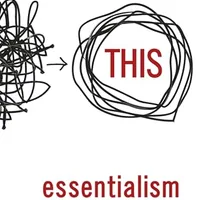
Essentialism — Greg McKeown (Paperback)
As an Amazon Associate, we earn from qualifying purchases — at no extra cost to you.
Over five days, the ledger gives you a picture that no productivity app ever will: not what you did, but what moved.
The Social Cost of Stepping Back
Here's something the busyness research implies that most productivity articles skip over: stepping away from the busyness signal has a real social cost.
Colleagues interpret "I'm protecting my focus time" as "I'm not a team player." Managers see white space in your calendar as a problem to fill. You might feel quiet pressure from people who equate visible busyness with contribution and depth with avoidance.
The Bellezza findings don't just describe the trap — they imply that people who are visibly not busy are perceived as less important, less in demand.
A useful reframe: stop defending your schedule and start reporting your output. When a manager asks why your afternoon is blocked, "I'm finishing the strategy brief" lands differently than "I'm protecting focus time." The first is a deliverable. The second sounds like a request for permission. In workplaces that reward visible busyness, the person who can point to tangible output earns more calendar credibility than any color-coded blocking system ever will.
Knowing this won't make the social friction disappear. But it will help you recognize it for what it is: a cultural reflex, not an accurate measure of your value. You're not opting out of productivity. You're opting out of the performance of productivity. Those are very different things, even if they look identical from the outside.
Sony WH-1000XM5 Noise Cancelling Headphones
As an Amazon Associate, we earn from qualifying purchases — at no extra cost to you.
How to Start Today
Pick your output metric the night before. Before tomorrow's meetings start, name the one output that would make tomorrow a genuine win. Write it down somewhere visible. Everything else is context, not priority.
Block one protected hour. Not a vague intention to be more focused. A literal block on your calendar — label it whatever you want — that you treat as immovable.
Run the "what moved" ledger for five consecutive days. After five days, you'll have real data showing which recurring commitments consume time without advancing anything you actually care about.
Audit one repeated commitment. Choose one recurring meeting or habit that has never appeared in your "most important output" column. Ask honestly whether it needs to exist in its current form. One of them almost certainly doesn't.
Change the phrase. The next time someone asks how your week's going, try a different answer than "crazy busy." Try: Good — I'm making real progress on something that matters. One small word swap. You're rewriting the status signal, one conversation at a time.
If the ledger keeps showing the same culprit — urgent work crowding out important work — the science behind why urgent always beats important (and the fix) is worth ten minutes.
Busyness was never the goal. Movement was.
The research from Bellezza and her colleagues shows that the status trap isn't a personal failing — it's a deeply embedded cultural script running quietly in the background of every overbooked calendar. You didn't choose it deliberately. But you can choose differently from here.
Vanulos is built on one idea: your evolution is something you design, not something that happens to you by default. A packed schedule isn't a design. It's the absence of one. The "what moved" ledger is how you start building the real thing — one honest daily audit at a time.
What's one recurring commitment in your week that has never produced visible output — and what would you have to believe about yourself to actually cut it?
For the daily patterns that tend to fill calendars without moving anything meaningful: the habits quietly holding you back.
Was this helpful?